Introduction
Arizona offers year-round boating in Arizona on its desert lakes and rivers, including the Colorado River, Lake Havasu, Lake Mead, and Roosevelt Lake. The Arizona Game and Fish Department (AZGFD) oversees all motorized watercraft registration, boat safety education, and law enforcement on state waterways, providing regular boating safety news. Arizona does not require an Arizona boating license or mandatory operator education, but safety courses are strongly recommended, and boaters can learn how to winterize a boat for off-season storage. Boaters should review Arizona boating requirements before heading out, as special federal regulations apply on the Colorado River and other federally controlled waters, where additional equipment like daytime and nighttime distress signals may be required, and boat docking skills are important. With warm desert climates and major reservoirs, boating is a popular activity year-round.
At a Glance
Registration
All motorized watercraft operating on Arizona waters must complete Arizona boat registration with the Arizona Game and Fish Department (AZGFD). When registering a boat in Arizona, registration fees for residents vary by boat length, typically ranging from $20 to $66. AZ boat registration can be renewed online through the AZGFD Watercraft Registration Renewal System, with immediate use authorized via a 45-day temporary certificate. The Arizona boat registration renewal process is straightforward and can be completed entirely online. Displaying the correct boat registration numbers is required, including the specific boat rego number, and performing a boat hin lookup can help verify vessel identity. Non-residents may operate in Arizona waters for up to 90 consecutive days with a valid out-of-state vessel registration, such as a boat registration georgia or florida boat registration, before needing to register in Arizona. Exceptions: non-motorized vessels (standard canoes, kayaks, paddleboards) and federally documented vessels are not required to register. A valid fishing license is required for anyone 10 or older fishing in public waters.
Safety Education
Arizona does not require a boating license or mandatory boater safety education certificate to operate a watercraft. However, AZGFD strongly recommends completing a boating safety course. The Arizona boater safety course is available in free classroom sessions, home study, or online formats. Taking a boating safety course is particularly recommended for operators of personal watercraft and those boating on the Colorado River or other federally controlled waters. Safe boating practices are encouraged for everyone on the water. The AZGFD Fish & Boat AZ app provides access to boat ramps, fishing locations, and regulations.
Safety Equipment
Required equipment: US Coast Guard-approved personal flotation device (Type I, II, III, or V life jacket) for each person on board; children under 12 must wear a life jacket at all times while the vessel is underway. A throwable flotation device (Type IV) required on all motorboats. A fire extinguisher is required, especially for motorboats, and boaters should know fire extinguisher requirements before launching. Additional equipment may be required on federally controlled waters (such as the Colorado River) including daytime and nighttime visual distress signals. Navigation lights required between sunset and sunrise—proper boat navigation light use is critical, along with overall boat lighting. Every vessel should also carry a boat anchor with a functional boat anchor winch and a boat horn for signaling. All vessels must have proper ventilation systems for enclosed engine compartments and backfire flame arrestors on inboard gasoline engines. Every life jacket should be readily accessible and properly fitted for each passenger.
Boating Laws
No mandatory Arizona boating license or operator education required in Arizona. Boating under the influence (BUI) is prohibited with a legal blood-alcohol limit of 0.08% — the same as for driving a car. Operators can be cited for BUI if impaired to the slightest degree. The minimum age for operating a personal watercraft is not specified by state law, though children under 12 must wear a life jacket at all times while the vessel is underway. Personal watercraft operators must follow specific operating rules. Understanding boating laws Arizona requires familiarity with both state and federal regulations, and being aware of Arizona boat crash reporting procedures is recommended. Non-residents may operate for up to 90 consecutive days before needing Arizona registration. Federally controlled waters (including the Colorado River) have additional federal regulations that boaters must follow, including navigation rules and equipment requirements.
Where to Boat
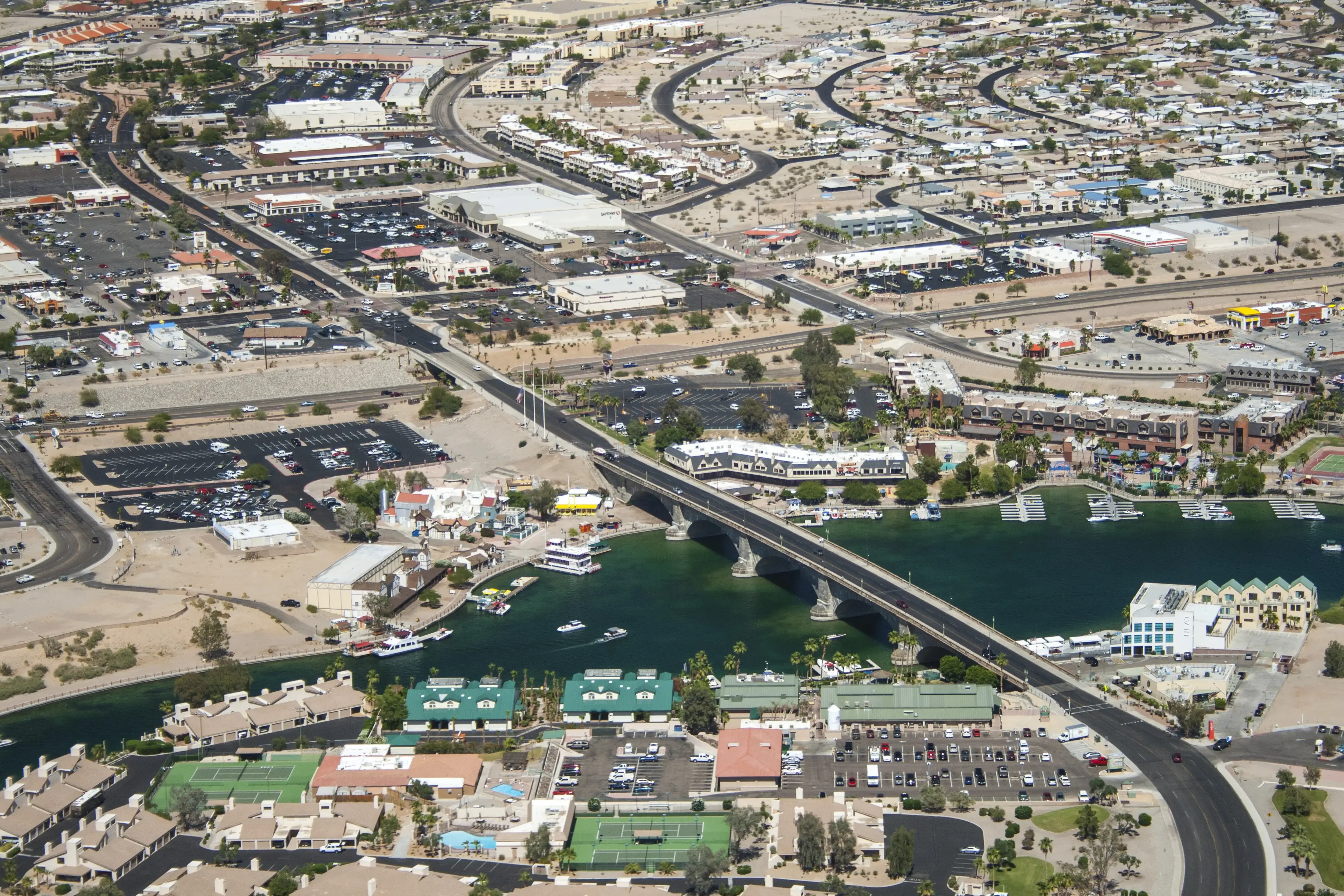
Popular waterways include Lake Havasu (19,300 acres on the Colorado River, famous for the London Bridge), Lake Mead (1.5 million acres, shared with Nevada, largest reservoir in the US), Lake Powell (162,000 acres, shared with Utah, stunning red rock canyons), Roosevelt Lake (21,000 acres, largest lake entirely within Arizona), Lake Pleasant (10,000 acres near Phoenix), Colorado River (stretches from Lake Mead to the Gulf of California), Parker Canyon Lake (southern Arizona), Saguaro Lake (Arizona's desert lake near Phoenix), Apache Lake, Canyon Lake, and Bartlett Lake. These popular lakes for boating in Arizona offer public boat launch ramps and boat ramp access for motorized and non-motorized watercraft.
Invasive Species
Arizona requires boaters to follow Clean, Drain, Dry protocols to prevent the spread of aquatic invasive species (AIS), particularly quagga mussels found in boat inspections, when leaving listed waterbodies. Boaters must clean their boats and equipment, drain all water (including bilges, live wells, and bait buckets), and dry the vessel completely before launching in another waterbody. Using a boat ais system or ais for boats can help track inspection compliance. The Clean, Drain, Dry procedure is essential to stop the spread of quagga mussels and zebra mussels, which have been found in lakes throughout the Colorado River system, including Lake Mead, Lake Havasu, and Lake Powell. Boaters should inspect their boats and trailers for any attached mussels or aquatic plants before and after each outing, and ensure proper boat drain plug installation such as a jon boat drain plug to prevent standing water.
Frequently Asked Questions
Do I need a license to operate a boat in Arizona?
No. Arizona does not require an Arizona boating license or mandatory boater education to operate a motorized watercraft. However, AZGFD strongly recommends taking an Arizona boater safety course to learn about Arizona boating requirements and safe operating practices.
What safety equipment is required on an Arizona boat?
Required: US Coast Guard-approved life jacket for each person, throwable flotation device on motorboats, fire extinguisher, and navigation lights. Children under 12 must wear a life jacket at all times while underway. Additional equipment may be required on federally controlled waters. Check specific fire extinguisher requirements for your vessel size.
What are the BUI laws in Arizona?
Boating under the influence (BUI) is illegal in Arizona. The legal blood-alcohol limit is 0.08%, the same as for driving a car. Operators can be cited for boating under the influence if impaired to the slightest degree.
What are Arizona's best boating destinations?
Top destinations include Lake Havasu, Lake Mead, Lake Powell, Roosevelt Lake, Lake Pleasant, and the Colorado River. Arizona offers warm desert boating with stunning red rock scenery and over 300 sunny days per year.
What invasive species rules apply to boaters?
Arizona requires Clean, Drain, Dry protocols to prevent the spread of aquatic invasive species like quagga mussels and zebra mussels. Clean your boat, drain all water, and dry completely before moving to another waterbody.
How do I register my boat in Arizona?
All motorized watercraft must complete Arizona boat registration with AZGFD. When registering a boat in Arizona, fees range from $20 to $66 based on length. Renew online through the AZGFD Watercraft portal — you get a 45-day temporary certificate for immediate use.