Deer hunting is one of the oldest and most rewarding outdoor traditions — yet for those who didn't grow up with a mentor or a hunting family, it can feel overwhelmingly hard to know where to start. The good news? With the right preparation and mindset, anyone can learn to hunt deer safely, ethically, and successfully.
The first thing most newcomers discover is that learning to hunt is less about raw instinct and more about knowledge, patience, and process. Each step — from choosing your first rifle to cooking your first venison roast — is learnable. Each step is learnable.
Get Formally Educated
Before you ever set foot in the field, the single most universally recommended starting point is enrolling in a certified Hunter Safety course. In most states and countries, this is legally required before you can purchase a hunting license — but even where it isn't mandatory, the value it provides is enormous.
Hunter Safety courses cover the fundamentals of firearm handling, safe shot selection, wildlife regulations, and ethical hunting practices. They are typically offered through state wildlife agencies, and many are available in both in-person and online formats. They often include a practical shooting component, giving beginners hands-on experience in a structured, supervised environment.
Pro Tip: Many hunting clubs and local ranges also offer beginner courses that go beyond safety — covering scouting, shot placement, and field care. These are worth seeking out in addition to your official certification.
Once certified, you'll need to register for the appropriate hunting licenses and tags in your area. State and regional wildlife management agencies typically have clear online portals for this. Public land hunting maps are also often available through these agencies, which is great for those who don't yet have access to private property.
Choosing Your First Rifle
Selecting the right firearm can feel intimidating, but for deer hunting, beginners have a solid range of proven, reliable options. The most important qualities to look for in a first deer rifle are reliability, manageable recoil, and accuracy at moderate distances.
Caliber-wise, some of the most popular and widely recommended choices for beginners include the .308 Winchester, .270 Winchester, and the 9.3×62 — all of which strike a good balance between stopping power and shooter comfort. These cartridges are widely available and perform well across a broad range of hunting conditions.
In terms of brands, entry-to-mid-range bolt-action rifles from manufacturers like Howa, Sauer, Remington, and Ruger are frequently praised for their accuracy out of the box and long-term reliability. A good first rifle doesn't need to be expensive — it needs to be dependable and something you'll enjoy practicing with.
Building Marksmanship Before the Hunt
Owning a deer rifle is only the beginning. Developing genuine shooting accuracy — particularly at field distances of 100 to 300 yards — requires consistent practice at a shooting range. Experienced hunters strongly emphasize that no amount of reading can substitute for real trigger time. Before you hunt, you should be fully confident in your ability to place a shot precisely and humanely.
Joining a local shooting club or range is an excellent way to build skill in a safe, structured environment, and range staff can often offer informal coaching and valuable feedback.
Deer Behavior & Habitat
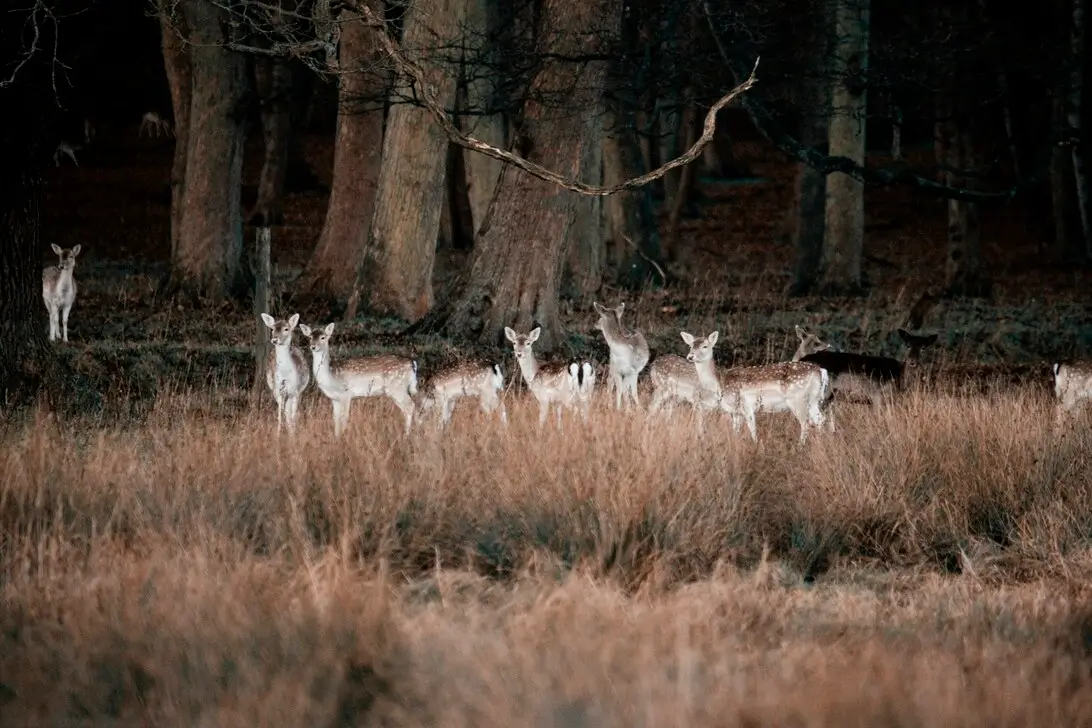
Successful deer hunting is rooted in an understanding of how deer live, move, and think. Deer are creatures of habit — during stable seasons, they tend to follow predictable patterns tied to food sources, bedding areas, and water. Learning to read these patterns is the core skill that separates consistent hunters from occasional ones.
Water and Food Sources
In drier climates and during summer months, deer will reliably gravitate toward water sources. In wetter regions with abundant surface water, deer behavior is less tied to water and more influenced by available food — acorns, agricultural fields, and natural browse. Local knowledge is invaluable here: what works in one region may not apply in another, so spend time observing your specific hunting area before the season opens.
Scouting Your Area
Spend time in your hunting area before the season begins. Look for deer tracks, worn trails through vegetation, droppings, rubs on trees (where bucks scrape their antlers), and scrapes in the soil. These signs tell you where deer are moving and when. Trail cameras are an increasingly popular tool for beginners, as they allow you to monitor activity without your presence disturbing the wildlife.
Setting Up Your Stand or Blind
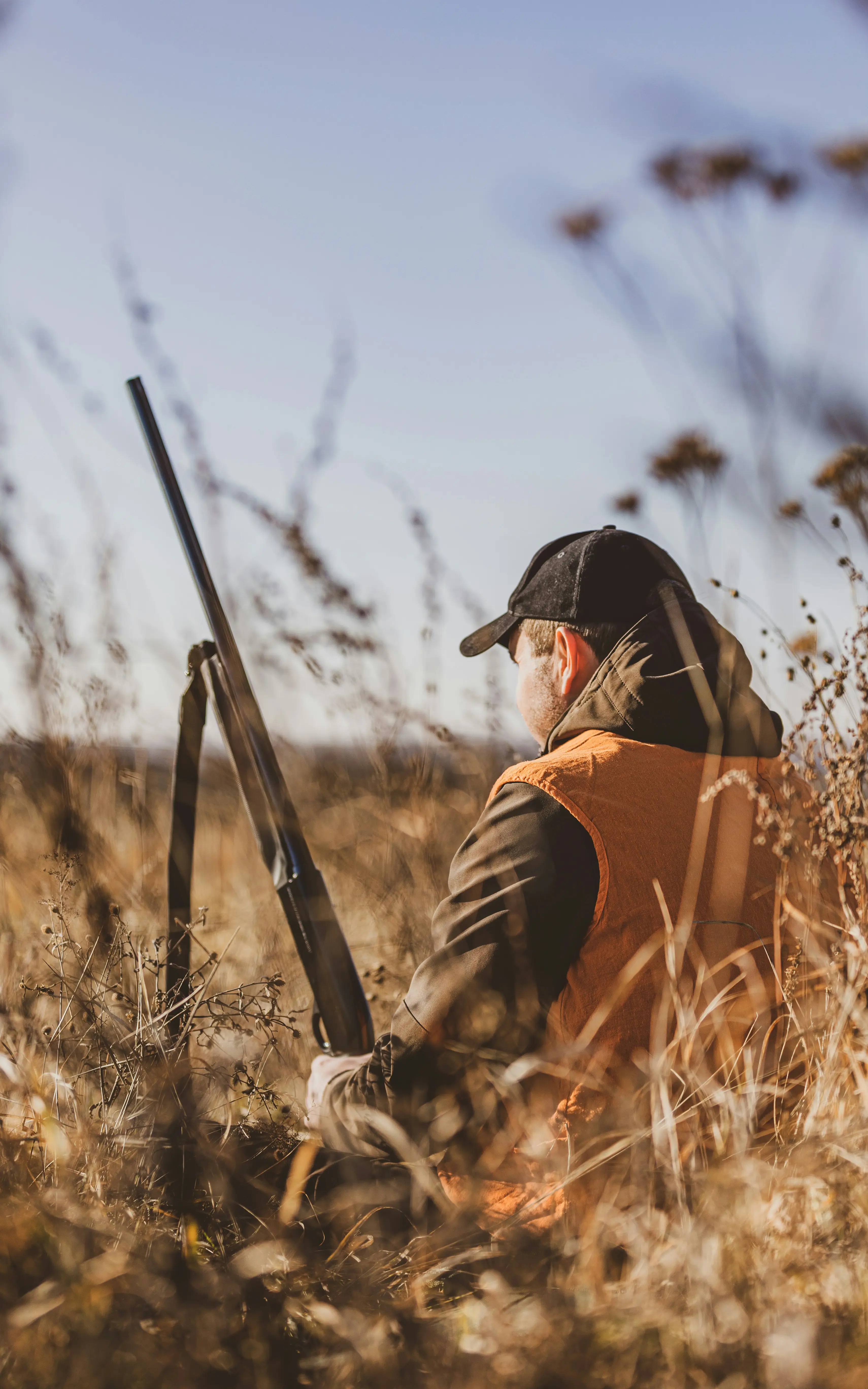
Once you understand where deer are traveling, you can position yourself effectively. Two main options are available: a ground blind (a concealed hide at ground level) or an elevated treestand. Elevated stands offer a wider field of view, help contain your scent, and — critically — place your shooting trajectory downward at an angle, which is much safer than shooting level to the ground. Whatever your setup, patience is the core skill: sit quietly, minimize movement, and let the deer come to you.
Scent Control: Deer have an exceptional sense of smell. Always position yourself downwind of where you expect deer to approach, and consider using scent-eliminating sprays on your clothing and gear. Even small details like this make a meaningful difference.
Field Dressing: What to Do After the Shot
One of the biggest concerns new hunters have isn't the shooting — it's what comes after. Field dressing (also called gutting) a deer is the process of removing the internal organs to begin cooling the carcass. It sounds daunting, but experienced hunters consistently say that after doing it a couple of times, it becomes a manageable and straightforward process.
Essential Equipment
- A sharp fixed-blade or folding knife (a quality fillet knife works well)
- Disposable rubber or latex gloves, recommended for hygiene
- A headlamp if hunting in low-light conditions
- Game bags to protect the meat from insects
- Rope or paracord to hang or drag the carcass
The Process
Field dressing should be done as quickly as possible after the harvest to begin the cooling process and preserve meat quality. The basic steps involve making careful incisions to open the body cavity and remove the organs — heart, lungs, liver, intestines, and stomach — without puncturing the digestive tract, which can contaminate the meat. Many hunters keep the heart and liver, as these are considered delicacies by experienced venison cooks.
After field dressing, the deer needs to be transported to a location where it can be properly cooled. If temperatures are warm (above 40°F / 4°C), getting the carcass into ice or a cool environment quickly is essential. In colder climates, hanging the deer in a shaded area for 24–48 hours allows the meat to age and tenderize naturally.
Meat Quality Tip: When butchering, take time to trim away the silvery connective tissue (called "silver skin") from each cut. Leaving it on makes the meat tougher and affects flavor. A sharp, thin fillet knife makes this task much easier.
Cooking Venison: Getting the Most from Your Harvest
Venison — deer meat — is lean, nutrient-dense, and deeply flavorful. It's also one of the most misunderstood meats in the kitchen. Many first-timers overcook it and come away thinking venison tastes gamey or tough. The truth is that venison responds beautifully to the right techniques.
Venison Steaks
Deer steaks are typically cut thin (around 3/8 to 1/2 inch), which means they can overcook in seconds on high heat. The most reliable method is the sous vide technique: seal the steaks and cook them in a water bath at 125°F (52°C) for at least one hour. Then finish with a quick sear — no more than 45 seconds per side — on a screaming-hot cast iron pan. This brings the internal temperature to around 135°F (57°C), the sweet spot for venison: pink, juicy, and tender.
Roasts and Slow Cooking
Venison roasts respond well to low-and-slow cooking methods. A classic pot roast approach in a Dutch oven, a slow cooker, or a pressure cooker (like an Instant Pot) yields incredibly tender results. Pressure cooking a venison roast takes about an hour, after which the meat falls apart easily. Add root vegetables like potatoes and carrots in the final ten minutes for a complete, hearty meal.
Ground Venison
Ground venison is extremely lean — leaner than most commercial beef. For burgers, consider mixing in a small amount of pork fat or beef tallow to add moisture and help patties hold together. As-is, ground venison is exceptional in chili, pasta sauces, tacos, and burritos. Venison tacos, in particular, have developed an almost cult-like following among hunters.
Beginner Recipe: Venison chili is one of the easiest ways to cook ground venison. Brown the meat with onions and garlic, add canned tomatoes, kidney beans, chili powder, cumin, and a pinch of smoked paprika. Simmer for 45 minutes. The lean venison absorbs the spices beautifully — a deeply satisfying dish even first-timers can nail.
Finding Community & Mentorship
Perhaps the most consistent piece of advice from experienced hunters to beginners is this: find a mentor. Hands-on learning, guided by someone with years of experience, is simply irreplaceable. There's a depth of knowledge — how to read wind, how to move quietly through the woods, how to judge a safe shot — that no article or video can fully convey.
If you don't have hunters in your immediate circle, there are several productive ways to connect with the community. Local shooting ranges are excellent starting points; many range-goers are experienced hunters happy to share knowledge. Gun shops and sporting goods stores are similar — staff and customers alike tend to be generous with information. Hunting clubs and associations, both local and national (such as the Backcountry Hunters & Anglers or the ADA in Australia), offer formal mentorship programs and group hunts specifically designed to welcome newcomers.
Don't hesitate to ask questions — the hunting world, for the most part, welcomes curious beginners enthusiastically. The key is to show genuine interest and a commitment to learning the right way.
The Philosophy of the Hunt
Beyond the practical skills, experienced hunters often speak about something harder to quantify: the value of simply being in the woods. Learning to move quietly, to sit still for hours, to observe the natural world with full attention — these skills transform not just how you hunt, but how you engage with nature as a whole.
Hunting at its best is a practice of patience, respect, and self-sufficiency. The goal isn't just to fill a freezer — it's to participate thoughtfully in the oldest form of food gathering that humans know, and to come away with a deeper understanding of the land and the animals that share it.
Whether you're motivated by the desire for wild, free-range protein, the appeal of time outdoors, or simply the curiosity of learning something new, deer hunting is a deeply rewarding pursuit. Start with your Hunter Safety course, build your skills deliberately, connect with experienced mentors, and enjoy the process. The rest will follow.