Also known as: Greenhead, Mallard duck, Wild duck
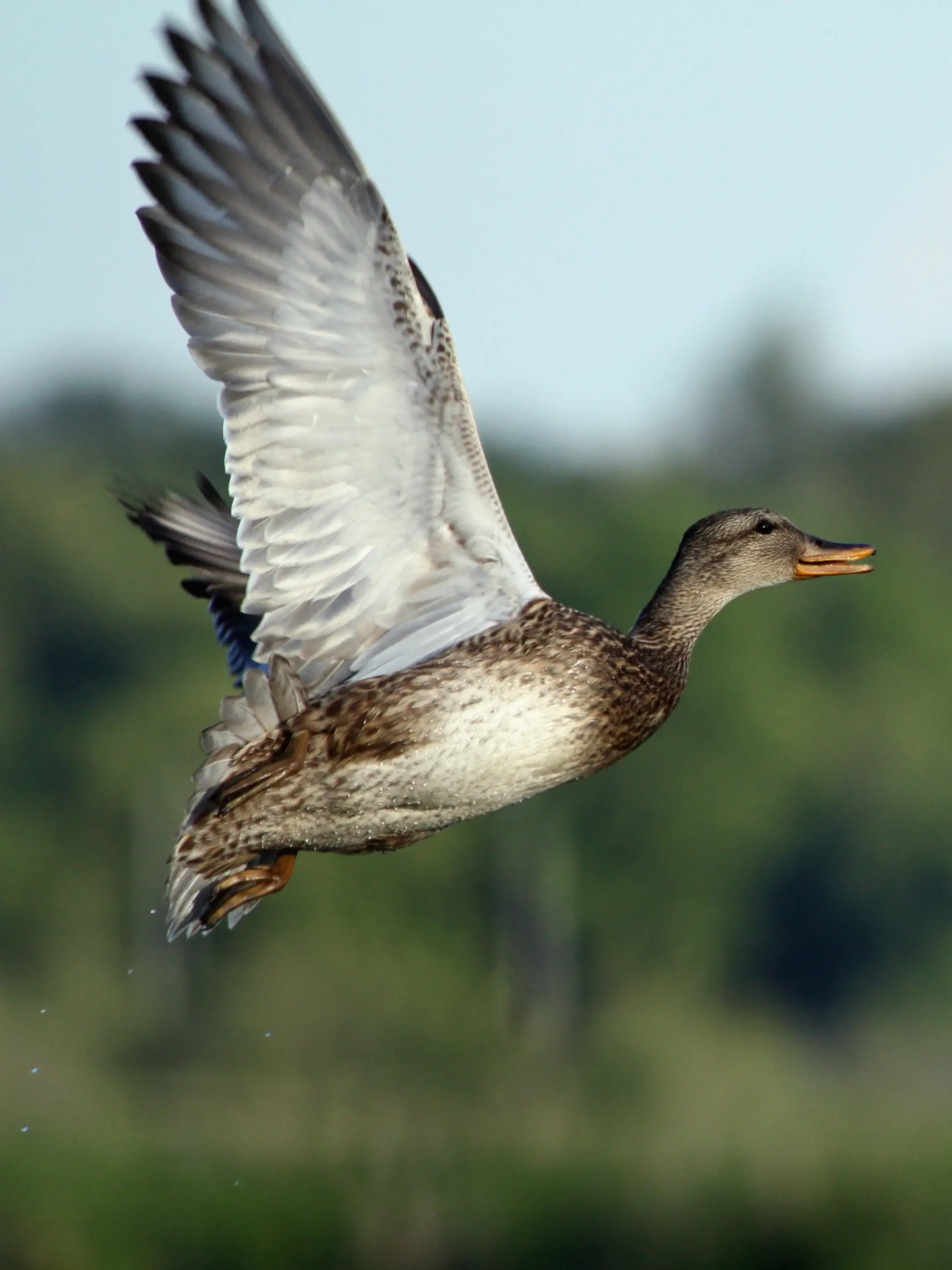
The mallard or wild duck is a dabbling duck that breeds throughout the temperate and subtropical Americas, Eurasia, and North Africa. It has been introduced to New Zealand, Australia, Peru, Brazil, Uruguay, Argentina, Chile, Colombia, the Falkland Islands, and South Africa. Belonging to the subfamily Anatinae of the waterfowl family Anatidae, mallards live in wetlands, eat water plants and small animals, and are social animals preferring to congregate in groups or flocks of varying sizes.
Habitat & Range
The mallard is widely distributed across theNorthernandSouthernHemispheres; in North America its range extends from southern and central Alaska to Mexico, theHawaiian Islands,[57]across thePalearctic,[58]from Iceland[59]and southern Greenland[57]and parts of Morocco (North Africa)[59]in the west,Scandinavia[59]and Britain[59]to the north, and to Siberia,[60]Japan,[61]and South Korea.[61]Also in the east, it ranges to south-eastern and south-western Australia[62]and New Zealand[63]in the Southern Hemisphere.[28]: 505[2]It is stronglymigratoryin the northern parts of its breeding range, and winters farther south.[64][65]For example, in North America, it winters south to thesouthern United Statesandnorthern Mexico,[66][67]but also regularly strays intoCentral Americaand theCaribbeanbetween September and May.[68]A drake later named "Trevor" attracted media attention in 2018 when it turned up on the island ofNiue, an atypical location for mallards.[69][70] The mallard inhabits a wide range of habitats and climates, from the Arctic tundra to subtropical regions.[71]It is found in both fresh- and salt-water wetlands, including parks, small ponds, rivers, lakes andestuaries, as well as shallow inlets and open sea within sight of the coastline.[72]Water depths of less than 0.9 metres (3.0 ft) are preferred, with birds avoiding areas more than a few metres deep.[73]They are attracted to bodies of water with aquatic vegetation.[28]: 507
Life History
A. p. platyrhynchosLinnaeus, 1758A. p. conboschasC. L. Brehm, 1831 Anas boschasLinnaeus, 1758; Anas aduncaLinnaeus, 1758 Themallard(/ˈmælɑːrd,ˈmælərd/) orwild duck(Anas platyrhynchos) is adabbling duckthat breeds throughout the temperate and subtropicalAmericas,Eurasia, andNorth Africa. It has beenintroducedtoNew Zealand,Australia,Peru,Brazil,Uruguay,Argentina,Chile,Colombia, theFalkland Islands, andSouth Africa. Belonging to thesubfamilyAnatinaeof thewaterfowlfamilyAnatidae, mallards live inwetlands, eat water plants and small animals, and aresocial animalspreferring to congregate in groups or flocks of varying sizes. Males (drakes) have green heads, while the females (ducks) have mainly brown-speckledplumage. Both sexes have an area of white-bordered black oriridescentpurple or blue feathers called aspeculumon their wings; males especially tend to have blue speculum feathers. The mallard is 50–65 cm (20–26 in) long, of which the body makes up around two-thirds the length. The wingspan is 81–98 cm (32–39 in) and thebillis 4.4 to 6.1 cm (1.7 to 2.4 in) long. It is often slightly heavier than most other dabbling ducks, weighing 0.7–1.6 kg (1.5–3.5 lb). The female lays 8 to 13 creamy white to greenish-buff spotlesseggs, on alternate days.Incubationtakes 27 to 28 days andfledgingtakes 50 to 60 days. The ducklings areprecocialand fully capable of swimming as soon as they hatch. The non-migratory mallard interbreeds with indigenous wild ducks of closely related species throughgenetic pollutionby producing fertile offspring. Complete hybridisation of various species of wild duck gene pools could result in the extinction of many indigenous waterfowl. This species is the main ancestor of most breeds ofdomestic duck, and its naturally evolved wild gene pool has been genetically polluted by the domestic and feral mallard populations. The mallard is considered to be aspecies of least concernby theInternational Union for Conservation of Nature(IUCN), and, unlike many waterfowl, is considered aninvasive speciesin some regions. It is a very adaptable species, being able to live and even thrive in urban areas which may have supported more localised, sensitive species of waterfowl before development. The mallard is a medium-sized waterfowl species that is often slightly heavier than most other dabbling ducks. It is 50–65 cm (20–26 in) long – of which the body makes up around two-thirds – has a wingspan of 81–98 cm (32–39 in),[28]: 505and weighs 0.7–1.6 kg (1.5–3.5 lb).[29]Among standard measurements, thewing chordis 25.7 to 30.6 cm (10.1 to 12.0 in), thebillis 4.4 to 6.1 cm (1.7 to 2.4 in), and thetarsusis 4.1 to 4.8 cm (1.6 to 1.9 in).[30] The breeding male mallard is unmistakable, with a glossy bottle-green head and a white collar that demarcates the head and neck from the purple-tinged brown breast, grey-brown wings, and a pale grey belly.[31]The rear of the male is black, with white-bordered dark tail feathers.[28]: 506The bill of the male is a yellowish-orange tipped with black, with that of the female generally darker and ranging from black to mottled orange and brown.[32]The female mallard is predominantly mottled, with each individual feather showing sharp contrast from buff to very dark brown, a coloration shared by most female dabbling ducks, and has buff cheeks, eyebrow, throat, and neck, with a darker crown and eye-stripe.[28]: 506Mallards, like othersexually-dimorphicbirds, can sometimes go through spontaneous sex reversal,[33]often caused by damaged or nonfunctioning sex organs, such as theovaries.[34]This phenomenon can cause female mallards to exhibit male plumage. Both male and female mallards have distinct iridescent purple-blue speculum feathers edged with white, which are prominent in flight or at rest but temporarily shed during the annual summer moult.[35] Upon hatching, the plumage of the duckling is yellow on the underside and face (with streaks by the eyes) and black on the back (with some yellow spots) all the way to the top and back of the head.[36]Its legs and bill are also black.[36]As it nears a month in age, the duckling's plumage starts becoming drab, looking more like the female, though more streaked, and its legs lose their dark grey colouring.[28]: 506Two months after hatching, the fledgling period has ended, and the duckling is now a juvenile.[37]The duckling is able to fly 50–60 days after hatching. Its bill soon loses its dark grey colouring, and its sex can finally be distinguished visually by three factors: 1)the bill is yellow in males, but black and orange in females;[38]2)the breast feathers are reddish-brown in males, but brown in females;[38]and 3)in males, the centre tail feather (drake feather) is curled, but in females, the centre tail feather is straight.[38]During the final period of maturity leading up to adulthood (6–10 months of age), the plumage of female juveniles remains the same while the plumage of male juveniles gradually changes to its characteristic colours.[39]This change in plumage also applies to adult mallard males when they transition in and out of their non-breedingeclipse plumageat the beginning and the end of the summer moulting period.[39]The adulthood age for mallards is fourteen months, and the average life expectancy is three years, but they can live to twenty.[40] Several species of duck have brown-plumaged females that can be confused with the female mallard.[41]The femalegadwall(Mareca strepera) has an orange-lined bill, white belly, black and white speculum that is seen as a white square on the wings in flight, and is a smaller bird.[28]: 506More similar to the female mallard inNorth Americaare the American black duck (A.rubripes), which is notably darker-hued in both sexes than the mallard,[42]and themottled duck(A.fulvigula), which is somewhat darker than the female mallard, and with slightly different bare-part colouration and no white edge on the speculum.[42] In captivity, domestic ducks come in wild-type plumages, white, and other colours.[46]Most of these colour variants are also known in domestic mallards not bred as livestock, but kept as pets,aviarybirds, etc., where they are rare but increasing in availability.[46] The mallard is a rare example of bothAllen's RuleandBergmann's Rulein birds.[47]Bergmann's Rule, which states that polar forms tend to be larger than related ones from warmer climates, has numerous examples in birds,[48]as in case of the Greenland mallard which is larger than the mallards further south.[26]Allen's Rule says that appendages like ears tend to be smaller in polar forms to minimise heat loss, and larger in tropical and desert equivalents to facilitate heat diffusion, and that the polar taxa are stockier overall.[49]Examples of this rule in birds are rare as they lack external ears, but the bill of ducks is supplied with a few blood vessels to prevent heat loss,[50]and, as in the Greenland mallard, the bill is smaller than that of birds farther south, illustrating the rule.[26] Due to the variability of the mallard's genetic code, which gives it its vast interbreeding capability, mutations in the genes that decide plumage colour are very common and have resulted in a wide variety of hybrids, such asBrewer's duck(mallard × gadwall,Mareca strepera).[51]
Status, Trends & Threats
Since 1998, the mallard has been rated as a species ofleast concernon theIUCN Red List of Endangered Species. This is because it has a large range–more than 65,000,000 km2(25,000,000 sq mi), though its very large population – estimated at more than 17 million mature individuals as of 2025 – is decreasing.[2] Unlike many waterfowl, mallards have benefited from human alterations to the world – so much so that they are now considered aninvasive speciesin some regions.[121]They are a common sight in urban parks, lakes, ponds, and other human-made water features in the regions they inhabit, and are often tolerated or encouraged in human habitat due to their placid nature towards humans, their ducklings and their beautiful and iridescent colours.[35]While most are not domesticated, mallards are so successful at coexisting in human regions that the main conservation risk they pose comes from the loss of genetic diversity among a region's traditional ducks once humans and mallards colonise an area. Mallards are very adaptable, being able to live and even thrive in urban areas which may have supported more localised, sensitive species of waterfowl before development.[122]The release offeralmallards in areas where they are not native sometimes creates problems through interbreeding with indigenouswaterfowl.[121][123]These non-migratory mallards interbreed with indigenous wild ducks from local populations of closely related species throughgenetic pollutionby producing fertile offspring.[123]Complete hybridisation of various species of wild duck gene pools could result in the extinction of many indigenous waterfowl.[123]The mallard itself is the ancestor of most domestic ducks, and its naturally evolved wild gene pool gets genetically polluted in turn by the domestic and feral populations.[124] Over time, a continuum of hybrids ranging between almost typical examples of either species develop; thespeciationprocess is beginning to reverse itself.[125]This has createdconservationconcerns for relatives of the mallard, such as theHawaiian duck,[126][127]the New Zealand grey duck (A.s. superciliosa)subspecies of thePacific black duck,[126][128]the American black duck,[129][130]themottled duck,[131]Meller's duck,[132]theyellow-billed duck,[125]and theMexican duck,[126][131]in the latter case even leading to a dispute as to whether these birds should be considered a species133 or included in the mallard species. Ecological changes and hunting have also led to a decline of local species; for example, the New Zealand grey duck population declined drastically due to overhunting in the mid-20th century.[128]Hybrid offspring of Hawaiian ducks seem to be less well adapted to native habitat, and using them in re-introduction projects apparently reduces success.[126][134]In summary, the problems of mallards "hybridising away" relatives is more a consequence of local ducks declining than of mallards spreading;allopatric speciationand isolating behaviour have produced today's diversity of mallard-like ducks despite the fact that, in most, if not all, of these populations, hybridisation must have occurred to some extent.[135] Mallard hybrids; xAix sponsa; xCairina moschata; xMareca americana; xMareca strepera(Brewer's duck); xMareca penelope; xNetta rufina; xTadorna ferruginea; xA. acuta; xA. carolinensis; xA. diazi; xA. fulvigula; xA. superciliosa; xA. rubripes; xA. undulata; xA. zonorhyncha
Hunting Season
Varies by waterfowl zone. Northeastern: Oct 4 - Jan 14. Southern San Joaquin Valley: Oct 18 - Jan 28. Southern California: Oct 18 - Jan 28. Colorado River: Oct 23 - Jan 31. Balance of State: Oct 18 - Jan 28.
Frequently Asked Questions
Regulations for hunting Mallard in California
Mallard hunting in California follows the state's duck season framework across five waterfowl zones. Daily bag limit is 7 ducks total with species-specific sub-limits. California duck validation, federal duck stamp (age 16+), and HIP validation are required. Shooting hours: 1/2 hour before official sunrise to sunset. Nonlead ammunition is mandatory. Possession limit: triple the daily bag. Special youth, veterans, and military days are offered in each zone.
Can you hunt mallards in California without a federal duck stamp?
No. Hunters 16 years of age and older must have a valid Federal Duck Stamp to hunt waterfowl, including mallards, in California. A California duck validation and HIP validation are also required.
What are the best areas for mallard hunting in California?
The Sacramento Valley, Klamath Basin, and Imperial Valley are among the premier mallard hunting destinations in California. The Pacific Flyway brings millions of ducks through the state each winter.
When is Mallard hunting season in California?
Varies by waterfowl zone. Northeastern: Oct 4 - Jan 14. Southern San Joaquin Valley: Oct 18 - Jan 28. Southern California: Oct 18 - Jan 28. Colorado River: Oct 23 - Jan 31. Balance of State: Oct 18 - Jan 28.
What is the bag limit for Mallard in California?
7 ducks per day statewide. Mallard sub-limit: 5 per day (no more than 2 females). Pintail: 3; Canvasback: 2; Redhead: 2; Scaup: 1-2 depending on zone and period.
What is another name for Mallard?
Mallard is also known as Greenhead, Mallard duck, Wild duck in California.
References
| State | Category | Directory | Subcategory | Content | Source |
|---|---|---|---|---|---|
| California | Hunting | Regulations | Season Dates | Varies by waterfowl zone. Northeastern: Oct 4 - Jan 14. Southern San Joaquin Valley: Oct 18 - Jan 28. Southern Californi | Link |
| California | Hunting | Regulations | Regulations | Mallard hunting in California follows the state's duck season framework across five waterfowl zones. Daily bag limit is | Link |