Also known as: Black-tailed deer, California mule deer, Columbian black-tailed deer
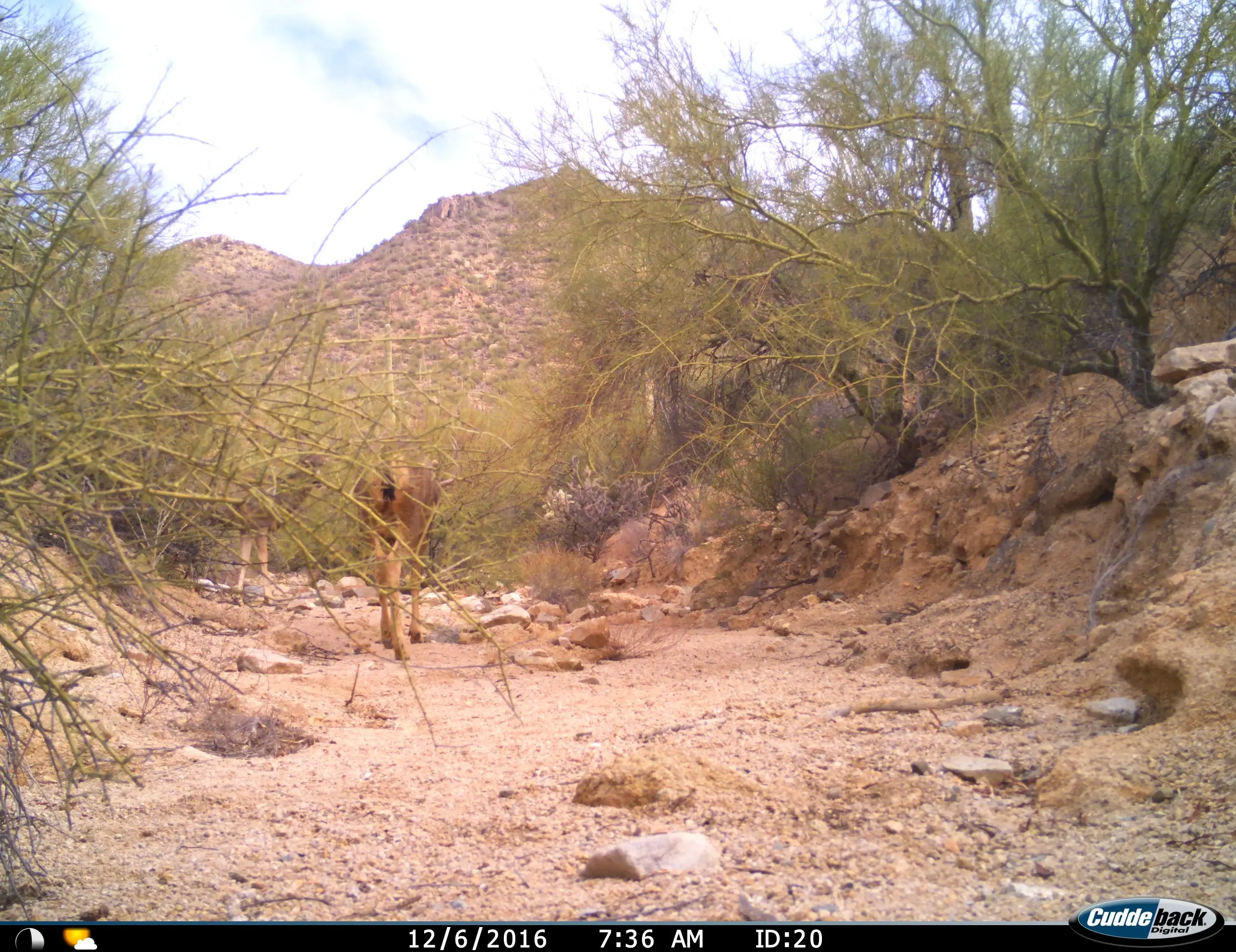
The mule deer is a deer indigenous to western North America; it is named for its ears, which are large like those of the mule. Two subspecies of mule deer are grouped into the black-tailed deer.
Life History
10, but some disputed (seetext) Cervus hemionusRafinesque, 1817; Cervus auritusWarden, 1820; Cervus macrotisSay, 1823; Cervus lewisiiPeale, 1848; Cariacus punctulatusGray, 1852; Cervus richardsoniAudubon & Bahman, 1848; Eucervus pusillaGray, 1873; Dorcelaphus crookiMearns, 1897; Cariacus virgultusHallock, 1899 Themule deer(Odocoileus hemionus) is adeerindigenous to westernNorth America; it is named for its ears, which are large like those of themule. Twosubspeciesof mule deer are grouped into theblack-tailed deer.[1][5][6][7][8][9][excessive citations] Mule deer are found only on the westernGreat Plains, in theRocky Mountains, in thesouthwest United States, and on the west coast of North America. Their range is much smaller than the relatedwhite-tailed deer, which are found throughout most of North America east of the Rocky Mountains and in the valleys of the Rocky Mountains fromIdahoandWyomingnorthward. Mule deer have also been introduced toArgentinaandKauai, Hawaii.[5] The most noticeable differences between white-tailed and mule deer are ear size, tail color, and antler configuration. In many cases, body size is also a key difference. The mule deer's tail is black-tipped, whereas the white-tailed deer's is not. Mule deer antlers are bifurcated; they "fork" as they grow, rather than branching from a single main beam, as is the case with white-tails. Each spring, a buck's antlers start to regrow almost immediately after the old antlers are shed. Shedding typically takes place in mid-February, with variations occurring by locale. Although capable of running, mule deer are often seenstotting(also called pronking), with all four feet coming down together. The mule deer is the larger of the threeOdocoileusspecies on average, with a height of 80–106 cm (31–42 in) at the shoulders and a nose-to-tail length ranging from 1.2 to 2.1 m (3.9 to 6.9 ft). Of this, the tail may comprise 11.6 to 23 cm (4.6 to 9.1 in). Adult bucks normally weigh 55–150 kg (121–331 lb), averaging around 92 kg (203 lb), although trophy specimens may weigh up to 210 kg (460 lb). Does (female deer) are smaller and typically weigh from 43 to 90 kg (95 to 198 lb), with an average of around 68 kg (150 lb).[24][25][26][27][excessive citations] Unlike the white-tailed, the mule deer does not generally show marked size variation across its range, although environmental conditions can cause considerable weight fluctuations in any given population. An exception to this is theSitka deersubspecies (O. h. sitkensis). This race is markedly smaller than other mule deer, with an average weight of 54.5 kg (120 lb) and 36 kg (79 lb) in males and females, respectively.[28]
Status, Trends & Threats
Protecting migration corridors is essential to maintain healthy mule deer populations. One thing everyone can do is help slow the increase in climate change by using greener energy sources and reducing the amount of waste in our households.[65]In addition, managers and researchers can assess the risks listed above and take the proper steps to mitigate any adverse impacts those risk have on mule deer populations. Not only will populations benefit from these efforts but so will many other wildlife species.[66] One way to help protect deer from getting hit on roadways is to install high fence wildlife fencing with escape routes.[67]This helps keep deer off the road, preventing vehicle collisions and allowing animals that are trapped between the road and the fence a way to escape to safety.[67]However, to maintain migration routes that cross busy highways, managers have also implemented natural, vegetated, overpasses and underpasses to allow animals, like mule deer, to migrate and move safely across highways.[68] Approaches to mitigating the impact of drilling and mining operations include regulating the time of year when active drilling and heavy traffic to sites are taking place, and using well-informed planning to protect critical deer habitat and using barriers to mitigate the activity, noise, light at the extraction sites.[69] The increase in urbanization has impacted mule deer migrations and there is evidence to show it also disrupts gene flow among mule deer populations.[70]One clear option is to not build houses in critical mule deer habitat; however, building near mule deer habitat has resulted in some deer becoming accustomed to humans and the resources, such as food and water.[71]Rather than migrate through urban areas some deer tend to stay close to those urban developments, potentially for resources and to avoid the obstacles in urban areas.[72]Suggested measures by property owners to protect mule deer genetic diversity and migration paths include planting deer-resistant plants, placing scare devices such as noise-makers, and desisting from feeding deer.[71]
Hunting Season
Varies by zone. A Zone: Jul-Sep (archery), Aug-Oct (general). B Zones: Aug-Oct (archery), Sep-Nov (general). C Zones: Aug-Oct (archery), Sep-Oct (general). D Zones: Aug-Oct (archery), Sep-Nov (general). X Zones: Aug-Oct (archery), Sep-Nov (general). Specific dates vary by zone. Check CDFW Big Game Hunting Digest for exact zone dates.
Frequently Asked Questions
Regulations for hunting Mule Deer in California
Mule deer are California's primary big game species. Hunting is managed through zone-specific seasons and bag limits. A valid California hunting license and deer tag are required. Hunters must follow nonlead ammunition requirements statewide. CWD testing is required for deer harvested in certain zones. Archery, general (rifle), muzzleloader, and apprentice hunts are available across A, B, C, D, and X zones. The Big Game Drawing awards tags for limited-quota hunts. Hunter orange is required during general seasons.
How many mule deer are in California?
California has an estimated mule deer population of approximately 400,000-500,000. The state is divided into multiple deer hunt zones (A, B, C, D, X) with varying seasons and tag quotas.
What is the best method for deer hunting in California?
California offers archery, general (rifle/muzzleloader), and apprentice deer hunts. Archery seasons are typically longer. The best method depends on terrain and zone. Most zones require a forked-horn minimum for legal bucks.
When is Mule Deer hunting season in California?
Varies by zone. A Zone: Jul-Sep (archery), Aug-Oct (general). B Zones: Aug-Oct (archery), Sep-Nov (general). C Zones: Aug-Oct (archery), Sep-Oct (general). D Zones: Aug-Oct (archery), Sep-Nov (general). X Zones: Aug-Oct (archery), Sep-Nov (general). Specific dates vary by zone. Check CDFW Big Game Hunting Digest for exact zone dates.
What is the bag limit for Mule Deer in California?
1 buck per tag (forked-horn or better in most zones). Some zones offer additional antlerless tags or restricted deer tags through the drawing system.
What is another name for Mule Deer?
Mule Deer is also known as Black-tailed deer, California mule deer, Columbian black-tailed deer in California.
References
| State | Category | Directory | Subcategory | Content | Source |
|---|---|---|---|---|---|
| California | Hunting | Regulations | Season Dates | Varies by zone. A Zone: Jul-Sep (archery), Aug-Oct (general). B Zones: Aug-Oct (archery), Sep-Nov (general). C Zones: Au | Link |
| California | Hunting | Regulations | Regulations | Mule deer are California's primary big game species. Hunting is managed through zone-specific seasons and bag limits. A | Link |