Also known as: Eastern wild turkey
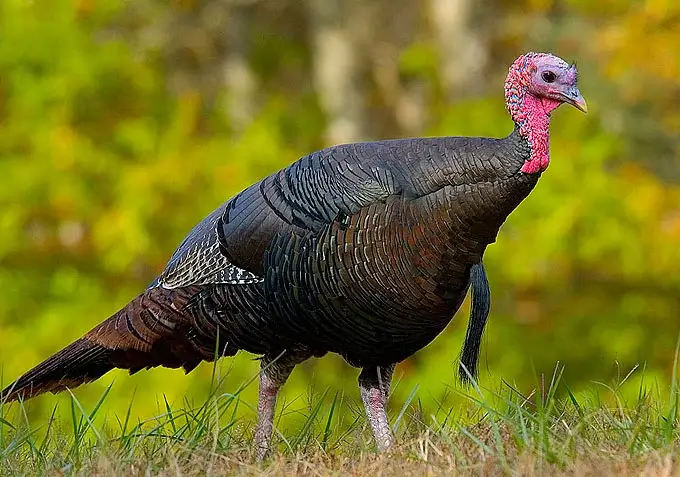
The wild turkey is a large, plump bird with a wide, rounded tail, long legs, and a long slim neck with a small head. Its body feathers are generally blackish and dark with a coppery sheen. Males are called toms (adults) or jakes (first-year birds); females are hens. Turkeys have a beard — specialized feathers protruding from the breast, typical on males but occasionally present on females too. Delaware's flock has an unusually high proportion of hens with beards due to the genetics of the birds used to stock the population. Wild turkeys are related to domestic turkeys, which descended from a southern Mexican subspecies. The original Lenape residents harvested them for food and used feathers for garments. Early European settlers noted their abundance in the 17th century.
Habitat & Range
Wild turkeys can be seen year-round in Delaware. They were historically widespread before European settlement. Today they occupy a mix of private and public lands statewide, utilizing forests, fields, and edge habitats.
Life History
Males compete for mates during spring mating season. Breeding occurs in spring, with hens laying clutches of eggs in ground nests. Poults (young) are precocial and follow the hen shortly after hatching.
Status, Trends & Threats
Wild turkeys were extinct in Delaware in the late 1800s due to habitat loss and overharvest through hunting. Early restoration in the 1960s using farm-raised birds had very little success. From 1984 to the early 2000s, the Division released wild-trapped birds from Pennsylvania, New Jersey, and Vermont. Initial release was 34 birds in 1984. Current estimate is a healthy statewide population of more than 6,000 birds, exceeding population goals set in the 1980s.
Hunting Season
Regular season: April 11 – May 10, 2026. Youth & non-ambulatory hunter hunt: April 4–5, 2026
License & Regulations
Hunters aged 13+ (resident and non-resident) need a valid Delaware Hunting License. Must pass a DNREC-approved turkey hunting course.
Frequently Asked Questions
What does a wild turkey look like?
Wild turkeys are large, plump birds with a wide rounded tail, long legs, and a long slim neck with a small head. Body feathers are generally blackish and dark with a coppery sheen. Males have a beard of specialized feathers protruding from the breast.
What is the history of wild turkeys in Delaware?
Wild turkeys became extinct in Delaware in the late 1800s. Restoration began in the 1960s but failed with farm-raised birds. From 1984 to the early 2000s, wild-trapped birds from Pennsylvania, New Jersey, and Vermont were released. The first modern hunting season opened in 1991 with 93 birds harvested.
What is the current turkey population in Delaware?
The current population is estimated at a healthy more than 6,000 birds. The 2025 harvest was 801 birds (a record), a 10.8% increase from 2024. The population exceeds goals set in the 1980s.
References
| State | Category | Directory | Subcategory | Content | Source |
|---|---|---|---|---|---|
| Delaware | Hunting | Regulations | Season Dates | Regular season: April 11 – May 10, 2026. Youth & non-ambulatory hunter hunt: April 4–5, 2026 | Link |
| Delaware | Hunting | License | License & Fees | Hunters aged 13+ (resident and non-resident) need a valid Delaware Hunting License. Must pass a DNREC-approved turkey hu | Link |
| Delaware | Hunting | Regulations | Regulations | 2026 regular season runs April 11 – May 10. Youth & non-ambulatory hunters hunt April 4–5. Sunday hunting now permitted. | Link |