Also known as: Coypu, River rat
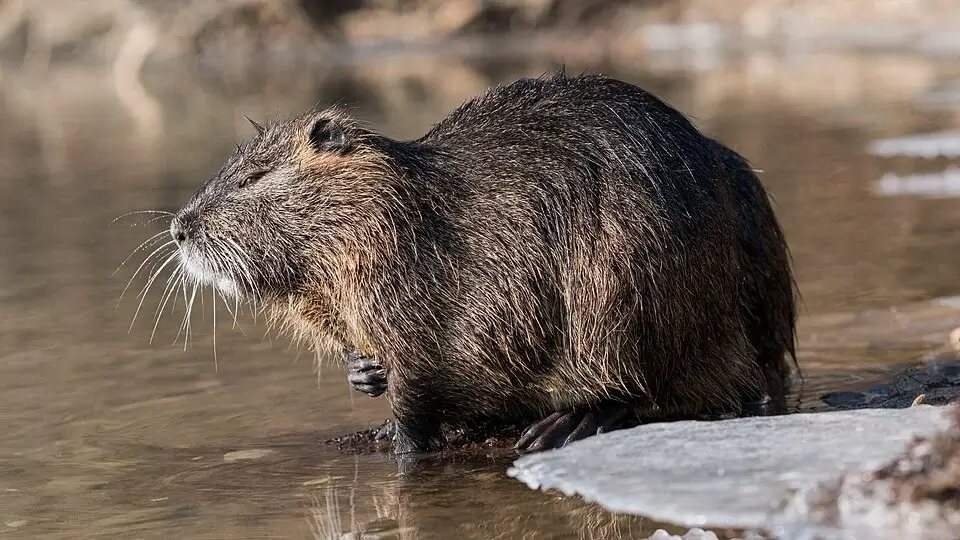
Regulatory Status: The State of Florida lists Nutria as a conditional species, prohibiting personal possession and requiring a permit to possess or import this species by licensed dealers, public exhibitors, or researchers that meet certain criteria. Please follow this link forNonnative Species Permit Applications and Information. Description: Nutria are large, semi-aquatic rodents not native to Florida. They have short legs, arched bodies and long tails that range between 13- 16 inches (1- 1.3 ft). Excluding their tail lengths, Nutria's average height is 24 inches (2 ft) and they can vary in weight between 12- 20 pounds. Their coats consist of a dense, gray underfur overlaid by dark brown to yellowish brown guard hairs that protect their body. Nutria have adapted to semi aquatic life including webbed hind feet, and high set eyes, ears, and nostrils. Their nostrils and mouth also have valves that seal out water when diving, swimming, or feeding underwater. They are most notably confused with beavers or muskrats. In the United States, nutria tend to occupy freshwater embankments such as farm ponds, drainage canals with various wetland combinations. They may also construct flattened, circular platforms of floating vegetation in shallow water to use for feeding, grooming, or birthing. However, they normally live in dense ground vegetation during the summer, and at other times of the year, they occupy burrows that are either abandoned by other nutria or another animal.. Native Range: The native range of nutria extends south of the equator in South America in Argentina, Bolivia, Brazil, Chile, Paraguay, and Uruguay. Florida Distribution: Current Nutria populations remain concentrated in the Jacksonville area with some sightings in Tampa, Pensacola, and West Palm Beach.Click this link tosee where the species has been reported in Florida. Potential Impacts: The majority of concerns about nutria in Florida relate to feeding and burrowing behaviors. Nutria may cause damage to boat docks and wharves by burrowing into their Styrofoam flotations. Their burrows may also weaken building foundations, road beds, stream banks, dams, and dikes. They also hold an agricultural concern because significant damage can be done when they gnaw at the bottom of plants, not just eat a large volume of them. For instance, they can do damage to crops including, sugarcane, rice, corn, beets, alfalfa, peanuts, melons, and wheat. The last concern, although not well documented, is the health concerns Nutria's posses. This stems from pathogens and parasites present in nutria populations that may be transmitted to humans, livestock, and pets. They host parasites such as nematodes and blood flukes that cause “nutria-itch” or “swimmers-itch”, the giardiasis protozoan, tapeworms, and liver flukes. Important Links: USGS Nutria Fact Sheet; Nonnative Species Permit Applications and Information; Gun and Light at Night Permit; View Observations of this Species in Florida; Report Sightings of Nonnative Species Frequently Asked Questions: How is the FWC managing this species? In order to reduce restrictions for take of destructive nutria populations, the FWC’s fur-bearer trapping regulations allow statewide nutria trapping year round with no bag limits. The FWCGun and Light at Night Permitauthorizes the take of nutria with a gun and light at night by landowners or by persons with written authorization from landowners. How should I report Nutria? The FWC encourages reports of nutria sightings. You can help by taking a picture, noting the location (GPS coordinates if possible), and reporting this information using the free IveGot1 mobile app or by reporting online atIveGot1.org.
Life History
Nutria are herbivores, they eat a variety of plants, although they may consume insects when onto plant material as well as, mussels or crustaceans in some regions. They prefer the base of plants, but will also consume the whole plant. In some cases, Nutria will also eat crops and lawn grasses found next to aquatic habitats they occupy and during winter they will eat tree bark.
Hunting Season
Year-round, statewide
Frequently Asked Questions
Regulations for hunting Nutria in Florida
Nutria may be taken year-round in Florida with no bag or possession limit. As an invasive species, removal is encouraged. All legal hunting methods allowed.
Are nutria invasive in Florida?
Yes, nutria are an invasive species in Florida. They were introduced from South America and can cause significant damage to wetlands and agricultural areas. Removal is encouraged.
When is Nutria hunting season in Florida?
Year-round, statewide
What's another name for Nutria?
Nutria is also known as Coypu, River rat in Florida.
References
| State | Category | Directory | Subcategory | Content | Source |
|---|---|---|---|---|---|
| Florida | Hunting | Regulations | Season Dates | Year-round, statewide | Link |
| Florida | Hunting | Regulations | Regulations | Nutria may be taken year-round in Florida with no bag or possession limit. As an invasive species, removal is encouraged | Link |