Also known as: Whitetail, Florida Key deer
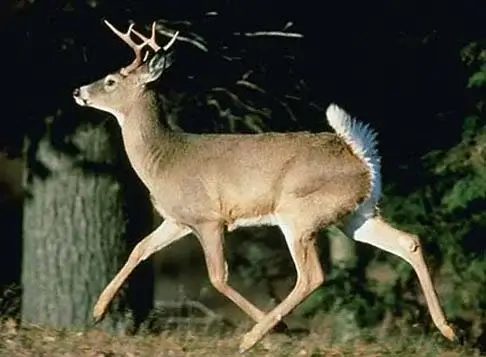
The common name refers to the tail; it is black/brown above and white below. White-tailed deer vary in size depending on the habitat. Adult male deer in Florida average 115 pounds, but can reach 190 pounds or more in North Florida. The smaller females average 90 pounds with larger females weighing 120 pounds or more. The Key deer subspecies (Odocoileus virginianus clavium) is notably smaller, averaging just 27 inches at the shoulders and weighing as much as 80 pounds. Throughout most of the year it's easy to tell males from females. The males, or bucks, have antlers, and they grow a new set every year. Antler growth generally begins in the spring and by the summer the antlers are covered with a velvety tissue that dries up and peels off. The buck rubs the antlers against trees, which eventually removes the remaining velvet, leaving the antlers hard and smooth. Antlers are important features during the animal’s breeding season when bucks will often fight to establish dominance. Antlers are shed in late winter or early spring after the breeding season ends. Human Interaction: It is important to avoid contact with fawns. Although fawns are able to run and follow their mothers shortly after birth, they protect themselves from predators by hiding in tall vegetation. The fawns have no scent and during this time the female limits contact with her fawn, except to nurse, so that her scent will not attract predators and mark the fawn's hiding place. After a couple of weeks, the fawn begins to accompany the doe as she forages. The brown hair with white spots provides excellent camouflage for the fawn. So if you approach a fawn and it does not flee please leave it alone. You can be assured that its mother is not far away. Chronic Wasting Disease: Chronic wasting disease(CWD) is a transmissible disease of the nervous system that is fatal to deer, elk, moose, caribou and other members of the deer family. It has been detected in Florida and is currently found in 31 states.
Habitat & Range
White-tailed deer can be found throughout Florida from the panhandle to the keys. They prefer habitats with young, low-growing vegetation and edge, where the intersection of two different habitats allows deer to easily feed and avoid predators.
Life History
When deer are alarmed, the tails are held erect and waved back and forth like a white flag, signaling a warning to other deer. When they are nervous, deer will stomp a foot and snort, before running off. Deer are most active at dawn and dusk. They are primarily browsers, feeding on the leaves, shoots, flowers and fruits of trees, shrubs, and forbs. Occasionally, they may browse and damage planted shrubs, landscaping or cultivated crops. Electric fencing is an effective remedy but can be cost prohibitive in large areas. When it's not possible to install an electric fence, and under special restrictions, deer causing damage to crops can beharassed (scared) when authorized. In cases where harassing/scaring is not eliminating the depredation or is not feasible, and in situations where deer are causing extreme damage to a crop, contact your localFWC regional officeto request adeer depredation permitfor temporary relief. For technical assistance with deer management, please contact your nearest theFWC regional office.
Status, Trends & Threats
Deer Management Disease in White-tailed Deer Living with White-tailed Deer Living with Deer Brochure Image Credit:FWC
Hunting Season
Zone A Archery: Aug 1-30, General Gun: Sep 19-Oct 18, Nov 21-Jan 3; Zone B Archery: Oct 17-Nov 15, General Gun: Dec 5-Feb 21; Zone C Archery: Sep 19-Oct 18, General Gun: Nov 7-Jan 24; Zone D Archery: Oct 24-Nov 25, General Gun: Nov 26-29, Dec 12-Feb 21
Frequently Asked Questions
Regulations for hunting White-tailed Deer in Florida
Florida deer seasons vary by zone (A-D). Daily bag: 2 deer, annual limit: 5 (only 2 may be antlerless in most DMUs). Archery, crossbow, muzzleloading, and general gun seasons available. Youth deer hunt weekends offered in each zone. Chronic Wasting Disease (CWD) management zones have additional antlerless harvest opportunities.
What does white-tailed deer eat in Florida?
White-tailed deer are primarily browsers, feeding on leaves, shoots, flowers, and fruits of trees, shrubs, and forbs. They are most active at dawn and dusk.
What is the size of Florida white-tailed deer?
Adult male deer in Florida average 115 pounds but can reach 190 pounds or more in North Florida. Females average 90 pounds. The Key deer subspecies is notably smaller, averaging just 27 inches at the shoulder.
When is White-tailed Deer hunting season in Florida?
Zone A Archery: Aug 1-30, General Gun: Sep 19-Oct 18, Nov 21-Jan 3; Zone B Archery: Oct 17-Nov 15, General Gun: Dec 5-Feb 21; Zone C Archery: Sep 19-Oct 18, General Gun: Nov 7-Jan 24; Zone D Archery: Oct 24-Nov 25, General Gun: Nov 26-29, Dec 12-Feb 21
What is the bag limit for White-tailed Deer in Florida?
2 per day, 5 per year (antlered only unless DMU allows antlerless)
What's another name for White-tailed Deer?
White-tailed Deer is also known as Whitetail, Florida Key deer in Florida.
References
| State | Category | Directory | Subcategory | Content | Source |
|---|---|---|---|---|---|
| Florida | Hunting | Regulations | Season Dates | Zone A Archery: Aug 1-30, General Gun: Sep 19-Oct 18, Nov 21-Jan 3; Zone B Archery: Oct 17-Nov 15, General Gun: Dec 5-Fe | Link |
| Florida | Hunting | Regulations | Regulations | Florida deer seasons vary by zone (A-D). Daily bag: 2 deer, annual limit: 5 (only 2 may be antlerless in most DMUs). Arc | Link |