Also known as: Gray fox
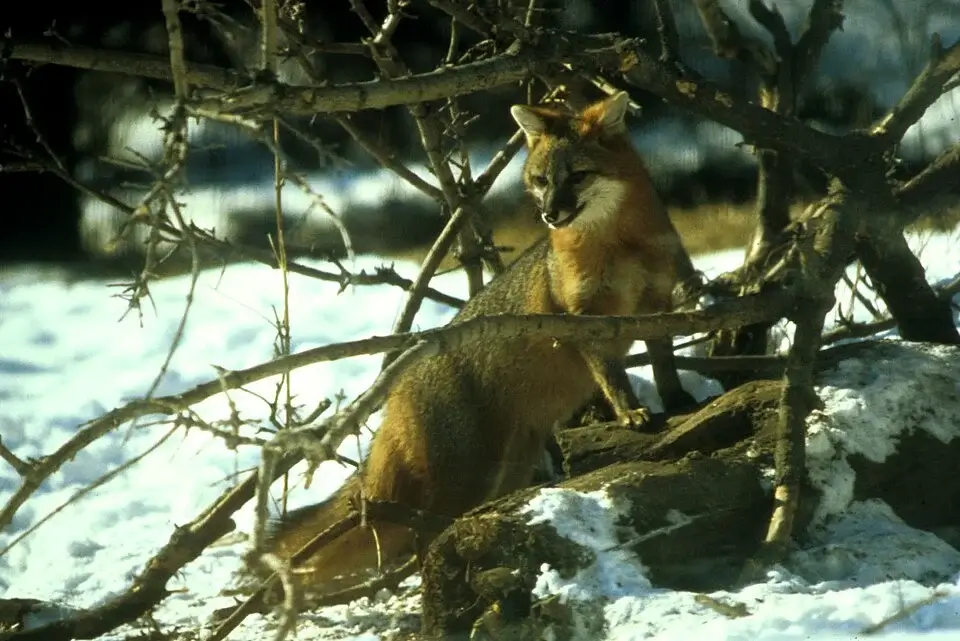
Red Fox: Adult red foxes weigh 7-15 pounds and have a distinct red/orange appearance, white chest, black legs, and bushy white-tipped tail. Silver or cross foxes are a melanistic form of the red fox; they appear black, silver or a combination of red/black/grey and are less common than the typical red phase. Red foxes have keen eyesight and hearing, and are very agile, jumping up to six feet high. Red foxes have a special method of hunting with impressive pounces on prey hidden under the snow or ground. Gray Fox: Gray foxes weigh about 10 pounds and are distinguished by their grizzled coloration, a hint of red on the neck, ears, and lower legs, and a black stripe down their tail. Gray fox are the only member in the canid (dog) family in North America that can climb trees. Red foxes can climb, but not as well as gray foxes. How To Prevent Or Resolve Conflicts With Foxes: Research suggests that humans create the conditions for conflict by deliberately or inadvertently providing animals with food and shelter. Preventing or removing access to these attractants is the first essential step to resolving a wildlife problem. This includes eliminating access to shelter, being smart about garbage, planting native plants to attract birds rather than using bird seed, protecting poultry and livestock, and being a responsible pet owner. Learn more about how to prevent or resolve conflicts with foxes
Habitat & Range
Foxes are found in diverse habitats and are quite tolerant of living near people. Foxes are common in agricultural landscapes and tend to do well with a mix of forest and fields. Coyotes are predators of foxes but tend to be more wary of people, so foxes avoid coyotes by living near people. The red fox is abundant and widespread, occurring in all counties in Maine. The gray fox is abundant in southern and mid-coast Maine and continues to expand into western and central parts of the state.
Life History
Diet: Foxes are omnivores and eat a wide variety of plants and animals, depending on the season. Small birds and mammals are consumed, including mice, voles, rats, rabbits, and bird eggs. Foxes also eat insects, snakes, carrion, berries, apples, corn, seeds, and nuts. Foxes are primarily nocturnal, including hunting during dawn and dusk, but foxes are occasionally seen out during the day, particularly during the spring/summer when rearing pups. Nocturnal/Diurnal: Fox tend to be most active during dawn and dusk but are commonly seen during both daylight and nighttime hours. Seasonal Changes: Seasonal changes for foxes primarily include changes in food availability, which may influence their home range. Reproduction & Family Structure: Though slightly varied between red and gray fox, breeding usually occurs anytime between January – March and gestation is anywhere from 50 and 63 days, giving birth to litters that range from three-six pups on average in the spring. Gray fox specifically breeds with a lifelong companion. Both male and female of gray and red fox provide food and care for young for up to three months and teach their young to hunt. Gray and red foxes do not interbreed. Family groups stay together until mid-September, when pups begin to disperse from their natal home range. Males generally disperse twice the distance of females, commonly moving 20-40 miles before finding new territories. Quite often female offspring will remain close to or share their mother's territories. Related females tolerate each other's presence, but territories of unrelated females are clearly defined and adhered to.
Status, Trends & Threats
Fox can become prey to coyotes, so you usually won’t find fox in areas where coyotes are common. Other threats include exposure to rat poison since fox are exceptional rodent control. Humans are also a mortality source, through hunting and trapping, or vehicle collisions. Red and gray foxes are considered furbearers and MDIFW regulates and manages the trapping and hunting of foxes. All foxes that are trapped or hunted must be registered and tagged. Biologists monitor the harvest data to ensure that trapping and hunting levels are sustainable.
Hunting Season
Hunting: Oct 20 - Feb 28. Trapping: Early fox/coyote season Oct 19 - Nov 1; General trapping Nov 2 - Dec 31.
Frequently Asked Questions
Regulations for hunting Gray Fox in Maine
Gray fox hunting season in Maine runs Oct 20 through Feb 28. No bag limit. Trapping is allowed during the early fox/coyote season (Oct 19 - Nov 1) and general trapping season (Nov 2 - Dec 31).
When is Gray Fox hunting season in Maine?
Hunting: Oct 20 - Feb 28. Trapping: Early fox/coyote season Oct 19 - Nov 1; General trapping Nov 2 - Dec 31.
What is the bag limit for Gray Fox in Maine?
No limit.
What's another name for Gray Fox?
Gray Fox is also known as Gray fox in Maine.
What is the scientific name of the gray fox?
The gray fox's scientific name is Vulpes vulpes and Urocyon cinereoargenteus.
References
| State | Category | Directory | Subcategory | Content | Source |
|---|---|---|---|---|---|
| Maine | Hunting | Regulations | Season Dates | Hunting: Oct 20 - Feb 28. Trapping: Early fox/coyote season Oct 19 - Nov 1; General trapping Nov 2 - Dec 31. | Link |
| Maine | Hunting | Regulations | Regulations | Gray fox hunting season in Maine runs Oct 20 through Feb 28. No bag limit. Trapping is allowed during the early fox/coyo | Link |