Also known as: Wapiti
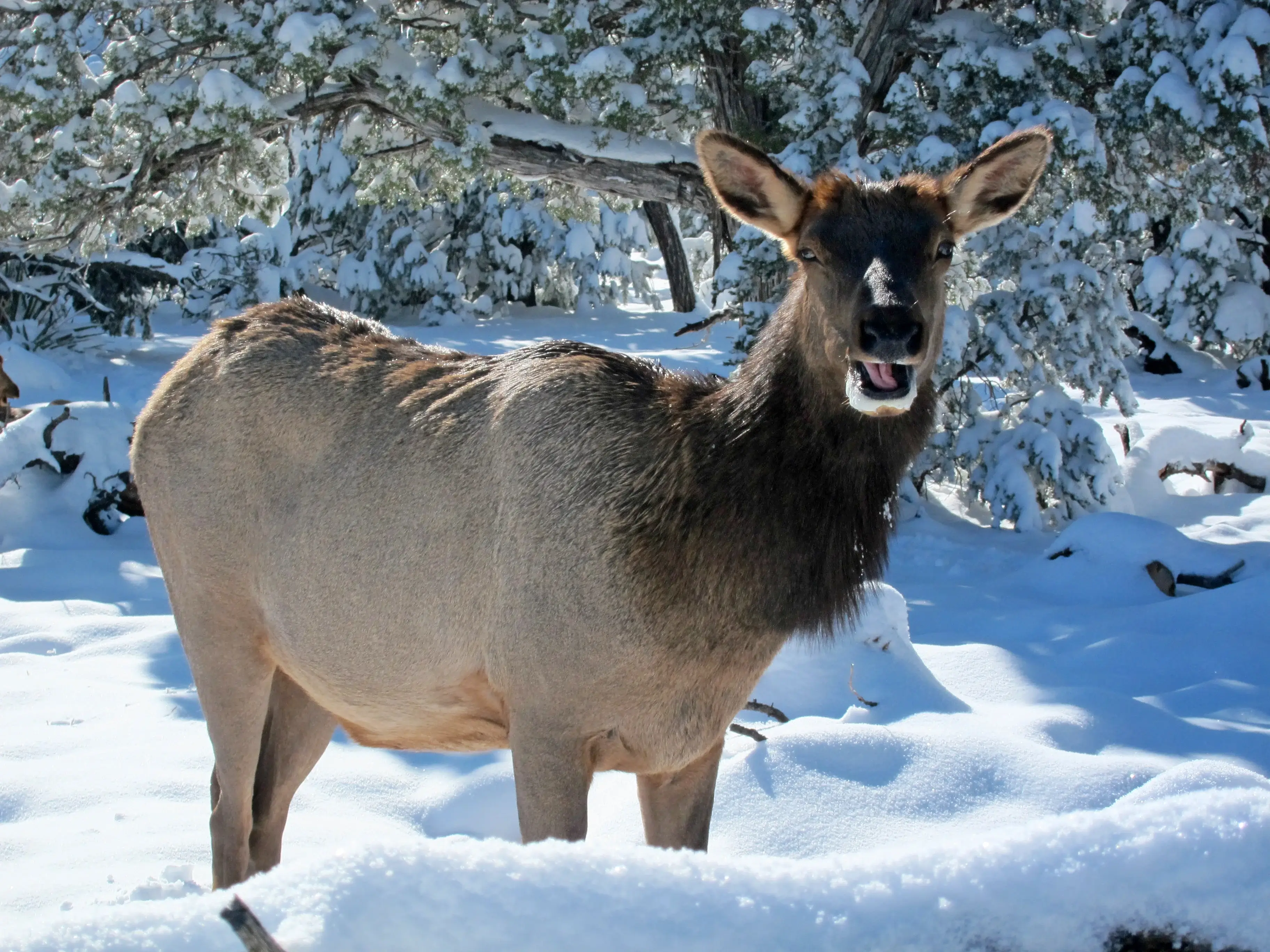
Elk Fact Sheet Averages 53 inches and 59 inches at the shoulder for cows and bulls, respectively. Bulls average 700 pounds (range 470-1,100 pounds); cows average 500 pounds (range 440-600 pounds). Coat reddish-brown, neck dark brown, small white tail, yellowish belly and rump patch. Antlers on males only. Main beam extending over the back, with several tines off the main beam. Tracks: Elk tracks: Front track slightly larger Front–3" - 5" L, 2-1/2" - 4-1/2" W. Rear– 2-1/2" - 4-1/2" L, 2-1/2" - 4" W. Walking stride 18" - 35". Fun Facts: Elk are also called wapiti, a Shawnee Indian name meaning white deer (referring to their bleached out white coat in the spring). Elk are the only species of North American deer that usually have upper canine teeth (often called bugler teeth).
Habitat & Range
Highly adaptable and able to flourish in most habitats from dry sagebrush grasslands to forested river bottoms. Found on the Little Missouri National Grasslands, Killdeer Mountain area, and in Cavalier County in northeastern North Dakota.
Life History
Food: Elk consume a variety of plants, with a change in frequency of their favorite type from season to season. They eat more than 100 types of forbs as well as a variety of grasses and some shrub species. Mating: Breeding peaks in mid- to late September, with bulls tending harems of 15-20 or more cows. No permanent pair bonds. Gestation averages about 250 days. Young One calf (rarely two) born late May to early June, and weighing about 37 pounds. Coat reddish with white spots on back. Habits: Most active at dawn and dusk. Cows usually in groups of 10 or more. Outside the breeding season, males are alone or in small bachelor groups.
Hunting Season
Elk Bow: Sep 4 – Sep 27; Regular Season: varies by unit (Oct 2 – Jan 3); Antlerless: Aug 7 – Sep 27 (private land)
Frequently Asked Questions
Regulations for hunting Elk in North Dakota
Elk hunting in North Dakota is by lottery only for ND residents. Units E1E-E7. Elk Bow (some units): Sep 4 – Sep 27. Regular season varies: most units Oct 2 – Jan 3. Antlerless elk on private land: Aug 7 – Sep 27. Total 1,062 licenses (372 any elk, 690 antlerless). Firearms: centerfire .25 cal or larger. Orange clothing required. Mandatory harvest reporting by Jan 15.
How big do elk get in North Dakota?
Bulls average 700 lbs (range 470-1,100 lbs), cows average 500 lbs (range 440-600 lbs). Shoulder height: bulls ~59 inches, cows ~53 inches.
What do elk eat?
Elk consume over 100 types of forbs plus a variety of grasses and some shrubs, with preferences shifting seasonally.
When is Elk hunting season in North Dakota?
Elk Bow: Sep 4 – Sep 27; Regular Season: varies by unit (Oct 2 – Jan 3); Antlerless: Aug 7 – Sep 27 (private land)
What is the bag limit for Elk in North Dakota?
1 elk per license (lottery only, ND residents only)
What's another name for Elk?
Elk is also known as Wapiti in North Dakota.
References
| State | Category | Directory | Subcategory | Content | Source |
|---|---|---|---|---|---|
| North Dakota | Hunting | Regulations | Season Dates | Elk Bow: Sep 4 – Sep 27; Regular Season: varies by unit (Oct 2 – Jan 3); Antlerless: Aug 7 – Sep 27 (private land) | Link |
| North Dakota | Hunting | Regulations | Regulations | Elk hunting in North Dakota is by lottery only for ND residents. Units E1E-E7. Elk Bow (some units): Sep 4 – Sep 27. Reg | Link |