Also known as: Muley, Black-tailed deer
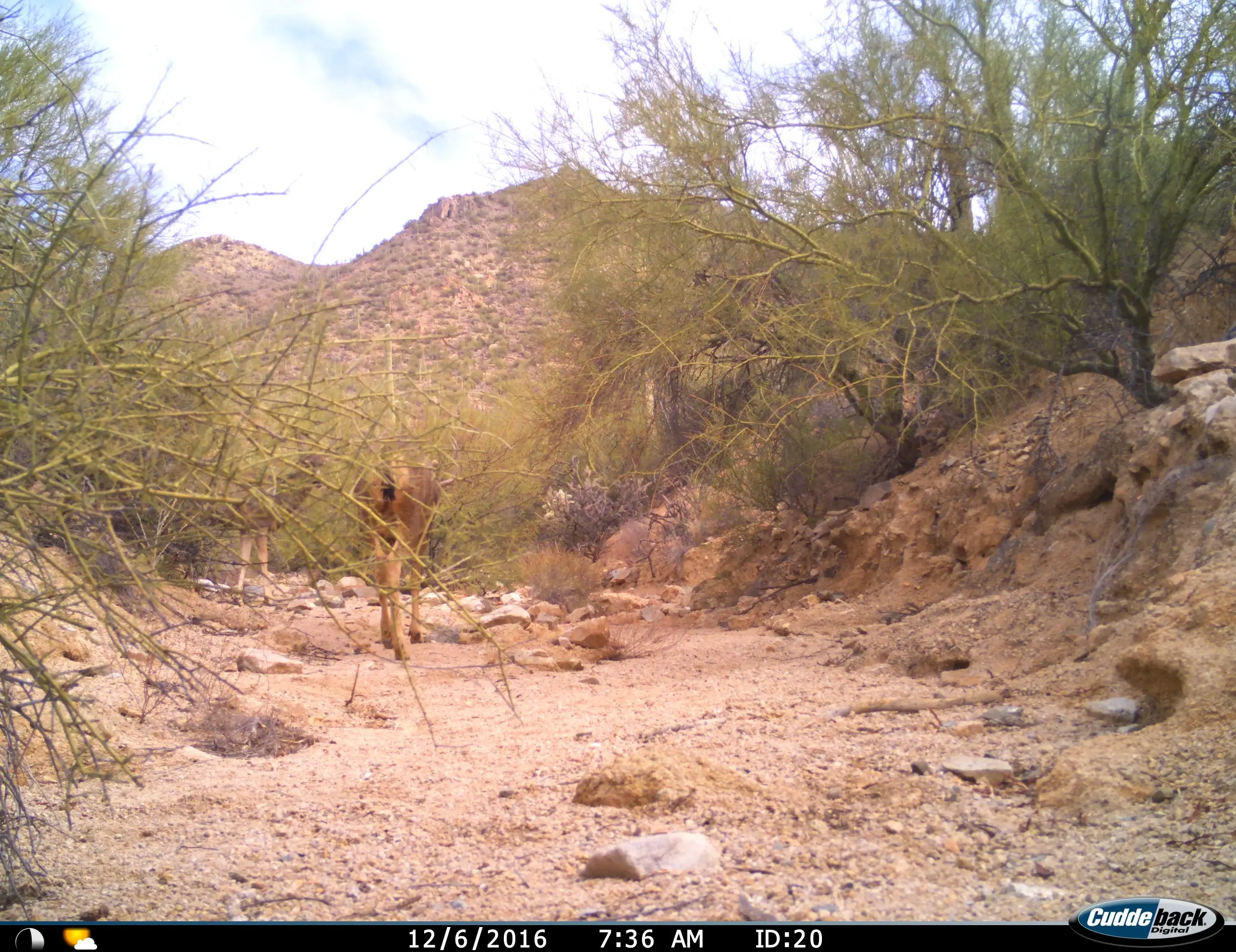
Mule Deer Fact Sheet Averages 39 inches at the shoulder (range 30-42 inches). Bucks average 170 pounds (range 125-330 pounds); does average 140 pounds (range 110-210 pounds). Coat reddish-brown in summer and blue-gray in winter, with white throat, belly and rump patch. Tail slender and white, with a black tip. Only males have antlers. Main beams divide into nearly equal branches, and may divide again to form four or more tines on each side. Tracks: Mule deer tracks:Front track slightly larger. Front–2-1/4" - 4" L, 1-5/8" - 2-3/4" W. Rear–2" - 3-1/2" L, 1-1/2" - 2-3/8". W Walking stride: 15" - 25" Fun Facts: When alarmed, mule deer often flee with a bouncing gait called “stotting.” Mule deer got their name because of their large ears.
Habitat & Range
Sagebrush plains and shortgrass prairie associated with buttes and rough badlands terrain. Primarily found in the badlands adjacent to the Little Missouri River. Secondary range extending north and east to the breaks along the Missouri River.
Life History
Food: Browse on a variety of trees, shrubs and forbs including green ash, aspen, sweetclover and sagebrush. Mule deer will also eat grass species, alfalfa and other agricultural crops. Mating: Breeding peaks in mid-November, with bucks tending one doe at a time. No permanent pair bonds. Gestation averages 204 days (range 183-218 days). Young One to three fawns (usually two) born late May to late June, and weighing about 8 pounds. Coat reddish-brown, with white spots on back. Habits: Most active at dawn and dusk. Does often socialize in small groups with related females from several generations. Outside of the breeding season, bucks usually alone or in small bachelor groups.
Hunting Season
Deer Bow: Sep 4 – Jan 3; Deer Gun: Nov 6 – Nov 22; Youth Deer: Sep 18 – Sep 27
Frequently Asked Questions
Regulations for hunting Mule Deer in North Dakota
Mule deer hunting in North Dakota is restricted primarily to the Badlands units (4A-4F). Deer Bow: Sep 4 – Jan 3. Deer Gun: Nov 6 – Nov 22. Mule deer-specific licenses: Type E (antlered, 1,200 total) and Type F (antlerless, 400 total). Mule deer are NOT legal during muzzleloader season. Youth hunters need special lottery licenses for mule deer in Badlands units. Nonresidents: 240 any-deer bow licenses (includes mule deer opportunity). Orange clothing required during gun season.
How big do mule deer get in North Dakota?
Bucks average 170 lbs, does average 140 lbs. Shoulder height averages 39 inches.
Why are they called mule deer?
They received their common name because of their large ears, which resemble those of a mule.
When is Mule Deer hunting season in North Dakota?
Deer Bow: Sep 4 – Jan 3; Deer Gun: Nov 6 – Nov 22; Youth Deer: Sep 18 – Sep 27
What is the bag limit for Mule Deer in North Dakota?
1 deer per license. Mule deer licenses limited to Badlands units 4A-4F
What's another name for Mule Deer?
Mule Deer is also known as Muley, Black-tailed deer in North Dakota.
References
| State | Category | Directory | Subcategory | Content | Source |
|---|---|---|---|---|---|
| North Dakota | Hunting | Regulations | Season Dates | Deer Bow: Sep 4 – Jan 3; Deer Gun: Nov 6 – Nov 22; Youth Deer: Sep 18 – Sep 27 | Link |
| North Dakota | Hunting | Regulations | Regulations | Mule deer hunting in North Dakota is restricted primarily to the Badlands units (4A-4F). Deer Bow: Sep 4 – Jan 3. Deer G | Link |