Also known as: Antelope, Pronghorn antelope
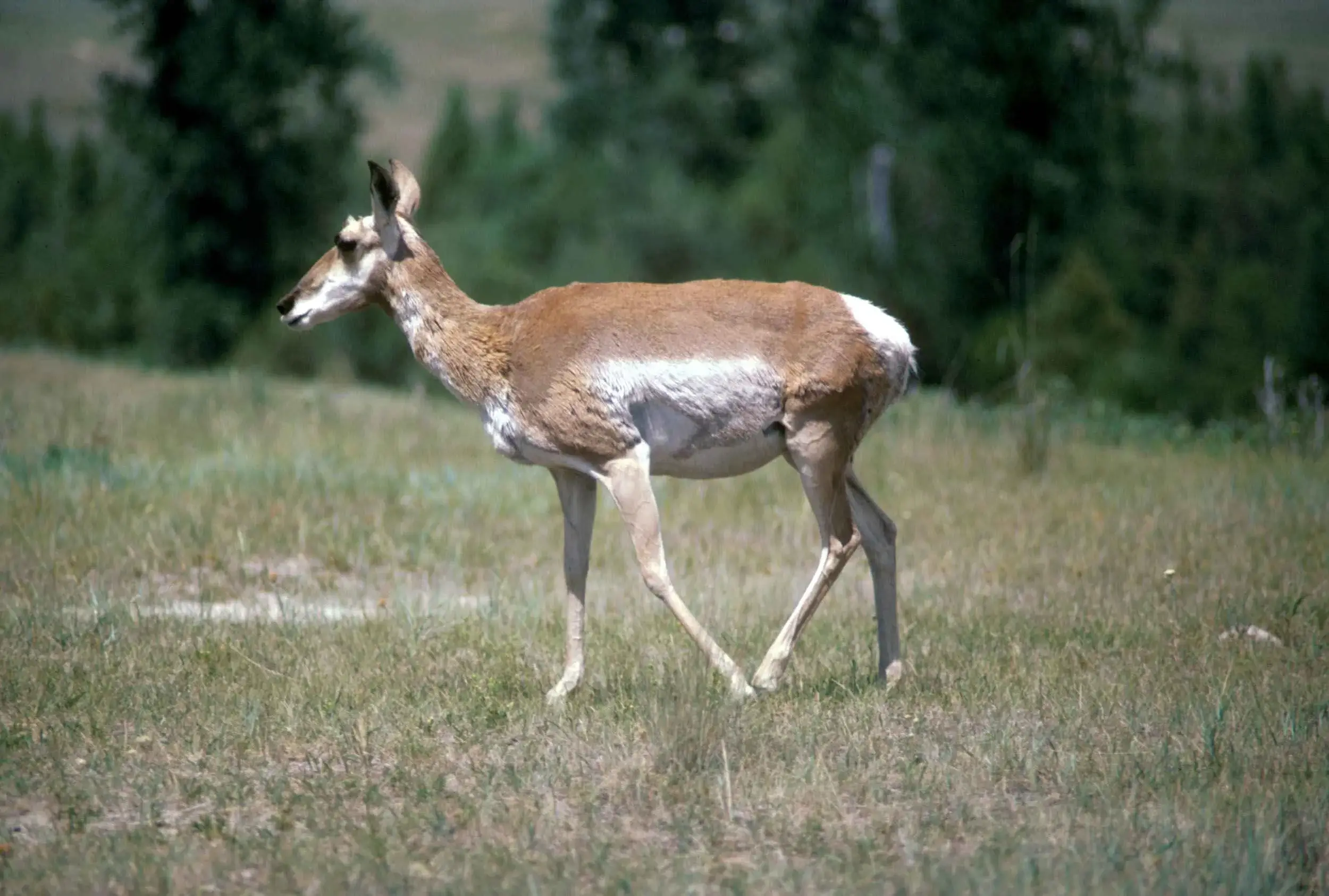
Pronghorn Fact Sheet Averages 35 inches at the shoulder (range 32-41 inches). Bucks average 120 pounds (range 100-135 pounds); does average 110 pounds (range 90-125 pounds). Coat rusty-brown and tan, with white neckbands, belly and rump. Black cheek patch on males. On males, horns extend past ears (often 12 inches or more), curving back, with a single prong rising from the upper half of the horn and pointing forward. Horns on females consist of only a small cone less than an inch long. Tracks: Pronghorn tracks: Front and rear tracks similar size 2-1/8" - 3-1/2" L, 1-1/2" - 2-1/4" W. Walking stride: 17" - 26" Fun Facts: Reaching speeds of more than 40 miles per hour, pronghorn are the fastest land mammal in North America. Pronghorn migrate 44 miles on average from summer to winter range and have been documented to move as far as 157 miles. Land management activities that fragment the landscape will likely be detrimental to the long-term persistence of pronghorn in the state.
Habitat & Range
Pronghorn are a landscape scale species that require large blocks of open continuous habitat. Sagebrush plains and shortgrass prairie associated with open terrain are common places they call home. Primary range in the extreme southwestern part of the state (Bowman and Slope counties), with diminishing numbers north and east. Uncommon north and east of the Missouri River.
Life History
Food: Pronghorn are herbivores. Their favorite food consists of a variety of forbs, followed by grass species and shrubs. Some of the common plants they eat include milk vetch, aster, blue grama, wheat grasses and sagebrush. Mating: Breeding peaks in mid-September, with bucks tending harems of 5-20 or more does. No permanent pair bonds. Gestation averages 252 days (delayed implantation of the egg). Young One to three fawns (usually two) born late May to late June, and weighing about 8 pounds. Coat tan, with black on hair tips. Habits: Most active at dawn and dusk, but frequently seen in the open throughout the day. Does typically in groups of 10 or more. Outside of the breeding season, males usually in small bachelor groups.
Hunting Season
Tentative fall season (lottery). 2026 regulations posted mid-July. Typically Sep-Oct.
Frequently Asked Questions
Regulations for hunting Pronghorn in North Dakota
Pronghorn hunting in North Dakota is by lottery only for ND residents. Season dates are typically in September-October. 2026 regulations will be posted after the proclamation is signed (mid-July). Check current NDGF regulations for specific unit dates and bag limits.
How fast can pronghorn run?
Pronghorn are the fastest land mammal in North America, reaching speeds over 40 mph.
Where are pronghorn found in North Dakota?
Primary range is in the extreme southwestern part of the state (Bowman and Slope counties), becoming uncommon north and east of the Missouri River.
When is Pronghorn hunting season in North Dakota?
Tentative fall season (lottery). 2026 regulations posted mid-July. Typically Sep-Oct.
What is the bag limit for Pronghorn in North Dakota?
1 pronghorn per license (lottery only, ND residents only)
What's another name for Pronghorn?
Pronghorn is also known as Antelope, Pronghorn antelope in North Dakota.
References
| State | Category | Directory | Subcategory | Content | Source |
|---|---|---|---|---|---|
| North Dakota | Hunting | Regulations | Season Dates | Tentative fall season (lottery). 2026 regulations posted mid-July. Typically Sep-Oct. | Link |
| North Dakota | Hunting | Regulations | Regulations | Pronghorn hunting in North Dakota is by lottery only for ND residents. Season dates are typically in September-October. | Link |