Also known as: Audubon's cottontail
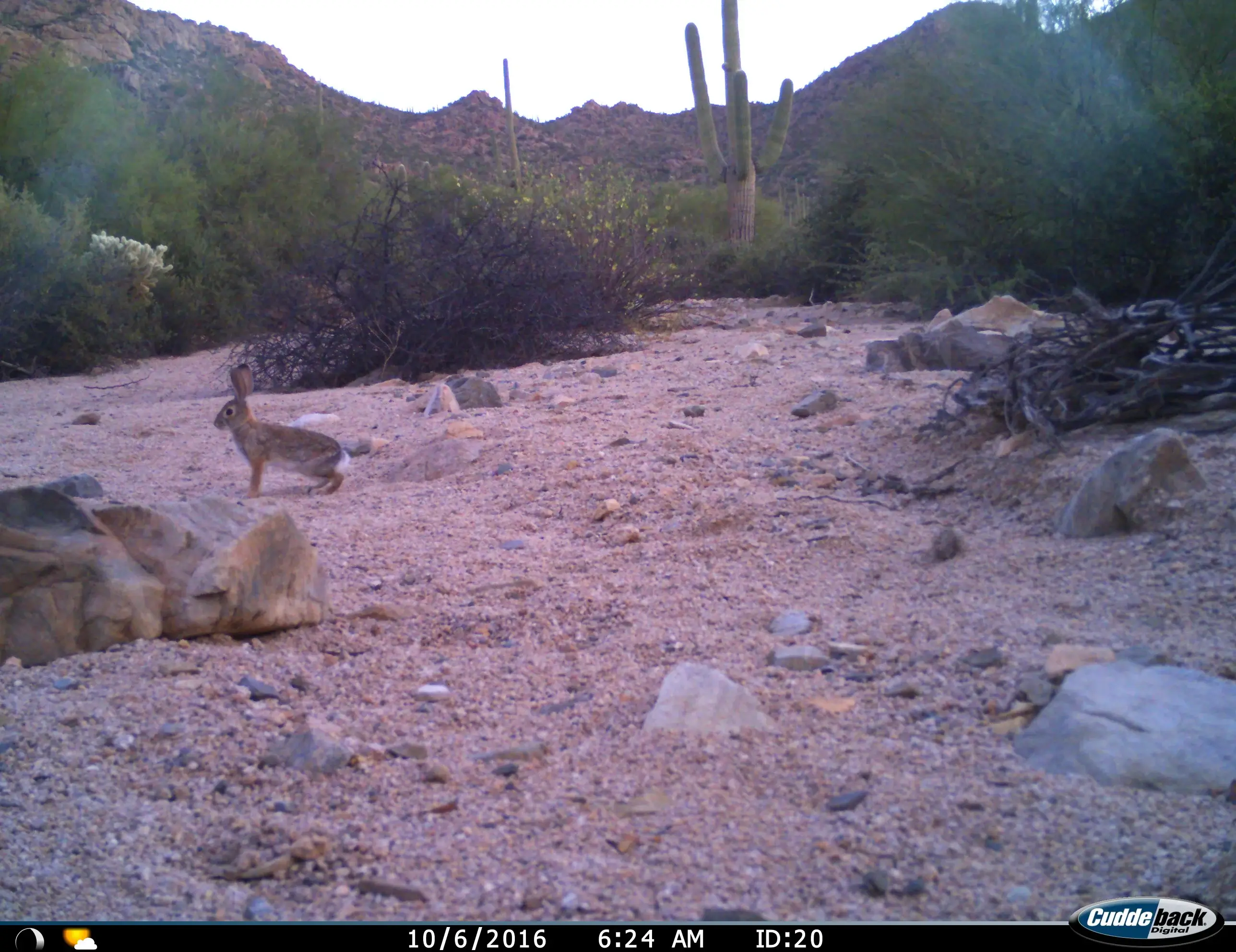
Desert CottontailDesert Cottontails are common and widespread throughout Nevada. Their round tail is dark on top with a white underside, resembling a cotton ball. To avoid overheating in the desert, Cottontails tend to be more active at night. They are light colored to minimize absorption of solar heat and have large ears to help radiate body heat into the air.
Habitat & Range
Desert Cottontails live in a wide range of habitats including open upland, sagebrush, grasslands, shrublands, riparian areas, and pinyon-juniper forests. They rarely stray far from their birthplace area.
Life History
Cottontails are herbivores, eating a wide variety of plant material such as grasses, sedges, and leaves. They are active in the early morning, late afternoon and at night, but may be seen at any time of the day. When the weather is hot and during the hottest part of the day, Cottontails may rest in the shade of large shrubs, in burrows or within thickets. In the hot months of summer, they conserve moisture and energy by avoiding activity during the hot, dry daylight hours. They’re bodies are made for the desert with their light-colored fur to minimize the absorption of solar heat and large ears to help radiate body heat into the air.The usual breeding season for the Desert Cottontail is from April to August. The nest is made out of grass and lined with the Cottontail’s fur that the mother pulls from her belly. She then gives birth to two to four litters of one to five young.The Desert Cottontail’s predators include hawks, owls, weasels, and foxes. They escape from predators by quickly zig-zagging across a field or creeping away very slowly while staying low to the ground. Often, the Cottontail runs to a protective location like a burrow or thicket. If cornered by a small predator, like a weasel, a Cottontail may “bowl over” the predator and give it a kick with its powerful hind legs. Sometimes, they will freeze when danger lurks and scrunch down to blend into its surroundings or try to slowly sneak away to safety.
Status, Trends & Threats
Habitat Degradation; Predation
Hunting Season
General: Nov 1, 2025 - Feb 28, 2026. Youth: Sep 27-Oct 5, 2025.
Frequently Asked Questions
Regulations for hunting Desert Cottontail in Nevada
Desert cottontail rabbit hunting in Nevada runs Nov 1-Feb 28. Youth season Sep 27-Oct 5 (same limits). Daily bag limit is 5 in aggregate with white-tailed jackrabbit (15 possession). Pygmy rabbit season is closed. RHDV2 (Rabbit Hemorrhagic Disease Virus-2) warning: report mortalities to NDOW.
When is Desert Cottontail hunting season in Nevada?
General: Nov 1, 2025 - Feb 28, 2026. Youth: Sep 27-Oct 5, 2025.
What is the bag limit for Desert Cottontail in Nevada?
5 per day aggregate (cottontail and white-tailed jackrabbit combined), 15 possession.
What's another name for Desert Cottontail?
Desert Cottontail is also known as Audubon's cottontail in Nevada.
References
| State | Category | Directory | Subcategory | Content | Source |
|---|---|---|---|---|---|
| Nevada | Hunting | Regulations | Season Dates | General: Nov 1, 2025 - Feb 28, 2026. Youth: Sep 27-Oct 5, 2025. | Link |
| Nevada | Hunting | Regulations | Regulations | Desert cottontail rabbit hunting in Nevada runs Nov 1-Feb 28. Youth season Sep 27-Oct 5 (same limits). Daily bag limit i | Link |