Also known as: Cougar, Puma, Catamount
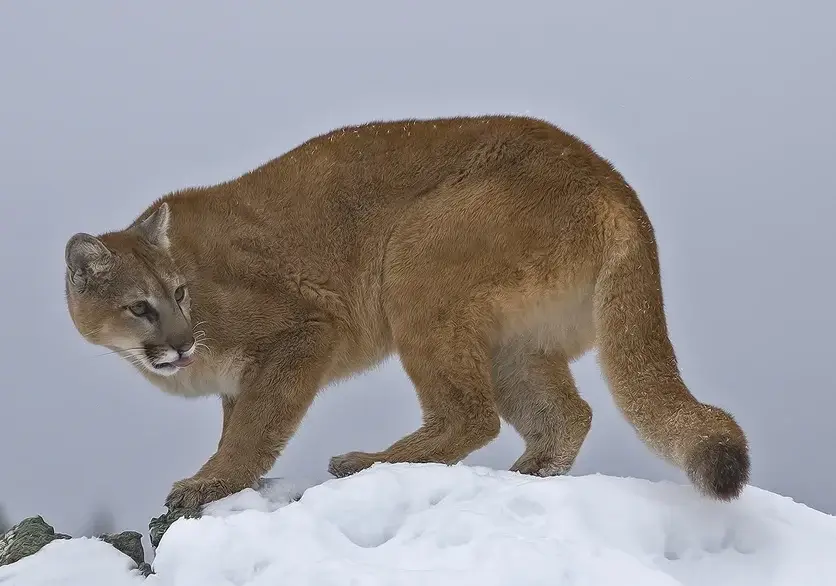
Mountain LionMountain Lions are the second largest wild cat in North America second to the jaguar. Mountain Lion coloration varies, but they typically have yellow-brown to gray-brown fur with a buff colored belly. They are known for their long tails which help them keep balance. Mountain Lions can be found in a variety of habitats from tropical forests to deserts. This is an exceptionally strong species with large claws and paws. They are easily distinguished from other wild cats in Nevada due to their large size and long tails.
Habitat & Range
Mountain Lions are adapted to a wide variety of habitats and environmental conditions found throughout Nevada. They prefer dense cover or rocky, rugged terrain, and also occur in low desert areas. In Nevada, Mountain Lion habitat is commonly associated with pinyon pine, juniper, and mountain mahogany.
Life History
Mountain Lions are carnivores who depend on meat for their survival. Their prey ranges from large game like mule deer and klk to small game like porcupines, coyotes, and rabbits. As ambush predators, Mountain Lions quietly stalk their prey or wait for it to get close to them before leaping onto the prey item. Mountain Lions will cache their prey under leaves or debris and come back to eat it at a later time. They are important predators in their habitats and help to control the populations of large ungulates like elk, deer, and pronghorn. Mountain Lions are solitary animals with large home ranges. Females have home ranges of nearly 90 square miles, while males have home ranges of nearly 175 square miles! Breeding can occur at any time during the year, but most kittens in Nevada are born in June and July.
Status, Trends & Threats
Drought; Habitat Loss
Hunting Season
Year-round. Over-the-counter tags available. Check current NDOW regulations for unit-specific quotas and closure dates.
Frequently Asked Questions
Regulations for hunting Mountain Lion in Nevada
Mountain lion hunting in Nevada is open year-round with over-the-counter tags. Hunters should check current NDOW regulations for unit-specific quotas, as individual areas may close once harvest limits are reached. Mandatory harvest reporting required within 10 days. Mountain lions are the second largest wild cat in North America and help regulate ungulate populations.
Do I need a tag to hunt mountain lions in Nevada?
Yes, mountain lion tags are available over-the-counter year-round in Nevada. However, individual hunt areas have harvest quotas that may close once met. Check current NDOW regulations for open areas.
When is Mountain Lion hunting season in Nevada?
Year-round. Over-the-counter tags available. Check current NDOW regulations for unit-specific quotas and closure dates.
What is the bag limit for Mountain Lion in Nevada?
Varies by hunt area. Typically 1-2 lions per season. Unit-specific quotas may close individual areas once met.
What's another name for Mountain Lion?
Mountain Lion is also known as Cougar, Puma, Catamount in Nevada.
References
| State | Category | Directory | Subcategory | Content | Source |
|---|---|---|---|---|---|
| Nevada | Hunting | Regulations | Season Dates | Year-round. Over-the-counter tags available. Check current NDOW regulations for unit-specific quotas and closure dates. | Link |
| Nevada | Hunting | Regulations | Regulations | Mountain lion hunting in Nevada is open year-round with over-the-counter tags. Hunters should check current NDOW regulat | Link |