Also known as: Beaver, American beaver
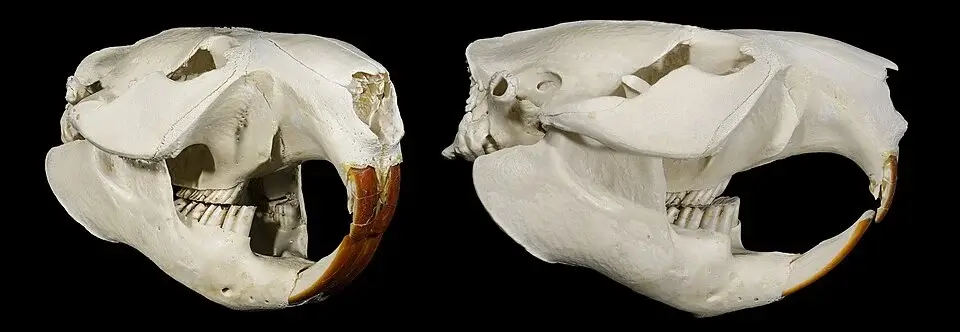
American Beaver: The American beaver (Castor canadensis) is common across Oklahoma. It is one of two extant beaver species; the other is the Eurasian beaver. The beaver is the largest rodent in North America. They live a semiaquatic life, meaning they inhabit the land and water equally. Beavers are dark brown mammals with webbed hind feet to help them swim. They have a broad, scaly flat tail. They have poor eye sight but have keen senses of hearing, smell and touch. Many people are aware of the beaver's large teeth, a characteristic for which they are recognized. A beaver's teeth grow continuously, so as they chew wood their teeth will not be worn down. Beavers have long, strong claws used for digging and have great dexterity for folding leaves and twisting small twigs off trees.Beavers are slow on land but are great swimmers and can stay underwater for some time. Beavers do not hibernate. They store sticks and logs in piles in their habitat and eat the underbark throughout the winter months. Their lips close behind their teeth, allowing the beaver to swim with building materials and food without drowning. Favorite foods of the beaver that are found in Oklahoma include cottonwood, willow, and johnson grass roots. But they will eat almost any type of bark, leaf or root. Beavers continue to grow throughout their lives. An adult beaver can weigh from 35 to 65 pounds. Females are as large or larger than males of the same age which is not common among mammals. Beavers can live more than 20 years in the wild. Beavers are also known for their natural activity of building dams on rivers and streams. These dams, constructed of downed trees and brush, serve as a way to maintain the water level in their living areas. They use their ever-growing teeth to chew down mailer trees and other plants for building and for food. They create large piles of sticks and trees, called lodges, for their living quarters. Their dams create wetland habitat for waterfowl and other wildlife. Beavers are monogamous and produce one litter each year, usually in spring. A typical litter contain up to four newborns called "kits". Families usually grow to consist of two adults and three or four kits altogether. American beavers like to keep to themselves and seem to constantly be working, which gave rise to the popular phrase "busy as a beaver." They can hold their breath up to 15 minutes during a dive so keep an eye out for them to resurface. When a beaver is in danger or frightened, it will give an alarm signal. When swimming, the frightened beaver forcefully slaps the water with its paddlelike tail before diving deep. The slapping tail makes a loud noise that is heard above and below the water alerting other beavers in the area. Nearby beavers will then dive into the water. The American beaver (Castor canadensis) is common across Oklahoma. It is one of two extant beaver species; the other is the Eurasian beaver. The beaver is the largest rodent in North America. They live a semiaquatic life, meaning they inhabit the land and water equally. Beavers are dark brown mammals with webbed hind feet to help them swim. They have a broad, scaly flat tail. They have poor eye sight but have keen senses of hearing, smell and touch. Many people are aware of the beaver's large teeth, a characteristic for which they are recognized. A beaver's teeth grow continuously, so as they chew wood their teeth will not be worn down. Beavers have long, strong claws used for digging and have great dexterity for folding leaves and twisting small twigs off trees.Beavers are slow on land but are great swimmers and can stay underwater for some time. Beavers do not hibernate. They store sticks and logs in piles in their habitat and eat the underbark throughout the winter months. Their lips close behind their teeth, allowing the beaver to swim with building materials and food without drowning. Favorite foods of the beaver that are found in Oklahoma include cottonwood, willow, and johnson grass roots. But they will eat almost any type of bark, leaf or root. Beavers continue to grow throughout their lives. An adult beaver can weigh from 35 to 65 pounds. Females are as large or larger than males of the same age which is not common among mammals. Beavers can live more than 20 years in the wild. Beavers are also known for their natural activity of building dams on rivers and streams. These dams, constructed of downed trees and brush, serve as a way to maintain the water level in their living areas. They use their ever-growing teeth to chew down mailer trees and other plants for building and for food. They create large piles of sticks and trees, called lodges, for their living quarters. Their dams create wetland habitat for waterfowl and other wildlife. Beavers are monogamous and produce one litter each year, usually in spring. A typical litter contain up to four newborns called "kits". Families usually grow to consist of two adults and three or four kits altogether. American beavers like to keep to themselves and seem to constantly be working, which gave rise to the popular phrase "busy as a beaver." They can hold their breath up to 15 minutes during a dive so keep an eye out for them to resurface. When a beaver is in danger or frightened, it will give an alarm signal. When swimming, the frightened beaver forcefully slaps the water with its paddlelike tail before diving deep. The slapping tail makes a loud noise that is heard above and below the water alerting other beavers in the area. Nearby beavers will then dive into the water. The American beaver (Castor canadensis) is common across Oklahoma. It is one of two extant beaver species; the other is the Eurasian beaver. The beaver is the largest rodent in North America. They live a semiaquatic life, meaning they inhabit the land and water equally. Beavers are dark brown mammals with webbed hind feet to help them swim. They have a broad, scaly flat tail. They have poor eye sight but have keen senses of hearing, smell and touch. Many people are aware of the beaver's large teeth, a characteristic for which they are recognized. A beaver's teeth grow continuously, so as they chew wood their teeth will not be worn down. Beavers have long, strong claws used for digging and have great dexterity for folding leaves and twisting small twigs off trees.Beavers are slow on land but are great swimmers and can stay underwater for some time. Beavers do not hibernate. They store sticks and logs in piles in their habitat and eat the underbark throughout the winter months. Their lips close behind their teeth, allowing the beaver to swim with building materials and food without drowning. Favorite foods of the beaver that are found in Oklahoma include cottonwood, willow, and johnson grass roots. But they will eat almost any type of bark, leaf or root. Beavers continue to grow throughout their lives. An adult beaver can weigh from 35 to 65 pounds. Females are as large or larger than males of the same age which is not common among mammals. Beavers can live more than 20 years in the wild. Beavers are also known for their natural activity of building dams on rivers and streams. These dams, constructed of downed trees and brush, serve as a way to maintain the water level in their living areas. They use their ever-growing teeth to chew down mailer trees and other plants for building and for food. They create large piles of sticks and trees, called lodges, for their living quarters. Their dams create wetland habitat for waterfowl and other wildlife. Beavers are monogamous and produce one litter each year, usually in spring. A typical litter contain up to four newborns called "kits". Families usually grow to consist of two adults and three or four kits altogether. American beavers like to keep to themselves and seem to constantly be working, which gave rise to the popular phrase "busy as a beaver." They can hold their breath up to 15 minutes during a dive so keep an eye out for them to resurface. When a beaver is in danger or frightened, it will give an alarm signal. When swimming, the frightened beaver forcefully slaps the water with its paddlelike tail before diving deep. The slapping tail makes a loud noise that is heard above and below the water alerting other beavers in the area. Nearby beavers will then dive into the water. The American beaver (Castor canadensis) is common across Oklahoma. It is one of two extant beaver species; the other is the Eurasian beaver. The beaver is the largest rodent in North America. They live a semiaquatic life, meaning they inhabit the land and water equally. Beavers are dark brown mammals with webbed hind feet to help them swim. They have a broad, scaly flat tail. They have poor eye sight but have keen senses of hearing, smell and touch. Many people are aware of the beaver's large teeth, a characteristic for which they are recognized. A beaver's teeth grow continuously, so as they chew wood their teeth will not be worn down. Beavers have long, strong claws used for digging and have great dexterity for folding leaves and twisting small twigs off trees.Beavers are slow on land but are great swimmers and can stay underwater for some time. Beavers do not hibernate. They store sticks and logs in piles in their habitat and eat the underbark throughout the winter months. Their lips close behind their teeth, allowing the beaver to swim with building materials and food without drowning. Favorite foods of the beaver that are found in Oklahoma include cottonwood, willow, and johnson grass roots. But they will eat almost any type of bark, leaf or root. Beavers continue to grow throughout their lives. An adult beaver can weigh from 35 to 65 pounds. Females are as large or larger than males of the same age which is not common among mammals. Beavers can live more than 20 years in the wild. Beavers are also known for their natural activity of building dams on rivers and streams. These dams, constructed of downed trees and brush, serve as a way to maintain the water level in their living areas. They use their ever-growing teeth to chew down mailer trees and other plants for building and for food. They create large piles of sticks and trees, called lodges, for their living quarters. Their dams create wetland habitat for waterfowl and other wildlife. Beavers are monogamous and produce one litter each year, usually in spring. A typical litter contain up to four newborns called "kits". Families usually grow to consist of two adults and three or four kits altogether. American beavers like to keep to themselves and seem to constantly be working, which gave rise to the popular phrase "busy as a beaver." They can hold their breath up to 15 minutes during a dive so keep an eye out for them to resurface. When a beaver is in danger or frightened, it will give an alarm signal. When swimming, the frightened beaver forcefully slaps the water with its paddlelike tail before diving deep. The slapping tail makes a loud noise that is heard above and below the water alerting other beavers in the area. Nearby beavers will then dive into the water. The American beaver (Castor canadensis) is common across Oklahoma. It is one of two extant beaver species; the other is the Eurasian beaver. The beaver is the largest rodent in North America. They live a semiaquatic life, meaning they inhabit the land and water equally. Beavers are dark brown mammals with webbed hind feet to help them swim. They have a broad, scaly flat tail. They have poor eye sight but have keen senses of hearing, smell and touch. Many people are aware of the beaver's large teeth, a characteristic for which they are recognized. A beaver's teeth grow continuously, so as they chew wood their teeth will not be worn down. Beavers have long, strong claws used for digging and have great dexterity for folding leaves and twisting small twigs off trees.Beavers are slow on land but are great swimmers and can stay underwater for some time. Beavers do not hibernate. They store sticks and logs in piles in their habitat and eat the underbark throughout the winter months. Their lips close behind their teeth, allowing the beaver to swim with building materials and food without drowning. Favorite foods of the beaver that are found in Oklahoma include cottonwood, willow, and johnson grass roots. But they will eat almost any type of bark, leaf or root. Beavers continue to grow throughout their lives. An adult beaver can weigh from 35 to 65 pounds. Females are as large or larger than males of the same age which is not common among mammals. Beavers can live more than 20 years in the wild. Beavers are also known for their natural activity of building dams on rivers and streams. These dams, constructed of downed trees and brush, serve as a way to maintain the water level in their living areas. They use their ever-growing teeth to chew down mailer trees and other plants for building and for food. They create large piles of sticks and trees, called lodges, for their living quarters. Their dams create wetland habitat for waterfowl and other wildlife. Beavers are monogamous and produce one litter each year, usually in spring. A typical litter contain up to four newborns called "kits". Families usually grow to consist of two adults and three or four kits altogether. American beavers like to keep to themselves and seem to constantly be working, which gave rise to the popular phrase "busy as a beaver." They can hold their breath up to 15 minutes during a dive so keep an eye out for them to resurface. When a beaver is in danger or frightened, it will give an alarm signal. When swimming, the frightened beaver forcefully slaps the water with its paddlelike tail before diving deep. The slapping tail makes a loud noise that is heard above and below the water alerting other beavers in the area. Nearby beavers will then dive into the water. The American beaver (Castor canadensis) is common across Oklahoma. It is one of two extant beaver species; the other is the Eurasian beaver. The beaver is the largest rodent in North America. They live a semiaquatic life, meaning they inhabit the land and water equally. Beavers are dark brown mammals with webbed hind feet to help them swim. They have a broad, scaly flat tail. They have poor eye sight but have keen senses of hearing, smell and touch. Many people are aware of the beaver's large teeth, a characteristic for which they are recognized. A beaver's teeth grow continuously, so as they chew wood their teeth will not be worn down. Beavers have long, strong claws used for digging and have great dexterity for folding leaves and twisting small twigs off trees.Beavers are slow on land but are great swimmers and can stay underwater for some time. Beavers do not hibernate. They store sticks and logs in piles in their habitat and eat the underbark throughout the winter months. Their lips close behind their teeth, allowing the beaver to swim with building materials and food without drowning. Favorite foods of the beaver that are found in Oklahoma include cottonwood, willow, and johnson grass roots. But they will eat almost any type of bark, leaf or root. The American beaver (Castor canadensis) is common across Oklahoma. It is one of two extant beaver species; the other is the Eurasian beaver. The beaver is the largest rodent in North America. They live a semiaquatic life, meaning they inhabit the land and water equally. Beavers are dark brown mammals with webbed hind feet to help them swim. They have a broad, scaly flat tail. They have poor eye sight but have keen senses of hearing, smell and touch. Many people are aware of the beaver's large teeth, a characteristic for which they are recognized. A beaver's teeth grow continuously, so as they chew wood their teeth will not be worn down. Beavers have long, strong claws used for digging and have great dexterity for folding leaves and twisting small twigs off trees.Beavers are slow on land but are great swimmers and can stay underwater for some time. Beavers do not hibernate. They store sticks and logs in piles in their habitat and eat the underbark throughout the winter months. Their lips close behind their teeth, allowing the beaver to swim with building materials and food without drowning. Favorite foods of the beaver that are found in Oklahoma include cottonwood, willow, and johnson grass roots. But they will eat almost any type of bark, leaf or root. The American beaver (Castor canadensis) is common across Oklahoma. It is one of two extant beaver species; the other is the Eurasian beaver. The beaver is the largest rodent in North America. They live a semiaquatic life, meaning they inhabit the land and water equally. Beavers are dark brown mammals with webbed hind feet to help them swim. They have a broad, scaly flat tail. They have poor eye sight but have keen senses of hearing, smell and touch. Many people are aware of the beaver's large teeth, a characteristic for which they are recognized. A beaver's teeth grow continuously, so as they chew wood their teeth will not be worn down. Beavers have long, strong claws used for digging and have great dexterity for folding leaves and twisting small twigs off trees.Beavers are slow on land but are great swimmers and can stay underwater for some time. Beavers do not hibernate. They store sticks and logs in piles in their habitat and eat the underbark throughout the winter months. Their lips close behind their teeth, allowing the beaver to swim with building materials and food without drowning. Favorite foods of the beaver that are found in Oklahoma include cottonwood, willow, and johnson grass roots. But they will eat almost any type of bark, leaf or root. The American beaver (Castor canadensis) is common across Oklahoma. It is one of two extant beaver species; the other is the Eurasian beaver. The beaver is the largest rodent in North America. They live a semiaquatic life, meaning they inhabit the land and water equally. Beavers are dark brown mammals with webbed hind feet to help them swim. They have a broad, scaly flat tail. They have poor eye sight but have keen senses of hearing, smell and touch. Many people are aware of the beaver's large teeth, a characteristic for which they are recognized. A beaver's teeth grow continuously, so as they chew wood their teeth will not be worn down. Beavers have long, strong claws used for digging and have great dexterity for folding leaves and twisting small twigs off trees.Beavers are slow on land but are great swimmers and can stay underwater for some time. Beavers do not hibernate. They store sticks and logs in piles in their habitat and eat the underbark throughout the winter months. Their lips close behind their teeth, allowing the beaver to swim with building materials and food without drowning. Favorite foods of the beaver that are found in Oklahoma include cottonwood, willow, and johnson grass roots. But they will eat almost any type of bark, leaf or root. Beavers continue to grow throughout their lives. An adult beaver can weigh from 35 to 65 pounds. Females are as large or larger than males of the same age which is not common among mammals. Beavers can live more than 20 years in the wild. Size: Beavers continue to grow throughout their lives. An adult beaver can weigh from 35 to 65 pounds. Females are as large or larger than males of the same age which is not common among mammals. Beavers can live more than 20 years in the wild. Beavers continue to grow throughout their lives. An adult beaver can weigh from 35 to 65 pounds. Females are as large or larger than males of the same age which is not common among mammals. Beavers can live more than 20 years in the wild. Beavers continue to grow throughout their lives. An adult beaver can weigh from 35 to 65 pounds. Females are as large or larger than males of the same age which is not common among mammals. Beavers can live more than 20 years in the wild. Beavers are also known for their natural activity of building dams on rivers and streams. These dams, constructed of downed trees and brush, serve as a way to maintain the water level in their living areas. They use their ever-growing teeth to chew down mailer trees and other plants for building and for food. They create large piles of sticks and trees, called lodges, for their living quarters. Their dams create wetland habitat for waterfowl and other wildlife. American beavers like to keep to themselves and seem to constantly be working, which gave rise to the popular phrase "busy as a beaver." They can hold their breath up to 15 minutes during a dive so keep an eye out for them to resurface. When a beaver is in danger or frightened, it will give an alarm signal. When swimming, the frightened beaver forcefully slaps the water with its paddlelike tail before diving deep. The slapping tail makes a loud noise that is heard above and below the water alerting other beavers in the area. Nearby beavers will then dive into the water. American beavers like to keep to themselves and seem to constantly be working, which gave rise to the popular phrase "busy as a beaver." They can hold their breath up to 15 minutes during a dive so keep an eye out for them to resurface. When a beaver is in danger or frightened, it will give an alarm signal. When swimming, the frightened beaver forcefully slaps the water with its paddlelike tail before diving deep. The slapping tail makes a loud noise that is heard above and below the water alerting other beavers in the area. Nearby beavers will then dive into the water. American beavers like to keep to themselves and seem to constantly be working, which gave rise to the popular phrase "busy as a beaver." They can hold their breath up to 15 minutes during a dive so keep an eye out for them to resurface. When a beaver is in danger or frightened, it will give an alarm signal. When swimming, the frightened beaver forcefully slaps the water with its paddlelike tail before diving deep. The slapping tail makes a loud noise that is heard above and below the water alerting other beavers in the area. Nearby beavers will then dive into the water.
Habitat & Range
Beavers are also known for their natural activity of building dams on rivers and streams. These dams, constructed of downed trees and brush, serve as a way to maintain the water level in their living areas. They use their ever-growing teeth to chew down mailer trees and other plants for building and for food. They create large piles of sticks and trees, called lodges, for their living quarters. Their dams create wetland habitat for waterfowl and other wildlife. Beavers are also known for their natural activity of building dams on rivers and streams. These dams, constructed of downed trees and brush, serve as a way to maintain the water level in their living areas. They use their ever-growing teeth to chew down mailer trees and other plants for building and for food. They create large piles of sticks and trees, called lodges, for their living quarters. Their dams create wetland habitat for waterfowl and other wildlife. Beavers are also known for their natural activity of building dams on rivers and streams. These dams, constructed of downed trees and brush, serve as a way to maintain the water level in their living areas. They use their ever-growing teeth to chew down mailer trees and other plants for building and for food. They create large piles of sticks and trees, called lodges, for their living quarters. Their dams create wetland habitat for waterfowl and other wildlife. Beavers are monogamous and produce one litter each year, usually in spring. A typical litter contain up to four newborns called "kits". Families usually grow to consist of two adults and three or four kits altogether.
Life History
Beavers are monogamous and produce one litter each year, usually in spring. A typical litter contain up to four newborns called "kits". Families usually grow to consist of two adults and three or four kits altogether. Beavers are monogamous and produce one litter each year, usually in spring. A typical litter contain up to four newborns called "kits". Families usually grow to consist of two adults and three or four kits altogether. Beavers are monogamous and produce one litter each year, usually in spring. A typical litter contain up to four newborns called "kits". Families usually grow to consist of two adults and three or four kits altogether. American beavers like to keep to themselves and seem to constantly be working, which gave rise to the popular phrase "busy as a beaver." They can hold their breath up to 15 minutes during a dive so keep an eye out for them to resurface. When a beaver is in danger or frightened, it will give an alarm signal. When swimming, the frightened beaver forcefully slaps the water with its paddlelike tail before diving deep. The slapping tail makes a loud noise that is heard above and below the water alerting other beavers in the area. Nearby beavers will then dive into the water.
Hunting Season
Year-round
Frequently Asked Questions
Regulations for hunting American Beaver in Oklahoma
Beaver may be taken year-round in Oklahoma with no bag limit. Beavers are classified as furbearers. Trapping is the primary method of harvest. Beaver dams create valuable wetland habitat for waterfowl and other wildlife.
When is American Beaver hunting season in Oklahoma?
Year-round
What's another name for American Beaver?
American Beaver is also known as Beaver, American beaver in Oklahoma.
References
| State | Category | Directory | Subcategory | Content | Source |
|---|---|---|---|---|---|
| Oklahoma | Hunting | Regulations | Season Dates | Year-round | Link |
| Oklahoma | Hunting | Regulations | Regulations | Beaver may be taken year-round in Oklahoma with no bag limit. Beavers are classified as furbearers. Trapping is the prim | Link |