Also known as: Alligator, Gator
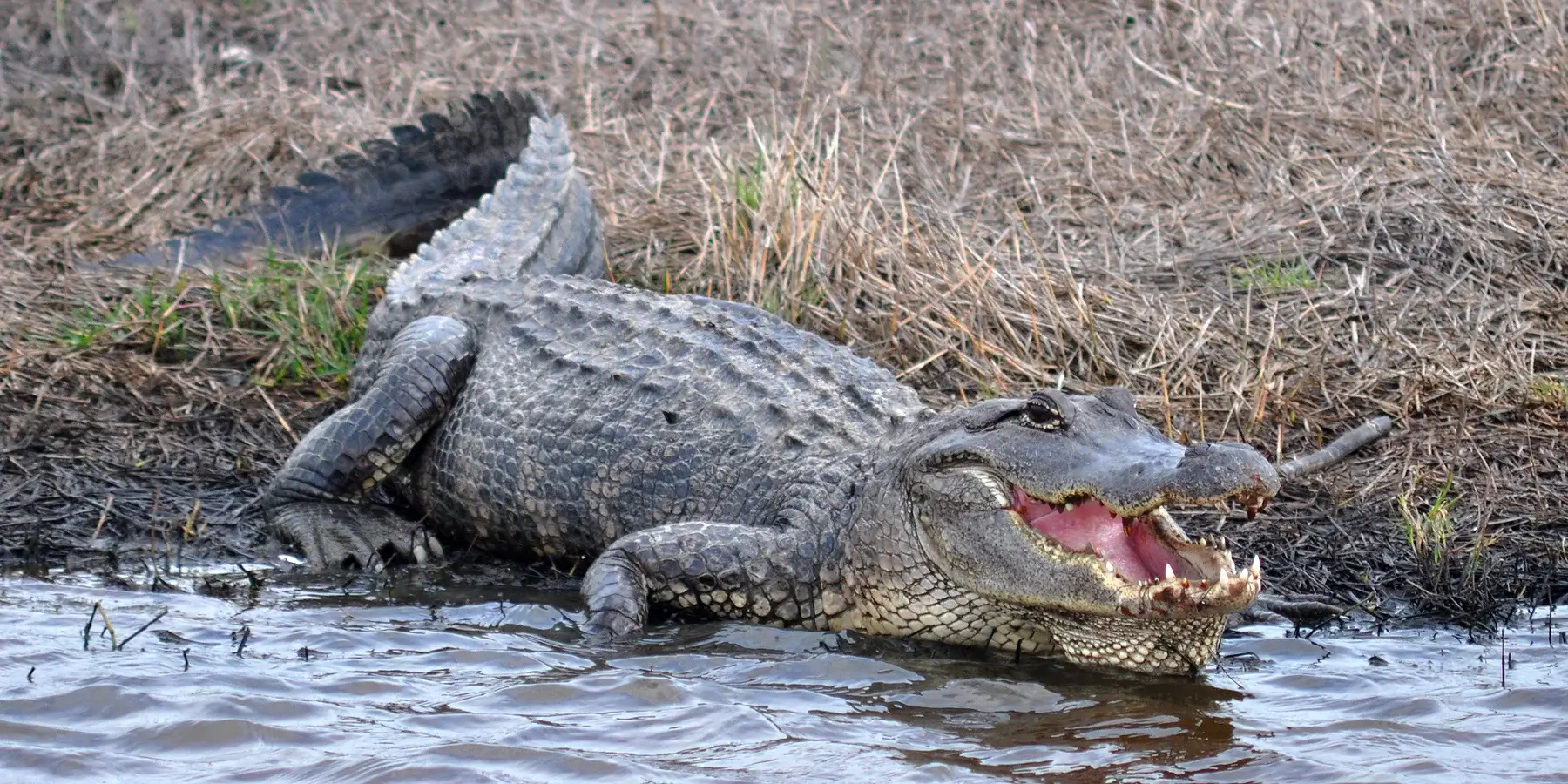
The American alligator (Alligator mississippiensis), sometimes referred to as a common alligator or just gator, is a large crocodilian reptile native to the Southeastern United States. It is one of the two extant species in the genus Alligator, and is larger than the only other living alligator species, the Chinese alligator. Adult male American alligators measure 3.4 to 4.8 m (11.2 to 15.7 ft) in length, and can weigh up to 900 kg (2,000 lb), with unverified sizes of up to 5.84 m (19.2 ft) and weights of 1,000 kg (2,200 lb) making it the heaviest member of the family Alligatoridae, and the second longest one, after the black caiman. Females are smaller, measuring 2.6 to 3.35 m (8.5 to 11.0 ft) in length. The American alligator inhabits subtropical and tropical freshwater wetlands, such as marshes and cypress swamps, from southern Oklahoma and Texas to North Carolina. It is distinguished from the sympatric American crocodile by its broader U-shaped snout, with overlapping jaws and darker coloration, and is less tolerant of saltwater but more tolerant of cooler climates than the American crocodile, which is found only in tropical and warm subtropical climates. American alligators are apex predators and consume fish, amphibians, reptiles, birds, mammals, and other American alligators. Hatchlings feed mostly on invertebrates. They play an important role as ecosystem engineers in wetland ecosystems through the creation of alligator holes, which provide both wet and dry habitats for other organisms. Throughout the year (in particular during the breeding season), American alligators bellow to declare territory, and locate suitable mates. Male American alligators use infrasound to attract females. Eggs are laid in a nest of vegetation, sticks, leaves, and mud in a sheltered spot on land near water. Young are born with yellow bands around their bodies and are protected by their mother for up to one year. This species displays parental care, which is rare for most reptiles.
Habitat & Range
American alligators inhabit swamps, streams, rivers, ponds, and lakes as well as wetland prairies interspersed with shallow open water and canals with associated levees. A lone American alligator was spotted for over 10 years living in a river north of Atlanta, Georgia. Females and juveniles are also found in Carolina Bays and other seasonal wetlands. While they prefer fresh water, American alligators may sometimes wander into brackish water, but are less tolerant of salt water than American crocodiles, as the salt glands on their tongues do not function. One study of American alligators in north-central Florida found the males preferred open lake water during the spring, while females used both swampy and open-water areas. During summer, males still preferred open water, while females remained in the swamps to construct their nests and lay their eggs. Both sexes may den underneath banks or clumps of trees during the winter. In some areas of their range, American alligators are an unusual example of urban wildlife; golf courses are often favored by the species due to an abundance of water and a frequent supply of prey animals such as fish and birds. Recent research on juvenile American alligators has found that young alligators can adjust behavior in reaction to stressful environments, particularly with higher salt levels. Rather than adapting physically, juveniles have been shown to change their everyday habits – things like basking in the sun or moving between habitats – to avoid dehydration from salt water . As sea levels continue to rise, it is especially important that alligators can adapt and maintain regular body function, despite changing environments.
Hunting Season
Public alligator hunt: Noon on the 2nd Saturday of September to noon on the 2nd Saturday of October. Lottery application period: June 1 through July 15.
License & Regulations
A valid South Carolina hunting license is required for resident and non-resident hunters age 16 and older. Licenses can be purchased online through the Go Outdoors SC portal or at authorized license retailers. Additional permits may be required: Big Game Permit for deer, bear, and turkey; individual bear tags ($25 residents, $100 nonresidents); turkey tags ($25 residents, $125 nonresidents); antlerless deer tags; and the federal Migratory Bird Hunting and Conservation Stamp (Duck Stamp) for waterfowl. Hunters born on or after July 1, 1979 must successfully complete a hunter education course.
Frequently Asked Questions
Regulations for hunting American Alligator in South Carolina
Alligator hunting in South Carolina is managed through a limited lottery draw system. Applicants apply through Go Outdoors SC during the June 1-July 15 window. Two tag types are available: standard tags and slot tags (4-8 ft alligators, restricted to snatch hooks, handheld snares, and ropes). CITES tags are required. Preference points reset when selected. The season runs from September to October with specific dates set annually by SCDNR.
When is American Alligator hunting season in South Carolina?
The American Alligator hunting season in South Carolina: Public alligator hunt: Noon on the 2nd Saturday of September to noon on the 2nd Saturday of October. Lottery application period: June 1 through July 15.
What is the bag limit for American Alligator in South Carolina?
The bag limit for American Alligator in South Carolina is: 1 alligator per tag. Lottery draw with limited tags available. Slot tag option: one alligator between 4 and 8 feet (no harpoons or bows allowed).
What's another name for American Alligator?
American Alligator is also known as Alligator, Gator in South Carolina.
How do I apply for the South Carolina alligator lottery?
Applications are accepted through Go Outdoors SC from June 1 through July 15. Hunters can apply for standard tags or slot tags (4-8 ft alligators). Preference points are awarded to unsuccessful applicants and reset to zero if selected. Selected hunters receive CITES tags and must attend a mandatory orientation before the season opens in September.
How to identify American Alligator?
The American alligator (Alligator mississippiensis), sometimes referred to as a common alligator or just gator, is a large crocodilian reptile native to the Southeastern United States. It is one of the two extant species in the genus Alligator, and is larger than the only other living alligator species, the Chinese alligator. Adult male American alligators measure 3.4 to 4.8 m (11.2 to 15.7 ft) in length, and can weigh up to 900 kg (2,000 lb), with unverified sizes of up to 5.84 m (19.2 ft) and ...
References
| State | Category | Directory | Subcategory | Content | Source |
|---|---|---|---|---|---|
| South Carolina | Hunting | Regulations | Season Dates | Public alligator hunt: Noon on the 2nd Saturday of September to noon on the 2nd Saturday of October. Lottery application | Link |
| South Carolina | Hunting | License | License & Fees | A valid South Carolina hunting license is required for resident and non-resident hunters age 16 and older. Licenses can | Link |
| South Carolina | Hunting | Regulations | Regulations | Alligator hunting in South Carolina is managed through a limited lottery draw system. Applicants apply through Go Outdoo | Link |