Also known as: American black bear
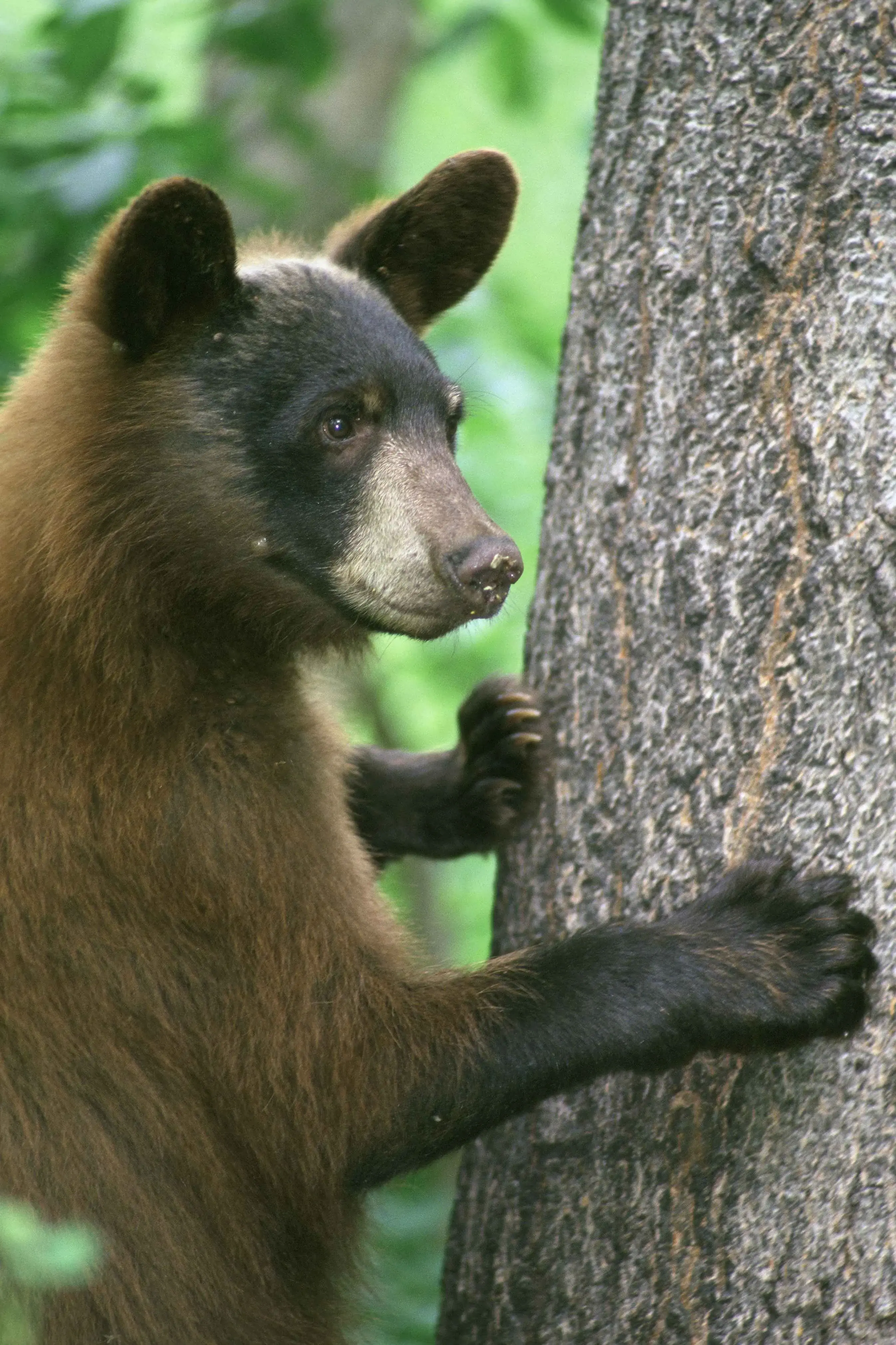
A large, stocky mammal reaching 5 to 6 feet in length, 2 to 3 feet at the shoulder, and weighing 90–400+ pounds depending on food availability. Though named black, coloration ranges from black to cinnamon brown. Front claws are typically longer than hind ones, and the fur is long and coarse. Classified as a carnivore but functions as a true omnivore. Vegetable matter almost always comprises well over half of the diet. Favorite foods include fresh leaves, fruits, berries, nuts, roots, and tubers. Insects and small mammals are eaten opportunistically. Bears break nut-tree branches, tear up ground for roots and insects, strip bark for pulp or insects, and rub against rough bark. In Texas deserts, they particularly consume the succulent base of the sotol plant.
Habitat & Range
Found across much of North America in habitats ranging from swamps to desert scrub. Two subspecies exist in Texas: the Mexican Black Bear and the New Mexico Black Bear, both in West Texas desert scrub or woodland within scattered mountain ranges, predominantly the Chisos and Guadalupe Mountains. Confirmed breeding population exists only in the Trans-Pecos region plus Val Verde and Crockett counties.
Life History
Breeding occurs in June and July. Females give birth to two to three cubs every two years in January or February while hibernating. During hibernation, heartbeat and respiration slow dramatically, but body temperature drops only slightly, and bears can be easily awakened. In Texas, only pregnant females reliably hibernate; others may remain active if food is available. Bears are generally harmless but can injure humans when provoked. They are capable of long-distance movement, especially as subadults or during drought/mast failure.
Status, Trends & Threats
State Threatened in Texas. TPWD is researching population size in West Texas and how the species is recolonizing parts of the state. Presence of a single individual does not indicate an established local population. The agency encourages reporting recent sightings to local biologists.
Frequently Asked Questions
What do black bears eat?
Black bears are omnivores. Vegetable matter comprises well over half their diet, including fresh leaves, fruits, berries, nuts, roots, and tubers. They also eat insects and small mammals opportunistically.
Are black bears endangered in Texas?
Yes, black bears are State Threatened in Texas. A confirmed breeding population exists only in the Trans-Pecos region.
Do black bears hibernate in Texas?
In Texas, only pregnant females reliably hibernate. Others may remain active if food is available.