Also known as: Mallard duck, Greenhead (male)
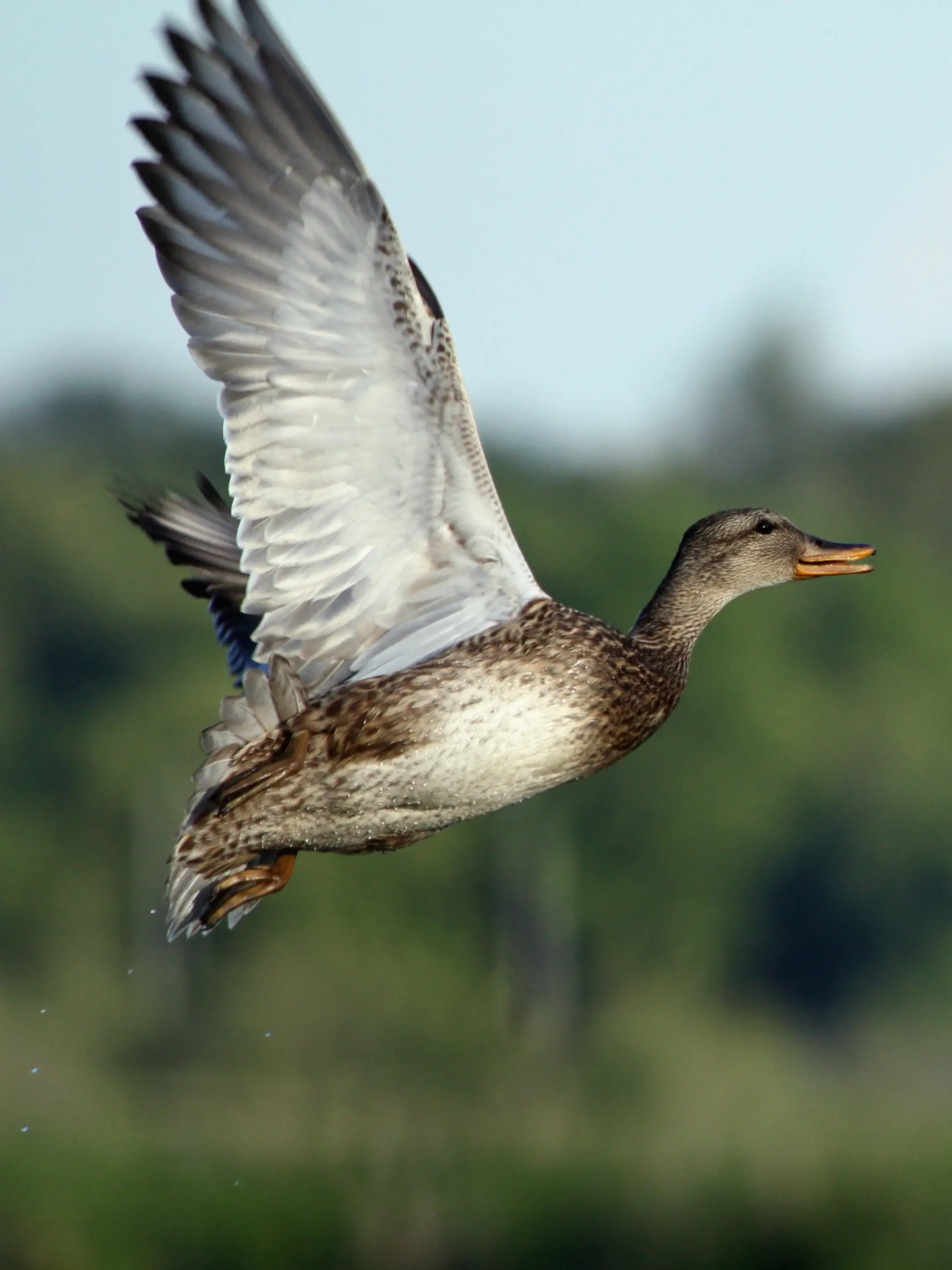
The mallard or wild duck is a dabbling duck that breeds throughout the temperate and subtropical Americas, Eurasia, and North Africa. It has been introduced to New Zealand, Australia, Peru, Brazil, Uruguay, Argentina, Chile, Colombia, the Falkland Islands, and South Africa. Belonging to the subfamily Anatinae of the waterfowl family Anatidae, mallards live in wetlands, eat water plants and small animals, and are social animals preferring to congregate in groups or flocks of varying sizes.
Habitat & Range
The mallard is widely distributed across the Northern and Southern Hemispheres; in North America its range extends from southern and central Alaska to Mexico, the Hawaiian Islands, across the Palearctic, from Iceland and southern Greenland and parts of Morocco (North Africa) in the west, Scandinavia and Britain to the north, and to Siberia, Japan, and South Korea. Also in the east, it ranges to south-eastern and south-western Australia and New Zealand in the Southern Hemisphere. It is strongly migratory in the northern parts of its breeding range, and winters farther south. For example, in North America, it winters south to the southern United States and northern Mexico, but also regularly strays into Central America and the Caribbean between September and May. A drake later named "Trevor" attracted media attention in 2018 when it turned up on the island of Niue, an atypical location for mallards. The mallard inhabits a wide range of habitats and climates, from the Arctic tundra to subtropical regions. It is found in both fresh- and salt-water wetlands, including parks, small ponds, rivers, lakes and estuaries, as well as shallow inlets and open sea within sight of the coastline. Water depths of less than 0.9 metres (3.0 ft) are preferred, with birds avoiding areas more than a few metres deep. They are attracted to bodies of water with aquatic vegetation.
Hunting Season
Check current West Virginia Migratory Bird Hunting Regulations. Typically Oct-Jan with split seasons.
License & Regulations
A valid West Virginia hunting license is required for resident and non-resident hunters age 15 and older. Licenses can be purchased online through the West Virginia Division of Natural Resources website or at authorized license retailers. Additional stamps may be required: RB (Resource Ballot) or RRB (Resource Recovery Ballot) for antlerless deer, TRD (Turkey Stamp) for spring turkey, and the federal Migratory Bird Hunting and Conservation Stamp (Duck Stamp) for waterfowl. Hunters born on or after January 1, 1975 must successfully complete a hunter education course.
Frequently Asked Questions
Regulations for hunting Mallard in West Virginia
Mallard and other duck hunting follows federal migratory bird regulations with state-specific season frameworks. HIP registration and federal Migratory Bird Hunting and Conservation Stamp (Duck Stamp) are required. Check the West Virginia Migratory Bird Regulations for current split seasons.
When is Mallard hunting season in West Virginia?
The Mallard hunting season in West Virginia: Check current West Virginia Migratory Bird Hunting Regulations. Typically Oct-Jan with split seasons.
What is the bag limit for Mallard in West Virginia?
The bag limit for Mallard in West Virginia is: Follow federal migratory bird regulations. Daily bag limit typically 4-6 ducks (species-specific limits apply).
What's another name for Mallard?
Mallard is also known as Mallard duck, Greenhead (male) in West Virginia.
How to identify Mallard?
The mallard or wild duck is a dabbling duck that breeds throughout the temperate and subtropical Americas, Eurasia, and North Africa. It has been introduced to New Zealand, Australia, Peru, Brazil, Uruguay, Argentina, Chile, Colombia, the Falkland Islands, and South Africa. Belonging to the subfamily Anatinae of the waterfowl family Anatidae, mallards live in wetlands, eat water plants and small animals, and are social animals preferring to congregate in groups or flocks of varying sizes.
References
| State | Category | Directory | Subcategory | Content | Source |
|---|---|---|---|---|---|
| West Virginia | Hunting | Regulations | Season Dates | Check current West Virginia Migratory Bird Hunting Regulations. Typically Oct-Jan with split seasons. | Link |
| West Virginia | Hunting | License | License & Fees | A valid West Virginia hunting license is required for resident and non-resident hunters age 15 and older. Licenses can b | Link |
| West Virginia | Hunting | Regulations | Regulations | Mallard and other duck hunting follows federal migratory bird regulations with state-specific season frameworks. HIP reg | Link |