Also known as: Mule deer, Black-tailed deer (subspecies)
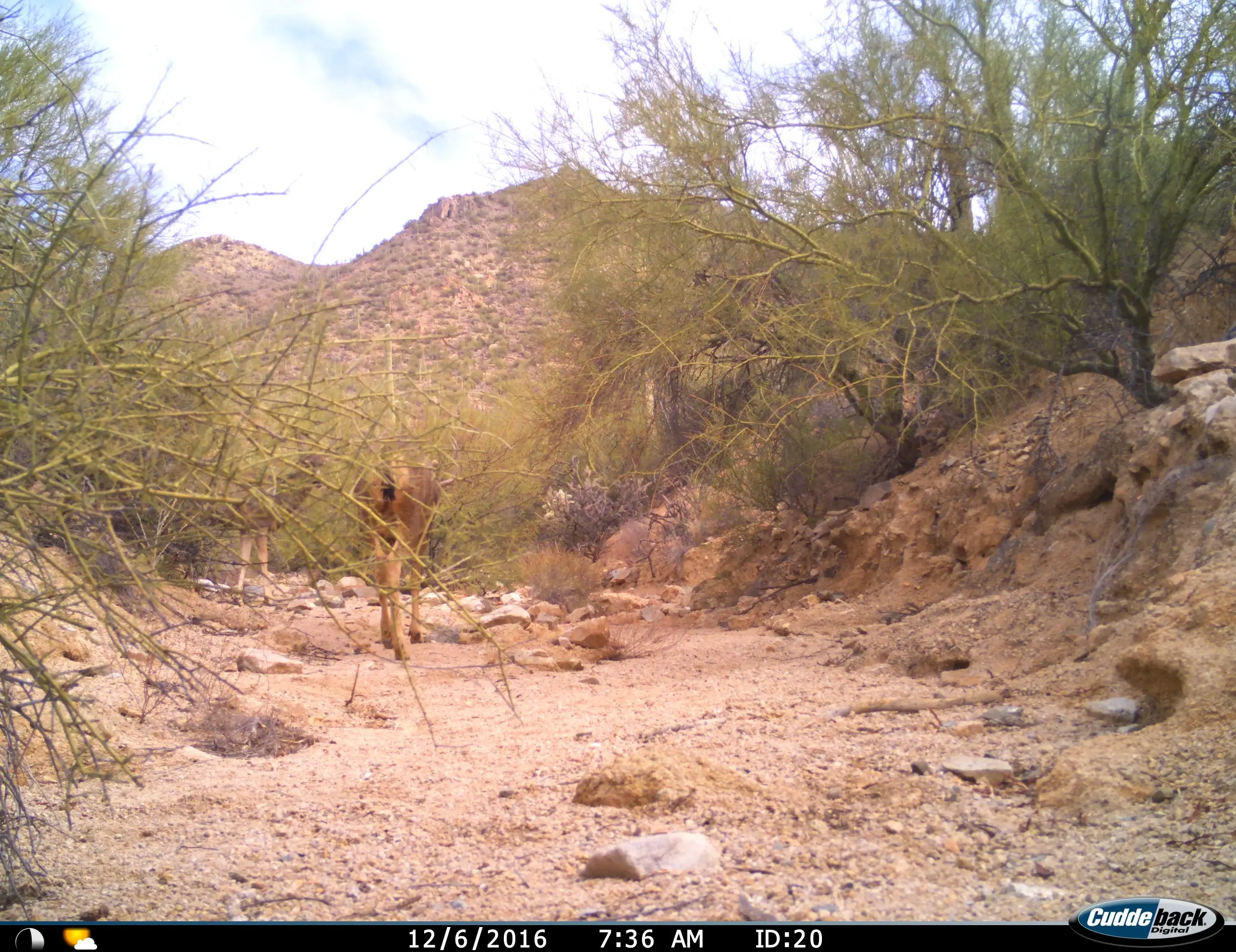
The mule deer (Odocoileus hemionus) is a deer indigenous to western North America; it is named for its ears, which are large like those of the mule. Two subspecies of mule deer are grouped into the black-tailed deer. Mule deer are found only on the western Great Plains, in the Rocky Mountains, in the southwest United States, and on the west coast of North America. Their range is much smaller than the related white-tailed deer, which are found throughout most of North America east of the Rocky Mountains and in the valleys of the Rocky Mountains from Idaho and Wyoming northward. Mule deer have also been introduced to Argentina and Kauai, Hawaii. Taxonomy Mule deer can be divided into two main groups: the mule deer (sensu stricto) and the black-tailed deer. The first group includes all subspecies, except O. h. columbianus and O. h. sitkensis, which are in the black-tailed deer group. The two main groups have been treated as separate species, but they hybridize, and virtually all recent authorities treat the mule deer and black-tailed deer as conspecific. Mule deer apparently evolved from the black-tailed deer. Despite this, the mtDNA of the white-tailed deer and mule deer is similar, but differs from that of the black-tailed deer. This may be the result of introgression, although hybrids between the mule deer and white-tailed deer are rare in the wild (apparently more common locally in West Texas), and the hybrid survival rate is low even in captivity. Many claims of observations of wild hybrids are not legitimate, as identification based on external features is complicated. Subspecies Some authorities have recognized O. h. crooki as a senior synonym of O. h. eremicus, but the type specimen of the former is a hybrid between the mule deer and white-tailed deer, so the name O. h. crooki is invalid. Additionally, the validity of O. h. inyoensis has been questioned, and the two insular O. h. cerrosensis and O. h. sheldoni may be synonyms of O. h. eremicus or O. h. peninsul
Hunting Season
Mule deer follow the same general deer seasons as white-tailed deer in West Virginia. See white-tailed deer season dates. Check county-specific regulations.
License & Regulations
A valid West Virginia hunting license is required for resident and non-resident hunters age 15 and older. Licenses can be purchased online through the West Virginia Division of Natural Resources website or at authorized license retailers. Additional stamps may be required: RB (Resource Ballot) or RRB (Resource Recovery Ballot) for antlerless deer, TRD (Turkey Stamp) for spring turkey, and the federal Migratory Bird Hunting and Conservation Stamp (Duck Stamp) for waterfowl. Hunters born on or after January 1, 1975 must successfully complete a hunter education course.
Frequently Asked Questions
Regulations for hunting Mule Deer in West Virginia
Mule deer in West Virginia are managed under the same general deer regulations. Hunters should check county-specific rules for any special restrictions.
When is Mule Deer hunting season in West Virginia?
The Mule Deer hunting season in West Virginia: Mule deer follow the same general deer seasons as white-tailed deer in West Virginia. See white-tailed deer season dates. Check county-specific regulations.
What is the bag limit for Mule Deer in West Virginia?
The bag limit for Mule Deer in West Virginia is: Same as white-tailed deer regulations. See county-specific rules.
What's another name for Mule Deer?
Mule Deer is also known as Mule deer, Black-tailed deer (subspecies) in West Virginia.
How to identify Mule Deer?
The mule deer (Odocoileus hemionus) is a deer indigenous to western North America; it is named for its ears, which are large like those of the mule. Two subspecies of mule deer are grouped into the black-tailed deer. Mule deer are found only on the western Great Plains, in the Rocky Mountains, in the southwest United States, and on the west coast of North America. Their range is much smaller than the related white-tailed deer, which are found throughout most of North America east of the Rocky Mo...
References
| State | Category | Directory | Subcategory | Content | Source |
|---|---|---|---|---|---|
| West Virginia | Hunting | Regulations | Season Dates | Mule deer follow the same general deer seasons as white-tailed deer in West Virginia. See white-tailed deer season dates | Link |
| West Virginia | Hunting | License | License & Fees | A valid West Virginia hunting license is required for resident and non-resident hunters age 15 and older. Licenses can b | Link |
| West Virginia | Hunting | Regulations | Regulations | Mule deer in West Virginia are managed under the same general deer regulations. Hunters should check county-specific rul | Link |