Also known as: Muskrat
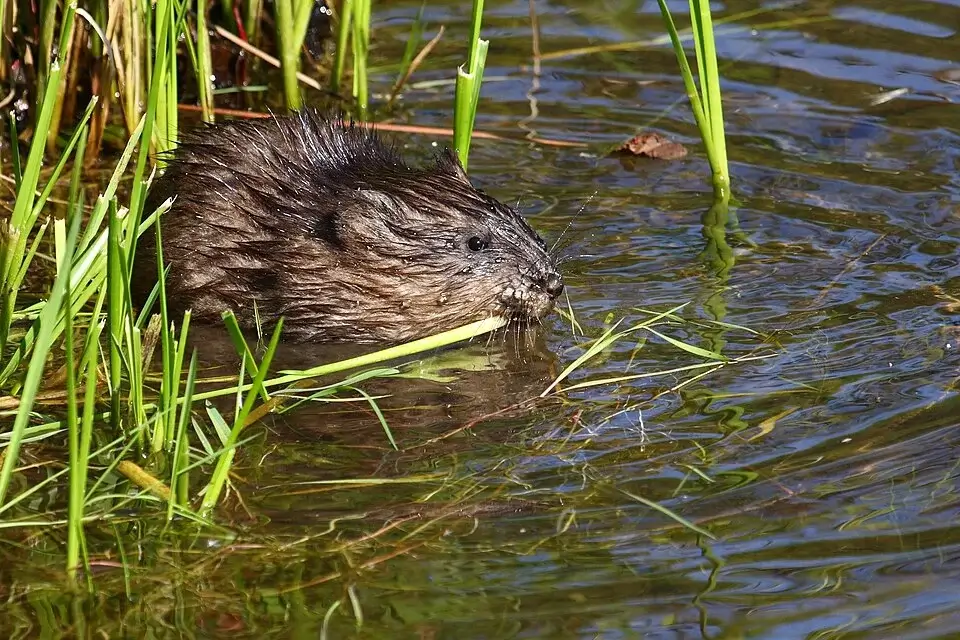
The muskrat or common muskrat (Ondatra zibethicus) is a medium-sized semiaquatic rodent. Adult muskrats weigh 0.6–2 kg (1+1⁄4–4+1⁄2 lb), with a body length (excluding the tail) of 20–35 cm (8–14 in). They are covered with short, thick fur of medium to dark brown color. Their long tails, covered with scales rather than hair, are laterally compressed and generate a small amount of thrust, with their webbed hind feet being the main means of propulsion and the unique tail mainly important in directional stability. Muskrats spend most of their time in the water and can swim underwater for 12 to 17 minutes. They live in families of a male and female pair and their young. They build nests to protect themselves from the cold and predators, often burrowed into the bank with an underwater entrance. Muskrats feed mostly on cattail and other aquatic vegetation but also eat small animals. Ondatra zibethicus is the only extant species in the genus Ondatra; its closest relative is the round-tailed muskrat (Neofiber alleni). It is the largest species in the subfamily Arvicolinae, which includes 142 other species of rodents, mostly voles and lemmings. The species is native to North America and an introduced species in parts of Eurasia and South America. The muskrat is found in various wetlands and has crucial effects on their ecology. It is also a resource of food and fur for humans. Description An adult muskrat is about 40–70 cm (16–28 in) long, half of that length being the tail, and weighs 0.6–2 kg (1+1⁄4–4+1⁄2 lb). That is about four times the weight of the brown rat (Rattus norvegicus), though an adult muskrat is only slightly longer. It is almost certainly the most prominent and heaviest member of the diverse family Cricetidae, which includes all voles, lemmings, and most mice native to the Americas, and hamsters in Eurasia. The muskrat is much smaller than a beaver (Castor canadensis), with which they often share a habitat. Muskrats are covered with short, thick fur, which is
Life History
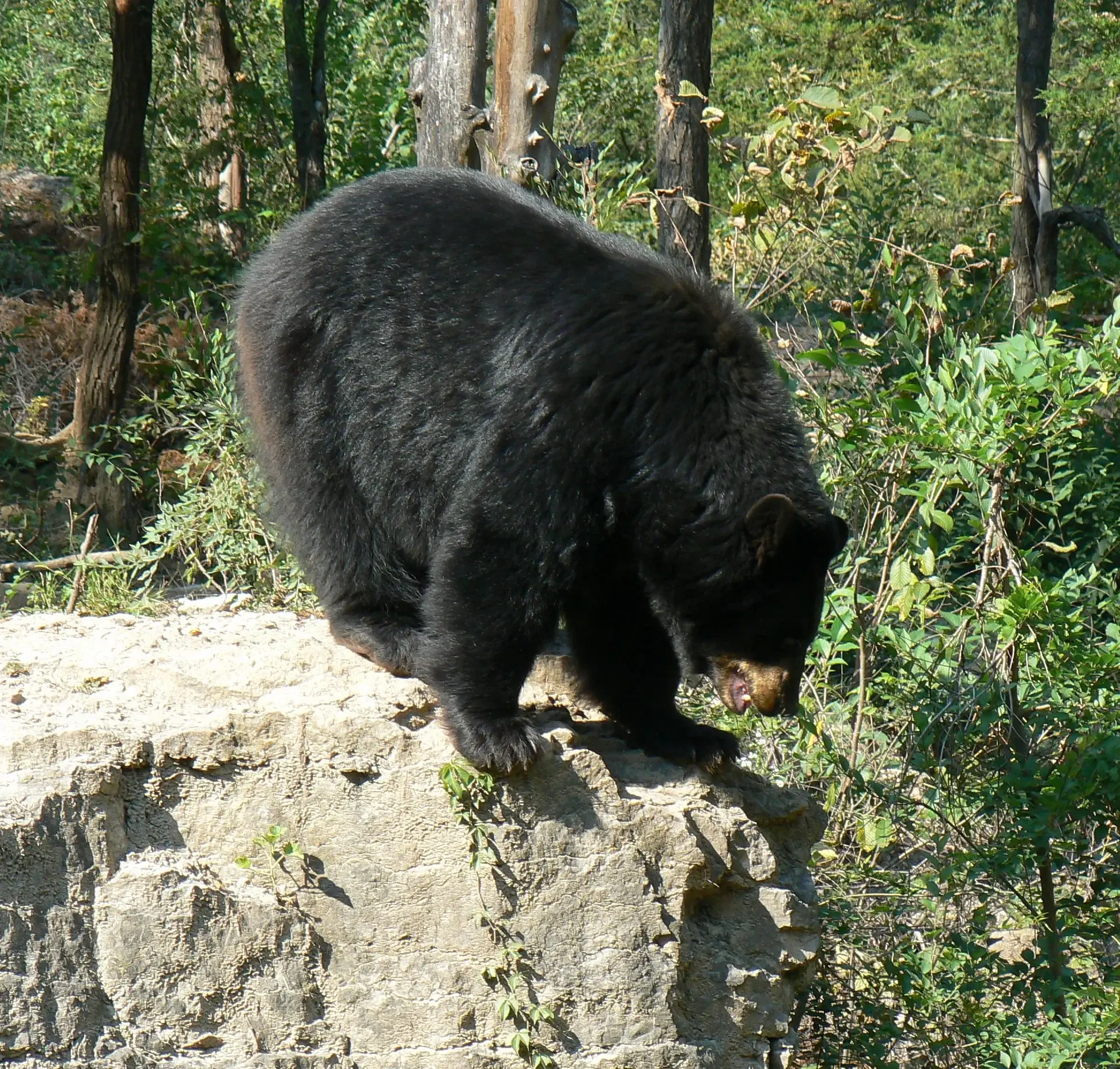
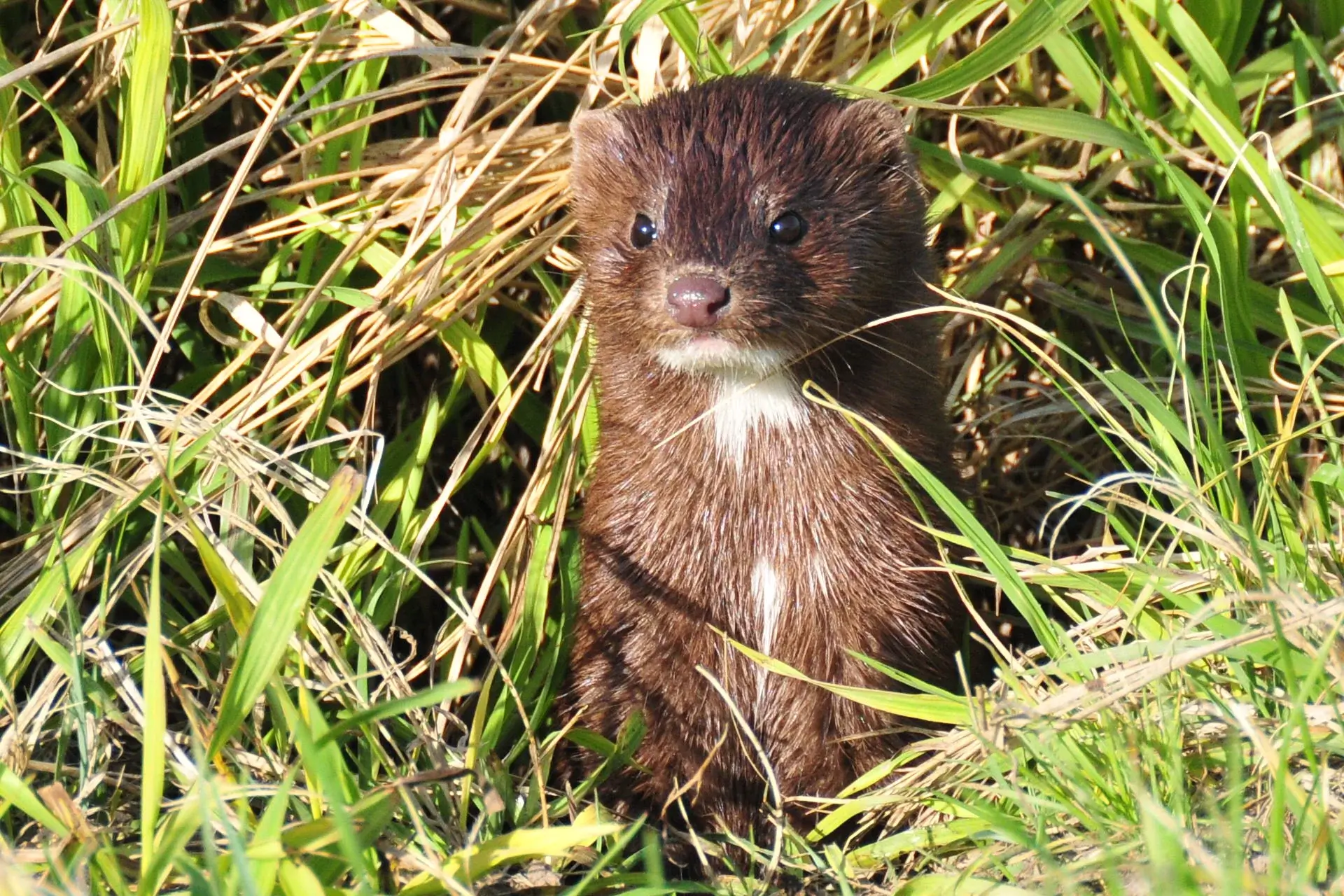
Muskrats normally live in families consisting of a male and female and their young. During the spring, they often fight with other muskrats over territory and potential mates. Many are injured or killed in these fights. Muskrat families build nests to protect themselves and their young from cold and predators. Muskrats burrow into the bank with an underwater entrance in streams, ponds, or lakes. These entrances are 15–20 cm (6–8 in) wide. In marshes, push-ups are constructed from vegetation and mud. These push-ups are up to 90 cm (3 ft) in height. In snowy areas, they keep the openings to their push-ups closed by plugging them with vegetation, which they replace daily. Some muskrat push-ups are swept away in spring floods and must be replaced yearly. Muskrats also build feeding platforms constructed in the water from cut pieces of vegetation supported by a branch structure. They help maintain open areas in marshes, which helps to provide habitat for aquatic birds. Muskrats are most active at night or near dawn and dusk. They feed on cattails and other aquatic vegetation. They do not store food for the winter, but sometimes eat the insides of their push-ups. While they may appear to steal food beavers have stored, more seemingly cooperative partnerships with beavers exist, as featured in the BBC David Attenborough wildlife documentary The Life of Mammals. Plant materials compose about 95% of their diets, but they also eat small animals, such as freshwater mussels, frogs, crayfish, fish, and small turtles. Muskrats follow trails they make in swamps and ponds. They continue to follow their trails under the ice when the water freezes. Muskrats provide an important food resource for many other animals, including mink, red and gray foxes, cougars, coyotes, wolves, boreal lynx, Canada lynx, bobcats, raccoons, brown and black bears, wolverines, American goshawks, bald eagles, golden eagles, gyrfalcons, great horned owls, cottonmouths, black snakes, American alligators, and bull sharks. Otters, snapping turtles, herons, bullfrogs, large fish such as pike and largemouth bass, and predatory land reptiles such as monitor lizards prey on baby muskrats. Caribou, moose, and elk sometimes feed on the vegetation which makes up muskrat push-ups during the winter when other food is scarce for them. In their introduced range in the former Soviet Union, the muskrat's greatest predator is the golden jackal. They can be completely eradicated in shallow water bodies. During the winter of 1948–49 in the Amu Darya (river in central Asia), muskrats constituted 12.3% of jackal feces contents, and 71% of muskrat houses were destroyed by jackals, 16% of which froze and became unsuitable for muskrat occupation. Jackals also harm the muskrat industry by eating muskrats caught in traps or taking skins left out to dry. Muskrats, like most rodents, are prolific breeders. Females can have two or three litters a year of six to eight young each. The babies are born small and hairles
Hunting Season
Trapping: Nov 1 - Feb 28.
License & Regulations
A valid West Virginia hunting license is required for resident and non-resident hunters age 15 and older. Licenses can be purchased online through the West Virginia Division of Natural Resources website or at authorized license retailers. Additional stamps may be required: RB (Resource Ballot) or RRB (Resource Recovery Ballot) for antlerless deer, TRD (Turkey Stamp) for spring turkey, and the federal Migratory Bird Hunting and Conservation Stamp (Duck Stamp) for waterfowl. Hunters born on or after January 1, 1975 must successfully complete a hunter education course.
Frequently Asked Questions
Regulations for hunting Muskrat in West Virginia
Muskrat trapping season runs from November through February. No bag limit.
When is Muskrat hunting season in West Virginia?
The Muskrat hunting season in West Virginia: Trapping: Nov 1 - Feb 28.
What's another name for Muskrat?
Muskrat is also known as Muskrat in West Virginia.
How to identify Muskrat?
The muskrat or common muskrat (Ondatra zibethicus) is a medium-sized semiaquatic rodent. Adult muskrats weigh 0.6–2 kg (1+1⁄4–4+1⁄2 lb), with a body length (excluding the tail) of 20–35 cm (8–14 in). They are covered with short, thick fur of medium to dark brown color. Their long tails, covered with scales rather than hair, are laterally compressed and generate a small amount of thrust, with their webbed hind feet being the main means of propulsion and the unique tail mainly important in directi...
References
| State | Category | Directory | Subcategory | Content | Source |
|---|---|---|---|---|---|
| West Virginia | Hunting | Regulations | Season Dates | Trapping: Nov 1 - Feb 28. | Link |
| West Virginia | Hunting | License | License & Fees | A valid West Virginia hunting license is required for resident and non-resident hunters age 15 and older. Licenses can b | Link |
| West Virginia | Hunting | Regulations | Regulations | Muskrat trapping season runs from November through February. No bag limit. | Link |