Also known as: Red fox
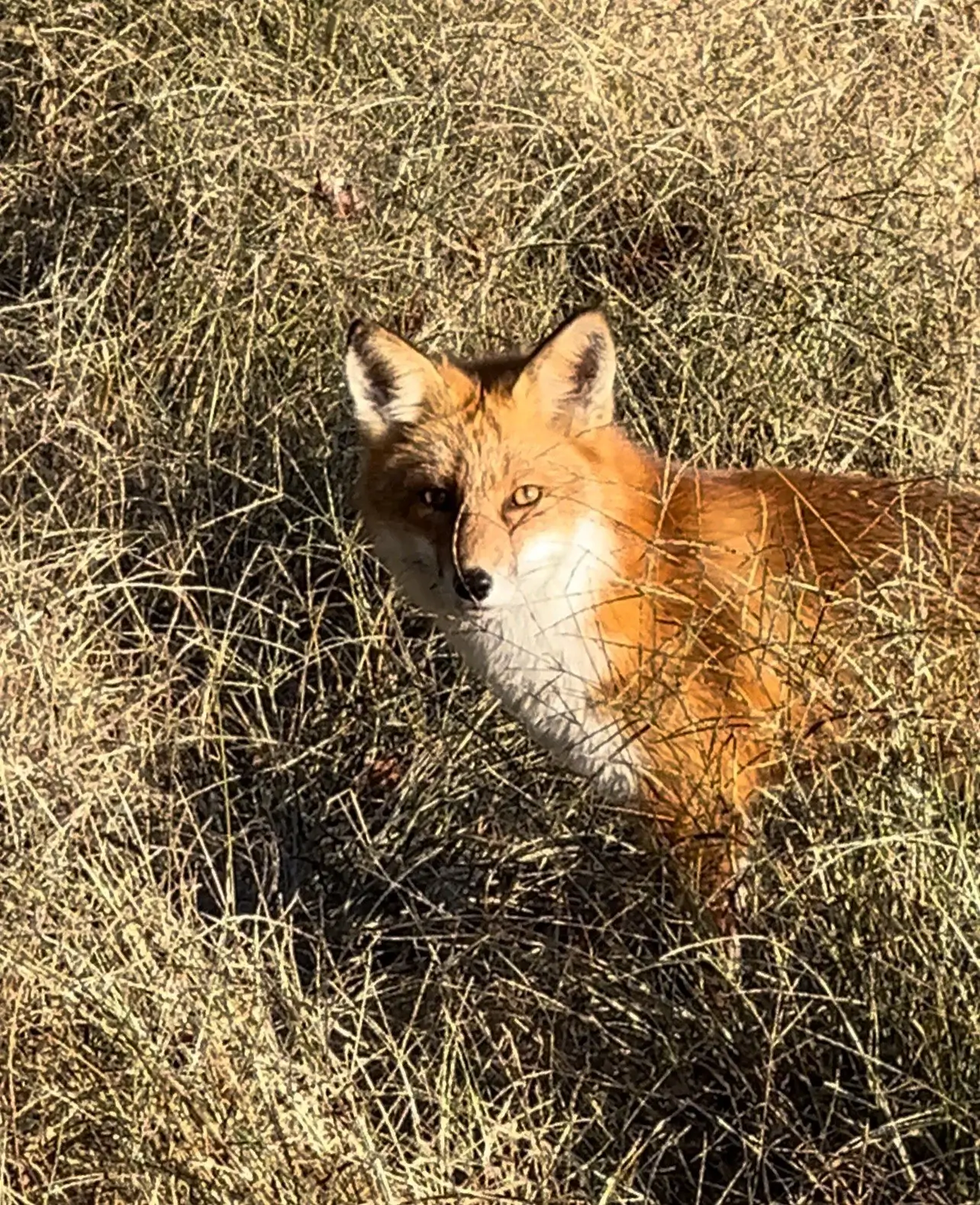
The red fox is the largest of the true foxes and one of the most widely distributed members of the order Carnivora. It is present across the entire Northern Hemisphere, including most of North America, Europe and Asia, as well as parts of North Africa. Its range has expanded alongside human settlement, with the species having been introduced to Australia, where it preys on native small and medium-sized rodents and marsupials. The red fox is listed as of least concern on the IUCN Red List. Because of its impact on native species, it is also included on the list of the "world's 100 worst invasive species".
Habitat & Range
Red foxes have been extremely successful in colonising built-up environments, particularly lower-density suburbs, although they have also been sighted in densely populated urban areas far from the countryside. Throughout the 20th century, they have established themselves in many Australian, European, Japanese and North American cities. The species first colonised British cities during the 1930s, entering Bristol and London during the 1940s, and later established themselves in Cambridge and Norwich. In Ireland, they are now common in suburban Dublin. In Australia, red foxes were recorded in Melbourne as early as the 1930s, while in Zurich, Switzerland, they only started appearing in the 1980s. Urban red foxes are most common in residential suburbs consisting of privately owned, low-density housing. They are rare in areas where industry, commerce or council-rented houses predominate. In these latter areas, the distribution is of a lower average density because they rely less on human resources; the home range of these foxes average from 80–90 ha (0.80–0.90 km2; 200–220 acres), whereas those in more residential areas average from 25–40 ha (0.25–0.40 km2; 62–99 acres). In the UK, it is estimated that the number of urban foxes rose from 33,000 in 1995 to 150,000 foxes in 2017. City-dwelling red foxes may scavenge food from litter bins and bin bags: research in 2025 suggests that human-generated food comprises 35% of urban fox diet, compared to just 6% for their rural counterparts. As a result of this difference in diet between urban and rural populations, city-dwelling red foxes tend to grow larger than their rural counterparts. It has been observed that urban foxes tend to have shorter and wider muzzles, smaller braincases and reduced sexual dimorphism relative to rural individuals: this is thought to be as a result of differing biomechanical demands of feeding or cognition between habitats.
Hunting Season
Hunting: Nov 1 - Feb 28. Night hunting with artificial light: Jan 1 - Feb 28. Trapping: Nov 1 - Feb 28.
License & Regulations
A valid West Virginia hunting license is required for resident and non-resident hunters age 15 and older. Licenses can be purchased online through the West Virginia Division of Natural Resources website or at authorized license retailers. Additional stamps may be required: RB (Resource Ballot) or RRB (Resource Recovery Ballot) for antlerless deer, TRD (Turkey Stamp) for spring turkey, and the federal Migratory Bird Hunting and Conservation Stamp (Duck Stamp) for waterfowl. Hunters born on or after January 1, 1975 must successfully complete a hunter education course.
Frequently Asked Questions
Regulations for hunting Red Fox in West Virginia
Red fox hunting and trapping season runs November through February. No bag limit. Night hunting with artificial light is permitted from January 1 through February 28.
When is Red Fox hunting season in West Virginia?
The Red Fox hunting season in West Virginia: Hunting: Nov 1 - Feb 28. Night hunting with artificial light: Jan 1 - Feb 28. Trapping: Nov 1 - Feb 28.
What's another name for Red Fox?
Red Fox is also known as Red fox in West Virginia.
How to identify Red Fox?
The red fox is the largest of the true foxes and one of the most widely distributed members of the order Carnivora. It is present across the entire Northern Hemisphere, including most of North America, Europe and Asia, as well as parts of North Africa. Its range has expanded alongside human settlement, with the species having been introduced to Australia, where it preys on native small and medium-sized rodents and marsupials. The red fox is listed as of least concern on the IUCN Red List. Becaus...
References
| State | Category | Directory | Subcategory | Content | Source |
|---|---|---|---|---|---|
| West Virginia | Hunting | Regulations | Season Dates | Hunting: Nov 1 - Feb 28. Night hunting with artificial light: Jan 1 - Feb 28. Trapping: Nov 1 - Feb 28. | Link |
| West Virginia | Hunting | License | License & Fees | A valid West Virginia hunting license is required for resident and non-resident hunters age 15 and older. Licenses can b | Link |
| West Virginia | Hunting | Regulations | Regulations | Red fox hunting and trapping season runs November through February. No bag limit. Night hunting with artificial light is | Link |