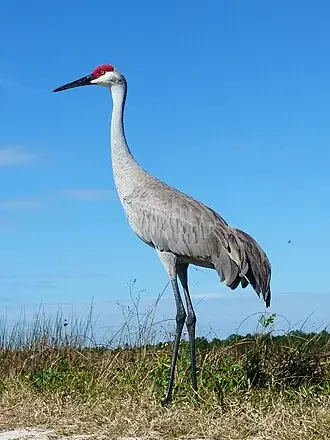
The sandhill crane is a species of large crane of North America and extreme northeastern Siberia. The common name of this bird refers to its habitat, such as the Platte River, on the edge of Nebraska's Sandhills on the American Great Plains. Sandhill cranes are known to frequent the edges of bodies of water. The central Platte River Valley in Nebraska is the most important stopover area for the nominotypical subspecies, the lesser sandhill crane (A. c. canadensis), with up to 450,000 of these birds migrating through annually.
Life History
Sandhill cranes are fairly social birds that usually live in pairs or family groups through the year. During migration and winter, unrelated cranes come together to form "survival groups" that forage and roost together. Such groups often congregate at migration and winter sites, sometimes in the thousands. Sandhill cranes are mainly herbivorous, but eat various types of food, depending on availability. They often feed with their bills down to the ground as they root around for seeds and other foods, in shallow wetlands with vegetation or various upland habitats. Cranes readily eat cultivated foods such as corn, wheat, cottonseed, and sorghum. Waste corn is useful to cranes preparing for migration, providing them with nutrients for the long journey. Among northern races of sandhill cranes, their diet is most varied, especially among breeding birds. They variously feed on berries, small mammals, insects, snails, reptiles, and amphibians.
Status, Trends & Threats
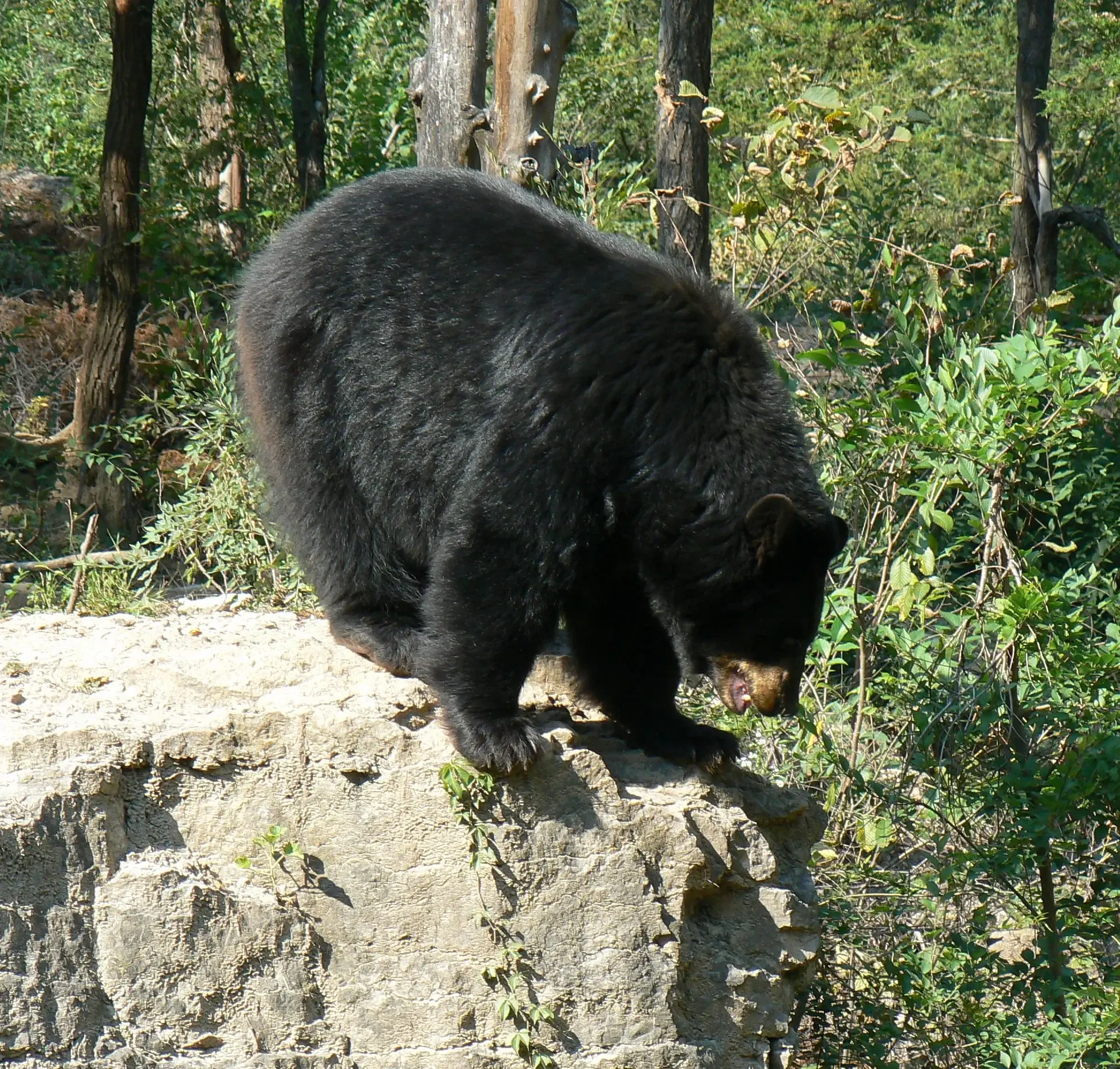
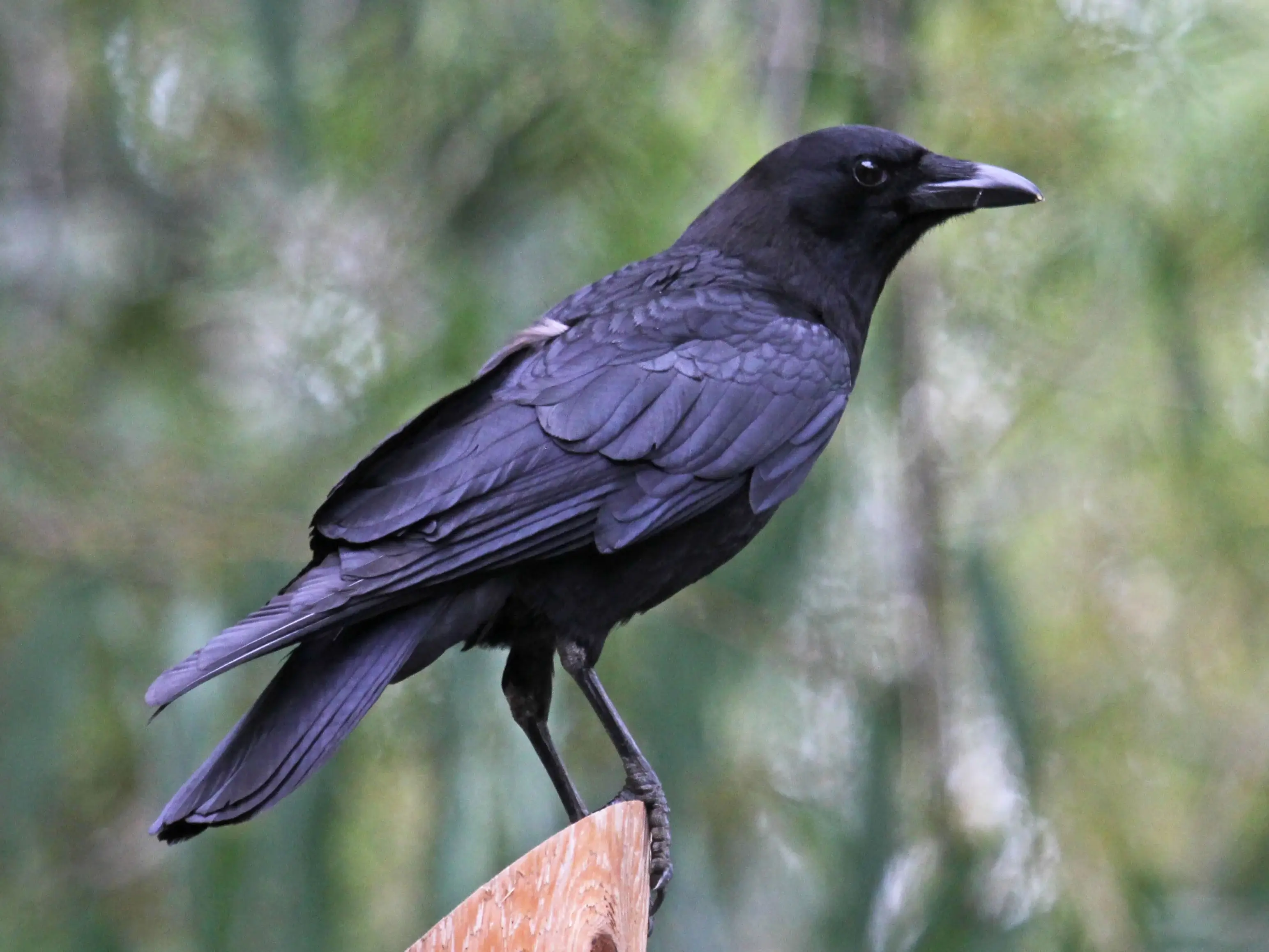
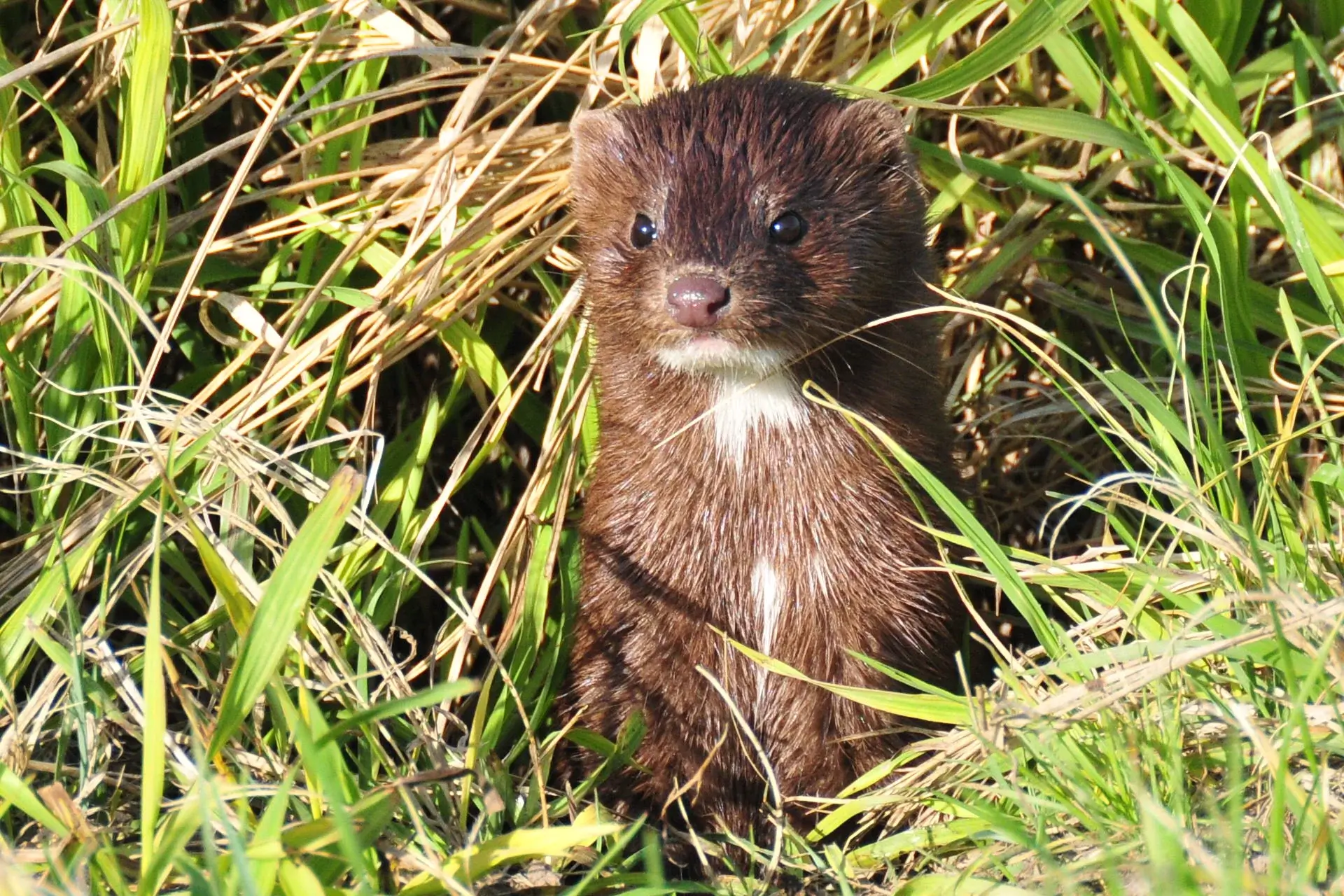
As a conspicuous ground-dwelling species, sandhill cranes are at risk from predators. Corvids, such as ravens and crows, gulls, jaegers, raptors, and mammals such as foxes, coyotes, and raccoons feed on young cranes and eggs. In Oregon and California, the most serious predators of chicks are reportedly coyotes, ravens, raccoons, American mink, and great horned owls, roughly in descending order. Cranes of all ages can be hunted by both North American species of eagles, bobcats, and possibly American alligators. Additionally, even a much smaller peregrine falcon was reported to have successfully killed a 3.1 kg (6.8 lb) adult sandhill crane in a stoop. In New Mexico, humans hunt them with a permit granted in a lottery draw during late fall. In total, 17 states allow hunting of sandhill cranes. Sandhill cranes defend themselves and their young from aerial predators by jumping and kicking. Actively brooding adults are more likely to react aggressively to potential predators to defend their chicks than wintering birds, which most often normally try to evade attacks on foot or in flight. For land predators such as dogs, foxes, and coyotes, they move forward, often hissing, with their wings open and bills pointed. If the predator persists, the crane stabs with its bill and kicks. It can even kill predators by piercing through the skull with its sharp beak, and even coyotes can be killed. In Florida, sandhill cranes may be eaten by some growth stage of invasive snakes, such as Burmese pythons, reticulated pythons, Southern African rock pythons, Central African rock pythons, boa constrictors, yellow anacondas, Bolivian anacondas, dark-spotted anacondas, and green anacondas.
Hunting Season
Check current West Virginia Migratory Bird Hunting Regulations. Limited season if available.
License & Regulations
A valid West Virginia hunting license is required for resident and non-resident hunters age 15 and older. Licenses can be purchased online through the West Virginia Division of Natural Resources website or at authorized license retailers. Additional stamps may be required: RB (Resource Ballot) or RRB (Resource Recovery Ballot) for antlerless deer, TRD (Turkey Stamp) for spring turkey, and the federal Migratory Bird Hunting and Conservation Stamp (Duck Stamp) for waterfowl. Hunters born on or after January 1, 1975 must successfully complete a hunter education course.
Frequently Asked Questions
Regulations for hunting Sandhill Crane in West Virginia
Sandhill crane hunting in West Virginia follows federal migratory bird regulations. HIP registration is required. Check current regulations for season availability.
When is Sandhill Crane hunting season in West Virginia?
The Sandhill Crane hunting season in West Virginia: Check current West Virginia Migratory Bird Hunting Regulations. Limited season if available.
What is the bag limit for Sandhill Crane in West Virginia?
The bag limit for Sandhill Crane in West Virginia is: Follow federal and state regulations if season is open.
How to identify Sandhill Crane?
The sandhill crane is a species of large crane of North America and extreme northeastern Siberia. The common name of this bird refers to its habitat, such as the Platte River, on the edge of Nebraska's Sandhills on the American Great Plains. Sandhill cranes are known to frequent the edges of bodies of water. The central Platte River Valley in Nebraska is the most important stopover area for the nominotypical subspecies, the lesser sandhill crane (A. c. canadensis), with up to 450,000 of these bi...
References
| State | Category | Directory | Subcategory | Content | Source |
|---|---|---|---|---|---|
| West Virginia | Hunting | Regulations | Season Dates | Check current West Virginia Migratory Bird Hunting Regulations. Limited season if available. | Link |
| West Virginia | Hunting | License | License & Fees | A valid West Virginia hunting license is required for resident and non-resident hunters age 15 and older. Licenses can b | Link |
| West Virginia | Hunting | Regulations | Regulations | Sandhill crane hunting in West Virginia follows federal migratory bird regulations. HIP registration is required. Check | Link |