Also known as: Whitetail, Virginia deer
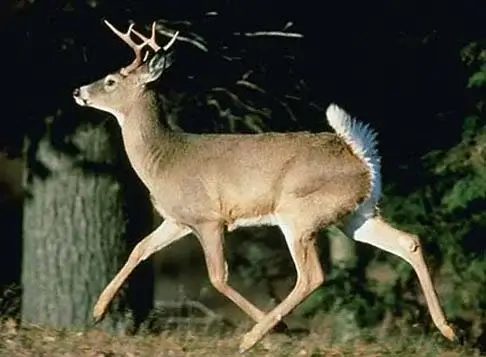
The white-tailed deer (Odocoileus virginianus), also known commonly as the whitetail and the Virginia deer, is a medium-sized species of deer native to North and South America. It is the most widely distributed mainland ungulate herbivore in the Americas; coupled with its natural predator, the mountain lion (Puma concolor), it is one of the most widely distributed terrestrial mammal species in the Americas and the world. Highly adaptable, the various subspecies of white-tailed deer inhabit many different ecosystems, from arid grasslands to the Amazon and Orinoco basins; from the Llanos to the high-elevation terrain of the Andes. Distribution In North America, the white-tailed deer is very common (even considered a nuisance in some areas) in states to the east and south of the Rocky Mountains, including southwestern Arizona, with the exception of the American West Coast and Baja California Peninsula, where its ecological niche is filled by the black-tailed deer (in the Pacific Northwest) or the mule deer (Odocoileus hemionus) from that point west except for mixed deciduous riparian corridors, river valley bottomlands, and lower foothills of the northern Rocky Mountain region from Wyoming west to eastern Washington and eastern Oregon, and north to northeastern British Columbia and southern Yukon, including in the Montana valley and foothill grasslands. The westernmost population of the species, known as the Columbian white-tailed deer, was once widespread in the mixed forests along the Willamette and Cowlitz River valleys of western Oregon and southwestern Washington, but current numbers are considerably reduced, and it is classified as near-threatened by the IUCN. This population is separated from other white-tailed deer populations. Texas is home to by far the most individual white-tailed deer of all U.S. states, Canadian provinces, or Latin American countries, with an estimated population of 5.3 million, with both wild deer and farmed herds, the latter raised for l
Habitat & Range
In North America, the white-tailed deer is very common (even considered a nuisance in some areas) in states to the east and south of the Rocky Mountains, including southwestern Arizona, with the exception of the American West Coast and Baja California Peninsula, where its ecological niche is filled by the black-tailed deer (in the Pacific Northwest) or the mule deer (Odocoileus hemionus) from that point west except for mixed deciduous riparian corridors, river valley bottomlands, and lower foothills of the northern Rocky Mountain region from Wyoming west to eastern Washington and eastern Oregon, and north to northeastern British Columbia and southern Yukon, including in the Montana valley and foothill grasslands. The westernmost population of the species, known as the Columbian white-tailed deer, was once widespread in the mixed forests along the Willamette and Cowlitz River valleys of western Oregon and southwestern Washington, but current numbers are considerably reduced, and it is classified as near-threatened by the IUCN. This population is separated from other white-tailed deer populations. Texas is home to by far the most individual white-tailed deer of all U.S. states, Canadian provinces, or Latin American countries, with an estimated population of 5.3 million, with both wild deer and farmed herds, the latter raised for large rack size and breeding. High populations of white-tailed deer are known to exist on the Edwards Plateau of Central Texas, as well as in Illinois, Indiana, Iowa, Maryland, Michigan, Minnesota, Mississippi, Missouri, New Jersey, New York, North Dakota, Ohio, Pennsylvania, and Wisconsin. The conversion of land adjacent to the Canadian Rockies to agricultural use, and partial clear-cutting of coniferous trees (resulting in widespread deciduous vegetation), has been favorable to the white-tailed deer and has extended its distribution to as far northwest as the Yukon. Populations of white-tailed deer around the Great Lakes have expanded their
Life History
White-tailed deer are generalists and can adapt to a wide variety of habitats. The largest deer occur in the temperate regions of North America. The northern white-tailed deer (O. v. borealis), Dakota white-tailed deer (O. v. dacotensis), and northwest white-tailed deer (O. v. ochrourus) are some of the largest animals, with large antlers. The smallest deer occur in the Florida Keys and in partially wooded lowlands in the Neotropics. Although most often thought of as forest animals depending on relatively small openings and edges, white-tailed deer can equally adapt themselves to life in more open prairie, savanna woodlands, and sage communities as in the Southwestern United States and northern Mexico. These savanna-adapted deer have relatively large antlers in proportion to their body size and large tails. Also, a noticeable difference exists in size between male and female deer of the savannas. The Texas white-tailed deer (O. v. texanus), of the prairies and oak savannas of Texas and parts of Mexico, are the largest savanna-adapted deer in the Southwest, with impressive antlers that might rival deer found in Canada and the northern United States. Populations of Arizona (O. v. couesi) and Carmen Mountains (O. v. carminis) white-tailed deer inhabit montane mixed oak and pine woodland communities. The Arizona and Carmen Mountains deer are smaller, but may also have impressive antlers, considering their size. The white-tailed deer of the Llanos region of Colombia and Venezuela (O. v. apurensis and O. v. gymnotis) have antler dimensions similar to the Arizona white-tailed deer. In some western regions of North America the white-tailed deer range overlaps with those of the mule deer. White-tail incursions in the Trans-Pecos region of Texas have resulted in some hybrids. In the extreme north of the range, their habitat is also used by moose in some areas. White-tailed deer may occur in areas that are also exploited by elk (wapiti) such as in mixed deciduous river valley bottomlands and formerly in the mixed deciduous forest of eastern United States. In places such as Glacier National Park in Montana and several national parks in the Columbian Mountains (Mount Revelstoke National Park) and Canadian Rocky Mountains, as well as in the Yukon Territory (Yoho National Park and Kootenay National Park), white-tailed deer are shy and more reclusive than the coexisting mule deer, elk and moose. Central American white-tailed deer prefer tropical and subtropical dry broadleaf forests, seasonal mixed deciduous forests, savanna, and adjacent wetland habitats over dense tropical and subtropical moist broadleaf forests. South American subspecies of white-tailed deer live in two types of environment. The first type, similar to the Central American deer, consists of savannas, dry deciduous forests, and riparian corridors that cover much of Venezuela and eastern Colombia. The other type is the higher elevation mountain grassland/mixed forest ecozones in the Andes Mount
Status, Trends & Threats
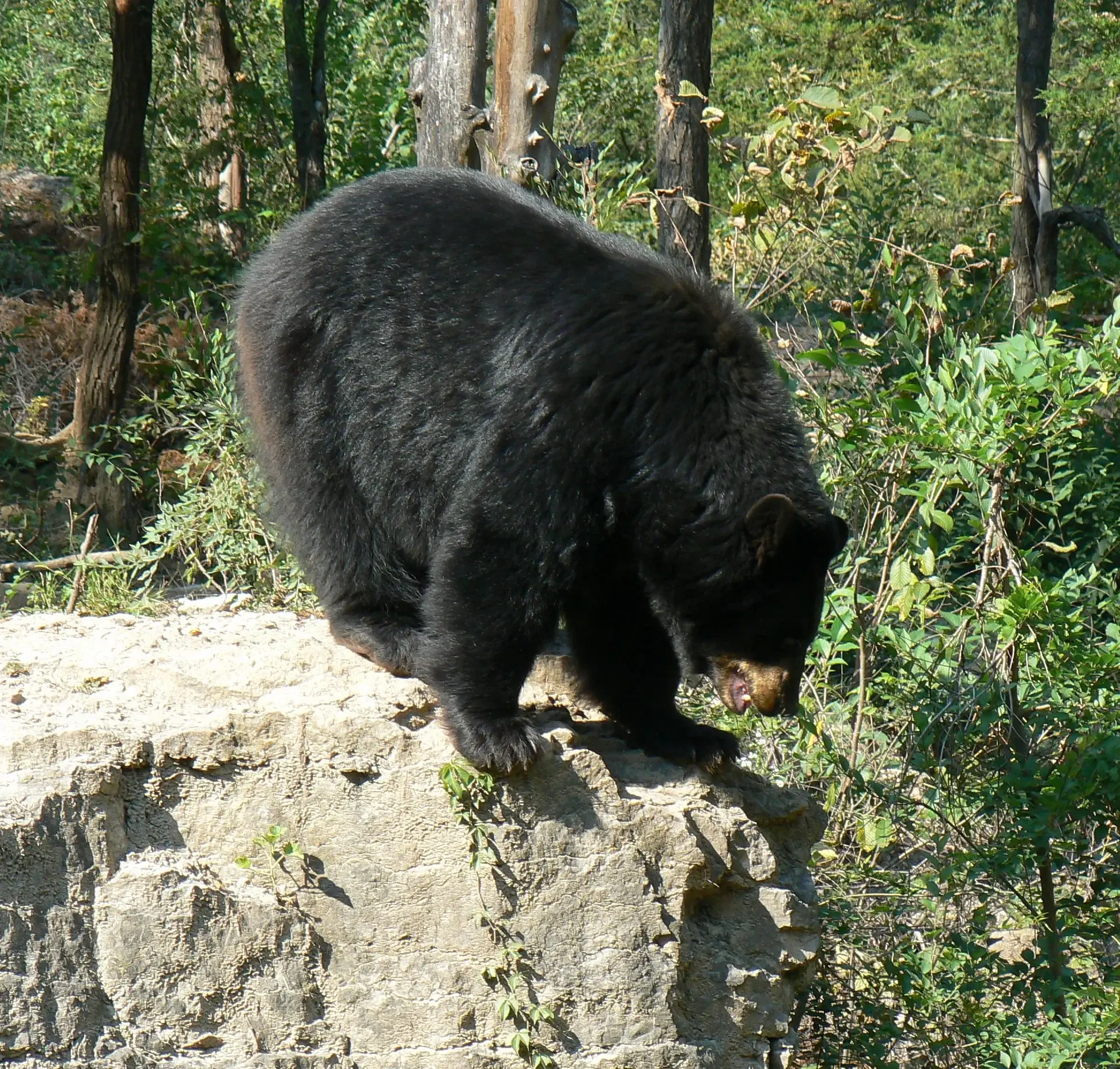
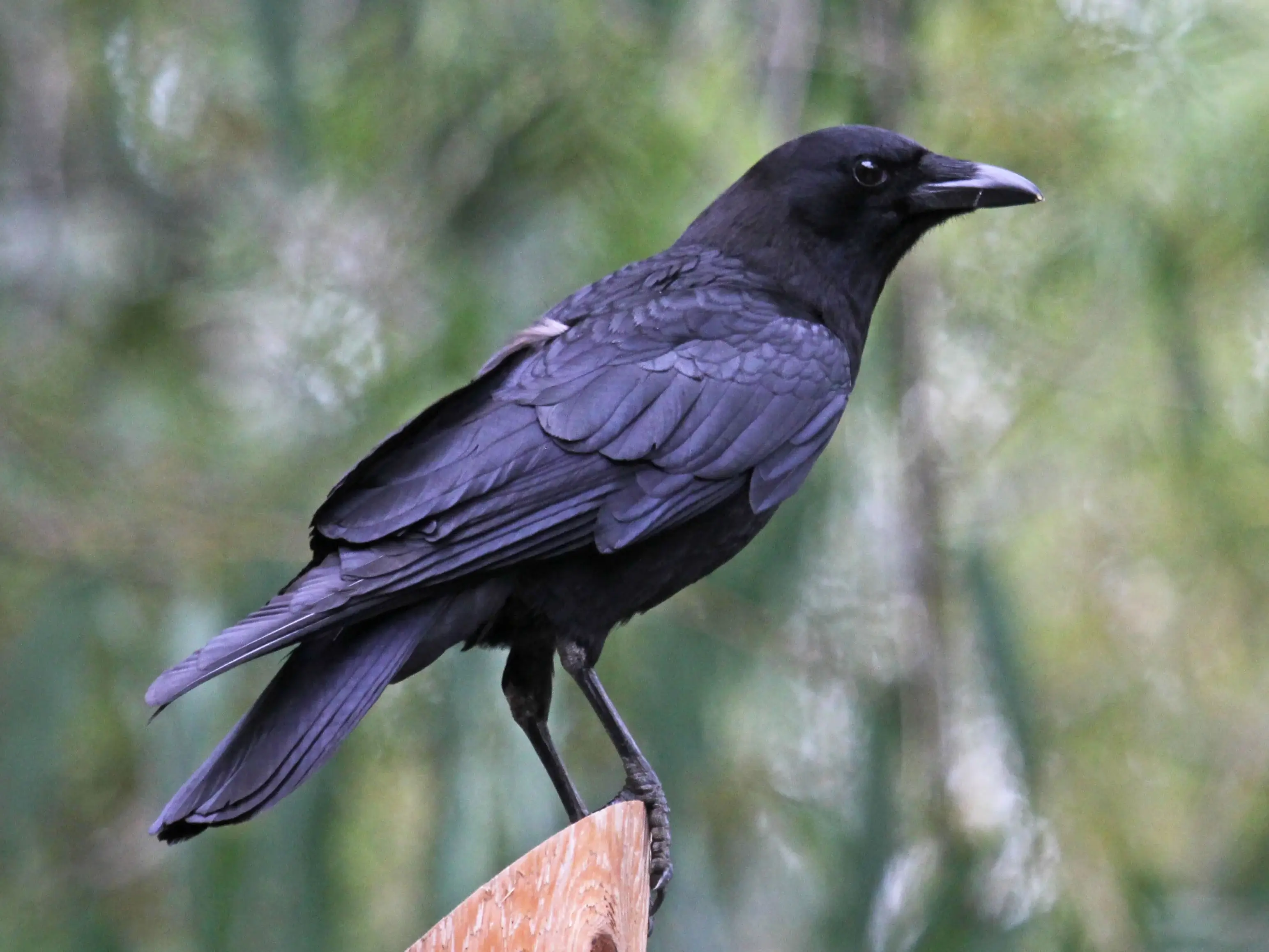
There are several natural predators of white-tailed deer, with wolves, cougars, American alligators, jaguars (in the American southwest, Mexico, and Central and South America) and humans being the most effective natural predators. Aside from humans, these predators frequently pick out easily caught young or infirm deer (which is believed to improve the genetic stock of a population), but can and do take healthy adults of any size. Bobcats, Canada lynx, grizzly and American black bears, wolverines, and packs of coyotes usually prey mainly on fawns. Bears may sometimes attack adult deer, while lynxes, coyotes, and wolverines are most likely to take adult deer when the ungulates are weakened by harsh winter weather. Many scavengers rely on deer as carrion, including New World vultures, raptors, red and gray foxes, and corvids. Few wild predators can afford to be picky and any will readily consume deer as carrion. Records exist of American crows and common ravens attempting to prey on white-tailed deer fawns by pecking around their face and eyes, though no accounts of success are given. Occasionally, both golden and bald eagles may capture deer fawns with their talons. In one case, a golden eagle was filmed in Illinois unsuccessfully trying to prey on a large mature white-tailed deer. White-tailed deer typically respond to the presence of potential predators by breathing very heavily (also called blowing) and fleeing. When they blow, the sound alerts other deer in the area. As they run, the flash of their white tails warns other deer. This especially serves to warn fawns when their mother is alarmed. Most natural predators of white-tailed deer hunt by ambush, although canids may engage in an extended chase, hoping to exhaust the prey. Felids typically try to suffocate the deer by biting the throat. Cougars and jaguars will initially knock the deer off balance with their powerful forelegs, whereas the smaller bobcats and lynxes will jump astride the deer to deliver a ki
Hunting Season
Buck Firearms: Nov 24 - Dec 7. Archery/Crossbow: Sep 27 - Dec 31. Antlerless (selected counties): Oct 23-26, Nov 24-Dec 7, Dec 11-14, Dec 28-31. Muzzleloader: Dec 15-21. Youth/Class Q/Class XS: Oct 18-19, Dec 26-27. Mountaineer Heritage: Jan 8-11.
License & Regulations
A valid West Virginia hunting license is required for resident and non-resident hunters age 15 and older. Licenses can be purchased online through the West Virginia Division of Natural Resources website or at authorized license retailers. Additional stamps may be required: RB (Resource Ballot) or RRB (Resource Recovery Ballot) for antlerless deer, TRD (Turkey Stamp) for spring turkey, and the federal Migratory Bird Hunting and Conservation Stamp (Duck Stamp) for waterfowl. Hunters born on or after January 1, 1975 must successfully complete a hunter education course.
Frequently Asked Questions
Regulations for hunting White-tailed Deer in West Virginia
West Virginia offers extensive deer hunting seasons including buck firearms, archery/crossbow, muzzleloader, antlerless, and youth seasons. Bag limits and antler restrictions vary by county. Hunters must possess appropriate licenses and stamps (RB or RRB for antlerless deer in most counties). Chronic Wasting Disease (CWD) testing is required in CWD Management Areas. Electronic registration is mandatory for all deer harvests.
When is White-tailed Deer hunting season in West Virginia?
The White-tailed Deer hunting season in West Virginia: Buck Firearms: Nov 24 - Dec 7. Archery/Crossbow: Sep 27 - Dec 31. Antlerless (selected counties): Oct 23-26, Nov 24-Dec 7, Dec 11-14, Dec 28-31. Muzzleloader: Dec 15-21. Youth/Class Q/Class XS: Oct 18-19, Dec 26-27. Mountaineer Heritage: Jan 8-11.
What is the bag limit for White-tailed Deer in West Virginia?
The bag limit for White-tailed Deer in West Virginia is: See county-specific regulations (pp. 15-20 of Hunting & Trapping Regulations). Typically 1 buck per season, antlerless permits vary by county.
What's another name for White-tailed Deer?
White-tailed Deer is also known as Whitetail, Virginia deer in West Virginia.
What is the rut timing for white-tailed deer in West Virginia?
The rut (breeding season) for white-tailed deer in West Virginia typically peaks in mid-to-late November, coinciding with the buck firearms season. During this period, bucks become less cautious and travel more actively in search of does.
What do white-tailed deer eat in West Virginia?
White-tailed deer are versatile herbivores. In West Virginia, they consume a variety of vegetation including grasses, forbs, agricultural crops, acorns and other mast, berries, and woody browse. Their diet shifts seasonally based on food availability.
How to identify White-tailed Deer?
The white-tailed deer (Odocoileus virginianus), also known commonly as the whitetail and the Virginia deer, is a medium-sized species of deer native to North and South America. It is the most widely distributed mainland ungulate herbivore in the Americas; coupled with its natural predator, the mountain lion (Puma concolor), it is one of the most widely distributed terrestrial mammal species in the Americas and the world. Highly adaptable, the various subspecies of white-tailed deer inhabit many ...
References
| State | Category | Directory | Subcategory | Content | Source |
|---|---|---|---|---|---|
| West Virginia | Hunting | Regulations | Season Dates | Buck Firearms: Nov 24 - Dec 7. Archery/Crossbow: Sep 27 - Dec 31. Antlerless (selected counties): Oct 23-26, Nov 24-Dec | Link |
| West Virginia | Hunting | License | License & Fees | A valid West Virginia hunting license is required for resident and non-resident hunters age 15 and older. Licenses can b | Link |
| West Virginia | Hunting | Regulations | Regulations | West Virginia offers extensive deer hunting seasons including buck firearms, archery/crossbow, muzzleloader, antlerless, | Link |