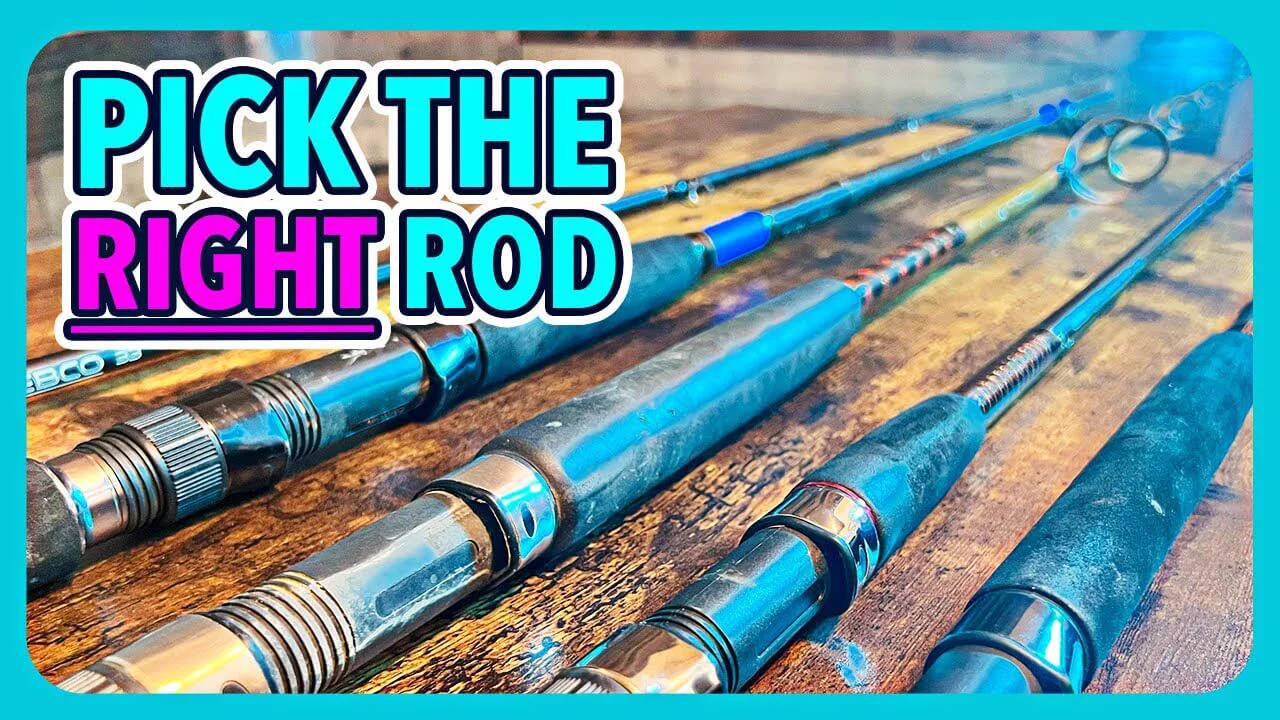
You walk into a sporting goods store, and there they are—rows upon rows of fishing rods stretching from floor to ceiling. Some cost $30, others $230, and they all look pretty similar. If you've ever felt overwhelmed standing in front of that wall of rods, you're not alone. The sheer number of options on the market today can make anyone's head spin.
The good news? Choosing a fishing rod doesn't have to be complicated. By understanding a few basic concepts—rod types, power, action, and ratings—you'll be able to pick the right rod for your needs without overthinking it. And as you'll see, the rod itself might not be the most critical piece of your setup after all.
Know the Two Main Types of Fishing Rods
Before anything else, you need to match your rod to your reel. Fishing rods come in two primary types, and they are not interchangeable.
Spinning Rods
A spinning rod is designed to work with a spinning reel. You can identify it by looking at the reel seat—the area where the reel attaches. On a spinning rod, the reel sits underneath the rod, hanging downward. The first guide (the ring closest to the handle) is noticeably larger than the others. This larger ring helps the line flow off the spinning reel's spool with minimal friction.
Casting Rods
A casting rod works with baitcasting reels, conventional reels, and spin cast reels. The reel sits on top of the rod. Look for a small trigger-like piece of plastic or metal protruding from the reel seat—this helps you hold the rod more comfortably when using a baitcaster. The guides on a casting rod are also smaller than those on a spinning rod.
Why this matters: If you put a spinning reel on a casting rod, that trigger will stick up and get in your way. The smaller guides will also hurt your casting accuracy. Always match the rod type to your reel type.
Understand Power vs. Action
Two terms you'll see on every rod are power and action. They sound similar but describe different things.
Power: How Strong Is the Main Shaft?
Power tells you how much flexibility the main shaft of the rod has. Ratings typically range from extra light to extra heavy. The power you need depends on the fish you're targeting and the lures you're throwing.
- Light power rods are good for small fish like panfish and crappie
- Medium power rods work well for bass and general freshwater fishing
- Heavy power rods are for big fish, heavy lures, and tough conditions
Action: How Flexible Is the Tip?
Action describes how much the tip of the rod bends. Common ratings include slow, moderate, and fast.
- Fast action: The tip is very flexible and bends mostly near the top. Great for smaller baits and lighter fish.
- Moderate or slow action: The rod is stiffer through the tip. Better for heavier lures like big swimbaits or chatterbaits, where you need more control during the cast.
Both power and action ratings should be printed somewhere on the rod shaft near the handle. If you can't find these specs on a rod in the store, consider that a red flag and move on.
Check the Lure Weight Rating
Every rod has a recommended lure weight range printed on it. This tells you the ideal weight of bait or lures for that particular rod tip.
- 2 ounces or less: Good for panfish and bass fishing
- 2 to 5 ounces: Heavier duty rod for larger fish and bigger baits
- Over 6 ounces: Monster fish territory—think 40, 50, or 60-pound fish
Stick within this range. If you throw lures that are too heavy, you risk snapping the line during the cast or damaging the rod over time.
Pay Attention to the Line Rating
The line rating is one of the most overlooked specs on a fishing rod, but it matters a lot. Here's a simple way to think about it: if the rod says it's rated for 10-pound line, you should be targeting fish around 10 pounds. If it says 50-pound line, target fish around 50 pounds.
The line rating generally goes hand in hand with the rod's power. A stiffer rod will have a higher line rating because it's built for bigger fish.
Here's where it gets tricky: you can find two rods that are both 7 feet long and both labeled "medium heavy," but one has a 10-pound line rating and the other has a 50-pound line rating. Those two rods are completely different, even though they share the same length and power rating. They are designed for totally different fishing situations.
Why this matters for rod durability: One of the main reasons rods break is because people use them outside their recommended ratings. If you take a medium heavy rod with a 20-pound line rating and try to catch 50-pound fish, you're putting stress on the shaft and tip that the rod wasn't built to handle. Over time, this deteriorates the fibers inside the rod, and eventually, it snaps.
Choose the Right Length
Rod length affects casting distance and accuracy. Here's the general rule:
- Short rods (under 7 feet): Better for accurate casting in tight spaces
- Medium rods (7 to 8 feet): A good all-around length for most freshwater fishing
- Long rods (9 to 10 feet): Give you extra casting distance but can feel cumbersome
- Surf rods (13 to 15 feet): For surf fishing, longer rods keep your line above the waves and help you cast farther
Consider your fishing environment. If you're fishing from a boat, a 7 to 8-foot rod is plenty. If you're fishing under overhanging trees, a 9-foot rod will be more trouble than it's worth.
One-Piece vs. Two-Piece Rods
In today's market, the quality difference between one-piece and two-piece rods is minimal. The main advantage of a two-piece rod is that it breaks down for easier transport and storage. This is especially useful for surf rods, where carrying a 15-foot stick isn't practical. For most other situations, choose whichever suits your storage needs.
Understand Rod Materials (Without Overthinking It)
Rods can be made from fiberglass, composite materials, E-glass, graphite, or combinations of these. Some manufacturers even have their own proprietary materials. The goal with all these options is simple: manufacturers are trying to make the strongest rods at the lightest possible weight.
Here's the easy way to look at it:
- Fiberglass is the cheapest material. It's durable but heavy.
- Combination materials (fiberglass mixed with graphite or other materials) are more expensive but generally lighter and sometimes stronger.
- Graphite rods are lighter and more sensitive but can be more brittle.
The material affects the rod's weight and price, but here's the truth: don't agonize over it. Your fishing setup includes the rod, reel, line, leader, hooks, swivels, and lures. Every single one of those components has a breaking point. The odds are you'll bend out a hook, break a swivel, snap your line, or have a reel failure long before you actually break the rod.
If you break a hook or a swivel, you lose the fish. If your line snaps, you lose the fish. If your reel breaks, you might have to handline the fish in—which can be dangerous. But if your rod breaks? You're inconvenienced. You can usually still land the fish.
That's why many experienced anglers suggest upgrading your reels, hooks, and swivels before spending big money on a rod. Get something durable and affordable first.
What Drives the Cost?
Why do some rods cost $30 and others $230? Several factors come into play:
- Material: Stronger, lighter materials cost more
- Length: Longer rods require more material
- Guides: Cheap guides vs. high-quality guides with ceramic inserts make a big difference in price
- Reel seat: Basic plastic screw-on seats are cheap; metal seats with multiple locking rings cost more
- Handle: Simple foam handles are inexpensive; ergonomic handles with cutouts or breathing holes cost more but reduce hand fatigue
- Brand name: Just like any product, brand recognition affects price
If you only fish once or twice a year, you probably don't need a $200 rod. A casual angler won't notice the difference, and today's budget rods hold up surprisingly well. If you fish every other day and do repeated casting, a more expensive rod will feel better, cause less fatigue, and likely come with a better warranty.
Should You Buy a Combo?
Fishing combos—where the rod, reel, and sometimes line come as a package—are tempting. They're convenient and cheap. For someone who fishes once or twice a year, they work just fine.
But if you fish regularly, consider buying your rod and reel separately. If you look up the individual prices of the rod and reel in a combo, they're often double the combo price. How do they sell them that cheap? Most likely, the manufacturer cut corners somewhere—cheaper gears, lower-quality rod materials, or both. For occasional use, that's probably fine. For regular fishing, separate purchases usually give you better quality.