You drew your first archery tag. Congratulations! Now what?
If you're feeling overwhelmed, confused, or unsure where to start, you're not alone. When I prepared for my first archery hunt, I remember that same feeling of intimidation. You walk into a bow shop, talk to technicians—some helpful, some not so much—and suddenly you're expected to know what kind of sight you want, what arrow rest works best, and how to tune your bow.
It's a lot.
The truth is, nobody expects you to know everything right away. But having someone walk you through the basics before you head into the field makes a world of difference. Whether you just drew your first tag or you're a few hunts in and still figuring things out, here are the ten things I wish someone had told me before my first archery hunt.
Understand That Bow Components Are Customizable
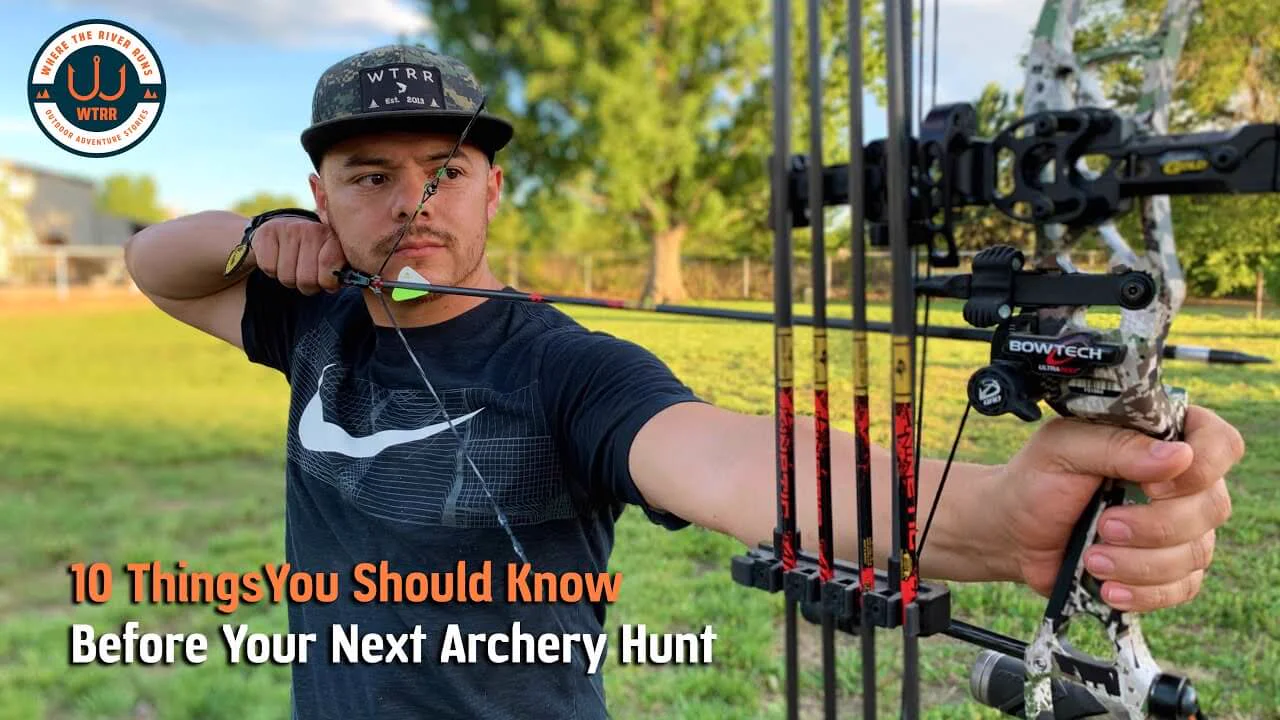
One of the first things to know about compound bows is that most components can be swapped out or upgraded. This isn't something beginners always realize. You don't have to settle for whatever comes on your bow.
Your sight is a good example. Some bows come with a multi-pin sight where you have several pins set at fixed distances. Others use a single-pin sight that you adjust to the exact yardage you're shooting. Both work, but they feel different to use.
Your arrow rest is another customizable component. Some rests are simple and hold the arrow in place, like a whisker biscuit. Others are drop-away rests that fall out of the way when you release the arrow, reducing contact and potentially improving accuracy.
Stabilizers come in countless shapes and sizes. They help balance your bow and keep it steady when you hold it at full draw. Some stabilizers are centered, others are offset to counterbalance weight from accessories like your quiver.
Speaking of quivers, you can mount them vertically along the bow's riser or horizontally to also act as a stabilizer. The point is, you have options.
When I bought my first bow, it came as a complete package—sight, rest, stabilizer, and quiver all included. It worked fine. But my current bow is completely customized to fit how I shoot. Every component was chosen for a reason, and that gives me confidence every time I draw.
Get Your Bow Professionally Tuned
When you buy a new bow, it needs to be tuned. Tuning means making adjustments so your arrows fly straight and true. This is not something you should try to figure out on your own if you're not experienced.
A good archery shop will tune your bow when you buy it. They'll check things like arrow flight and make sure everything is aligned properly. One common method is paper tuning, where you shoot an arrow through a sheet of paper placed a few inches in front of the bow. The hole the arrow leaves tells the technician whether the arrow is flying straight or wobbling.
If the arrow tears the paper cleanly, with just the fletchings leaving their mark, your bow is tuned well. If the tear is ragged or shows the arrow was tilted, adjustments are needed.
Some bows are easier to tune than others. When I bought my current bow, I chose it partly because it's known for being highly tunable. Accuracy matters, and I didn't want to wonder whether my bow was working against me.
Shoot Your Bow Until the Strings Settle
Brand new bowstrings will stretch and relax as you shoot. This is normal—it's just the nature of the material. But when your strings settle, it can throw your bow out of tune.
After you buy a bow, shoot it a lot. A hundred arrows, three hundred arrows—the more the better. Pay attention to how it sounds and feels. If something seems off, take it back to the shop.
That's what I did. After shooting my new bow for a while, I noticed it didn't sound right, and the arrows weren't flying the way they should. I took it back, and the technician tightened the strings. After that, it shot great again.
Expect to make at least one trip back to the shop after those first few hundred shots. It's part of the process.
Field Points and Broadheads Fly Differently
Most of your practice will be with field points—the simple bullet-shaped tips that come with most arrows. They're great for target practice. But broadheads, the hunting tips you'll actually use on an animal, have different aerodynamics. They can fly differently than field points.
This is something I didn't know before my first hunt. I shot hundreds of field points, then switched to broadheads right before the hunt without checking how they grouped. I had no idea if my broadheads were hitting six inches off from my field points or just half an inch.
The solution is simple. Practice a lot with field points. Then, a couple weeks before your hunt, put on the broadheads you plan to use and shoot at a broadhead-safe target. See how they compare to your field points. If they're hitting in the same spot, great. If not, you may need to adjust your bow or your aim.
Pick One Broadhead and Stick With It
There are dozens of broadhead designs on the market. Fixed blade, mechanical, hybrid—everyone has an opinion on what's best. For your first hunt, just pick one and use it consistently.
The reason is tuning. When you tune your bow for a specific broadhead, you're setting everything up for that particular weight and design. If you switch broadheads mid-hunt, your tuning could be off, and your accuracy will suffer.
I prefer fixed-blade broadheads. They've worked for me, so I don't see a reason to change. But the specific type matters less than being consistent. Pick one, tune for it, and use it for the entire hunt.
Use the Right Targets for the Right Tips
Field points and broadheads damage targets differently. If you shoot broadheads into a target meant for field points, you'll tear it up quickly. The broadhead blades cut through the foam or material, leaving big gashes that shorten the target's life.
Some broadhead manufacturers sell practice versions that aren't sharpened. These are great because they let you practice with the same broadhead design without destroying your target. You can also buy targets specifically rated for broadheads.
Just make sure you're using the right combination. Your wallet and your practice sessions will thank you.
Practice in the Clothes You'll Hunt In
This tip made a huge difference for me. You might practice all summer in a t-shirt and feel like a marksman. But opening morning of your hunt might be 30 degrees, and you'll be wearing multiple layers, a heavy jacket, and gloves.
If you've never drawn your bow in those clothes, you're in for a surprise.
I learned this firsthand. I bought a new hunting jacket and decided to test it while practicing. When I drew my bow, the loose end of the zipped-up jacket flipped over my bowstring. When I released, the arrow flew nowhere near my target.
I had to adjust. I started zipping the jacket all the way up to my chin so the fabric stayed out of the way. But even that changed how my draw felt.
Whatever you plan to wear—puffy jackets, rain gear, face masks, gloves—practice in it at least a few times. Know how it feels to draw with those layers on. It could save you from missing a shot at the moment that matters most.
Practice Shooting From Different Positions
In the field, you won't always be standing on flat ground with perfect footing. Animals show up in all kinds of positions, and you need to be ready.
A good bow hunter taught me to practice shooting from my knees, from a seated position, and even from awkward angles. Think about the scenarios you might face. If you're hunting from a spot-and-stalk approach, you might find yourself crawling into position and then needing to shoot from the ground.
The more positions you practice from, the more prepared you'll be. Don't just stand at the target range. Mix it up.
Don't Push the Animal After the Shot
When you make your first good shot on an animal, the excitement is overwhelming. I know. I've been there.
I shot a buck at about 60 yards. The arrow hit perfectly. I saw blood—a lot of it. My first instinct was to celebrate and then immediately go after the animal.
That was a mistake.
My brother and I waited maybe three minutes before we started tracking. We followed a trail of heavy blood, but then it stopped. We ended up pushing that buck at least half a mile from where I shot it. It took us two hours to find it, buried in sagebrush. I almost lost my first archery buck because I was impatient.
When you make a good shot, give the animal time to expire. Wait at least 30 minutes, sometimes longer. Unless you see it fall, assume it needs time to bleed out. Patience after the shot is just as important as accuracy during it.
Enjoy Your First Harvest, No Matter What It Is
Your first archery animal is a big deal. Whether it's a trophy buck or a doe, any animal taken with a bow is hard-earned. You have to get close—close enough that you can probably smell the animal when you take your shot. That's not easy.
When you make that shot and recover your animal, take a moment. Celebrate with whoever is with you. Recognize what you've accomplished.
Hunting is hard. Bow hunting is even harder. You've challenged yourself in a way that many people never will. Enjoy that feeling.