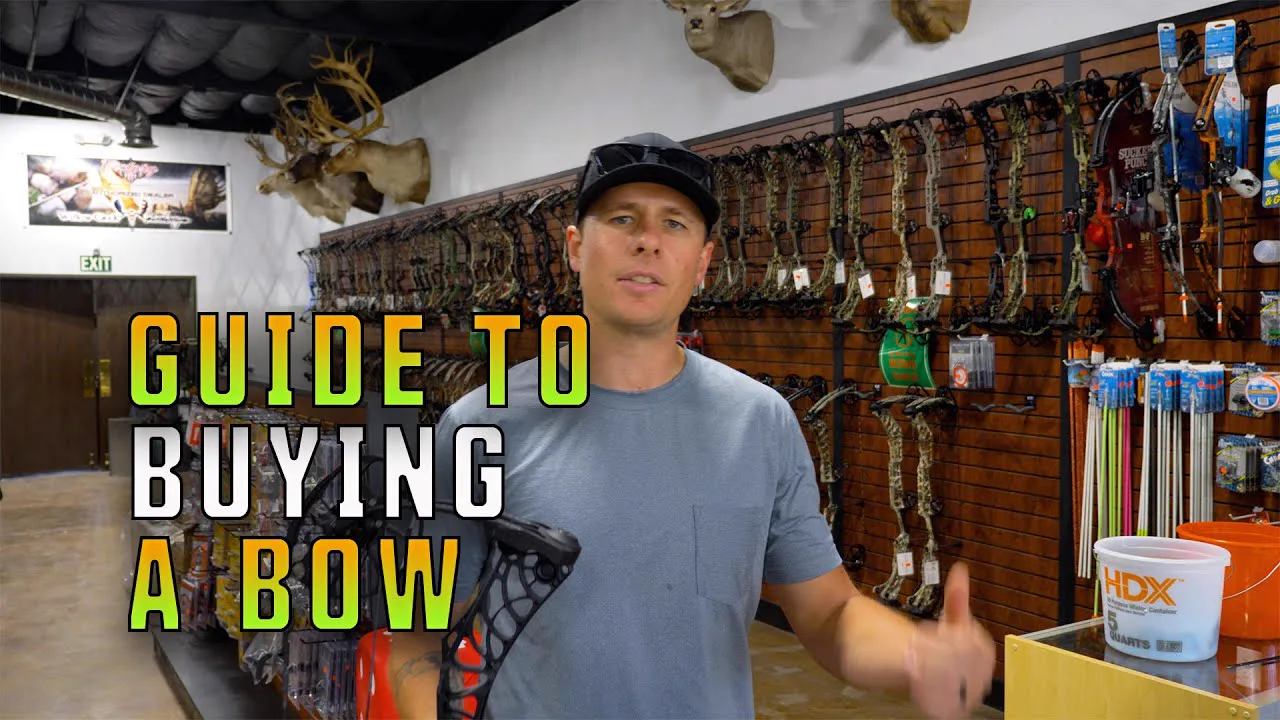
So you've decided to get into archery or bowhunting. Maybe you've watched a few videos, talked to a friend who hunts, or just feel ready to try something new. But now you're standing in front of a wall of compound bows, and honestly, it's a lot.
Between the different brands, cam systems, draw lengths, and a dozen accessories you didn't even know existed, it's easy to feel overwhelmed. The good news? You don't need to know everything at once. This guide walks through what to expect when buying your first compound bow—from picking the bow itself to choosing arrows, sights, and a case. By the end, you'll know what questions to ask and what matters most for a beginner.
Choose the Right Bow for You
The first and most important decision is the bow itself. Today's market has plenty of excellent options. Brands like Mathews and Hoyt offer top-tier bows, but there are many others that perform well too. Most modern bows in the $600–$1,700 range are reliable. The bad manufacturers have mostly been weeded out over the years.
What matters most is how the bow feels to you. Don't get too caught up in specs like axle-to-axle length or brace height at first. Instead, focus on two things: draw weight and draw length.
Your pro shop should set the bow to the proper draw length and a comfortable weight before you even think about buying. Spend some time pulling it back. Try different cam systems—they can feel very different from one bow to the next. The bow that feels best in your hands is the one you'll shoot most often, and that's what matters for a beginner.
Pick an Arrow Rest
Once you've chosen your bow, the next accessory is the arrow rest. This is what holds your arrow in place while you draw and shoot.
There are two main types: limb-driven and cable-driven rests. Both work well, but many beginners prefer a rest with a full enclosure. That means the arrow is held securely and won't fall out if you're walking through the woods or moving around.
Brands like Hamskea and QAD make popular models. Some higher-end rests use a micro-adjust or micro-click system, which makes fine-tuning your bow easier. You don't need the most expensive rest right away, but a quality rest will make your shooting more consistent.
Choose a Bow Sight
Your sight helps you aim at different distances. There are two main categories: fixed sights and movable (or slider) sights.
- Fixed sights usually have multiple pins—often five to seven. Each pin is set for a specific distance, like 20, 30, 40 yards, and so on.
- Movable or slider sights typically use a single pin that you adjust for exact yardage. Many experienced archers prefer these because they reduce clutter in your sight picture.
For a beginner, a three-pin fixed sight is a common and affordable choice. But if your budget allows, a single-pin slider can be easier to learn with because you only focus on one pin at a time. Ultimately, it comes down to what feels comfortable and fits your budget. You don't need to spend $400 on a sight to start.
Add a Stabilizer
A stabilizer attaches to the front (and sometimes back) of your bow. Its main job is to reduce vibration and help the bow stay steady when you shoot.
Stabilizers come in different lengths and diameters. Some are thicker and heavier; others are micro-diameter, which helps in windy conditions. For a beginner, a basic front stabilizer is enough. You can always add a back stabilizer later if you feel you need more balance.
Select a Release Aid
A release aid is the device you use to draw and release the bowstring. The most common type for beginners is the index or caliper-style release. It straps around your wrist and uses a trigger mechanism that you press with your finger.
Prices range from about $60 to over $300. You don't need the most expensive model. What matters is comfort and consistency. Some people prefer a thumb release instead of an index style. Most pro shops will let you try different releases on a shot trainer, so take advantage of that. Find what feels natural.
Pick the Right Arrows
Arrows might seem simple, but they're more technical than they look. The most important factor is the arrow's spine, or stiffness.
Arrow spine is measured in numbers like 200, 300, 400, 500, and 600. A lower number means a stiffer arrow. Your draw length and bow poundage determine which spine you need. For example, someone shooting 70 pounds with a 32-inch draw will need a stiffer arrow than someone shooting 50 pounds with a 28-inch draw.
Your pro shop can help you choose the right spine. Arrow prices vary widely—from around $50 for a basic set to over $200 for high-end carbon arrows. As a beginner, you don't need the most expensive arrows. Focus on getting the right spine and a straight, durable shaft.
Get a Target
You'll need something to shoot at. The main options are:
- Bag targets – The most affordable, usually $50–$100. Fine for field points but won't last long if you shoot broadheads into them.
- Foam or layered targets – Brands like Reinhardt and Morrell make targets that handle both field points and broadheads. More durable but cost more—around $125 to $250.
- Block-style targets – Have replaceable cores and are good for practice. Can handle broadheads but aren't cheap.
If you're only shooting field points, a bag target is all you need. If you plan to practice with broadheads before hunting season, invest in a target designed for them.
Buy a Bow Case
Your bow will get knocked around in your truck or during transport. A good case protects it.
- Soft cases – Lightweight and affordable. Brands like Tarantula Archery and Easton make them. They offer basic protection.
- Hard cases – More protection. Plano makes a budget-friendly option, and SKB makes high-end cases. A mid-range hard case for around $89 offers good value.
For a beginner, a soft case is fine if you're careful. If you plan to travel or want extra peace of mind, go with a hard case.
Practice and Tune Your Setup
Once you have everything, it's time to shoot. Find a local archery range and start practicing. Your sights will need to be dialed in, and your peep sight (the small ring you look through) may need adjustment.
Archery is a very individual sport. Your draw length, peep height, and anchor point will be different from anyone else's. If something doesn't feel right, take your bow back to the pro shop. They can make adjustments to fit you perfectly.
FAQ
How much should I spend on my first compound bow?
You can find good beginner bows in the $400–$700 range, but top-tier models go up to $1,700. Focus on fit and comfort rather than price alone.
Do I need to buy all the accessories at once?
Not necessarily. Start with the basics: bow, rest, sight, release, arrows, and a target. You can add a stabilizer and case later.
What's the most important thing for a beginner to get right?
Draw length and draw weight. If the bow doesn't fit you, it will be hard to shoot accurately and enjoyably.
Can I use broadheads in any target?
No. Only targets specifically designed for broadheads can handle them. Bag targets will wear out quickly if you shoot broadheads into them.
Should I buy online or at a pro shop?
A pro shop is strongly recommended for your first bow. They can measure you, set up the bow, and help you choose the right accessories. Online purchases don't offer that hands-on help.
Based on: Beginners Guide to Archery | Buying your FIRST Compound Bow — Dead Head Archery, YouTube. Watch on YouTube.