The first time I went camping with my family, I showed up with a suitcase and zero clue what I was doing. We had a tent that leaked, sleeping bags that weren't warm enough, and absolutely no plan for what to do if it rained. Spoiler alert: it rained. The kids were cold, everyone was grumpy, and I spent the night wondering why I thought this was a good idea. But here's the thing — I learned from that disaster. Over the years, I've figured out what you actually need to have a dry, comfortable, safe, and fun campout with your family. And that's what this article is about. Whether you're a complete beginner or someone looking to refine your setup, we're going to break down the camping essentials in order of priority, starting with the stuff that keeps you safe and working our way to the things that make camping enjoyable.
Prepare Your First Aid Kit
Before you think about tents or sleeping bags, you need to be ready for emergencies. First aid is the top priority because it covers the basics of keeping everyone safe and healthy while you're away from home.
What Goes in a Good First Aid Kit
You don't need a massive medical bag, but you do need a few key items. Start with something to clean and bandage wounds — antiseptic wipes, bandages of different sizes, and medical tape. Then add something for pain relief, like ibuprofen or acetaminophen. Always check with your doctor if you're unsure about medications.
Treating Stings, Allergies, and Ticks
Insect stings and allergic reactions can happen anywhere, so include something like Benadryl or an antihistamine. An after-bite treatment or soothing cream is also helpful. Tweezers or a tick remover are essential for pulling out ticks, bee stingers, or slivers. You might also want to add an emergency blanket, a small pocket knife, and hand warmers for extra peace of mind.
Don't Forget Your Regular Medications
If you or anyone in your family takes prescription medications, bring them along. Also, consider carrying something for an upset stomach or food poisoning — it's better to have it and not need it than the other way around.
Set Up Your Shelter System
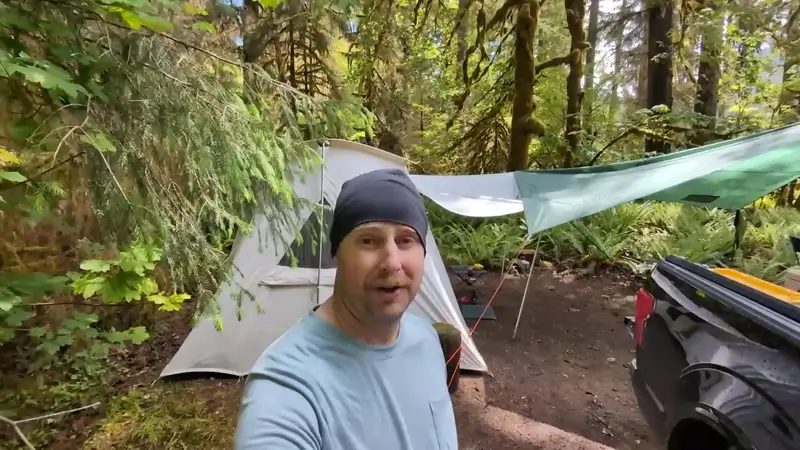
Shelter is your second priority because it protects you from rain, wind, cold, and sun. What you need depends on where you're camping and the weather you expect, but there are a few basics everyone should have.
The Tent: Your Main Shelter
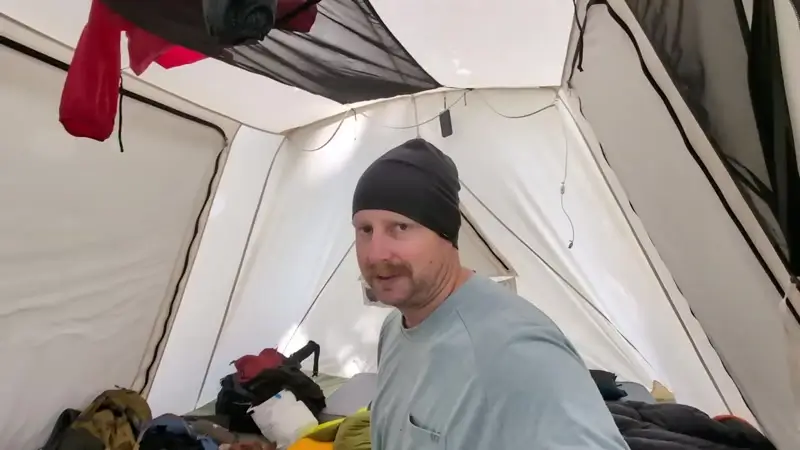
A tent is the most obvious piece of shelter gear. You don't need to spend a fortune on a high-end tent to get started. Tents from big-box stores like Costco or Walmart will work fine for most beginners. If you're camping with just two people, a small tent is plenty. For a family, look for something that fits everyone comfortably. The tent's main job is to keep you dry, so make sure it's waterproof or has a rainfly.
Rainfly and Tarp Options
Even if your tent is waterproof, a rainfly or tarp adds extra protection from heavy rain. A simple blue tarp from a hardware store works in a pinch, but you'll also need some paracord or polycord to tie it out and stakes to secure it. If you're car camping, you can always keep a tarp in your vehicle just in case.
Sleeping Bags and Quilts
For sleeping, you need something to keep you warm. Sleeping bags are the most common choice, but some people prefer quilts. Mummy bags are great for kids because they trap heat well. The key is to choose something appropriate for the weather — a summer bag won't cut it in cold temperatures.
Sleeping Pads: Don't Skimp on This
A sleeping pad is essential because it insulates you from the cold ground. Avoid the big, thick air mattresses you see online — they're often uncomfortable, hot in summer, cold in winter, and if you're sharing one, every movement wakes the other person. Instead, look for a pad that combines foam and air insulation. These are around four inches thick, comfortable, and not as expensive as you might think. You can find good ones for about $100 each.
Pillows: Bring What You Know
For car camping, just bring a regular pillow from home. It's far more comfortable than any inflatable camp pillow. If you're backpacking or short on space, a rollable camp pillow works, but it won't match the comfort of your bed pillow.
Lighting: See Where You're Going
A headlamp, flashlight, or string lights are part of your shelter system because you need to find your way around at night. You can survive without them, but they make life much easier.
Sort Out Your Water System
Water is essential for survival, cooking, cleaning, and even putting out campfires. How you handle water depends on where you're camping.
Water Storage for Car Camping
If you're at a developed campground with water access, a simple water jug works perfectly. A five-gallon jug is inexpensive — around $20 — and easy to fill. One jug usually lasts a family of five for a two-night trip, assuming you're not using it for everything. A good rule of thumb is about half a gallon per person per day.
Water Filters for Remote Camping
If you're camping in a remote area without water access, you'll want a water filter. But for most beginners camping at established sites, a jug is all you need.
A Collapsible Bucket for Campfires
A small collapsible bucket is handy for carrying water to your campsite, especially for putting out campfires. It packs down small and costs very little. Keep a bucket of water next to your fire so you can douse it quickly if needed.
Build Your Cook System and Food Storage
Food is next on the priority list. You need a way to store, prepare, and cook food safely.
Food Storage: Keep Critters Out
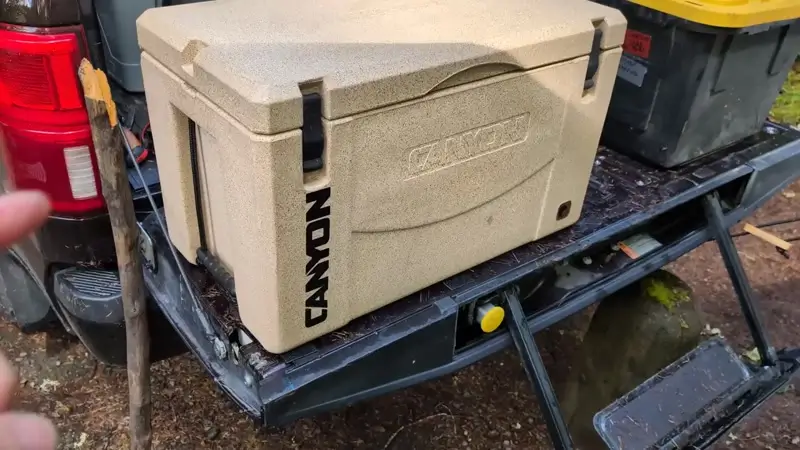
A cooler is essential, but you don't need to buy an expensive, heavy-duty one right away. A simple Coleman cooler from Walmart works fine for most beginners. What matters is that you can store your food safely from bears, raccoons, mice, squirrels, and birds. If you're in bear country, you may need a bear-resistant container that you can lock at night.
Cooking Gear: Keep It Simple
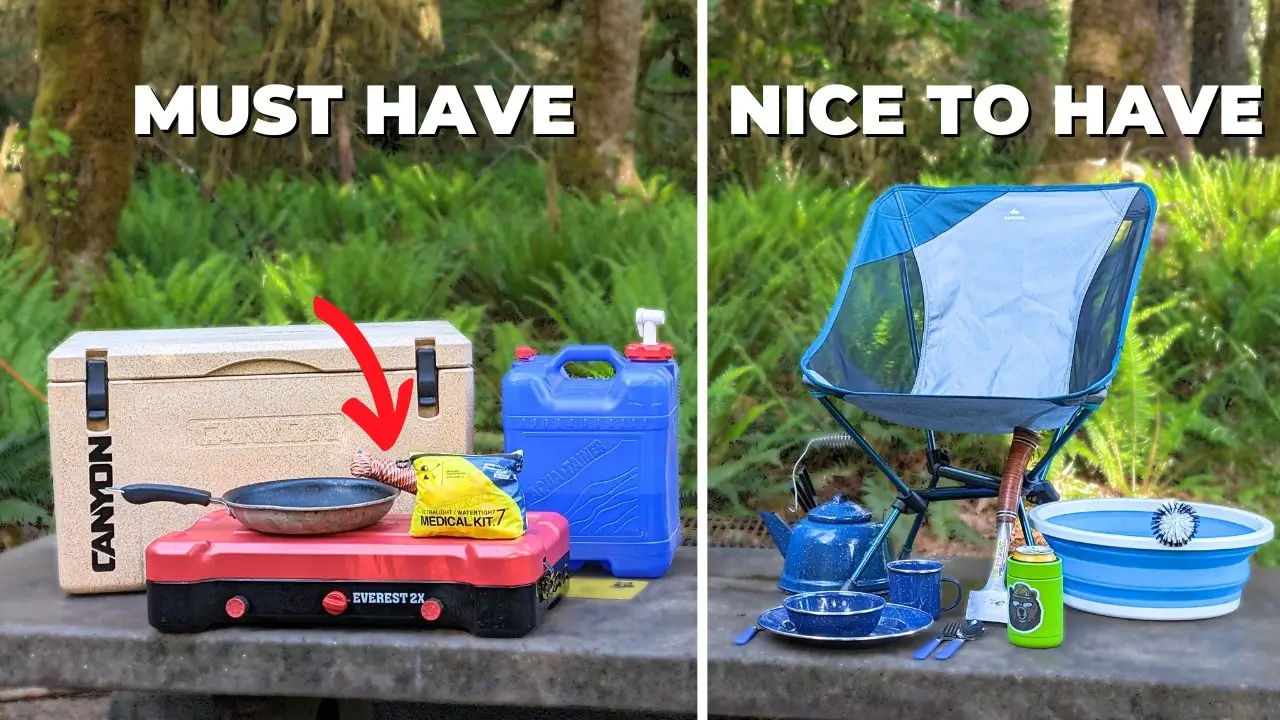
You don't need fancy camping cookware. A simple camp stove, a frying pan, and a pot or two are enough. You can often find old cookware at thrift stores for cheap. Enamel dishes are affordable and reusable, which is better than using paper plates that create trash. A cutting board, oven mitt, and dish towels from home work just fine.
Propane and Fuel
Your stove needs fuel. Little green propane bottles work fine for short trips, but if you camp often, consider buying an extension hose and a small propane tank. It saves money in the long run and means you don't have to deal with empty bottles.
Firewood and Fire-Making Tools
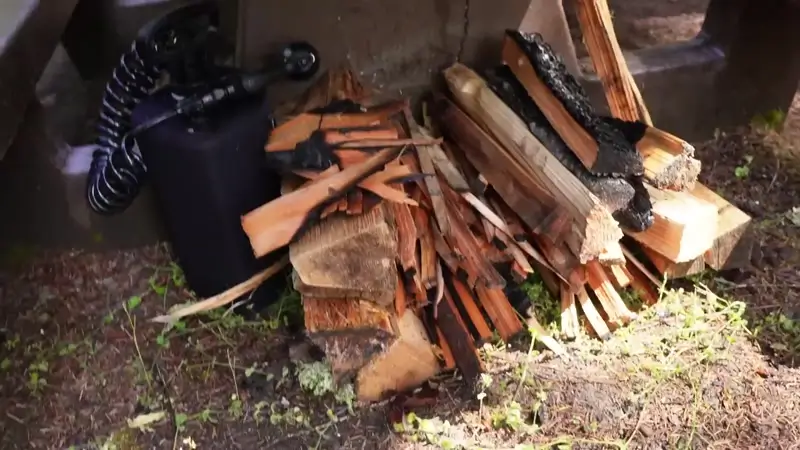
If you plan to have a campfire, you'll need firewood. Always buy local firewood to avoid spreading diseases from one area to another. A small hatchet or camp knife helps process wood into kindling. You'll also need a lighter, flint, or matches to start the fire. Fire starter plugs or rope are nice to have but not essential.
Add Comfort Items
Comfort isn't essential for survival, but it can make or break a camping trip — especially for beginners who might already be nervous about being uncomfortable.
Camp Chairs
A good camp chair lets you sit by the fire or by the lake and relax. It's one of the simplest comfort items that makes a huge difference.
Insect Repellent
Bug spray or a Thermacell device is essential for most camping trips. Mosquitoes and other insects can make camping miserable, so don't forget this.
Clothing: Don't Buy New
You don't need special camping clothes. The only two items worth investing in are good socks that wick moisture (synthetic or merino wool) and a base layer like thermal long johns. These help you stay dry and warm, especially at night.
A Koozie for Cold Drinks
This might sound silly, but having a koozie to keep your drinks cold is a small comfort that adds to the enjoyment of camping.
Frequently Asked Questions
Q: Do I need an expensive tent to start camping?
No. A basic tent from a big-box store is fine for beginners. Focus on getting something waterproof and the right size for your group.
Q: Can I use an air mattress for camping?
You can, but it's not recommended. Air mattresses are often uncomfortable, don't insulate well from the ground, and can be noisy when sharing. A foam-and-air hybrid pad is a better choice.
Q: How much water should I bring per person?
A good rule of thumb is about half a gallon per person per day. This covers drinking, cooking, and basic cleaning.
Q: Do I need special camping cookware?
No. Old pots, pans, and dishes from home work perfectly. Thrift stores are a great place to find affordable camping cookware.
Q: What's the most important thing to bring for comfort?
A camp chair and insect repellent are the two comfort items that make the biggest difference for most people. This article analyzes the YouTube video "The Gear You MUST HAVE To Start Camping" by Outdoor Empire. Last accessed: May 26, 2026. All rights to the video content belong to the original creator.