Also known as: American black duck, Black mallard
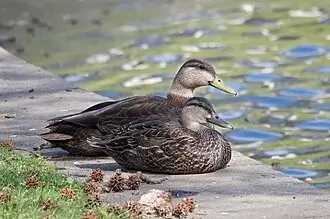
Scientific Name:Anas rubripesClassification:Game SpeciesAbundance: Wintering-statewide (tan); Breeding-coast (brown) The American black duck, along with the wood duck, mallard, teal and others, is a member of the group of ducks called dabbling ducks. Dabbling ducks are recognized by their ability to “jump” vertically from the water when taking flight and by their “dabbling” method of feeding in which they tip up, exposing their rump, when feeding in shallow water. Aptly named, the black duck is a mottled brown-black duck that is similar in appearance to the more common hen (female) mallard, but it has a much darker body. There is a noticeable contrast between the light brown head and the brown-black body. While in flight, the white underwings provide a striking contrast to the overall black appearance. The black duck is the only common duck in North America where males (drakes) and females (hens) are nearly identical in appearance. Black ducks and mallards interbreed resulting in a variety of plumages. The calls of the drake and hen black duck are nearly identical to the male and female mallard. Calls include a variety of loud quacks, sometimes made in rapid succession. Males are generally less vocal. Black ducks are one of the largest dabbling ducks. Additional Info(including license requirements, non-toxic shot requirements, baiting information and various reports) Since the 1960s, biologists with the Wildlife Resources Commission have conducted a survey of waterfowl, including black ducks, during January of each year. The survey is conducted from an airplane, primarily in coastal areas of eastern North Carolina, and estimates the numbers of waterfowl that winter in our state. The survey, also known as the Mid-winter Waterfowl Survey, is a cooperative effort with the United States Fish and Wildlife Service, and is conducted in every state in the Atlantic Flyway; an artificial designation which describes the migration paths waterfowl use from their breeding areas to wintering grounds along the Atlantic seaboard. The Mid-winter Waterfowl Survey is the primary population index for the black duck in North America. Based upon this index, black ducks may have declined as much as 60 percent over the last 30 years. Peak numbers of black ducks observed in North Carolina occurred during the late 1970s, with approximately 23,000 counted during the Mid-winter Waterfowl Survey. That number had dwindled to an average of only 7,000 observed during the period from 2001-2005. The black duck also continues to be one of the most studied ducks by biologists in North America.
Habitat & Range
Peak numbers of black ducks observed in North Carolina occurred during the late 1970s, with approximately 23,000 counted during the Mid-winter Waterfowl Survey.
Hunting Season
Inland Zone: Opens Nov 22 (closed earlier in season). Coastal Zone: Opens Nov 22. Season closes Jan 31.
Frequently Asked Questions
Regulations for hunting American Black Duck in North Carolina
American black ducks have a delayed season opening (November 22) and a reduced bag limit of 2 per day within the 6-duck aggregate limit. They are managed under federal migratory bird regulations due to population concerns. A federal duck stamp and HIP number are required.
When is American Black Duck hunting season in North Carolina?
The hunting season for American Black Duck in North Carolina is: Inland Zone: Opens Nov 22 (closed earlier in season). Coastal Zone: Opens Nov 22. Season closes Jan 31.
What is the bag limit for American Black Duck in North Carolina?
The bag limit for American Black Duck in North Carolina is: 2 black ducks per day (part of 6-duck daily aggregate limit).
What's another name for American Black Duck?
American Black Duck is also known as American black duck, Black mallard in North Carolina.
References
| State | Category | Directory | Subcategory | Content | Source |
|---|---|---|---|---|---|
| North Carolina | Hunting | Regulations | Season Dates | Inland Zone: Opens Nov 22 (closed earlier in season). Coastal Zone: Opens Nov 22. Season closes Jan 31. | Link |
| North Carolina | Hunting | Regulations | Regulations | American black ducks have a delayed season opening (November 22) and a reduced bag limit of 2 per day within the 6-duck | Link |