Also known as: Grey squirrel, Eastern gray squirrel
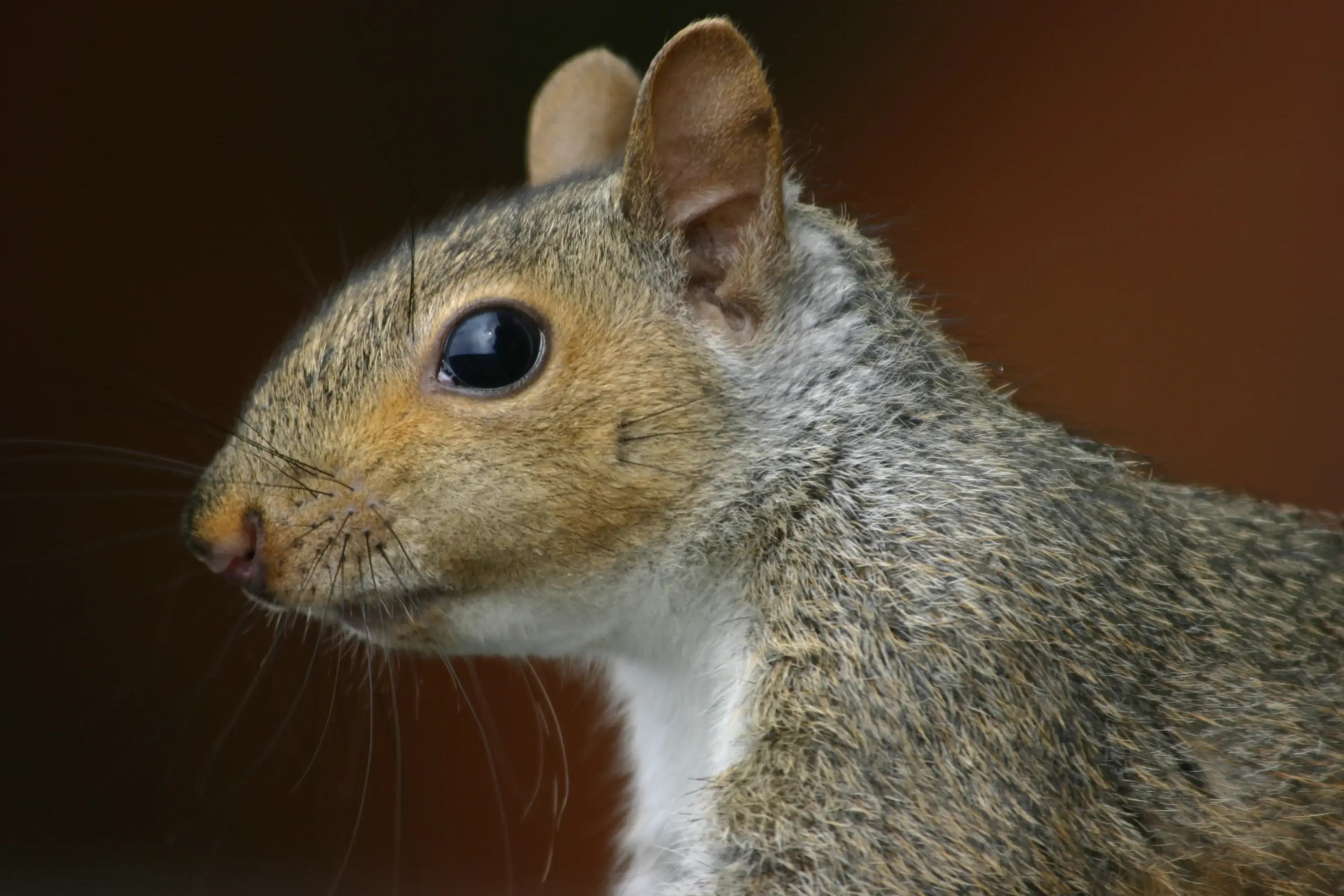
Eastern Gray Squirrel: While many of Oklahoma's native wildlife species have a tough time adjusting when humans move into their habitat, the Eastern gray squirrel (Sciurus carolinensis) is certainly an exception to the rule. Gray squirrels use our attics for homes, our power lines as highways and our bird feeders as their personal buffet tables. They inhabit the eastern haIf of the U.S., and have adapted well to our backyards and parks. The most notable physical feature of the gray squirrel is its large, bushy tail, which comprises about half its total length. In fact, the Latin word for squirrel,sciurus, comes from a Greek word meaning tail. The tail has many important functions other than looks. It acts as a rudder when the acrobatic animal jumps from tree to tree, as a sun shade, as a warm covering during the winter, and as a signal to other gray squirrels indicating an individual's mood. The tail can even be used to distract a pursuing predator. Squirrels are well known for the habit of burying and hiding nuts during the fall to supplement their winter diet. The nuts are usually very close to the surface and the squirrels do not remember where the nuts are, but find them using their keen sense of smell. Inevitably, a large percentage of these cached nuts are never found and come up as seedlings the next spring. So, next time you watch an eastern gray squirrel scurrying around your yard, local park or through the timber, enjoy the sight and take pleasure in knowing that it is doing its part to refurbish forest habitat. The gray squirrel is medium sized - measuring around 17 inches from nose to tail and weighing approximately one pound. Both sexes are the same size and covered with soft fur that may range in color from light gray to light red. They prefer cavities in the trees to escape predators, for winter shelter and to raise their young. When cavities aren't available, they will also build a nest out of leaves and twigs high in a tree. Gray squirrels live 10 to 12 years and typically do not roam far from the place where they were born. Their home range consists of between one- and seven-acres of mast-bearing hardwood trees. Mast is any hard fruit such as acorns, hickory nuts, pecans or walnuts and is among the squirrels favorite foods. However, these aerial acrobats are part of the rodent family and are opportunistic feeders that may eat flowers, buds, fruit, cones, maple samaras and even mushrooms depending on the season. Although the squirrels can reproduce year round, most litters are born in the spring. After a gestation period of 42 days, a litter of three to five blind, hairless babies are born and the mother assumes all parenting roles until the young squirrels are able to fend for themselves at about three months of age. While in the nest, young squirrels are vulnerable to snakes and raccoons and once they grow up they are constantly on the look out for other predators including foxes, bobcats, coyotes, hawks and even owls. In urban areas, dogs, cats and cars can also take their toll on squirrel populations. Squirrel Hunting Tips While many of Oklahoma's native wildlife species have a tough time adjusting when humans move into their habitat, the Eastern gray squirrel (Sciurus carolinensis) is certainly an exception to the rule. Gray squirrels use our attics for homes, our power lines as highways and our bird feeders as their personal buffet tables. They inhabit the eastern haIf of the U.S., and have adapted well to our backyards and parks. The most notable physical feature of the gray squirrel is its large, bushy tail, which comprises about half its total length. In fact, the Latin word for squirrel,sciurus, comes from a Greek word meaning tail. The tail has many important functions other than looks. It acts as a rudder when the acrobatic animal jumps from tree to tree, as a sun shade, as a warm covering during the winter, and as a signal to other gray squirrels indicating an individual's mood. The tail can even be used to distract a pursuing predator. Squirrels are well known for the habit of burying and hiding nuts during the fall to supplement their winter diet. The nuts are usually very close to the surface and the squirrels do not remember where the nuts are, but find them using their keen sense of smell. Inevitably, a large percentage of these cached nuts are never found and come up as seedlings the next spring. So, next time you watch an eastern gray squirrel scurrying around your yard, local park or through the timber, enjoy the sight and take pleasure in knowing that it is doing its part to refurbish forest habitat. The gray squirrel is medium sized - measuring around 17 inches from nose to tail and weighing approximately one pound. Both sexes are the same size and covered with soft fur that may range in color from light gray to light red. They prefer cavities in the trees to escape predators, for winter shelter and to raise their young. When cavities aren't available, they will also build a nest out of leaves and twigs high in a tree. Gray squirrels live 10 to 12 years and typically do not roam far from the place where they were born. Their home range consists of between one- and seven-acres of mast-bearing hardwood trees. Mast is any hard fruit such as acorns, hickory nuts, pecans or walnuts and is among the squirrels favorite foods. However, these aerial acrobats are part of the rodent family and are opportunistic feeders that may eat flowers, buds, fruit, cones, maple samaras and even mushrooms depending on the season. Although the squirrels can reproduce year round, most litters are born in the spring. After a gestation period of 42 days, a litter of three to five blind, hairless babies are born and the mother assumes all parenting roles until the young squirrels are able to fend for themselves at about three months of age. While in the nest, young squirrels are vulnerable to snakes and raccoons and once they grow up they are constantly on the look out for other predators including foxes, bobcats, coyotes, hawks and even owls. In urban areas, dogs, cats and cars can also take their toll on squirrel populations. Squirrel Hunting Tips While many of Oklahoma's native wildlife species have a tough time adjusting when humans move into their habitat, the Eastern gray squirrel (Sciurus carolinensis) is certainly an exception to the rule. Gray squirrels use our attics for homes, our power lines as highways and our bird feeders as their personal buffet tables. They inhabit the eastern haIf of the U.S., and have adapted well to our backyards and parks. The most notable physical feature of the gray squirrel is its large, bushy tail, which comprises about half its total length. In fact, the Latin word for squirrel,sciurus, comes from a Greek word meaning tail. The tail has many important functions other than looks. It acts as a rudder when the acrobatic animal jumps from tree to tree, as a sun shade, as a warm covering during the winter, and as a signal to other gray squirrels indicating an individual's mood. The tail can even be used to distract a pursuing predator. Squirrels are well known for the habit of burying and hiding nuts during the fall to supplement their winter diet. The nuts are usually very close to the surface and the squirrels do not remember where the nuts are, but find them using their keen sense of smell. Inevitably, a large percentage of these cached nuts are never found and come up as seedlings the next spring. So, next time you watch an eastern gray squirrel scurrying around your yard, local park or through the timber, enjoy the sight and take pleasure in knowing that it is doing its part to refurbish forest habitat. The gray squirrel is medium sized - measuring around 17 inches from nose to tail and weighing approximately one pound. Both sexes are the same size and covered with soft fur that may range in color from light gray to light red. They prefer cavities in the trees to escape predators, for winter shelter and to raise their young. When cavities aren't available, they will also build a nest out of leaves and twigs high in a tree. Gray squirrels live 10 to 12 years and typically do not roam far from the place where they were born. Their home range consists of between one- and seven-acres of mast-bearing hardwood trees. Mast is any hard fruit such as acorns, hickory nuts, pecans or walnuts and is among the squirrels favorite foods. However, these aerial acrobats are part of the rodent family and are opportunistic feeders that may eat flowers, buds, fruit, cones, maple samaras and even mushrooms depending on the season. Although the squirrels can reproduce year round, most litters are born in the spring. After a gestation period of 42 days, a litter of three to five blind, hairless babies are born and the mother assumes all parenting roles until the young squirrels are able to fend for themselves at about three months of age. While in the nest, young squirrels are vulnerable to snakes and raccoons and once they grow up they are constantly on the look out for other predators including foxes, bobcats, coyotes, hawks and even owls. In urban areas, dogs, cats and cars can also take their toll on squirrel populations. Squirrel Hunting Tips While many of Oklahoma's native wildlife species have a tough time adjusting when humans move into their habitat, the Eastern gray squirrel (Sciurus carolinensis) is certainly an exception to the rule. Gray squirrels use our attics for homes, our power lines as highways and our bird feeders as their personal buffet tables. They inhabit the eastern haIf of the U.S., and have adapted well to our backyards and parks. The most notable physical feature of the gray squirrel is its large, bushy tail, which comprises about half its total length. In fact, the Latin word for squirrel,sciurus, comes from a Greek word meaning tail. The tail has many important functions other than looks. It acts as a rudder when the acrobatic animal jumps from tree to tree, as a sun shade, as a warm covering during the winter, and as a signal to other gray squirrels indicating an individual's mood. The tail can even be used to distract a pursuing predator. Squirrels are well known for the habit of burying and hiding nuts during the fall to supplement their winter diet. The nuts are usually very close to the surface and the squirrels do not remember where the nuts are, but find them using their keen sense of smell. Inevitably, a large percentage of these cached nuts are never found and come up as seedlings the next spring. So, next time you watch an eastern gray squirrel scurrying around your yard, local park or through the timber, enjoy the sight and take pleasure in knowing that it is doing its part to refurbish forest habitat. The gray squirrel is medium sized - measuring around 17 inches from nose to tail and weighing approximately one pound. Both sexes are the same size and covered with soft fur that may range in color from light gray to light red. They prefer cavities in the trees to escape predators, for winter shelter and to raise their young. When cavities aren't available, they will also build a nest out of leaves and twigs high in a tree. Gray squirrels live 10 to 12 years and typically do not roam far from the place where they were born. Their home range consists of between one- and seven-acres of mast-bearing hardwood trees. Mast is any hard fruit such as acorns, hickory nuts, pecans or walnuts and is among the squirrels favorite foods. However, these aerial acrobats are part of the rodent family and are opportunistic feeders that may eat flowers, buds, fruit, cones, maple samaras and even mushrooms depending on the season. Although the squirrels can reproduce year round, most litters are born in the spring. After a gestation period of 42 days, a litter of three to five blind, hairless babies are born and the mother assumes all parenting roles until the young squirrels are able to fend for themselves at about three months of age. While in the nest, young squirrels are vulnerable to snakes and raccoons and once they grow up they are constantly on the look out for other predators including foxes, bobcats, coyotes, hawks and even owls. In urban areas, dogs, cats and cars can also take their toll on squirrel populations. Squirrel Hunting Tips While many of Oklahoma's native wildlife species have a tough time adjusting when humans move into their habitat, the Eastern gray squirrel (Sciurus carolinensis) is certainly an exception to the rule. Gray squirrels use our attics for homes, our power lines as highways and our bird feeders as their personal buffet tables. They inhabit the eastern haIf of the U.S., and have adapted well to our backyards and parks. The most notable physical feature of the gray squirrel is its large, bushy tail, which comprises about half its total length. In fact, the Latin word for squirrel,sciurus, comes from a Greek word meaning tail. The tail has many important functions other than looks. It acts as a rudder when the acrobatic animal jumps from tree to tree, as a sun shade, as a warm covering during the winter, and as a signal to other gray squirrels indicating an individual's mood. The tail can even be used to distract a pursuing predator. Squirrels are well known for the habit of burying and hiding nuts during the fall to supplement their winter diet. The nuts are usually very close to the surface and the squirrels do not remember where the nuts are, but find them using their keen sense of smell. Inevitably, a large percentage of these cached nuts are never found and come up as seedlings the next spring. So, next time you watch an eastern gray squirrel scurrying around your yard, local park or through the timber, enjoy the sight and take pleasure in knowing that it is doing its part to refurbish forest habitat. The gray squirrel is medium sized - measuring around 17 inches from nose to tail and weighing approximately one pound. Both sexes are the same size and covered with soft fur that may range in color from light gray to light red. They prefer cavities in the trees to escape predators, for winter shelter and to raise their young. When cavities aren't available, they will also build a nest out of leaves and twigs high in a tree. Gray squirrels live 10 to 12 years and typically do not roam far from the place where they were born. Their home range consists of between one- and seven-acres of mast-bearing hardwood trees. Mast is any hard fruit such as acorns, hickory nuts, pecans or walnuts and is among the squirrels favorite foods. However, these aerial acrobats are part of the rodent family and are opportunistic feeders that may eat flowers, buds, fruit, cones, maple samaras and even mushrooms depending on the season. Although the squirrels can reproduce year round, most litters are born in the spring. After a gestation period of 42 days, a litter of three to five blind, hairless babies are born and the mother assumes all parenting roles until the young squirrels are able to fend for themselves at about three months of age. While in the nest, young squirrels are vulnerable to snakes and raccoons and once they grow up they are constantly on the look out for other predators including foxes, bobcats, coyotes, hawks and even owls. In urban areas, dogs, cats and cars can also take their toll on squirrel populations. Squirrel Hunting Tips While many of Oklahoma's native wildlife species have a tough time adjusting when humans move into their habitat, the Eastern gray squirrel (Sciurus carolinensis) is certainly an exception to the rule. Gray squirrels use our attics for homes, our power lines as highways and our bird feeders as their personal buffet tables. They inhabit the eastern haIf of the U.S., and have adapted well to our backyards and parks. The most notable physical feature of the gray squirrel is its large, bushy tail, which comprises about half its total length. In fact, the Latin word for squirrel,sciurus, comes from a Greek word meaning tail. The tail has many important functions other than looks. It acts as a rudder when the acrobatic animal jumps from tree to tree, as a sun shade, as a warm covering during the winter, and as a signal to other gray squirrels indicating an individual's mood. The tail can even be used to distract a pursuing predator. Squirrels are well known for the habit of burying and hiding nuts during the fall to supplement their winter diet. The nuts are usually very close to the surface and the squirrels do not remember where the nuts are, but find them using their keen sense of smell. Inevitably, a large percentage of these cached nuts are never found and come up as seedlings the next spring. So, next time you watch an eastern gray squirrel scurrying around your yard, local park or through the timber, enjoy the sight and take pleasure in knowing that it is doing its part to refurbish forest habitat. While many of Oklahoma's native wildlife species have a tough time adjusting when humans move into their habitat, the Eastern gray squirrel (Sciurus carolinensis) is certainly an exception to the rule. Gray squirrels use our attics for homes, our power lines as highways and our bird feeders as their personal buffet tables. They inhabit the eastern haIf of the U.S., and have adapted well to our backyards and parks. The most notable physical feature of the gray squirrel is its large, bushy tail, which comprises about half its total length. In fact, the Latin word for squirrel,sciurus, comes from a Greek word meaning tail. The tail has many important functions other than looks. It acts as a rudder when the acrobatic animal jumps from tree to tree, as a sun shade, as a warm covering during the winter, and as a signal to other gray squirrels indicating an individual's mood. The tail can even be used to distract a pursuing predator. Squirrels are well known for the habit of burying and hiding nuts during the fall to supplement their winter diet. The nuts are usually very close to the surface and the squirrels do not remember where the nuts are, but find them using their keen sense of smell. Inevitably, a large percentage of these cached nuts are never found and come up as seedlings the next spring. So, next time you watch an eastern gray squirrel scurrying around your yard, local park or through the timber, enjoy the sight and take pleasure in knowing that it is doing its part to refurbish forest habitat. While many of Oklahoma's native wildlife species have a tough time adjusting when humans move into their habitat, the Eastern gray squirrel (Sciurus carolinensis) is certainly an exception to the rule. Gray squirrels use our attics for homes, our power lines as highways and our bird feeders as their personal buffet tables. They inhabit the eastern haIf of the U.S., and have adapted well to our backyards and parks. The most notable physical feature of the gray squirrel is its large, bushy tail, which comprises about half its total length. In fact, the Latin word for squirrel,sciurus, comes from a Greek word meaning tail. The tail has many important functions other than looks. It acts as a rudder when the acrobatic animal jumps from tree to tree, as a sun shade, as a warm covering during the winter, and as a signal to other gray squirrels indicating an individual's mood. The tail can even be used to distract a pursuing predator. Squirrels are well known for the habit of burying and hiding nuts during the fall to supplement their winter diet. The nuts are usually very close to the surface and the squirrels do not remember where the nuts are, but find them using their keen sense of smell. Inevitably, a large percentage of these cached nuts are never found and come up as seedlings the next spring. So, next time you watch an eastern gray squirrel scurrying around your yard, local park or through the timber, enjoy the sight and take pleasure in knowing that it is doing its part to refurbish forest habitat. While many of Oklahoma's native wildlife species have a tough time adjusting when humans move into their habitat, the Eastern gray squirrel (Sciurus carolinensis) is certainly an exception to the rule. Gray squirrels use our attics for homes, our power lines as highways and our bird feeders as their personal buffet tables. They inhabit the eastern haIf of the U.S., and have adapted well to our backyards and parks. The most notable physical feature of the gray squirrel is its large, bushy tail, which comprises about half its total length. In fact, the Latin word for squirrel,sciurus, comes from a Greek word meaning tail. The tail has many important functions other than looks. It acts as a rudder when the acrobatic animal jumps from tree to tree, as a sun shade, as a warm covering during the winter, and as a signal to other gray squirrels indicating an individual's mood. The tail can even be used to distract a pursuing predator. Squirrels are well known for the habit of burying and hiding nuts during the fall to supplement their winter diet. The nuts are usually very close to the surface and the squirrels do not remember where the nuts are, but find them using their keen sense of smell. Inevitably, a large percentage of these cached nuts are never found and come up as seedlings the next spring. So, next time you watch an eastern gray squirrel scurrying around your yard, local park or through the timber, enjoy the sight and take pleasure in knowing that it is doing its part to refurbish forest habitat. The gray squirrel is medium sized - measuring around 17 inches from nose to tail and weighing approximately one pound. Both sexes are the same size and covered with soft fur that may range in color from light gray to light red. Size: The gray squirrel is medium sized - measuring around 17 inches from nose to tail and weighing approximately one pound. Both sexes are the same size and covered with soft fur that may range in color from light gray to light red. The gray squirrel is medium sized - measuring around 17 inches from nose to tail and weighing approximately one pound. Both sexes are the same size and covered with soft fur that may range in color from light gray to light red. The gray squirrel is medium sized - measuring around 17 inches from nose to tail and weighing approximately one pound. Both sexes are the same size and covered with soft fur that may range in color from light gray to light red. They prefer cavities in the trees to escape predators, for winter shelter and to raise their young. When cavities aren't available, they will also build a nest out of leaves and twigs high in a tree. Squirrel Hunting Tips Squirrel Hunting Tips Squirrel Hunting Tips
Habitat & Range
They prefer cavities in the trees to escape predators, for winter shelter and to raise their young. When cavities aren't available, they will also build a nest out of leaves and twigs high in a tree. They prefer cavities in the trees to escape predators, for winter shelter and to raise their young. When cavities aren't available, they will also build a nest out of leaves and twigs high in a tree. They prefer cavities in the trees to escape predators, for winter shelter and to raise their young. When cavities aren't available, they will also build a nest out of leaves and twigs high in a tree. Gray squirrels live 10 to 12 years and typically do not roam far from the place where they were born. Their home range consists of between one- and seven-acres of mast-bearing hardwood trees. Mast is any hard fruit such as acorns, hickory nuts, pecans or walnuts and is among the squirrels favorite foods. However, these aerial acrobats are part of the rodent family and are opportunistic feeders that may eat flowers, buds, fruit, cones, maple samaras and even mushrooms depending on the season. Although the squirrels can reproduce year round, most litters are born in the spring. After a gestation period of 42 days, a litter of three to five blind, hairless babies are born and the mother assumes all parenting roles until the young squirrels are able to fend for themselves at about three months of age. While in the nest, young squirrels are vulnerable to snakes and raccoons and once they grow up they are constantly on the look out for other predators including foxes, bobcats, coyotes, hawks and even owls. In urban areas, dogs, cats and cars can also take their toll on squirrel populations.
Life History
Gray squirrels live 10 to 12 years and typically do not roam far from the place where they were born. Their home range consists of between one- and seven-acres of mast-bearing hardwood trees. Mast is any hard fruit such as acorns, hickory nuts, pecans or walnuts and is among the squirrels favorite foods. However, these aerial acrobats are part of the rodent family and are opportunistic feeders that may eat flowers, buds, fruit, cones, maple samaras and even mushrooms depending on the season. Although the squirrels can reproduce year round, most litters are born in the spring. After a gestation period of 42 days, a litter of three to five blind, hairless babies are born and the mother assumes all parenting roles until the young squirrels are able to fend for themselves at about three months of age. While in the nest, young squirrels are vulnerable to snakes and raccoons and once they grow up they are constantly on the look out for other predators including foxes, bobcats, coyotes, hawks and even owls. In urban areas, dogs, cats and cars can also take their toll on squirrel populations. Gray squirrels live 10 to 12 years and typically do not roam far from the place where they were born. Their home range consists of between one- and seven-acres of mast-bearing hardwood trees. Mast is any hard fruit such as acorns, hickory nuts, pecans or walnuts and is among the squirrels favorite foods. However, these aerial acrobats are part of the rodent family and are opportunistic feeders that may eat flowers, buds, fruit, cones, maple samaras and even mushrooms depending on the season. Although the squirrels can reproduce year round, most litters are born in the spring. After a gestation period of 42 days, a litter of three to five blind, hairless babies are born and the mother assumes all parenting roles until the young squirrels are able to fend for themselves at about three months of age. While in the nest, young squirrels are vulnerable to snakes and raccoons and once they grow up they are constantly on the look out for other predators including foxes, bobcats, coyotes, hawks and even owls. In urban areas, dogs, cats and cars can also take their toll on squirrel populations. Gray squirrels live 10 to 12 years and typically do not roam far from the place where they were born. Their home range consists of between one- and seven-acres of mast-bearing hardwood trees. Mast is any hard fruit such as acorns, hickory nuts, pecans or walnuts and is among the squirrels favorite foods. However, these aerial acrobats are part of the rodent family and are opportunistic feeders that may eat flowers, buds, fruit, cones, maple samaras and even mushrooms depending on the season. Although the squirrels can reproduce year round, most litters are born in the spring. After a gestation period of 42 days, a litter of three to five blind, hairless babies are born and the mother assumes all parenting roles until the young squirrels are able to fend for themselves at about three months of age. While in the nest, young squirrels are vulnerable to snakes and raccoons and once they grow up they are constantly on the look out for other predators including foxes, bobcats, coyotes, hawks and even owls. In urban areas, dogs, cats and cars can also take their toll on squirrel populations. Squirrel Hunting Tips
Hunting Season
May 15 – Feb 28 (statewide)
Frequently Asked Questions
Regulations for hunting Eastern Gray Squirrel in Oklahoma
Squirrel hunting in Oklahoma runs May 15 through Feb 28 statewide. Daily limit is 25 fox and gray squirrels combined, with 50 in possession after the first day. Falconry open year-round. Shooting hours: 30 minutes before official sunrise to official sunset. Legal means: shotgun, rifle, handgun, archery, legal raptors.
When is Eastern Gray Squirrel hunting season in Oklahoma?
May 15 – Feb 28 (statewide)
What is the bag limit for Eastern Gray Squirrel in Oklahoma?
25 per day (fox and gray squirrels combined); 50 in possession after first day
What's another name for Eastern Gray Squirrel?
Eastern Gray Squirrel is also known as Grey squirrel, Eastern gray squirrel in Oklahoma.
References
| State | Category | Directory | Subcategory | Content | Source |
|---|---|---|---|---|---|
| Oklahoma | Hunting | Regulations | Season Dates | May 15 – Feb 28 (statewide) | Link |
| Oklahoma | Hunting | Regulations | Regulations | Squirrel hunting in Oklahoma runs May 15 through Feb 28 statewide. Daily limit is 25 fox and gray squirrels combined, wi | Link |