Also known as: Wapiti
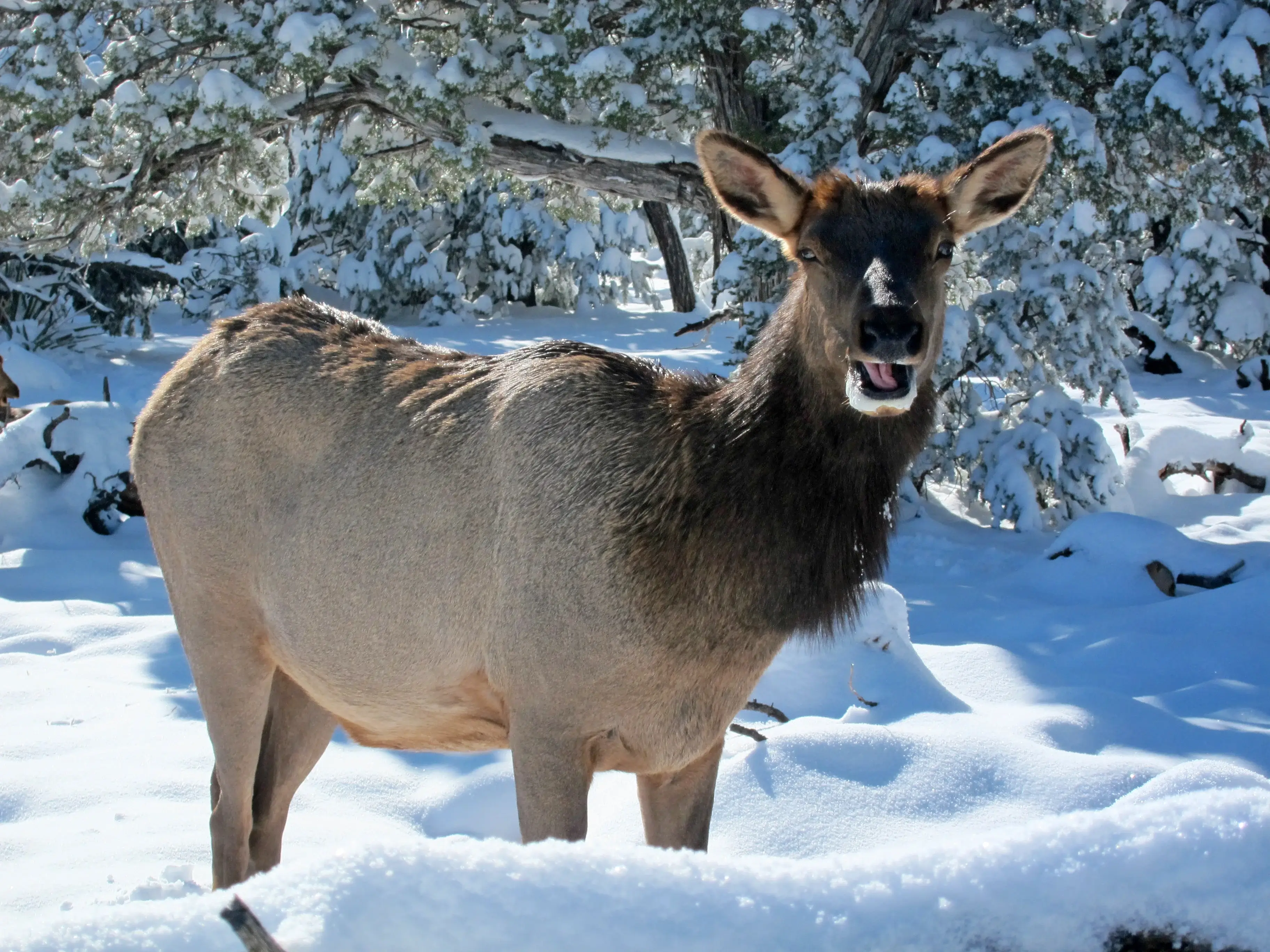
Elk: The second-largest antlered animal in North America, the elk (Cervus canademis) weighs in between 700 and 1,000 pounds. It stands about 5 feet tall at the shoulder and is recognized by its light-colored winter coat and brown mane. Elk are ruminants, so they consume forbs, fruits and other plants. They also eat large amounts of grass and other rough-fiber vegetation during winter. In some areas, elk make long, seasonal migrations between summer and winter ranges, but they are non-migratory in Oklahoma. Easily distinguished from other American ungulates, bull elk have tremendous antlers. A bull's antlers can grow up to four feet in height, making the animal about 9 feet tall overall. The antlers grow in phases as the elk gets older. Yearling bulls can grow spikes, buttons or up to five tines. Today, elk are primarily found in western North America. In Oklahoma, herds of elk can be found on the Wichita Mountains National Wildlife Refuge and in the Pushmataha, Cookson Hills, Spavinaw and Cherokee wildlife management areas. Smaller herds are found on private lands in Kiowa, Comanche and Caddo counties. Since natural predators have largely disappeared, unmanaged elk have overpopulated their available range, causing habitat degradation. During breeding months, the growing antlers eventually turn to bone, and bulls remove the velvet by aggressively rubbing the antlers on trees and shrubs. The rubbing shines the antlers, preparing the bull for mating season. In the late summer, bulls are beard bugling to attract cows and intimidate other bulls. They fight with their antlers to determine who will mate with certain cows. Males with bigger antlers, typically the older bulls, usually win these fights and dominate herds. Bulls gather cows and calves into small groups known as harems. The bull tries to protect its harem from other bulls. Calves typically are born in May and June. Calves are born scentless to help prevent predators. Typically about 35 pounds at birth, calves spend their first weeks motionless while their mother feeds. Within a month, the calves begin eating grass while continuing to nurse throughout summer. Calves are independent from their mother by fall. During an elk's second year, raghorns, or young adult bulls, produce multi-tined antlers. Bulls shed their antlers in March and start growing their replacements by May. In August, the replacements are fully grown and covered by a blood filled velvet coating. Elk Hunting Resources The second-largest antlered animal in North America, the elk (Cervus canademis) weighs in between 700 and 1,000 pounds. It stands about 5 feet tall at the shoulder and is recognized by its light-colored winter coat and brown mane. Elk are ruminants, so they consume forbs, fruits and other plants. They also eat large amounts of grass and other rough-fiber vegetation during winter. In some areas, elk make long, seasonal migrations between summer and winter ranges, but they are non-migratory in Oklahoma. Easily distinguished from other American ungulates, bull elk have tremendous antlers. A bull's antlers can grow up to four feet in height, making the animal about 9 feet tall overall. The antlers grow in phases as the elk gets older. Yearling bulls can grow spikes, buttons or up to five tines. Today, elk are primarily found in western North America. In Oklahoma, herds of elk can be found on the Wichita Mountains National Wildlife Refuge and in the Pushmataha, Cookson Hills, Spavinaw and Cherokee wildlife management areas. Smaller herds are found on private lands in Kiowa, Comanche and Caddo counties. Since natural predators have largely disappeared, unmanaged elk have overpopulated their available range, causing habitat degradation. During breeding months, the growing antlers eventually turn to bone, and bulls remove the velvet by aggressively rubbing the antlers on trees and shrubs. The rubbing shines the antlers, preparing the bull for mating season. In the late summer, bulls are beard bugling to attract cows and intimidate other bulls. They fight with their antlers to determine who will mate with certain cows. Males with bigger antlers, typically the older bulls, usually win these fights and dominate herds. Bulls gather cows and calves into small groups known as harems. The bull tries to protect its harem from other bulls. Calves typically are born in May and June. Calves are born scentless to help prevent predators. Typically about 35 pounds at birth, calves spend their first weeks motionless while their mother feeds. Within a month, the calves begin eating grass while continuing to nurse throughout summer. Calves are independent from their mother by fall. During an elk's second year, raghorns, or young adult bulls, produce multi-tined antlers. Bulls shed their antlers in March and start growing their replacements by May. In August, the replacements are fully grown and covered by a blood filled velvet coating. Elk Hunting Resources The second-largest antlered animal in North America, the elk (Cervus canademis) weighs in between 700 and 1,000 pounds. It stands about 5 feet tall at the shoulder and is recognized by its light-colored winter coat and brown mane. Elk are ruminants, so they consume forbs, fruits and other plants. They also eat large amounts of grass and other rough-fiber vegetation during winter. In some areas, elk make long, seasonal migrations between summer and winter ranges, but they are non-migratory in Oklahoma. Easily distinguished from other American ungulates, bull elk have tremendous antlers. A bull's antlers can grow up to four feet in height, making the animal about 9 feet tall overall. The antlers grow in phases as the elk gets older. Yearling bulls can grow spikes, buttons or up to five tines. Today, elk are primarily found in western North America. In Oklahoma, herds of elk can be found on the Wichita Mountains National Wildlife Refuge and in the Pushmataha, Cookson Hills, Spavinaw and Cherokee wildlife management areas. Smaller herds are found on private lands in Kiowa, Comanche and Caddo counties. Since natural predators have largely disappeared, unmanaged elk have overpopulated their available range, causing habitat degradation. During breeding months, the growing antlers eventually turn to bone, and bulls remove the velvet by aggressively rubbing the antlers on trees and shrubs. The rubbing shines the antlers, preparing the bull for mating season. In the late summer, bulls are beard bugling to attract cows and intimidate other bulls. They fight with their antlers to determine who will mate with certain cows. Males with bigger antlers, typically the older bulls, usually win these fights and dominate herds. Bulls gather cows and calves into small groups known as harems. The bull tries to protect its harem from other bulls. Calves typically are born in May and June. Calves are born scentless to help prevent predators. Typically about 35 pounds at birth, calves spend their first weeks motionless while their mother feeds. Within a month, the calves begin eating grass while continuing to nurse throughout summer. Calves are independent from their mother by fall. During an elk's second year, raghorns, or young adult bulls, produce multi-tined antlers. Bulls shed their antlers in March and start growing their replacements by May. In August, the replacements are fully grown and covered by a blood filled velvet coating. Elk Hunting Resources The second-largest antlered animal in North America, the elk (Cervus canademis) weighs in between 700 and 1,000 pounds. It stands about 5 feet tall at the shoulder and is recognized by its light-colored winter coat and brown mane. Elk are ruminants, so they consume forbs, fruits and other plants. They also eat large amounts of grass and other rough-fiber vegetation during winter. In some areas, elk make long, seasonal migrations between summer and winter ranges, but they are non-migratory in Oklahoma. Easily distinguished from other American ungulates, bull elk have tremendous antlers. A bull's antlers can grow up to four feet in height, making the animal about 9 feet tall overall. The antlers grow in phases as the elk gets older. Yearling bulls can grow spikes, buttons or up to five tines. Today, elk are primarily found in western North America. In Oklahoma, herds of elk can be found on the Wichita Mountains National Wildlife Refuge and in the Pushmataha, Cookson Hills, Spavinaw and Cherokee wildlife management areas. Smaller herds are found on private lands in Kiowa, Comanche and Caddo counties. Since natural predators have largely disappeared, unmanaged elk have overpopulated their available range, causing habitat degradation. During breeding months, the growing antlers eventually turn to bone, and bulls remove the velvet by aggressively rubbing the antlers on trees and shrubs. The rubbing shines the antlers, preparing the bull for mating season. In the late summer, bulls are beard bugling to attract cows and intimidate other bulls. They fight with their antlers to determine who will mate with certain cows. Males with bigger antlers, typically the older bulls, usually win these fights and dominate herds. Bulls gather cows and calves into small groups known as harems. The bull tries to protect its harem from other bulls. Calves typically are born in May and June. Calves are born scentless to help prevent predators. Typically about 35 pounds at birth, calves spend their first weeks motionless while their mother feeds. Within a month, the calves begin eating grass while continuing to nurse throughout summer. Calves are independent from their mother by fall. During an elk's second year, raghorns, or young adult bulls, produce multi-tined antlers. Bulls shed their antlers in March and start growing their replacements by May. In August, the replacements are fully grown and covered by a blood filled velvet coating. Elk Hunting Resources The second-largest antlered animal in North America, the elk (Cervus canademis) weighs in between 700 and 1,000 pounds. It stands about 5 feet tall at the shoulder and is recognized by its light-colored winter coat and brown mane. Elk are ruminants, so they consume forbs, fruits and other plants. They also eat large amounts of grass and other rough-fiber vegetation during winter. In some areas, elk make long, seasonal migrations between summer and winter ranges, but they are non-migratory in Oklahoma. Easily distinguished from other American ungulates, bull elk have tremendous antlers. A bull's antlers can grow up to four feet in height, making the animal about 9 feet tall overall. The antlers grow in phases as the elk gets older. Yearling bulls can grow spikes, buttons or up to five tines. Today, elk are primarily found in western North America. In Oklahoma, herds of elk can be found on the Wichita Mountains National Wildlife Refuge and in the Pushmataha, Cookson Hills, Spavinaw and Cherokee wildlife management areas. Smaller herds are found on private lands in Kiowa, Comanche and Caddo counties. Since natural predators have largely disappeared, unmanaged elk have overpopulated their available range, causing habitat degradation. During breeding months, the growing antlers eventually turn to bone, and bulls remove the velvet by aggressively rubbing the antlers on trees and shrubs. The rubbing shines the antlers, preparing the bull for mating season. In the late summer, bulls are beard bugling to attract cows and intimidate other bulls. They fight with their antlers to determine who will mate with certain cows. Males with bigger antlers, typically the older bulls, usually win these fights and dominate herds. Bulls gather cows and calves into small groups known as harems. The bull tries to protect its harem from other bulls. Calves typically are born in May and June. Calves are born scentless to help prevent predators. Typically about 35 pounds at birth, calves spend their first weeks motionless while their mother feeds. Within a month, the calves begin eating grass while continuing to nurse throughout summer. Calves are independent from their mother by fall. During an elk's second year, raghorns, or young adult bulls, produce multi-tined antlers. Bulls shed their antlers in March and start growing their replacements by May. In August, the replacements are fully grown and covered by a blood filled velvet coating. Elk Hunting Resources The second-largest antlered animal in North America, the elk (Cervus canademis) weighs in between 700 and 1,000 pounds. It stands about 5 feet tall at the shoulder and is recognized by its light-colored winter coat and brown mane. Elk are ruminants, so they consume forbs, fruits and other plants. They also eat large amounts of grass and other rough-fiber vegetation during winter. In some areas, elk make long, seasonal migrations between summer and winter ranges, but they are non-migratory in Oklahoma. The second-largest antlered animal in North America, the elk (Cervus canademis) weighs in between 700 and 1,000 pounds. It stands about 5 feet tall at the shoulder and is recognized by its light-colored winter coat and brown mane. Elk are ruminants, so they consume forbs, fruits and other plants. They also eat large amounts of grass and other rough-fiber vegetation during winter. In some areas, elk make long, seasonal migrations between summer and winter ranges, but they are non-migratory in Oklahoma. The second-largest antlered animal in North America, the elk (Cervus canademis) weighs in between 700 and 1,000 pounds. It stands about 5 feet tall at the shoulder and is recognized by its light-colored winter coat and brown mane. Elk are ruminants, so they consume forbs, fruits and other plants. They also eat large amounts of grass and other rough-fiber vegetation during winter. In some areas, elk make long, seasonal migrations between summer and winter ranges, but they are non-migratory in Oklahoma. The second-largest antlered animal in North America, the elk (Cervus canademis) weighs in between 700 and 1,000 pounds. It stands about 5 feet tall at the shoulder and is recognized by its light-colored winter coat and brown mane. Elk are ruminants, so they consume forbs, fruits and other plants. They also eat large amounts of grass and other rough-fiber vegetation during winter. In some areas, elk make long, seasonal migrations between summer and winter ranges, but they are non-migratory in Oklahoma. Easily distinguished from other American ungulates, bull elk have tremendous antlers. A bull's antlers can grow up to four feet in height, making the animal about 9 feet tall overall. The antlers grow in phases as the elk gets older. Yearling bulls can grow spikes, buttons or up to five tines. Size: Easily distinguished from other American ungulates, bull elk have tremendous antlers. A bull's antlers can grow up to four feet in height, making the animal about 9 feet tall overall. The antlers grow in phases as the elk gets older. Yearling bulls can grow spikes, buttons or up to five tines. Easily distinguished from other American ungulates, bull elk have tremendous antlers. A bull's antlers can grow up to four feet in height, making the animal about 9 feet tall overall. The antlers grow in phases as the elk gets older. Yearling bulls can grow spikes, buttons or up to five tines. Easily distinguished from other American ungulates, bull elk have tremendous antlers. A bull's antlers can grow up to four feet in height, making the animal about 9 feet tall overall. The antlers grow in phases as the elk gets older. Yearling bulls can grow spikes, buttons or up to five tines. Today, elk are primarily found in western North America. In Oklahoma, herds of elk can be found on the Wichita Mountains National Wildlife Refuge and in the Pushmataha, Cookson Hills, Spavinaw and Cherokee wildlife management areas. Smaller herds are found on private lands in Kiowa, Comanche and Caddo counties. Since natural predators have largely disappeared, unmanaged elk have overpopulated their available range, causing habitat degradation. Elk Hunting Resources Elk Hunting Resources Elk Hunting Resources
Habitat & Range
Today, elk are primarily found in western North America. In Oklahoma, herds of elk can be found on the Wichita Mountains National Wildlife Refuge and in the Pushmataha, Cookson Hills, Spavinaw and Cherokee wildlife management areas. Smaller herds are found on private lands in Kiowa, Comanche and Caddo counties. Since natural predators have largely disappeared, unmanaged elk have overpopulated their available range, causing habitat degradation. Today, elk are primarily found in western North America. In Oklahoma, herds of elk can be found on the Wichita Mountains National Wildlife Refuge and in the Pushmataha, Cookson Hills, Spavinaw and Cherokee wildlife management areas. Smaller herds are found on private lands in Kiowa, Comanche and Caddo counties. Since natural predators have largely disappeared, unmanaged elk have overpopulated their available range, causing habitat degradation. Today, elk are primarily found in western North America. In Oklahoma, herds of elk can be found on the Wichita Mountains National Wildlife Refuge and in the Pushmataha, Cookson Hills, Spavinaw and Cherokee wildlife management areas. Smaller herds are found on private lands in Kiowa, Comanche and Caddo counties. Since natural predators have largely disappeared, unmanaged elk have overpopulated their available range, causing habitat degradation. During breeding months, the growing antlers eventually turn to bone, and bulls remove the velvet by aggressively rubbing the antlers on trees and shrubs. The rubbing shines the antlers, preparing the bull for mating season. In the late summer, bulls are beard bugling to attract cows and intimidate other bulls. They fight with their antlers to determine who will mate with certain cows. Males with bigger antlers, typically the older bulls, usually win these fights and dominate herds. Bulls gather cows and calves into small groups known as harems. The bull tries to protect its harem from other bulls. Calves typically are born in May and June. Calves are born scentless to help prevent predators. Typically about 35 pounds at birth, calves spend their first weeks motionless while their mother feeds. Within a month, the calves begin eating grass while continuing to nurse throughout summer. Calves are independent from their mother by fall. During an elk's second year, raghorns, or young adult bulls, produce multi-tined antlers. Bulls shed their antlers in March and start growing their replacements by May. In August, the replacements are fully grown and covered by a blood filled velvet coating.
Life History
During breeding months, the growing antlers eventually turn to bone, and bulls remove the velvet by aggressively rubbing the antlers on trees and shrubs. The rubbing shines the antlers, preparing the bull for mating season. In the late summer, bulls are beard bugling to attract cows and intimidate other bulls. They fight with their antlers to determine who will mate with certain cows. Males with bigger antlers, typically the older bulls, usually win these fights and dominate herds. Bulls gather cows and calves into small groups known as harems. The bull tries to protect its harem from other bulls. Calves typically are born in May and June. Calves are born scentless to help prevent predators. Typically about 35 pounds at birth, calves spend their first weeks motionless while their mother feeds. Within a month, the calves begin eating grass while continuing to nurse throughout summer. Calves are independent from their mother by fall. During an elk's second year, raghorns, or young adult bulls, produce multi-tined antlers. Bulls shed their antlers in March and start growing their replacements by May. In August, the replacements are fully grown and covered by a blood filled velvet coating. During breeding months, the growing antlers eventually turn to bone, and bulls remove the velvet by aggressively rubbing the antlers on trees and shrubs. The rubbing shines the antlers, preparing the bull for mating season. In the late summer, bulls are beard bugling to attract cows and intimidate other bulls. They fight with their antlers to determine who will mate with certain cows. Males with bigger antlers, typically the older bulls, usually win these fights and dominate herds. Bulls gather cows and calves into small groups known as harems. The bull tries to protect its harem from other bulls. Calves typically are born in May and June. Calves are born scentless to help prevent predators. Typically about 35 pounds at birth, calves spend their first weeks motionless while their mother feeds. Within a month, the calves begin eating grass while continuing to nurse throughout summer. Calves are independent from their mother by fall. During an elk's second year, raghorns, or young adult bulls, produce multi-tined antlers. Bulls shed their antlers in March and start growing their replacements by May. In August, the replacements are fully grown and covered by a blood filled velvet coating. During breeding months, the growing antlers eventually turn to bone, and bulls remove the velvet by aggressively rubbing the antlers on trees and shrubs. The rubbing shines the antlers, preparing the bull for mating season. In the late summer, bulls are beard bugling to attract cows and intimidate other bulls. They fight with their antlers to determine who will mate with certain cows. Males with bigger antlers, typically the older bulls, usually win these fights and dominate herds. Bulls gather cows and calves into small groups known as harems. The bull tries to protect its harem from other bulls. Calves typically are born in May and June. Calves are born scentless to help prevent predators. Typically about 35 pounds at birth, calves spend their first weeks motionless while their mother feeds. Within a month, the calves begin eating grass while continuing to nurse throughout summer. Calves are independent from their mother by fall. During an elk's second year, raghorns, or young adult bulls, produce multi-tined antlers. Bulls shed their antlers in March and start growing their replacements by May. In August, the replacements are fully grown and covered by a blood filled velvet coating. Elk Hunting Resources
Hunting Season
Archery: Oct 1 – Jan 15; Youth Gun: Oct 16–18; Muzzleloader: Oct 24 – Nov 1; Gun: Nov 21 – Dec 6; Holiday Antlerless Gun: Dec 18–31
Frequently Asked Questions
Regulations for hunting Elk in Oklahoma
Elk hunting in Oklahoma is managed by zone with specific quotas. Combined season limit is 2 elk, either sex (check zone-specific limits). Seasons: Archery (Oct 1 – Jan 15), Youth Gun (Oct 16–18), Muzzleloader (Oct 24 – Nov 1), Gun (Nov 21 – Dec 6), Holiday Antlerless Gun (Dec 18–31). Hunters must check zone quotas before hunting. Written landowner permission required. Elk hunting is closed on Department-owned lands except for controlled hunt permittees.
Where are elk found in Oklahoma?
Elk in Oklahoma are primarily found in the Wichita Mountains National Wildlife Refuge, several wildlife management areas (Pushmataha, Cookson Hills, Spavinaw, Cherokee), and on private lands in Kiowa, Comanche, and Caddo counties. Elk are non-migratory in Oklahoma.
How big do Oklahoma elk get?
Elk are the second-largest antlered animal in North America, weighing 700 to 1,000 pounds and standing about 5 feet at the shoulder. Bull elk grow antlers up to four feet in height.
When is Elk hunting season in Oklahoma?
Archery: Oct 1 – Jan 15; Youth Gun: Oct 16–18; Muzzleloader: Oct 24 – Nov 1; Gun: Nov 21 – Dec 6; Holiday Antlerless Gun: Dec 18–31
What is the bag limit for Elk in Oklahoma?
2 elk (check specific zone bag limit; some zones require 1 antlerless)
What's another name for Elk?
Elk is also known as Wapiti in Oklahoma.
References
| State | Category | Directory | Subcategory | Content | Source |
|---|---|---|---|---|---|
| Oklahoma | Hunting | Regulations | Season Dates | Archery: Oct 1 – Jan 15; Youth Gun: Oct 16–18; Muzzleloader: Oct 24 – Nov 1; Gun: Nov 21 – Dec 6; Holiday Antlerless Gun | Link |
| Oklahoma | Hunting | Regulations | Regulations | Elk hunting in Oklahoma is managed by zone with specific quotas. Combined season limit is 2 elk, either sex (check zone- | Link |