Also known as: Gray fox, Tree fox
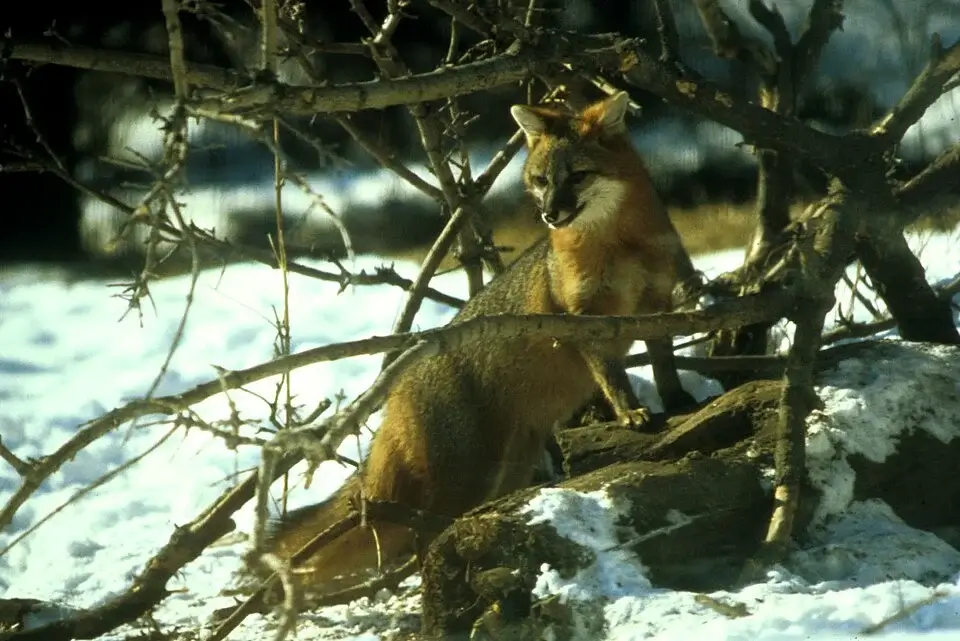
Gray Fox: Three species of foxes can be found in Oklahoma, and one of them is the gray fox. The others are the red fox and the swift fox. The gray fox can easily be confused with the red fox, but it can be distinguished by the patch of gray fur along the back and face. The gray fox also has reddish-brown fur on its sides with a long bushy tail that has a black stripe running along the top of it. The gray fox is the only species of fox that can climb straight up a tree. They do this to escape predators, search for food, or find a place to relax. They have the ability to jump from branch to branch, and they use their long sharp claws to climb up and down the trunk. Adult male gray foxes can reach a weight up to 15 pounds, while the adult female will usually weigh about 8 pounds. The average lifespan of a gray fox in the wild is six to eight years. Gray foxes prefer to live in heavily wooded areas. Their coloring helps them easily blend in with their environment. The mating season for gray foxes is usually between January and April depending on climate and location. The male typically pairs with one female in its lifetime unless that female dies. The gestation period lasts an average of 53 days, and a litter will have up to seven kits. The female prepares a den and tends to the kits, while the male hunts for food. At about 3 months old, the kits are taken out of the den to be taught how to hunt. Within another month, they are able to hunt on their own. The den is then left until the next year, and the same male and female will come back together to produce and raise another litter. Gray foxes make their dens in crevices, caves, hollow logs, trees, or burrows in the ground. Gray foxes are able to mate at 1 year of age. This can quickly lead to the population outgrowing the carrying capacity of the environment, resulting in loss of food, loss of habitat, and spreading of disease. To keep this from happening, the Oklahoma Department of Wildlife Conservation has included gray foxes in the furbearer trapping and hunting season from December through February. Gray foxes can run at speeds up to 27 mph and can maintain that speed for quite some time; this helps them catch their prey. They eat various foods including rodents, birds, insects, fruit, nuts, and grass. During summer and fall, they will eat a lot of grasshoppers and crickets to supplement their diet. Three species of foxes can be found in Oklahoma, and one of them is the gray fox. The others are the red fox and the swift fox. The gray fox can easily be confused with the red fox, but it can be distinguished by the patch of gray fur along the back and face. The gray fox also has reddish-brown fur on its sides with a long bushy tail that has a black stripe running along the top of it. The gray fox is the only species of fox that can climb straight up a tree. They do this to escape predators, search for food, or find a place to relax. They have the ability to jump from branch to branch, and they use their long sharp claws to climb up and down the trunk. Adult male gray foxes can reach a weight up to 15 pounds, while the adult female will usually weigh about 8 pounds. The average lifespan of a gray fox in the wild is six to eight years. Gray foxes prefer to live in heavily wooded areas. Their coloring helps them easily blend in with their environment. The mating season for gray foxes is usually between January and April depending on climate and location. The male typically pairs with one female in its lifetime unless that female dies. The gestation period lasts an average of 53 days, and a litter will have up to seven kits. The female prepares a den and tends to the kits, while the male hunts for food. At about 3 months old, the kits are taken out of the den to be taught how to hunt. Within another month, they are able to hunt on their own. The den is then left until the next year, and the same male and female will come back together to produce and raise another litter. Gray foxes make their dens in crevices, caves, hollow logs, trees, or burrows in the ground. Gray foxes are able to mate at 1 year of age. This can quickly lead to the population outgrowing the carrying capacity of the environment, resulting in loss of food, loss of habitat, and spreading of disease. To keep this from happening, the Oklahoma Department of Wildlife Conservation has included gray foxes in the furbearer trapping and hunting season from December through February. Gray foxes can run at speeds up to 27 mph and can maintain that speed for quite some time; this helps them catch their prey. They eat various foods including rodents, birds, insects, fruit, nuts, and grass. During summer and fall, they will eat a lot of grasshoppers and crickets to supplement their diet. Three species of foxes can be found in Oklahoma, and one of them is the gray fox. The others are the red fox and the swift fox. The gray fox can easily be confused with the red fox, but it can be distinguished by the patch of gray fur along the back and face. The gray fox also has reddish-brown fur on its sides with a long bushy tail that has a black stripe running along the top of it. The gray fox is the only species of fox that can climb straight up a tree. They do this to escape predators, search for food, or find a place to relax. They have the ability to jump from branch to branch, and they use their long sharp claws to climb up and down the trunk. Adult male gray foxes can reach a weight up to 15 pounds, while the adult female will usually weigh about 8 pounds. The average lifespan of a gray fox in the wild is six to eight years. Gray foxes prefer to live in heavily wooded areas. Their coloring helps them easily blend in with their environment. The mating season for gray foxes is usually between January and April depending on climate and location. The male typically pairs with one female in its lifetime unless that female dies. The gestation period lasts an average of 53 days, and a litter will have up to seven kits. The female prepares a den and tends to the kits, while the male hunts for food. At about 3 months old, the kits are taken out of the den to be taught how to hunt. Within another month, they are able to hunt on their own. The den is then left until the next year, and the same male and female will come back together to produce and raise another litter. Gray foxes make their dens in crevices, caves, hollow logs, trees, or burrows in the ground. Gray foxes are able to mate at 1 year of age. This can quickly lead to the population outgrowing the carrying capacity of the environment, resulting in loss of food, loss of habitat, and spreading of disease. To keep this from happening, the Oklahoma Department of Wildlife Conservation has included gray foxes in the furbearer trapping and hunting season from December through February. Gray foxes can run at speeds up to 27 mph and can maintain that speed for quite some time; this helps them catch their prey. They eat various foods including rodents, birds, insects, fruit, nuts, and grass. During summer and fall, they will eat a lot of grasshoppers and crickets to supplement their diet. Three species of foxes can be found in Oklahoma, and one of them is the gray fox. The others are the red fox and the swift fox. The gray fox can easily be confused with the red fox, but it can be distinguished by the patch of gray fur along the back and face. The gray fox also has reddish-brown fur on its sides with a long bushy tail that has a black stripe running along the top of it. The gray fox is the only species of fox that can climb straight up a tree. They do this to escape predators, search for food, or find a place to relax. They have the ability to jump from branch to branch, and they use their long sharp claws to climb up and down the trunk. Adult male gray foxes can reach a weight up to 15 pounds, while the adult female will usually weigh about 8 pounds. The average lifespan of a gray fox in the wild is six to eight years. Gray foxes prefer to live in heavily wooded areas. Their coloring helps them easily blend in with their environment. The mating season for gray foxes is usually between January and April depending on climate and location. The male typically pairs with one female in its lifetime unless that female dies. The gestation period lasts an average of 53 days, and a litter will have up to seven kits. The female prepares a den and tends to the kits, while the male hunts for food. At about 3 months old, the kits are taken out of the den to be taught how to hunt. Within another month, they are able to hunt on their own. The den is then left until the next year, and the same male and female will come back together to produce and raise another litter. Gray foxes make their dens in crevices, caves, hollow logs, trees, or burrows in the ground. Gray foxes are able to mate at 1 year of age. This can quickly lead to the population outgrowing the carrying capacity of the environment, resulting in loss of food, loss of habitat, and spreading of disease. To keep this from happening, the Oklahoma Department of Wildlife Conservation has included gray foxes in the furbearer trapping and hunting season from December through February. Gray foxes can run at speeds up to 27 mph and can maintain that speed for quite some time; this helps them catch their prey. They eat various foods including rodents, birds, insects, fruit, nuts, and grass. During summer and fall, they will eat a lot of grasshoppers and crickets to supplement their diet. Three species of foxes can be found in Oklahoma, and one of them is the gray fox. The others are the red fox and the swift fox. The gray fox can easily be confused with the red fox, but it can be distinguished by the patch of gray fur along the back and face. The gray fox also has reddish-brown fur on its sides with a long bushy tail that has a black stripe running along the top of it. The gray fox is the only species of fox that can climb straight up a tree. They do this to escape predators, search for food, or find a place to relax. They have the ability to jump from branch to branch, and they use their long sharp claws to climb up and down the trunk. Adult male gray foxes can reach a weight up to 15 pounds, while the adult female will usually weigh about 8 pounds. The average lifespan of a gray fox in the wild is six to eight years. Gray foxes prefer to live in heavily wooded areas. Their coloring helps them easily blend in with their environment. The mating season for gray foxes is usually between January and April depending on climate and location. The male typically pairs with one female in its lifetime unless that female dies. The gestation period lasts an average of 53 days, and a litter will have up to seven kits. The female prepares a den and tends to the kits, while the male hunts for food. At about 3 months old, the kits are taken out of the den to be taught how to hunt. Within another month, they are able to hunt on their own. The den is then left until the next year, and the same male and female will come back together to produce and raise another litter. Gray foxes make their dens in crevices, caves, hollow logs, trees, or burrows in the ground. Gray foxes are able to mate at 1 year of age. This can quickly lead to the population outgrowing the carrying capacity of the environment, resulting in loss of food, loss of habitat, and spreading of disease. To keep this from happening, the Oklahoma Department of Wildlife Conservation has included gray foxes in the furbearer trapping and hunting season from December through February. Gray foxes can run at speeds up to 27 mph and can maintain that speed for quite some time; this helps them catch their prey. They eat various foods including rodents, birds, insects, fruit, nuts, and grass. During summer and fall, they will eat a lot of grasshoppers and crickets to supplement their diet. Three species of foxes can be found in Oklahoma, and one of them is the gray fox. The others are the red fox and the swift fox. The gray fox can easily be confused with the red fox, but it can be distinguished by the patch of gray fur along the back and face. The gray fox also has reddish-brown fur on its sides with a long bushy tail that has a black stripe running along the top of it. The gray fox is the only species of fox that can climb straight up a tree. They do this to escape predators, search for food, or find a place to relax. They have the ability to jump from branch to branch, and they use their long sharp claws to climb up and down the trunk. Three species of foxes can be found in Oklahoma, and one of them is the gray fox. The others are the red fox and the swift fox. The gray fox can easily be confused with the red fox, but it can be distinguished by the patch of gray fur along the back and face. The gray fox also has reddish-brown fur on its sides with a long bushy tail that has a black stripe running along the top of it. The gray fox is the only species of fox that can climb straight up a tree. They do this to escape predators, search for food, or find a place to relax. They have the ability to jump from branch to branch, and they use their long sharp claws to climb up and down the trunk. Three species of foxes can be found in Oklahoma, and one of them is the gray fox. The others are the red fox and the swift fox. The gray fox can easily be confused with the red fox, but it can be distinguished by the patch of gray fur along the back and face. The gray fox also has reddish-brown fur on its sides with a long bushy tail that has a black stripe running along the top of it. The gray fox is the only species of fox that can climb straight up a tree. They do this to escape predators, search for food, or find a place to relax. They have the ability to jump from branch to branch, and they use their long sharp claws to climb up and down the trunk. Three species of foxes can be found in Oklahoma, and one of them is the gray fox. The others are the red fox and the swift fox. The gray fox can easily be confused with the red fox, but it can be distinguished by the patch of gray fur along the back and face. The gray fox also has reddish-brown fur on its sides with a long bushy tail that has a black stripe running along the top of it. The gray fox is the only species of fox that can climb straight up a tree. They do this to escape predators, search for food, or find a place to relax. They have the ability to jump from branch to branch, and they use their long sharp claws to climb up and down the trunk. Adult male gray foxes can reach a weight up to 15 pounds, while the adult female will usually weigh about 8 pounds. The average lifespan of a gray fox in the wild is six to eight years. Size: Adult male gray foxes can reach a weight up to 15 pounds, while the adult female will usually weigh about 8 pounds. The average lifespan of a gray fox in the wild is six to eight years. Adult male gray foxes can reach a weight up to 15 pounds, while the adult female will usually weigh about 8 pounds. The average lifespan of a gray fox in the wild is six to eight years. Adult male gray foxes can reach a weight up to 15 pounds, while the adult female will usually weigh about 8 pounds. The average lifespan of a gray fox in the wild is six to eight years. Gray foxes prefer to live in heavily wooded areas. Their coloring helps them easily blend in with their environment. Gray foxes can run at speeds up to 27 mph and can maintain that speed for quite some time; this helps them catch their prey. They eat various foods including rodents, birds, insects, fruit, nuts, and grass. During summer and fall, they will eat a lot of grasshoppers and crickets to supplement their diet. Gray foxes can run at speeds up to 27 mph and can maintain that speed for quite some time; this helps them catch their prey. They eat various foods including rodents, birds, insects, fruit, nuts, and grass. During summer and fall, they will eat a lot of grasshoppers and crickets to supplement their diet. Gray foxes can run at speeds up to 27 mph and can maintain that speed for quite some time; this helps them catch their prey. They eat various foods including rodents, birds, insects, fruit, nuts, and grass. During summer and fall, they will eat a lot of grasshoppers and crickets to supplement their diet.
Habitat & Range
Gray foxes prefer to live in heavily wooded areas. Their coloring helps them easily blend in with their environment. Gray foxes prefer to live in heavily wooded areas. Their coloring helps them easily blend in with their environment. Gray foxes prefer to live in heavily wooded areas. Their coloring helps them easily blend in with their environment. The mating season for gray foxes is usually between January and April depending on climate and location. The male typically pairs with one female in its lifetime unless that female dies. The gestation period lasts an average of 53 days, and a litter will have up to seven kits. The female prepares a den and tends to the kits, while the male hunts for food. At about 3 months old, the kits are taken out of the den to be taught how to hunt. Within another month, they are able to hunt on their own. The den is then left until the next year, and the same male and female will come back together to produce and raise another litter. Gray foxes make their dens in crevices, caves, hollow logs, trees, or burrows in the ground. Gray foxes are able to mate at 1 year of age. This can quickly lead to the population outgrowing the carrying capacity of the environment, resulting in loss of food, loss of habitat, and spreading of disease. To keep this from happening, the Oklahoma Department of Wildlife Conservation has included gray foxes in the furbearer trapping and hunting season from December through February.
Life History
The mating season for gray foxes is usually between January and April depending on climate and location. The male typically pairs with one female in its lifetime unless that female dies. The gestation period lasts an average of 53 days, and a litter will have up to seven kits. The female prepares a den and tends to the kits, while the male hunts for food. At about 3 months old, the kits are taken out of the den to be taught how to hunt. Within another month, they are able to hunt on their own. The den is then left until the next year, and the same male and female will come back together to produce and raise another litter. Gray foxes make their dens in crevices, caves, hollow logs, trees, or burrows in the ground. Gray foxes are able to mate at 1 year of age. This can quickly lead to the population outgrowing the carrying capacity of the environment, resulting in loss of food, loss of habitat, and spreading of disease. To keep this from happening, the Oklahoma Department of Wildlife Conservation has included gray foxes in the furbearer trapping and hunting season from December through February. The mating season for gray foxes is usually between January and April depending on climate and location. The male typically pairs with one female in its lifetime unless that female dies. The gestation period lasts an average of 53 days, and a litter will have up to seven kits. The female prepares a den and tends to the kits, while the male hunts for food. At about 3 months old, the kits are taken out of the den to be taught how to hunt. Within another month, they are able to hunt on their own. The den is then left until the next year, and the same male and female will come back together to produce and raise another litter. Gray foxes make their dens in crevices, caves, hollow logs, trees, or burrows in the ground. Gray foxes are able to mate at 1 year of age. This can quickly lead to the population outgrowing the carrying capacity of the environment, resulting in loss of food, loss of habitat, and spreading of disease. To keep this from happening, the Oklahoma Department of Wildlife Conservation has included gray foxes in the furbearer trapping and hunting season from December through February. The mating season for gray foxes is usually between January and April depending on climate and location. The male typically pairs with one female in its lifetime unless that female dies. The gestation period lasts an average of 53 days, and a litter will have up to seven kits. The female prepares a den and tends to the kits, while the male hunts for food. At about 3 months old, the kits are taken out of the den to be taught how to hunt. Within another month, they are able to hunt on their own. The den is then left until the next year, and the same male and female will come back together to produce and raise another litter. Gray foxes make their dens in crevices, caves, hollow logs, trees, or burrows in the ground. Gray foxes are able to mate at 1 year of age. This can quickly lead to the population outgrowing the carrying capacity of the environment, resulting in loss of food, loss of habitat, and spreading of disease. To keep this from happening, the Oklahoma Department of Wildlife Conservation has included gray foxes in the furbearer trapping and hunting season from December through February. Gray foxes can run at speeds up to 27 mph and can maintain that speed for quite some time; this helps them catch their prey. They eat various foods including rodents, birds, insects, fruit, nuts, and grass. During summer and fall, they will eat a lot of grasshoppers and crickets to supplement their diet.
Hunting Season
Dec 1 – Feb 28
Frequently Asked Questions
Regulations for hunting Gray Fox in Oklahoma
Gray fox hunting and trapping in Oklahoma runs Dec 1 through Feb 28. Combined season limit for gray and red foxes is 6, with no more than 2 red foxes. Gray foxes are the only fox species capable of climbing trees.
When is Gray Fox hunting season in Oklahoma?
Dec 1 – Feb 28
What is the bag limit for Gray Fox in Oklahoma?
Combined with red fox: 6 total (no more than 2 red foxes) per license
What's another name for Gray Fox?
Gray Fox is also known as Gray fox, Tree fox in Oklahoma.
References
| State | Category | Directory | Subcategory | Content | Source |
|---|---|---|---|---|---|
| Oklahoma | Hunting | Regulations | Season Dates | Dec 1 – Feb 28 | Link |
| Oklahoma | Hunting | Regulations | Regulations | Gray fox hunting and trapping in Oklahoma runs Dec 1 through Feb 28. Combined season limit for gray and red foxes is 6, | Link |