Also known as: Turtle dove, Carolina dove
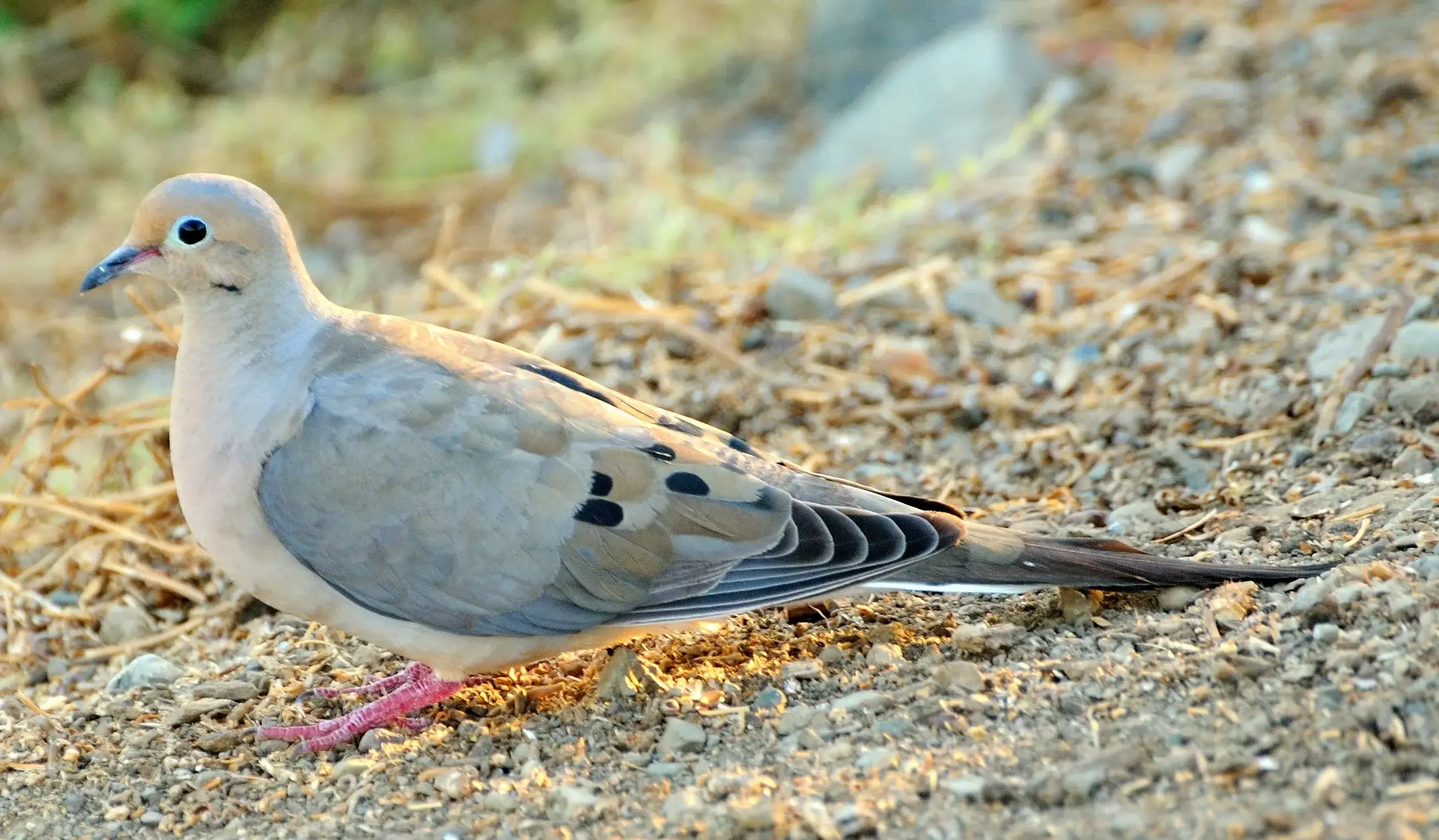
Mourning Dove: The mourning dove (Zenaida macroura) is a common sight at bird feeders across Oklahoma. it gets its name from its low, moaning "coo-ooo-ooo". They are often seen perched on telephone wires, fence lines and foraging for seeds on the ground. As you may have guessed, the mourning dove is a member of the dove family (Columbidae). These attractive birds are long, and buff-colored with a small head, a plump body and a long pointed rail. Their eyes have a blue ring of featherless skin around them. When they are raking flight and landing, their wings will make a sharp "whistling" sound. They are fast in flight, capable of reaching speeds of 55 miles per hour. Mourning doves are quick and maneuverable while in flight and can escape most predators. Mourning doves arc attracted to a wide range of seed types, such as, corn, millet, sunflower seeds, wheat, pine nuts, sweet-gum seeds and many more. While they will actively forage on seeds that are readily visible, they wilI not dig or scratch for seeds. lf a predator is near their nest, the adults will lure them away by using a broken wing display and staying on the ground as if it is injured until the predator approaches, at which time they will fly away. Males will be slightly larger than females, and females will have more of a brown coloring. They are primarily found in open country, areas with scattered trees, woodland edges and urban areas in communal roosts, except during mating season when they split off into breeding pairs. They will eat approximately 12 to 20 percent of their body weight in seeds each day. They feed on the ground in agricultural fields, grasslands, backyards and roadsides. When a mated pair begins to build a nest, the male will gather materials and bring them to the female, which will then build the nest. Building materials for the nest include pine needles, grass blades and twigs. The nests are built in trees, shrubs, guttering on houses and occasionally on the ground when a better location is nor available. Breeding season for this bird takes places from February through October. Mated pairs are monogamous during the mating season and many will stay together during the winter and pair back up the following spring. Both parents care for their young. They will lay two eggs, and both parents will incubate them for 14 days. While the adults live almost exclusively on seeds, their young are fed crop milk, which is a high energy substance that both parents will provide the first three to four days. Young mourning doves will leave the nest around 15 days after hatching, but will stay in the nesting area and beg for food from the male until they have become more proficient at £lying, which happens when they reach around 30 days of age. In warmer climates, they can be prolific breeders, with the potential to raise up to six broods in a single year. That is more than any other native bird species. Sexual maturity is reached around 85 days of age. The average lifespan of mourning doves in the wild is 1.5 years. Mourning doves will migrate two times each year, once in the spring and another during the fall. During the fall migration, the young or immature birds will go first, followed by the females, then the males. Some individuals will skip migration due to the abundant food supply found at bird feeders. When migrating, they will travel in large flocks and fly at low altitudes. Dove Hunting Resources The mourning dove (Zenaida macroura) is a common sight at bird feeders across Oklahoma. it gets its name from its low, moaning "coo-ooo-ooo". They are often seen perched on telephone wires, fence lines and foraging for seeds on the ground. As you may have guessed, the mourning dove is a member of the dove family (Columbidae). These attractive birds are long, and buff-colored with a small head, a plump body and a long pointed rail. Their eyes have a blue ring of featherless skin around them. When they are raking flight and landing, their wings will make a sharp "whistling" sound. They are fast in flight, capable of reaching speeds of 55 miles per hour. Mourning doves are quick and maneuverable while in flight and can escape most predators. Mourning doves arc attracted to a wide range of seed types, such as, corn, millet, sunflower seeds, wheat, pine nuts, sweet-gum seeds and many more. While they will actively forage on seeds that are readily visible, they wilI not dig or scratch for seeds. lf a predator is near their nest, the adults will lure them away by using a broken wing display and staying on the ground as if it is injured until the predator approaches, at which time they will fly away. Males will be slightly larger than females, and females will have more of a brown coloring. They are primarily found in open country, areas with scattered trees, woodland edges and urban areas in communal roosts, except during mating season when they split off into breeding pairs. They will eat approximately 12 to 20 percent of their body weight in seeds each day. They feed on the ground in agricultural fields, grasslands, backyards and roadsides. When a mated pair begins to build a nest, the male will gather materials and bring them to the female, which will then build the nest. Building materials for the nest include pine needles, grass blades and twigs. The nests are built in trees, shrubs, guttering on houses and occasionally on the ground when a better location is nor available. Breeding season for this bird takes places from February through October. Mated pairs are monogamous during the mating season and many will stay together during the winter and pair back up the following spring. Both parents care for their young. They will lay two eggs, and both parents will incubate them for 14 days. While the adults live almost exclusively on seeds, their young are fed crop milk, which is a high energy substance that both parents will provide the first three to four days. Young mourning doves will leave the nest around 15 days after hatching, but will stay in the nesting area and beg for food from the male until they have become more proficient at £lying, which happens when they reach around 30 days of age. In warmer climates, they can be prolific breeders, with the potential to raise up to six broods in a single year. That is more than any other native bird species. Sexual maturity is reached around 85 days of age. The average lifespan of mourning doves in the wild is 1.5 years. Mourning doves will migrate two times each year, once in the spring and another during the fall. During the fall migration, the young or immature birds will go first, followed by the females, then the males. Some individuals will skip migration due to the abundant food supply found at bird feeders. When migrating, they will travel in large flocks and fly at low altitudes. Dove Hunting Resources The mourning dove (Zenaida macroura) is a common sight at bird feeders across Oklahoma. it gets its name from its low, moaning "coo-ooo-ooo". They are often seen perched on telephone wires, fence lines and foraging for seeds on the ground. As you may have guessed, the mourning dove is a member of the dove family (Columbidae). These attractive birds are long, and buff-colored with a small head, a plump body and a long pointed rail. Their eyes have a blue ring of featherless skin around them. When they are raking flight and landing, their wings will make a sharp "whistling" sound. They are fast in flight, capable of reaching speeds of 55 miles per hour. Mourning doves are quick and maneuverable while in flight and can escape most predators. Mourning doves arc attracted to a wide range of seed types, such as, corn, millet, sunflower seeds, wheat, pine nuts, sweet-gum seeds and many more. While they will actively forage on seeds that are readily visible, they wilI not dig or scratch for seeds. lf a predator is near their nest, the adults will lure them away by using a broken wing display and staying on the ground as if it is injured until the predator approaches, at which time they will fly away. Males will be slightly larger than females, and females will have more of a brown coloring. They are primarily found in open country, areas with scattered trees, woodland edges and urban areas in communal roosts, except during mating season when they split off into breeding pairs. They will eat approximately 12 to 20 percent of their body weight in seeds each day. They feed on the ground in agricultural fields, grasslands, backyards and roadsides. When a mated pair begins to build a nest, the male will gather materials and bring them to the female, which will then build the nest. Building materials for the nest include pine needles, grass blades and twigs. The nests are built in trees, shrubs, guttering on houses and occasionally on the ground when a better location is nor available. Breeding season for this bird takes places from February through October. Mated pairs are monogamous during the mating season and many will stay together during the winter and pair back up the following spring. Both parents care for their young. They will lay two eggs, and both parents will incubate them for 14 days. While the adults live almost exclusively on seeds, their young are fed crop milk, which is a high energy substance that both parents will provide the first three to four days. Young mourning doves will leave the nest around 15 days after hatching, but will stay in the nesting area and beg for food from the male until they have become more proficient at £lying, which happens when they reach around 30 days of age. In warmer climates, they can be prolific breeders, with the potential to raise up to six broods in a single year. That is more than any other native bird species. Sexual maturity is reached around 85 days of age. The average lifespan of mourning doves in the wild is 1.5 years. Mourning doves will migrate two times each year, once in the spring and another during the fall. During the fall migration, the young or immature birds will go first, followed by the females, then the males. Some individuals will skip migration due to the abundant food supply found at bird feeders. When migrating, they will travel in large flocks and fly at low altitudes. Dove Hunting Resources The mourning dove (Zenaida macroura) is a common sight at bird feeders across Oklahoma. it gets its name from its low, moaning "coo-ooo-ooo". They are often seen perched on telephone wires, fence lines and foraging for seeds on the ground. As you may have guessed, the mourning dove is a member of the dove family (Columbidae). These attractive birds are long, and buff-colored with a small head, a plump body and a long pointed rail. Their eyes have a blue ring of featherless skin around them. When they are raking flight and landing, their wings will make a sharp "whistling" sound. They are fast in flight, capable of reaching speeds of 55 miles per hour. Mourning doves are quick and maneuverable while in flight and can escape most predators. Mourning doves arc attracted to a wide range of seed types, such as, corn, millet, sunflower seeds, wheat, pine nuts, sweet-gum seeds and many more. While they will actively forage on seeds that are readily visible, they wilI not dig or scratch for seeds. lf a predator is near their nest, the adults will lure them away by using a broken wing display and staying on the ground as if it is injured until the predator approaches, at which time they will fly away. Males will be slightly larger than females, and females will have more of a brown coloring. They are primarily found in open country, areas with scattered trees, woodland edges and urban areas in communal roosts, except during mating season when they split off into breeding pairs. They will eat approximately 12 to 20 percent of their body weight in seeds each day. They feed on the ground in agricultural fields, grasslands, backyards and roadsides. When a mated pair begins to build a nest, the male will gather materials and bring them to the female, which will then build the nest. Building materials for the nest include pine needles, grass blades and twigs. The nests are built in trees, shrubs, guttering on houses and occasionally on the ground when a better location is nor available. Breeding season for this bird takes places from February through October. Mated pairs are monogamous during the mating season and many will stay together during the winter and pair back up the following spring. Both parents care for their young. They will lay two eggs, and both parents will incubate them for 14 days. While the adults live almost exclusively on seeds, their young are fed crop milk, which is a high energy substance that both parents will provide the first three to four days. Young mourning doves will leave the nest around 15 days after hatching, but will stay in the nesting area and beg for food from the male until they have become more proficient at £lying, which happens when they reach around 30 days of age. In warmer climates, they can be prolific breeders, with the potential to raise up to six broods in a single year. That is more than any other native bird species. Sexual maturity is reached around 85 days of age. The average lifespan of mourning doves in the wild is 1.5 years. Mourning doves will migrate two times each year, once in the spring and another during the fall. During the fall migration, the young or immature birds will go first, followed by the females, then the males. Some individuals will skip migration due to the abundant food supply found at bird feeders. When migrating, they will travel in large flocks and fly at low altitudes. Dove Hunting Resources The mourning dove (Zenaida macroura) is a common sight at bird feeders across Oklahoma. it gets its name from its low, moaning "coo-ooo-ooo". They are often seen perched on telephone wires, fence lines and foraging for seeds on the ground. As you may have guessed, the mourning dove is a member of the dove family (Columbidae). These attractive birds are long, and buff-colored with a small head, a plump body and a long pointed rail. Their eyes have a blue ring of featherless skin around them. When they are raking flight and landing, their wings will make a sharp "whistling" sound. They are fast in flight, capable of reaching speeds of 55 miles per hour. Mourning doves are quick and maneuverable while in flight and can escape most predators. Mourning doves arc attracted to a wide range of seed types, such as, corn, millet, sunflower seeds, wheat, pine nuts, sweet-gum seeds and many more. While they will actively forage on seeds that are readily visible, they wilI not dig or scratch for seeds. lf a predator is near their nest, the adults will lure them away by using a broken wing display and staying on the ground as if it is injured until the predator approaches, at which time they will fly away. Males will be slightly larger than females, and females will have more of a brown coloring. They are primarily found in open country, areas with scattered trees, woodland edges and urban areas in communal roosts, except during mating season when they split off into breeding pairs. They will eat approximately 12 to 20 percent of their body weight in seeds each day. They feed on the ground in agricultural fields, grasslands, backyards and roadsides. When a mated pair begins to build a nest, the male will gather materials and bring them to the female, which will then build the nest. Building materials for the nest include pine needles, grass blades and twigs. The nests are built in trees, shrubs, guttering on houses and occasionally on the ground when a better location is nor available. Breeding season for this bird takes places from February through October. Mated pairs are monogamous during the mating season and many will stay together during the winter and pair back up the following spring. Both parents care for their young. They will lay two eggs, and both parents will incubate them for 14 days. While the adults live almost exclusively on seeds, their young are fed crop milk, which is a high energy substance that both parents will provide the first three to four days. Young mourning doves will leave the nest around 15 days after hatching, but will stay in the nesting area and beg for food from the male until they have become more proficient at £lying, which happens when they reach around 30 days of age. In warmer climates, they can be prolific breeders, with the potential to raise up to six broods in a single year. That is more than any other native bird species. Sexual maturity is reached around 85 days of age. The average lifespan of mourning doves in the wild is 1.5 years. Mourning doves will migrate two times each year, once in the spring and another during the fall. During the fall migration, the young or immature birds will go first, followed by the females, then the males. Some individuals will skip migration due to the abundant food supply found at bird feeders. When migrating, they will travel in large flocks and fly at low altitudes. Dove Hunting Resources The mourning dove (Zenaida macroura) is a common sight at bird feeders across Oklahoma. it gets its name from its low, moaning "coo-ooo-ooo". They are often seen perched on telephone wires, fence lines and foraging for seeds on the ground. As you may have guessed, the mourning dove is a member of the dove family (Columbidae). These attractive birds are long, and buff-colored with a small head, a plump body and a long pointed rail. Their eyes have a blue ring of featherless skin around them. When they are raking flight and landing, their wings will make a sharp "whistling" sound. They are fast in flight, capable of reaching speeds of 55 miles per hour. Mourning doves are quick and maneuverable while in flight and can escape most predators. Mourning doves arc attracted to a wide range of seed types, such as, corn, millet, sunflower seeds, wheat, pine nuts, sweet-gum seeds and many more. While they will actively forage on seeds that are readily visible, they wilI not dig or scratch for seeds. lf a predator is near their nest, the adults will lure them away by using a broken wing display and staying on the ground as if it is injured until the predator approaches, at which time they will fly away. The mourning dove (Zenaida macroura) is a common sight at bird feeders across Oklahoma. it gets its name from its low, moaning "coo-ooo-ooo". They are often seen perched on telephone wires, fence lines and foraging for seeds on the ground. As you may have guessed, the mourning dove is a member of the dove family (Columbidae). These attractive birds are long, and buff-colored with a small head, a plump body and a long pointed rail. Their eyes have a blue ring of featherless skin around them. When they are raking flight and landing, their wings will make a sharp "whistling" sound. They are fast in flight, capable of reaching speeds of 55 miles per hour. Mourning doves are quick and maneuverable while in flight and can escape most predators. Mourning doves arc attracted to a wide range of seed types, such as, corn, millet, sunflower seeds, wheat, pine nuts, sweet-gum seeds and many more. While they will actively forage on seeds that are readily visible, they wilI not dig or scratch for seeds. lf a predator is near their nest, the adults will lure them away by using a broken wing display and staying on the ground as if it is injured until the predator approaches, at which time they will fly away. The mourning dove (Zenaida macroura) is a common sight at bird feeders across Oklahoma. it gets its name from its low, moaning "coo-ooo-ooo". They are often seen perched on telephone wires, fence lines and foraging for seeds on the ground. As you may have guessed, the mourning dove is a member of the dove family (Columbidae). These attractive birds are long, and buff-colored with a small head, a plump body and a long pointed rail. Their eyes have a blue ring of featherless skin around them. When they are raking flight and landing, their wings will make a sharp "whistling" sound. They are fast in flight, capable of reaching speeds of 55 miles per hour. Mourning doves are quick and maneuverable while in flight and can escape most predators. Mourning doves arc attracted to a wide range of seed types, such as, corn, millet, sunflower seeds, wheat, pine nuts, sweet-gum seeds and many more. While they will actively forage on seeds that are readily visible, they wilI not dig or scratch for seeds. lf a predator is near their nest, the adults will lure them away by using a broken wing display and staying on the ground as if it is injured until the predator approaches, at which time they will fly away. The mourning dove (Zenaida macroura) is a common sight at bird feeders across Oklahoma. it gets its name from its low, moaning "coo-ooo-ooo". They are often seen perched on telephone wires, fence lines and foraging for seeds on the ground. As you may have guessed, the mourning dove is a member of the dove family (Columbidae). These attractive birds are long, and buff-colored with a small head, a plump body and a long pointed rail. Their eyes have a blue ring of featherless skin around them. When they are raking flight and landing, their wings will make a sharp "whistling" sound. They are fast in flight, capable of reaching speeds of 55 miles per hour. Mourning doves are quick and maneuverable while in flight and can escape most predators. Mourning doves arc attracted to a wide range of seed types, such as, corn, millet, sunflower seeds, wheat, pine nuts, sweet-gum seeds and many more. While they will actively forage on seeds that are readily visible, they wilI not dig or scratch for seeds. lf a predator is near their nest, the adults will lure them away by using a broken wing display and staying on the ground as if it is injured until the predator approaches, at which time they will fly away. Males will be slightly larger than females, and females will have more of a brown coloring. Size: Males will be slightly larger than females, and females will have more of a brown coloring. Males will be slightly larger than females, and females will have more of a brown coloring. Males will be slightly larger than females, and females will have more of a brown coloring. They are primarily found in open country, areas with scattered trees, woodland edges and urban areas in communal roosts, except during mating season when they split off into breeding pairs. They will eat approximately 12 to 20 percent of their body weight in seeds each day. They feed on the ground in agricultural fields, grasslands, backyards and roadsides. When a mated pair begins to build a nest, the male will gather materials and bring them to the female, which will then build the nest. Building materials for the nest include pine needles, grass blades and twigs. The nests are built in trees, shrubs, guttering on houses and occasionally on the ground when a better location is nor available.
Habitat & Range
They are primarily found in open country, areas with scattered trees, woodland edges and urban areas in communal roosts, except during mating season when they split off into breeding pairs. They will eat approximately 12 to 20 percent of their body weight in seeds each day. They feed on the ground in agricultural fields, grasslands, backyards and roadsides. When a mated pair begins to build a nest, the male will gather materials and bring them to the female, which will then build the nest. Building materials for the nest include pine needles, grass blades and twigs. The nests are built in trees, shrubs, guttering on houses and occasionally on the ground when a better location is nor available. They are primarily found in open country, areas with scattered trees, woodland edges and urban areas in communal roosts, except during mating season when they split off into breeding pairs. They will eat approximately 12 to 20 percent of their body weight in seeds each day. They feed on the ground in agricultural fields, grasslands, backyards and roadsides. When a mated pair begins to build a nest, the male will gather materials and bring them to the female, which will then build the nest. Building materials for the nest include pine needles, grass blades and twigs. The nests are built in trees, shrubs, guttering on houses and occasionally on the ground when a better location is nor available. They are primarily found in open country, areas with scattered trees, woodland edges and urban areas in communal roosts, except during mating season when they split off into breeding pairs. They will eat approximately 12 to 20 percent of their body weight in seeds each day. They feed on the ground in agricultural fields, grasslands, backyards and roadsides. When a mated pair begins to build a nest, the male will gather materials and bring them to the female, which will then build the nest. Building materials for the nest include pine needles, grass blades and twigs. The nests are built in trees, shrubs, guttering on houses and occasionally on the ground when a better location is nor available. Breeding season for this bird takes places from February through October. Mated pairs are monogamous during the mating season and many will stay together during the winter and pair back up the following spring. Both parents care for their young. They will lay two eggs, and both parents will incubate them for 14 days. While the adults live almost exclusively on seeds, their young are fed crop milk, which is a high energy substance that both parents will provide the first three to four days. Young mourning doves will leave the nest around 15 days after hatching, but will stay in the nesting area and beg for food from the male until they have become more proficient at £lying, which happens when they reach around 30 days of age. In warmer climates, they can be prolific breeders, with the potential to raise up to six broods in a single year. That is more than any other native bird species. Sexual maturity is reached around 85 days of age. The average lifespan of mourning doves in the wild is 1.5 years. Mourning doves will migrate two times each year, once in the spring and another during the fall. During the fall migration, the young or immature birds will go first, followed by the females, then the males. Some individuals will skip migration due to the abundant food supply found at bird feeders. When migrating, they will travel in large flocks and fly at low altitudes. Dove Hunting Resources
Life History
Breeding season for this bird takes places from February through October. Mated pairs are monogamous during the mating season and many will stay together during the winter and pair back up the following spring. Both parents care for their young. They will lay two eggs, and both parents will incubate them for 14 days. While the adults live almost exclusively on seeds, their young are fed crop milk, which is a high energy substance that both parents will provide the first three to four days. Young mourning doves will leave the nest around 15 days after hatching, but will stay in the nesting area and beg for food from the male until they have become more proficient at £lying, which happens when they reach around 30 days of age. In warmer climates, they can be prolific breeders, with the potential to raise up to six broods in a single year. That is more than any other native bird species. Sexual maturity is reached around 85 days of age. The average lifespan of mourning doves in the wild is 1.5 years. Mourning doves will migrate two times each year, once in the spring and another during the fall. During the fall migration, the young or immature birds will go first, followed by the females, then the males. Some individuals will skip migration due to the abundant food supply found at bird feeders. When migrating, they will travel in large flocks and fly at low altitudes. Dove Hunting Resources Breeding season for this bird takes places from February through October. Mated pairs are monogamous during the mating season and many will stay together during the winter and pair back up the following spring. Both parents care for their young. They will lay two eggs, and both parents will incubate them for 14 days. While the adults live almost exclusively on seeds, their young are fed crop milk, which is a high energy substance that both parents will provide the first three to four days. Young mourning doves will leave the nest around 15 days after hatching, but will stay in the nesting area and beg for food from the male until they have become more proficient at £lying, which happens when they reach around 30 days of age. In warmer climates, they can be prolific breeders, with the potential to raise up to six broods in a single year. That is more than any other native bird species. Sexual maturity is reached around 85 days of age. The average lifespan of mourning doves in the wild is 1.5 years. Mourning doves will migrate two times each year, once in the spring and another during the fall. During the fall migration, the young or immature birds will go first, followed by the females, then the males. Some individuals will skip migration due to the abundant food supply found at bird feeders. When migrating, they will travel in large flocks and fly at low altitudes. Dove Hunting Resources Breeding season for this bird takes places from February through October. Mated pairs are monogamous during the mating season and many will stay together during the winter and pair back up the following spring. Both parents care for their young. They will lay two eggs, and both parents will incubate them for 14 days. While the adults live almost exclusively on seeds, their young are fed crop milk, which is a high energy substance that both parents will provide the first three to four days. Young mourning doves will leave the nest around 15 days after hatching, but will stay in the nesting area and beg for food from the male until they have become more proficient at £lying, which happens when they reach around 30 days of age. In warmer climates, they can be prolific breeders, with the potential to raise up to six broods in a single year. That is more than any other native bird species. Sexual maturity is reached around 85 days of age. The average lifespan of mourning doves in the wild is 1.5 years. Mourning doves will migrate two times each year, once in the spring and another during the fall. During the fall migration, the young or immature birds will go first, followed by the females, then the males. Some individuals will skip migration due to the abundant food supply found at bird feeders. When migrating, they will travel in large flocks and fly at low altitudes. Dove Hunting Resources
Hunting Season
First season: Sep 1 – Oct 31; Second season: Dec 1–29
Frequently Asked Questions
Regulations for hunting Mourning Dove in Oklahoma
Mourning dove hunting in Oklahoma has two seasons: Sep 1 – Oct 31 and Dec 1–29. Daily bag limit is 15 birds aggregate (mourning dove and white-winged dove combined). Eurasian collared doves do not count toward the limit if the head or one fully feathered wing remains attached. Shooting hours: 30 minutes before official sunrise to official sunset. Nontoxic shot required.
When is Mourning Dove hunting season in Oklahoma?
First season: Sep 1 – Oct 31; Second season: Dec 1–29
What is the bag limit for Mourning Dove in Oklahoma?
15 per day aggregate (mourning + white-winged); 30 possession after first day; Eurasian collared dove has no bag limit if head/feathered wing remains attached
What's another name for Mourning Dove?
Mourning Dove is also known as Turtle dove, Carolina dove in Oklahoma.
References
| State | Category | Directory | Subcategory | Content | Source |
|---|---|---|---|---|---|
| Oklahoma | Hunting | Regulations | Season Dates | First season: Sep 1 – Oct 31; Second season: Dec 1–29 | Link |
| Oklahoma | Hunting | Regulations | Regulations | Mourning dove hunting in Oklahoma has two seasons: Sep 1 – Oct 31 and Dec 1–29. Daily bag limit is 15 birds aggregate (m | Link |