Also known as: Antelope, Pronghorn antelope, American antelope
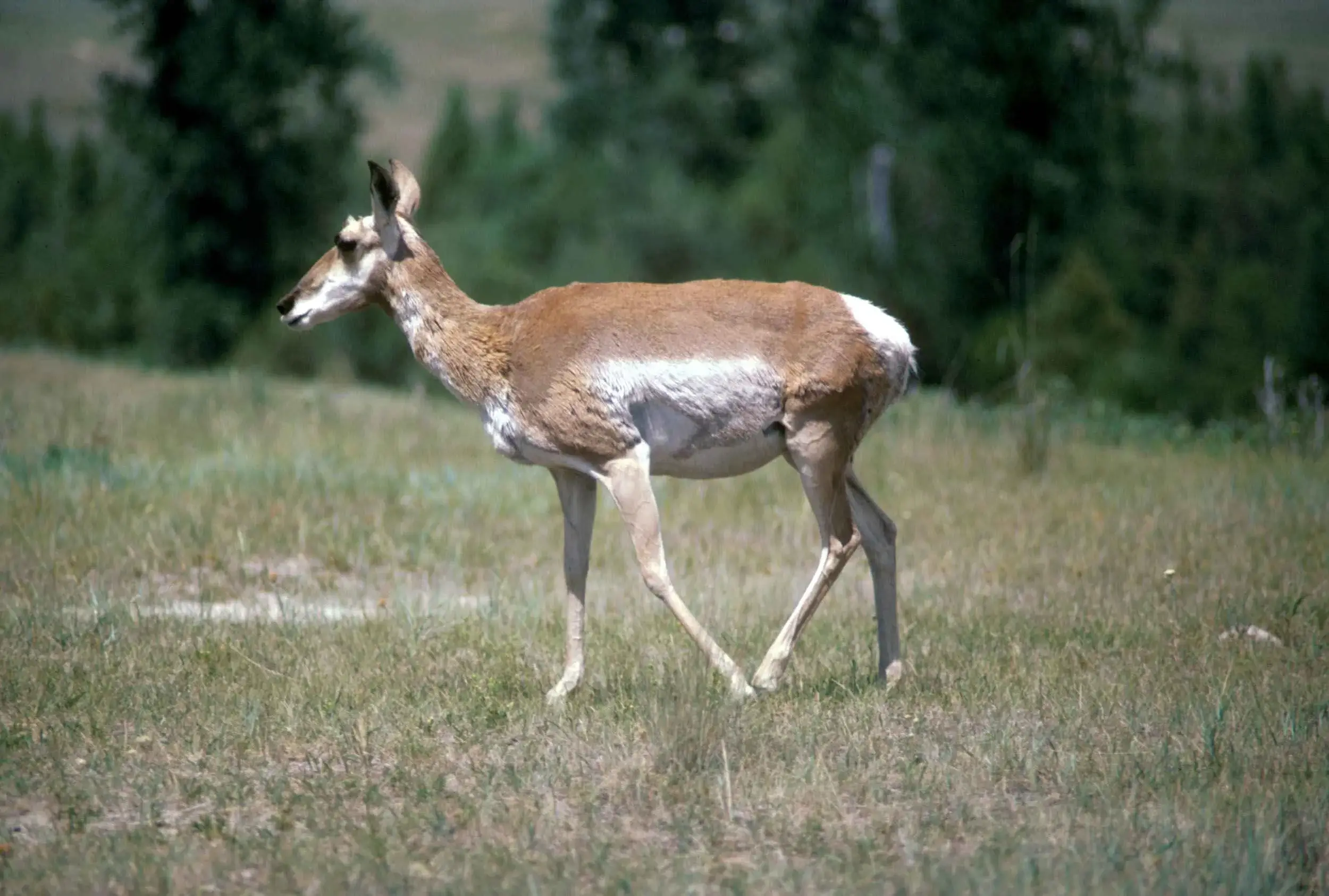
Pronghorn: The pronghorn is so unique that it is the only member of it family, Antilocapra. Its Latin nameAntilocapra americana,means the "American goat-antelope." But the pronghorn is directly related to neither New World goats nor Old World antelopes. Instead, pronghorn antelope are American natives that can be found nowhere else in the world, and healthy populations exist right here in Oklahoma. Pronghorn have a rich tan color contrasting with white patches on the neck, stomach and rump. Males have black patches on the lower jaw below the eye and a black mask extending back from the nose. Both pronghorn bucks and doe have horn although the female's horn, are much smaller than the male's, which are 10 to 16 inches long. The horn is, made up of two parts: a bony core and a black outer heath. Unlike true goat or antelope (or an other animal for that matter), which grow horns that are never shed, the pronghorn sheds a heath of its horn each year and grows another sheath the next year. If pronghorns are known for one thing it is speed. They sprint as fast as 70 miles per hour, making them the fastest animals in North America. Besides their legs, pronghorns rely on their keen eyesight and sensitive noses to avoid danger on the prairie. Adult pronghorn have few natural predators, although the young can be vulnerable to mountain lions, coyotes and other predators. Pronghorns are at home in the wide-open spaces of the American West where other animals may find food and cover in short supply. In Oklahoma, these striking big game mammals can be spotted in the short and mixed grass prairie of Cimarron and Texas counties, both of which support enough pronghorn to provide hunting seasons to sportsmen. Mature pronghorn bucks stake out their territories and assemble harems of up to 10 does each fall. Although brief fights may break out between rival males, confrontations are usually decided with a few head butts and a lot of posturing. Offspring are born in late May or early June. Twins are fairly common. The young are up and running with the rest of the pronghorn herd within a month. Pronghorn Hunting Resources The pronghorn is so unique that it is the only member of it family, Antilocapra. Its Latin nameAntilocapra americana,means the "American goat-antelope." But the pronghorn is directly related to neither New World goats nor Old World antelopes. Instead, pronghorn antelope are American natives that can be found nowhere else in the world, and healthy populations exist right here in Oklahoma. Pronghorn have a rich tan color contrasting with white patches on the neck, stomach and rump. Males have black patches on the lower jaw below the eye and a black mask extending back from the nose. Both pronghorn bucks and doe have horn although the female's horn, are much smaller than the male's, which are 10 to 16 inches long. The horn is, made up of two parts: a bony core and a black outer heath. Unlike true goat or antelope (or an other animal for that matter), which grow horns that are never shed, the pronghorn sheds a heath of its horn each year and grows another sheath the next year. If pronghorns are known for one thing it is speed. They sprint as fast as 70 miles per hour, making them the fastest animals in North America. Besides their legs, pronghorns rely on their keen eyesight and sensitive noses to avoid danger on the prairie. Adult pronghorn have few natural predators, although the young can be vulnerable to mountain lions, coyotes and other predators. Pronghorns are at home in the wide-open spaces of the American West where other animals may find food and cover in short supply. In Oklahoma, these striking big game mammals can be spotted in the short and mixed grass prairie of Cimarron and Texas counties, both of which support enough pronghorn to provide hunting seasons to sportsmen. Mature pronghorn bucks stake out their territories and assemble harems of up to 10 does each fall. Although brief fights may break out between rival males, confrontations are usually decided with a few head butts and a lot of posturing. Offspring are born in late May or early June. Twins are fairly common. The young are up and running with the rest of the pronghorn herd within a month. Pronghorn Hunting Resources The pronghorn is so unique that it is the only member of it family, Antilocapra. Its Latin nameAntilocapra americana,means the "American goat-antelope." But the pronghorn is directly related to neither New World goats nor Old World antelopes. Instead, pronghorn antelope are American natives that can be found nowhere else in the world, and healthy populations exist right here in Oklahoma. Pronghorn have a rich tan color contrasting with white patches on the neck, stomach and rump. Males have black patches on the lower jaw below the eye and a black mask extending back from the nose. Both pronghorn bucks and doe have horn although the female's horn, are much smaller than the male's, which are 10 to 16 inches long. The horn is, made up of two parts: a bony core and a black outer heath. Unlike true goat or antelope (or an other animal for that matter), which grow horns that are never shed, the pronghorn sheds a heath of its horn each year and grows another sheath the next year. If pronghorns are known for one thing it is speed. They sprint as fast as 70 miles per hour, making them the fastest animals in North America. Besides their legs, pronghorns rely on their keen eyesight and sensitive noses to avoid danger on the prairie. Adult pronghorn have few natural predators, although the young can be vulnerable to mountain lions, coyotes and other predators. Pronghorns are at home in the wide-open spaces of the American West where other animals may find food and cover in short supply. In Oklahoma, these striking big game mammals can be spotted in the short and mixed grass prairie of Cimarron and Texas counties, both of which support enough pronghorn to provide hunting seasons to sportsmen. Mature pronghorn bucks stake out their territories and assemble harems of up to 10 does each fall. Although brief fights may break out between rival males, confrontations are usually decided with a few head butts and a lot of posturing. Offspring are born in late May or early June. Twins are fairly common. The young are up and running with the rest of the pronghorn herd within a month. Pronghorn Hunting Resources The pronghorn is so unique that it is the only member of it family, Antilocapra. Its Latin nameAntilocapra americana,means the "American goat-antelope." But the pronghorn is directly related to neither New World goats nor Old World antelopes. Instead, pronghorn antelope are American natives that can be found nowhere else in the world, and healthy populations exist right here in Oklahoma. Pronghorn have a rich tan color contrasting with white patches on the neck, stomach and rump. Males have black patches on the lower jaw below the eye and a black mask extending back from the nose. Both pronghorn bucks and doe have horn although the female's horn, are much smaller than the male's, which are 10 to 16 inches long. The horn is, made up of two parts: a bony core and a black outer heath. Unlike true goat or antelope (or an other animal for that matter), which grow horns that are never shed, the pronghorn sheds a heath of its horn each year and grows another sheath the next year. If pronghorns are known for one thing it is speed. They sprint as fast as 70 miles per hour, making them the fastest animals in North America. Besides their legs, pronghorns rely on their keen eyesight and sensitive noses to avoid danger on the prairie. Adult pronghorn have few natural predators, although the young can be vulnerable to mountain lions, coyotes and other predators. Pronghorns are at home in the wide-open spaces of the American West where other animals may find food and cover in short supply. In Oklahoma, these striking big game mammals can be spotted in the short and mixed grass prairie of Cimarron and Texas counties, both of which support enough pronghorn to provide hunting seasons to sportsmen. Mature pronghorn bucks stake out their territories and assemble harems of up to 10 does each fall. Although brief fights may break out between rival males, confrontations are usually decided with a few head butts and a lot of posturing. Offspring are born in late May or early June. Twins are fairly common. The young are up and running with the rest of the pronghorn herd within a month. Pronghorn Hunting Resources The pronghorn is so unique that it is the only member of it family, Antilocapra. Its Latin nameAntilocapra americana,means the "American goat-antelope." But the pronghorn is directly related to neither New World goats nor Old World antelopes. Instead, pronghorn antelope are American natives that can be found nowhere else in the world, and healthy populations exist right here in Oklahoma. Pronghorn have a rich tan color contrasting with white patches on the neck, stomach and rump. Males have black patches on the lower jaw below the eye and a black mask extending back from the nose. Both pronghorn bucks and doe have horn although the female's horn, are much smaller than the male's, which are 10 to 16 inches long. The horn is, made up of two parts: a bony core and a black outer heath. Unlike true goat or antelope (or an other animal for that matter), which grow horns that are never shed, the pronghorn sheds a heath of its horn each year and grows another sheath the next year. If pronghorns are known for one thing it is speed. They sprint as fast as 70 miles per hour, making them the fastest animals in North America. Besides their legs, pronghorns rely on their keen eyesight and sensitive noses to avoid danger on the prairie. Adult pronghorn have few natural predators, although the young can be vulnerable to mountain lions, coyotes and other predators. Pronghorns are at home in the wide-open spaces of the American West where other animals may find food and cover in short supply. In Oklahoma, these striking big game mammals can be spotted in the short and mixed grass prairie of Cimarron and Texas counties, both of which support enough pronghorn to provide hunting seasons to sportsmen. Mature pronghorn bucks stake out their territories and assemble harems of up to 10 does each fall. Although brief fights may break out between rival males, confrontations are usually decided with a few head butts and a lot of posturing. Offspring are born in late May or early June. Twins are fairly common. The young are up and running with the rest of the pronghorn herd within a month. Pronghorn Hunting Resources The pronghorn is so unique that it is the only member of it family, Antilocapra. Its Latin nameAntilocapra americana,means the "American goat-antelope." But the pronghorn is directly related to neither New World goats nor Old World antelopes. Instead, pronghorn antelope are American natives that can be found nowhere else in the world, and healthy populations exist right here in Oklahoma. Pronghorn have a rich tan color contrasting with white patches on the neck, stomach and rump. Males have black patches on the lower jaw below the eye and a black mask extending back from the nose. Both pronghorn bucks and doe have horn although the female's horn, are much smaller than the male's, which are 10 to 16 inches long. The horn is, made up of two parts: a bony core and a black outer heath. Unlike true goat or antelope (or an other animal for that matter), which grow horns that are never shed, the pronghorn sheds a heath of its horn each year and grows another sheath the next year. If pronghorns are known for one thing it is speed. They sprint as fast as 70 miles per hour, making them the fastest animals in North America. Besides their legs, pronghorns rely on their keen eyesight and sensitive noses to avoid danger on the prairie. Adult pronghorn have few natural predators, although the young can be vulnerable to mountain lions, coyotes and other predators. The pronghorn is so unique that it is the only member of it family, Antilocapra. Its Latin nameAntilocapra americana,means the "American goat-antelope." But the pronghorn is directly related to neither New World goats nor Old World antelopes. Instead, pronghorn antelope are American natives that can be found nowhere else in the world, and healthy populations exist right here in Oklahoma. Pronghorn have a rich tan color contrasting with white patches on the neck, stomach and rump. Males have black patches on the lower jaw below the eye and a black mask extending back from the nose. Both pronghorn bucks and doe have horn although the female's horn, are much smaller than the male's, which are 10 to 16 inches long. The horn is, made up of two parts: a bony core and a black outer heath. Unlike true goat or antelope (or an other animal for that matter), which grow horns that are never shed, the pronghorn sheds a heath of its horn each year and grows another sheath the next year. If pronghorns are known for one thing it is speed. They sprint as fast as 70 miles per hour, making them the fastest animals in North America. Besides their legs, pronghorns rely on their keen eyesight and sensitive noses to avoid danger on the prairie. Adult pronghorn have few natural predators, although the young can be vulnerable to mountain lions, coyotes and other predators. The pronghorn is so unique that it is the only member of it family, Antilocapra. Its Latin nameAntilocapra americana,means the "American goat-antelope." But the pronghorn is directly related to neither New World goats nor Old World antelopes. Instead, pronghorn antelope are American natives that can be found nowhere else in the world, and healthy populations exist right here in Oklahoma. Pronghorn have a rich tan color contrasting with white patches on the neck, stomach and rump. Males have black patches on the lower jaw below the eye and a black mask extending back from the nose. Both pronghorn bucks and doe have horn although the female's horn, are much smaller than the male's, which are 10 to 16 inches long. The horn is, made up of two parts: a bony core and a black outer heath. Unlike true goat or antelope (or an other animal for that matter), which grow horns that are never shed, the pronghorn sheds a heath of its horn each year and grows another sheath the next year. If pronghorns are known for one thing it is speed. They sprint as fast as 70 miles per hour, making them the fastest animals in North America. Besides their legs, pronghorns rely on their keen eyesight and sensitive noses to avoid danger on the prairie. Adult pronghorn have few natural predators, although the young can be vulnerable to mountain lions, coyotes and other predators. The pronghorn is so unique that it is the only member of it family, Antilocapra. Its Latin nameAntilocapra americana,means the "American goat-antelope." But the pronghorn is directly related to neither New World goats nor Old World antelopes. Instead, pronghorn antelope are American natives that can be found nowhere else in the world, and healthy populations exist right here in Oklahoma. Pronghorn have a rich tan color contrasting with white patches on the neck, stomach and rump. Males have black patches on the lower jaw below the eye and a black mask extending back from the nose. Both pronghorn bucks and doe have horn although the female's horn, are much smaller than the male's, which are 10 to 16 inches long. The horn is, made up of two parts: a bony core and a black outer heath. Unlike true goat or antelope (or an other animal for that matter), which grow horns that are never shed, the pronghorn sheds a heath of its horn each year and grows another sheath the next year. If pronghorns are known for one thing it is speed. They sprint as fast as 70 miles per hour, making them the fastest animals in North America. Besides their legs, pronghorns rely on their keen eyesight and sensitive noses to avoid danger on the prairie. Adult pronghorn have few natural predators, although the young can be vulnerable to mountain lions, coyotes and other predators. Pronghorns are at home in the wide-open spaces of the American West where other animals may find food and cover in short supply. In Oklahoma, these striking big game mammals can be spotted in the short and mixed grass prairie of Cimarron and Texas counties, both of which support enough pronghorn to provide hunting seasons to sportsmen. Pronghorn Hunting Resources Pronghorn Hunting Resources Pronghorn Hunting Resources
Habitat & Range
Pronghorns are at home in the wide-open spaces of the American West where other animals may find food and cover in short supply. In Oklahoma, these striking big game mammals can be spotted in the short and mixed grass prairie of Cimarron and Texas counties, both of which support enough pronghorn to provide hunting seasons to sportsmen. Pronghorns are at home in the wide-open spaces of the American West where other animals may find food and cover in short supply. In Oklahoma, these striking big game mammals can be spotted in the short and mixed grass prairie of Cimarron and Texas counties, both of which support enough pronghorn to provide hunting seasons to sportsmen. Pronghorns are at home in the wide-open spaces of the American West where other animals may find food and cover in short supply. In Oklahoma, these striking big game mammals can be spotted in the short and mixed grass prairie of Cimarron and Texas counties, both of which support enough pronghorn to provide hunting seasons to sportsmen. Mature pronghorn bucks stake out their territories and assemble harems of up to 10 does each fall. Although brief fights may break out between rival males, confrontations are usually decided with a few head butts and a lot of posturing. Offspring are born in late May or early June. Twins are fairly common. The young are up and running with the rest of the pronghorn herd within a month.
Life History
Mature pronghorn bucks stake out their territories and assemble harems of up to 10 does each fall. Although brief fights may break out between rival males, confrontations are usually decided with a few head butts and a lot of posturing. Offspring are born in late May or early June. Twins are fairly common. The young are up and running with the rest of the pronghorn herd within a month. Mature pronghorn bucks stake out their territories and assemble harems of up to 10 does each fall. Although brief fights may break out between rival males, confrontations are usually decided with a few head butts and a lot of posturing. Offspring are born in late May or early June. Twins are fairly common. The young are up and running with the rest of the pronghorn herd within a month. Mature pronghorn bucks stake out their territories and assemble harems of up to 10 does each fall. Although brief fights may break out between rival males, confrontations are usually decided with a few head butts and a lot of posturing. Offspring are born in late May or early June. Twins are fairly common. The young are up and running with the rest of the pronghorn herd within a month. Pronghorn Hunting Resources
Hunting Season
Archery: Oct 1–14; Gun (either sex, draw): Sep 4–6; Gun (doe, controlled hunt): Sep 7–16; Gun (doe, landowner): Nov 28 – Jan 15
Frequently Asked Questions
Regulations for hunting Pronghorn in Oklahoma
Pronghorn hunting in Oklahoma is limited to Cimarron County and portions of Texas County west of SH-136. Combined season limit is 2 antelope (max 1 buck). Archery: Oct 1–14. Gun seasons require controlled hunt draw or landowner permit. Written landowner permission required. E-check within 24 hours.
How fast can pronghorn run?
Pronghorn can sprint up to 70 miles per hour, making them the fastest land animals in North America. They rely on speed, keen eyesight, and sensitive hearing to detect and escape predators.
Where can you hunt pronghorn in Oklahoma?
Pronghorn hunting in Oklahoma is limited to Cimarron County and the portion of Texas County west of State Highway 136. Most seasons require a controlled hunt draw permit.
When is Pronghorn hunting season in Oklahoma?
Archery: Oct 1–14; Gun (either sex, draw): Sep 4–6; Gun (doe, controlled hunt): Sep 7–16; Gun (doe, landowner): Nov 28 – Jan 15
What is the bag limit for Pronghorn in Oklahoma?
2 total (no more than 1 buck)
What's another name for Pronghorn?
Pronghorn is also known as Antelope, Pronghorn antelope, American antelope in Oklahoma.
References
| State | Category | Directory | Subcategory | Content | Source |
|---|---|---|---|---|---|
| Oklahoma | Hunting | Regulations | Season Dates | Archery: Oct 1–14; Gun (either sex, draw): Sep 4–6; Gun (doe, controlled hunt): Sep 7–16; Gun (doe, landowner): Nov 28 – | Link |
| Oklahoma | Hunting | Regulations | Regulations | Pronghorn hunting in Oklahoma is limited to Cimarron County and portions of Texas County west of SH-136. Combined season | Link |