Also known as: Eastern wild turkey, Rio Grande turkey, Merriam's turkey
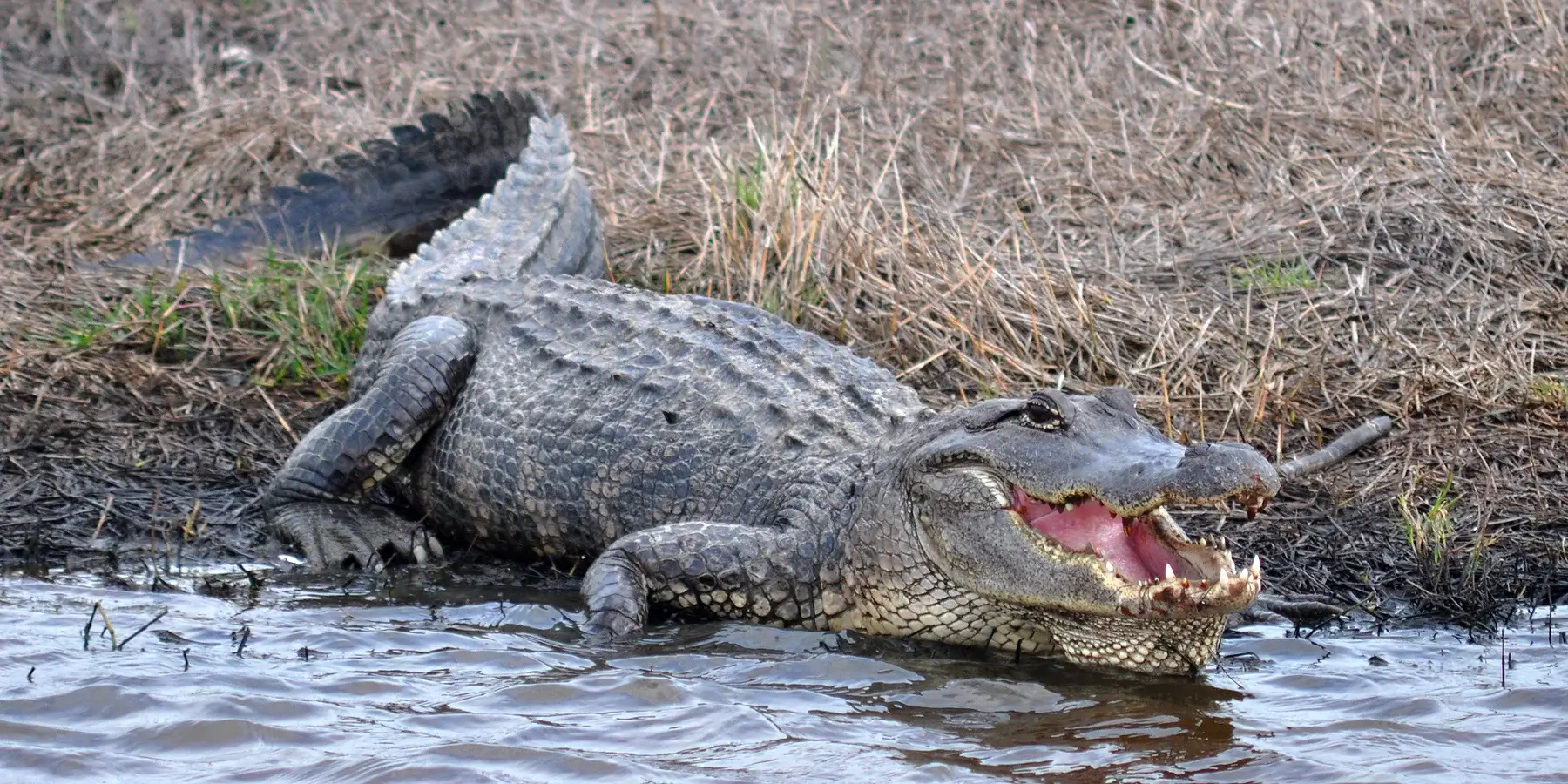
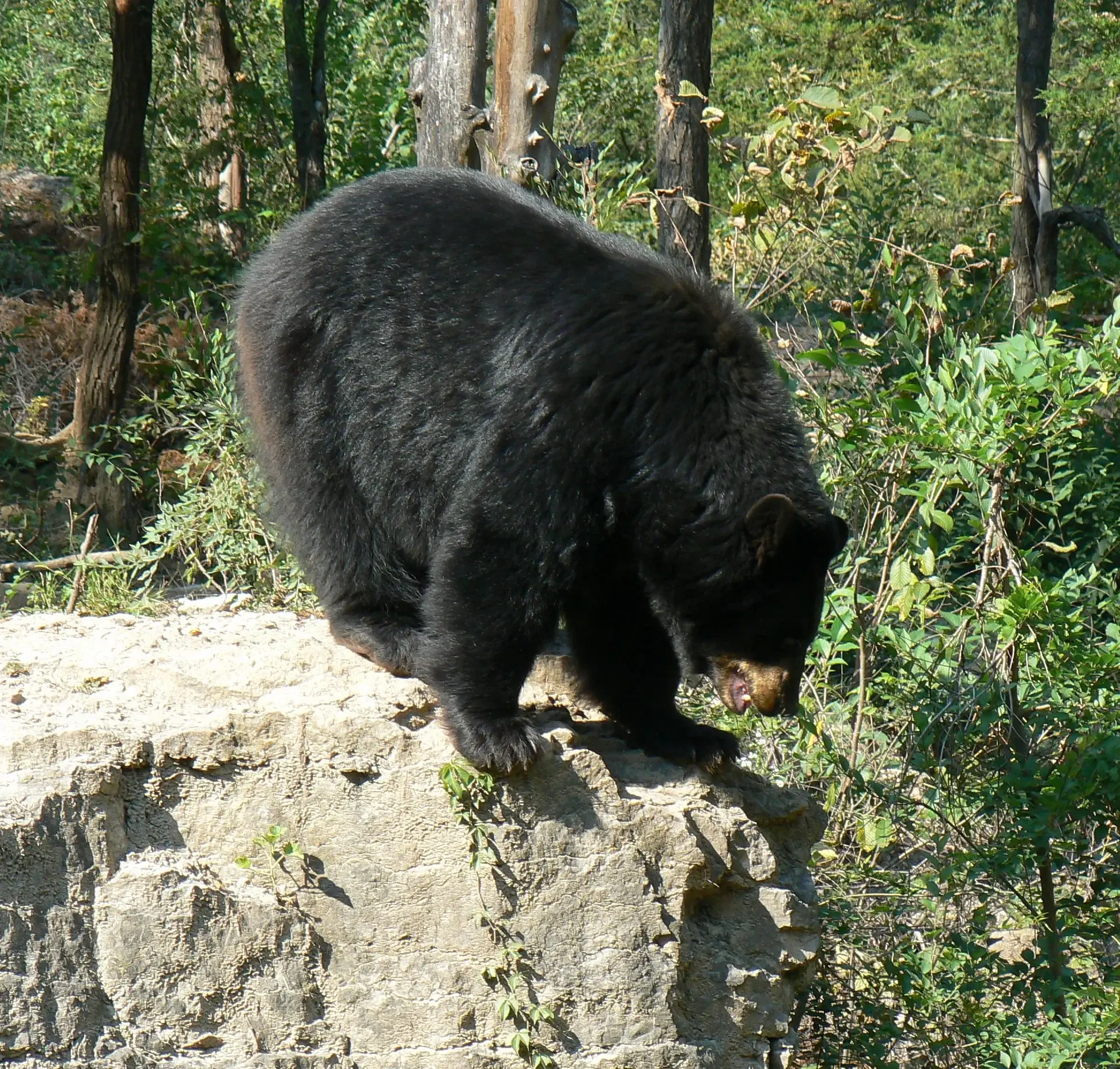
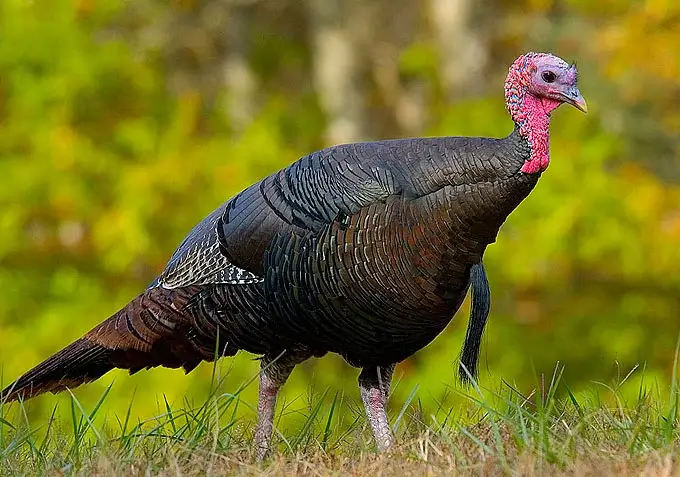
The wild turkey wasformally describedin 1758 by the Swedish naturalistCarl Linnaeusin thetenth editionof hisSystema Naturaeunder its currentbinomial nameMeleagris gallopavo.[2]Thetype localityis Mexico.[3]The genus nameMeleagrisis fromAncient Greekμελεαγρις/meleagrismeaning "guineafowl".[4]The specific epithetgallopavois a lateMedieval Latinword for a wild turkey: it combines Latingallusmeaning "fowl" andpavomeaning "peacock".[5]The word was used in 1555 by the Swiss naturalistConrad Gessnerin hisHistoriae animalium.[6] Sixsubspeciesare recognised:[7] Linnaeus, 1758 Sennett, 1879 Nelson, 1900 Gould, 1856 Scott, 1890 Vieillot, 1817 An adult male (tom or gobbler) normally weighs from5 to 11kg (11 to 24lb)and measures100–125cm (39–49in)in length. The adult female (hen) is typically much smaller at2.5–5.4kg (5.5–11.9lb)and is76 to 95cm (30 to 37in)long.[8][9]Per two large studies, the average weight of adult males is7.6kg (17lb)and the average weight of adult females is4.26kg (9.4lb).[10][11]The record-sized adult male wild turkey, according to theNational Wild Turkey Federation, weighed16.85kg (37.1lb), with records of tom turkeys weighing over13.8kg (30lb)uncommon but not rare. Considering its maximum and average weight, it is among the heaviest flying birds in the world.[12] The wings are relatively small, as is typical of the galliform order, and the wingspan ranges from1.25 to 1.44m (4ft 1in to 4ft 9in). Thewing chordis only20 to 21.4cm (7.9 to 8.4in). Thebillis also relatively small, as adults measure2 to 3.2cm (0.79 to 1.26in)inculmenlength.[13]Thetarsusof the wild turkey is quite long and sturdy, measuring from9.7 to 19.1cm (3.8 to 7.5in). The tail is also relatively long, ranging from24.5 to 50.5cm (9.6 to 19.9in).[14] Fully-grown wild turkeys have long, reddish-yellow to grayish-green legs. Each foot has three front toes, with a shorter, rear-facing toe; males have a spur behind each of their lower legs, used to spar with other males.[15] The body feathers are generally blackish and dark, sometimes gray-brown, overall, with a coppery sheen that becomes more complex in older males. Mature males have a large, featherless, reddish head and red throat, with redwattleson the throat and neck. The head has fleshy, unique growths calledcaruncles, which may be used to identify certain birds from one another. When toms are excited, a fleshy flap on the bill (called asnood) expands, and this, the wattles and the bare skin of the head and neck all become red with enhanced flow of blood to the head. Tail feathers are of the same length in adults but of different lengths in juveniles. Males have a long, dark, fan-shaped tail and glossy, bronze wings. As with many other species ofGalliformes, turkeys exhibit strongsexual dimorphism. The male is substantially larger than the female, and his feathers have areas of red, purple, green, copper, bronze, and goldiridescence. The preen gland (uropygial gland) is also larger in males compared to females. In contrast to the majority of other birds, they are colonized by bacteria of unknown function (Corynebacterium uropygiale).[16]Males typically have at least one "beard", a tuft of coarse hair-like filaments (mesofiloplumes), growing from the center of the breast.[17]Beards grow continuously during the turkey's lifespan[18]and a one-year-old male has a beard up to5in (13cm)long.[17]Approximately 10% of females have a beard, usually shorter and thinner than that of the male.[17][18] Females have feathers that are duller overall, in shades of brown and gray. Parasites can dull the coloration of both sexes; in males, vivid coloration may serve as a signal of health.[19]The primary wing feathers have white bars. Turkeys have approximately 5,000 to 6,000 feathers.[20]Juvenile males are called jakes; the difference between jakes and toms is that jakes have very short "beards" and tail fans with longer feathers in the middle. The tom's tail fan feathers are uniform in length.[21] The turkey has the second-highest maximum average weight of any North American bird, after thetrumpeter swan(Cygnus buccinator). By average mass, however, several other American birds surpass the mean weight of the turkey, including theAmerican white pelican(Pelecanus erythrorhynchos), thetundra swan(Cygnus columbianus columbianus), the endangeredCalifornia condor(Gymnogyps californianus), andwhooping crane(Grus americana).[22][10] Flight: Despite their weight, wild turkeys, unlike theirdomesticated counterparts, are agile, fast fliers. In ideal habitat of open woodland or wooded grasslands,[23]they may fly beneath the canopy top and find perches. They usually fly close to the ground for no more than 400m (a quarter mile).[citation needed] Wild turkeys have very good eyesight, but their vision is very poor at night. They will generally not see a predator until it is too late. At twilight most turkeys will head for the trees and roost well off the ground: it is safer to sleep there in numbers than to risk being victim to predators who hunt by night. Because wild turkeys do not migrate, in snowier parts of the species's habitat like the Northeast, Rockies, much of Canada, and the Midwest, it is very important for this bird to learn to select large conifer trees where they can fly onto the branches and shelter from blizzards.[24] Vocalizations: Wild turkeys have many calls: assemblycall, gobble, plain yelp, purr, cluck and purr, cluck, cutt, excited yelp, fly-down cackle, tree call, kee kee run, and putt.[25]In early spring, males older than a year old and, occasionally to a lesser extent, males younger than a year old gobble to announce their presence to females and competing males. The gobble of a wild turkey can be heard up to a mile away. In some seasons, gobbling is reduced as a result of weather; pressure, precipitation, and temperature are cited as being the three main weather-related reasons for a reduction in gobbling.[26]Males also emit a low-pitched "drumming" sound, produced by the movement of air in theair sacin the chest, similar to the booming of aprairie chicken. In addition they produce a sound known as the "spit", which is a sharp expulsion of air from this air sac.[citation needed] Foraging: Wild turkeys areomnivorous, foraging on the ground or climbing shrubs and small trees to feed. They prefer eatingacorns,nuts, and other hardmastof various trees, includinghazel,chestnut,hickory, andpinyon pine, as well as variousseeds,berriessuch asjuniperandbearberry,buds,leaves,fern fronds, roots, andinsects.[9]Turkeys also occasionally consumeamphibianssuch assalamandersand smallreptilessuch aslizardsand smallsnakes.[9]Poults have been observed eating insects, berries, and seeds. Wild turkeys often feed in cowpastures, sometimes visit backyard bird feeders, and favor croplands after harvest to scavenge seeds on the ground. Turkeys are also known to eat a wide variety ofgrasses. Turkey populations can reach large numbers in small areas because of their ability to forage for different types of food.[citation needed]Early morning and late afternoon are the desired times for eating. Social Structure And Mating: Males arepolygamous, mating with as many hens as they can. Male wild turkeysdisplayfor females by puffing out their feathers, spreading out their tails, and dragging their wings. This behavior is most commonly referred to as strutting. Their heads and necks are colored with red, white, and blue. The color can change with the turkey's mood, with a solid white head and neck being the most excited. They use gobbling, drumming/booming, and spitting as signs of social dominance, and to attract females. Courtship begins during the months of March and April, which is when turkeys are still flocked together in winter areas. Males may be seen courting in groups, often with the dominant male gobbling, spreading his tail feathers (strutting), drumming/booming, and spitting. In a study, the average dominant male that courted as part of a pair of males fathered six more eggs than males that courted alone. Genetic analysis of pairs of males courting together shows that they are close relatives, with half of their genetic material being identical. The theory behind team-courtship is that the less-dominant male has a greater chance of passing along shared genetic material than if he were courting alone.[27] When mating is finished, females search for nest sites. Nests are shallow dirt depressions engulfed with woody vegetation. Hens lay a clutch of 10–14 eggs, usually one per day. The eggs are incubated for at least 28 days. The poults areprecocialandnidifugous, leaving the nest in about 12–24 hours. Turkeys are a ground nesting bird, and because of this they are heavily preyed on; reproductively-active wild turkeys have a lower annual survival rate due to predation of nests.[28] Positive Relationships With Other Wild Species: Turkeys will occasionally forage withdeerandsquirrels, and may even play with them.[29]By foraging together, each can help the other watch for predators with their different senses: the deer with their improved olfactory sense, the turkey with its superior sight, and squirrels providing an additional set of eyes from the air.[30] Predators: Predators of eggs and nestlings includeraccoons(Procyon lotor),Virginia opossums(Didelphis virginiana),striped skunks(Mephitis mephitis),spotted skunks(Spilogalessp.),red foxes(Vulpes vulpes),gray foxes(Urocyon citnereoargenteus),groundhogs(Marmota monax), among otherrodents.[31][32][33][34]Predators of poults in addition to nestlings and eggs also include several species of snake, namelyrat snakes(Elaphessp.),gopher snakes(Pituophis catenifer), andpinesnakes(Pituophisssp.). Avian predators of poults includeraptorssuch asbald eagles(Haliaeetus leucocephalus),barred owl(Strix varia),red-shouldered(Buteo lineatus),red-tailed(Buteo jamaicensis),white-tailed(Geranoaetus albicaudatus),Harris'shawks (Parabuteo unicinctus),Cooper's hawk(Astur cooperii), andbroad-winged hawk(Buteo platypterus) (both likely of very small poults).[35][36][37][38][39][40]Mortality of poults is greatest in the first 14 days of life, especially of those roosting on the ground, decreasing most notably after half a year, when they attain near adult sizes.[41] In addition to poults, hens and adult-sized fledglings (but not, as far as is known, adult male toms) are vulnerable to predation bygreat horned owls(Bubo virginianus),[42]American goshawk(Astur atricapillus),[43]domestic dogs(Canis familiaris),domestic cats(Felis catus), andred foxes(Vulpes vulpes).[44]Predators of both adults and poults includecoyotes(Canis latrans),[45]gray wolves(Canis lupus),[46]bobcats(Lynx rufus),[47]cougars(Puma concolor),[48]Canada lynx(Lynx canadensis),golden eagles(Aquila chrysaetos),[49]and possiblyAmerican black bears(Ursus americanus), which also will eat the eggs if they find them.[50]TheAmerican alligator(Alligator mississippiensis) is a predator to all turkeys of all ages in the Southeast and will eat them if they get too close to water. Humans are now the leading predator of adult turkeys.[9][51]When approached by potential predators, turkeys and their poults usually run rather than fly away, though they may also fly short distances if pressed. Another alternative behaviour, common inGalliformes, is that when surprised with no time to flee, the poults hide under the wings and body of the hen while she sits tight and still. Presumably, the hen has vocal and behavioural signals that trigger the poults to instinctively run to the hen for cover. Occasionally, if cornered, adult turkeys may try to fight off predators and large male toms can be especially aggressive in self-defense. When fighting off predators, turkeys may kick with their legs, using the spurs on their back of the legs as a weapon, bite with their beak, and ram with their relatively large bodies and may be able to deter predators up to the size of mid-sized mammals.[52][53]Hens have been observed chasing off at least two species of hawks in flight when their poults are threatened.[54] Wild turkeys are not usually aggressive towards humans, but can be frightened or provoked to behave with aggression. They are most likely to attack if startled, cornered, harassed, or if approached too closely. Attacks and potential injuries can usually be avoided by giving wild turkeys a respectful amount of space and keeping outdoor spaces clean and undisturbed.[55]Also, turkeys that are habituated to seeing people, at places like parks or campgrounds, can be tame and will even feed from the hands of people. Male toms occasionally will attack parked cars and reflective surfaces, thinking they see another turkey and must defend their territory. Range And Population: At the beginning of the 20th century the range and numbers of wild turkeys had plummeted due to overhunting and habitat loss. When Europeans arrived in the New World, they were found from the southeastern US to Mexico. Turkeys were first domesticated by native peoples in Mexico and brought back to Europe during colonization. European settlers brought domesticated turkeys to the northern portions of North America during the 17th century. Habitat loss and market hunting were major factors in the decline of wild populations for the next two centuries.[56] Game managers estimate that the entire population of wild turkeys in the United States was as low as 30,000 by the late 1930s.[57]By the 1940s, it was almost totally extirpated fromCanadaand had become localized in pockets in the United States, in the north-east effectively restricted to theAppalachians, only as far north as central Pennsylvania. Early attempts used hand-reared birds, a practice that failed miserably as the birds were unable to survive in the wild at all and many had imprinted far too much on humans to effectively survive. Game officials later made efforts to protect and encourage the breeding of the surviving wild population. They would wait for numbers to grow, catch the surplus birds with a device that would have a projectile net that would ensnare the creature, move it to another unoccupied territory, and repeat the cycle. Over time this included some in the western states where it was not native. There is evidence that the bird does well when near farmland, which provides grain and also berry-bearing shrubs at its edges.[58]:368–379As wild turkey numbers rebounded, hunting became legal in 49 U.S. states (excludingAlaska). In 1973, the total U.S. population was estimated to be 1.3 million, and current[when?]estimates place the entire wild turkey population at 7 million individuals. Since the 1980s, "trap and transfer" projects have reintroduced wild turkeys to several provinces of Canada as well, sometimes from across the border in the United States. They appear to be very successful as of 2018 as wild turkeys have multiplied rapidly and flourished in places where they were not expected to survive by Canadian scientists, often quite far north of their original expected range. Attempts to introduce the wild turkey toBritainas a game bird in the 18th century were unsuccessful.[a]George IIis said to have kept a flock of a few thousand inRichmond Parknear London, but they were too easy for localpoachersto steal, and the fights with poachers became too dangerous for thegamekeepers. They were hunted with dogs and then shot out of trees where they took refuge. Several other populations, introduced or escaped, have survived for periods elsewhere in Britain andIreland, but seem to have died out, perhaps from a combination of lack of winter feed and poaching.[58]:363[60]Small populations, probably descended from farm as well as wild stock, in theCzech RepublicandGermanyhave been more successful, and there are wild populations of some size following introductions inHawaiiandNew Zealand.[58]:363–368 TheCalifornian turkey(Meleagris californica) is an extinct species ofturkeyindigenous to thePleistoceneand earlyHoloceneofCalifornia. It became extinct about 10,000 years ago. The present Californian wild turkey population derives from wild turkeys introduced to the region during the 1960s and 1970s from other areas by game officials.[61]They proliferated after 2000 to become an everyday sight in theEast Bayby 2015.[62] Subspecies: There are subtle differences in the coloration, habitat, and behavior of the different subspecies of wild turkeys. The six subspecies are: Eastern Wild Turkey (Meleagris Gallopavo Silvestris): This was the turkey subspecies Europeans first encountered in the wild: by thePuritans, the founders ofJamestown, the Dutch who lived in New York, and by theAcadians. Its range is one of the largest of all subspecies, covering the entire eastern half of the United States fromMainein the north to northern Florida and extending as far west asMinnesota,Illinois, and intoMissouri. In Canada, its range extends into SoutheasternManitoba,Ontario, SouthwesternQuebec(includingPontiac, Quebecand the lower half of theWestern Quebec Seismic Zone), and theMaritime Provinces. They number from 5.1 to 5.3 million birds. They were first named 'forest turkey' in 1817, and can grow up to4ft (1.2m)tall. The upper tail coverts are tipped with chestnut brown. Males can reach30lb (14kg)in weight. The eastern wild turkey is heavily hunted in the Eastern USA and is the most hunted wild turkey subspecies. Osceola Wild Turkey Or Florida Wild Turkey (Meleagris Gallopavo Osceola): Most common in the Florida peninsula, they number from 80,000 to 100,000 birds. This bird is named for the famousSeminoleleaderOsceola, and was first described in 1890. It is smaller and darker than the eastern wild turkey. The wing feathers are very dark with smaller amounts of the white barring seen on other subspecies. Their overall body feathers are aniridescentgreen-purple color. They are often found in scrub patches of palmetto and occasionally near swamps, where amphibian prey is abundant. Osceola turkeys are the smallest subspecies weighing16 to 18 pounds (7 to 8kg). Rio Grande Wild Turkey (Meleagris Gallopavo Intermedia): The Rio Grande wild turkey ranges through Texas toOklahoma,Kansas,New Mexico,Colorado,Oregon,Utah, and was introduced to central and westernCalifornia, as well as parts of a few northeastern states.[citation needed]It was also introduced toHawaiʻiin the late 1950s. Population estimates for this subspecies are around 1,000,000.[63]This subspecies, native to the central plain states, was first described in 1879, and has relatively long legs, better adapted to a prairie habitat. Its body feathers often have a green-coppery sheen. The tips of the tail and lower back feathers are a buff-to-very light tan color. Its habitats are brush areas next to streams, rivers ormesquite,pineand scrub oak forests. The Rio Grande turkey isgregarious. Merriam'S Wild Turkey (Meleagris Gallopavo Merriami): The Merriam's wild turkey ranges through theRocky Mountainsand the neighboringprairiesofWyoming,MontanaandSouth Dakota, as well as much of the high mesa country ofNew Mexico,Arizona, southernUtahand theNavajo Nation, with number from 334,460 to 344,460 birds.[citation needed]The subspecies has also been introduced intoOregon. The initial releases of Merriam's turkeys in 1961 resulted in establishing a remnant population of Merriam's turkeys along the east-slope of Mt. Hood and natural immigration of turkeys from Idaho has established Merriam's flocks along the eastern border of Oregon.[64]Merriam's wild turkeys live inponderosa pineand mountainous regions. The subspecies was named in 1900 in honor ofClinton Hart Merriam, the first chief of theU.S. Biological Survey. The tail and lower back feathers have white tips and purple and bronze reflections. Gould'S Wild Turkey (Meleagris Gallopavo Mexicana): Native from the central valleys to the northern mountains ofMexicoand the southernmost parts ofArizonaandNew Mexico. Gould's wild turkeys are heavily protected and regulated. The subspecies was first described in 1856. They exist in small numbers in the U.S. but are abundant in northwestern portions of Mexico. A small population has been established in southern Arizona. Gould's are the largest of the six subspecies. They have longer legs, larger feet, and longer tail feathers. The main colors of the body feathers are copper and greenish-gold. This subspecies is heavily protected owing to its skittish nature and threatened status. South Mexican Wild Turkey (Meleagris Gallopavo Gallopavo): The south Mexican wild turkey is considered thenominate subspecies, and the only one that is not found in the United States or Canada. In central Mexico, archaeologicalM. gallopavobones have been identified at sites dating to 800–100BC.[citation needed]It is unclear whether these early specimens represent wild or domestic individuals, but domestic turkeys were likely established in central Mexico by the first half of the Classic Period (c. AD200–1000). Late Preclassic (300BC–AD100) turkey remains identified at the archaeological site of El Mirador (Petén, Guatemala) represent the earliest evidence of the export of the south Mexican wild turkey (Meleagris gallopavo gallopavo) to the ancient Maya world. The southMexicanwild subspecies,M. g. gallopavo, wasdomesticatedeither in Mexico or by Preclassic peoples inMesoamerica, giving rise to thedomestic turkey(M. g. domesticus).[65]The Spaniards brought this tamed subspecies back to Europe with them in the mid-16th century; from Spain it spread to France and later Britain as a farmyard animal, usually becoming the centerpiece of a feast for the well-to-do. By 1620 it was common enough so that Pilgrim settlers of Massachusetts could bring turkeys with them fromEngland, unaware that it had a larger close relative already occupying the forests of Massachusetts. It is one of the smallest subspecies and is best known in Spanish from its Aztec-derived name,guajolote. This wild turkey subspecies is thought to be critically endangered, as of 2010. Benjamin Franklin And The Myth Of U.S. National Bird Suggestion: The idea thatBenjamin Franklinpreferred the turkey as the national bird of the United States comes from a letter he wrote to his daughter Sarah Bache on 26January 1784.[67]The main subject of the letter is a criticism of theSociety of the Cincinnati, which he likened to achivalric order, which contradicted the ideals of the newly founded Americanrepublic.[68]In one section of the letter, Franklin remarked on the appearance of thebald eagleon the Society's crest: Others object to the Bald Eagle, as looking too much like a Dindon, or Turkey. For my own part I wish the Bald Eagle had not been chosen the Representative of our Country. He is a Bird of bad moral Character. He does not get his Living honestly. You may have seen him perched on some dead Tree near the River, where, too lazy to fish for himself, he watches the Labour of the Fishing Hawk [osprey]; and when that diligent Bird has at length taken a Fish, and is bearing it to his Nest for the Support of his Mate and young Ones, the Bald Eagle pursues him and takes it from him. With all this Injustice, he is never in good Case but like those among Men who live by Sharping & Robbing he is generally poor and often very lousy. Besides he is a rank Coward: The littleKing Birdnot bigger than a Sparrow attacks him boldly and drives him out of the District. He is therefore by no means a proper Emblem for the brave and honest Cincinnati of America who have driven all the King birds from our Country...I am on this account not displeased that the Figure is not known as a Bald Eagle, but looks more like a Turkey. For in Truth the Turkey is in Comparison a much more respectable Bird, and withal a true original Native of America ... He is besides, though a little vain & silly, a Bird of Courage, and would not hesitate to attack a Grenadier of the British Guards who should presume to invade his Farm Yard with a red Coat on. Franklin never publicly voiced opposition to the bald eagle as a national symbol, nor did he ever publicly suggest the turkey as a national symbol.[68][69]The story has been called a myth.[70] Significance To Native Americans: The wild turkey, throughout its range, plays a significant role in the cultures of manyNative American tribesall over North America. It is a favorite meal in eastern tribes. Eastern Native American tribes consumed both the eggs and meat, sometimes turning the latter into a type of jerky to preserve it and make it last through cold weather. They provided habitat by burning down portions of forests to create meadows which would attract mating birds, and thus give a clear shot to hunters. The feathers of turkeys also often made their way into the rituals and headgear of many tribes. Many leaders, such asCatawbachiefs, traditionally wore turkey feather headdresses.[71]:367 Significant peoples of several tribes, includingMuscogee CreekandWampanoag, wore turkey feather cloaks.[71]:381,474The turkey clan is one of the threeLenapeclans.[71]:423Movements of wild turkeys inspired theCaddotribe'sturkey dance.[72]TheNavajo peopleof Northeastern Arizona, New Mexico and Utah call the turkeyTązhiiand relate the bird to the corn and seeds which The Turkey in Navajo folklore brought from the Third Navajo World. It is one of the Navajos' sacred birds, with the Navajo people using the feathers and parts in multiple traditional ceremonies.
Habitat & Range
Wild turkeys preferhardwoodand mixedconifer-hardwood forests with scattered openings such aspastures,fields,orchardsand seasonalmarshes. They seemingly can adapt to virtually any dense native plant community as long as coverage and openings are widely available. Open, mature forest with a variety of interspersion of tree species appear to be preferred. In the Northeast of North America, turkeys are most profuse in hardwood timber ofoak-hickory(Quercus-Carya) and forests of red oak (Quercus rubra), beech (Fagus grandifolia), cherry (Prunus serotina) and white ash (Fraxinus americana). Best ranges for turkeys in theCoastal PlainandPiedmontsections have an interspersion of clearings, farms, and plantations with preferred habitat along principal rivers and in cypress (Taxodium distichum) and tupelo (Nyssa sylvatica) swamps. In theAppalachian PlateauandCumberland Plateaubirds occupy mixed forest of oaks and pines on southern and western slopes, also hickory with diverse understories. Bald cypress and sweet gum (Liquidambar styraciflua) swamps of southFlorida; also hardwood ofCliftonia(a heath) and oak in north-central Florida.LykesFisheating Creekarea of south Florida has up to 51% cypress, 12% hardwood hammocks, 17% glades of short grasses with isolated live oak (Quercus virginiana); nesting in neighboring prairies. Original habitat here was mainly longleaf pine (Pinus palustris) with turkey oak (Quercus laevis) and slash pine (Pinus elliottii) "flatwoods", now mainly replaced by slash pine plantations. InCalifornia, turkeys live in a wide range of habitats;acornsare a favorite food, in addition to wild oats (Avena barbata), drawing turkeys to areas of open oak forest and oak savanna across the central areas of the state. They frequent the lower-elevation oak woodlands of theSierra Nevadafoothills andCoast Ranges, and the central coast north throughMendocino County, which is primarily open conifer forest with various species offernsgrowing in the understory. They can also be found in the conifer foothills and fern-heavy forested areas of theKlamath MountainsandCascade Rangein the northern areas of the state. InSan Diego County, turkeys tend to be found farther from the coast, usually a minimum of 30–50 miles inland, at reasonably higher elevation; there is a healthy turkey population inhabiting the montane conifer woods and open oak forest habitats of theCleveland National Forest, a region which borders onhigh desertand generally receives very minimal annual precipitation. Turkeys in these areas can be found in dense thickets of manzanita (Arctostaphylos), often growing on arid hillsides, for shelter and nesting sites, as well as rocky and boulder-strewnchaparralfoothills.
Hunting Season
Spring: Youth Apr 10–11, Regular Apr 16 – May 16. Fall: Archery Oct 1 – Jan 15, Gun Oct 31 – Nov 20
Frequently Asked Questions
Regulations for hunting Wild turkey in Oklahoma
Wild turkey hunting in Oklahoma has spring and fall seasons. Spring season: Youth Apr 10–11, Regular Apr 16 – May 16, limit 1 tom (bearded only). Fall season: Archery Oct 1 – Jan 15, Gun Oct 31 – Nov 20, limit 1 tom. Shotgun with shot no larger than BB is legal. Rifles and handguns prohibited during spring season. Evidence of sex (one leg with foot or beard) must remain on carcass until check-in.
What is the difference between spring and fall turkey hunting?
Spring turkey season targets bearded turkeys (typically gobblers) using calls to attract birds during breeding season. Fall turkey season can target either sex and often involves different techniques such as flock busting or using calls to reassemble scattered flocks.
What is the best call for turkey hunting in Oklahoma?
Oklahoma turkeys respond to a variety of calls including box calls, slate calls, diaphragm calls, and locator calls (owl hoots, crow calls). The best call depends on conditions and the specific subspecies, which include Eastern, Rio Grande, and Merriam's turkeys.
When is Wild turkey hunting season in Oklahoma?
Spring: Youth Apr 10–11, Regular Apr 16 – May 16. Fall: Archery Oct 1 – Jan 15, Gun Oct 31 – Nov 20
What is the bag limit for Wild turkey in Oklahoma?
Spring: 1 tom turkey. Fall: 1 tom turkey
What's another name for Wild turkey?
Wild turkey is also known as Eastern wild turkey, Rio Grande turkey, Merriam's turkey in Oklahoma.
References
| State | Category | Directory | Subcategory | Content | Source |
|---|---|---|---|---|---|
| Oklahoma | Hunting | Regulations | Season Dates | Spring: Youth Apr 10–11, Regular Apr 16 – May 16. Fall: Archery Oct 1 – Jan 15, Gun Oct 31 – Nov 20 | Link |
| Oklahoma | Hunting | Regulations | Regulations | Wild turkey hunting in Oklahoma has spring and fall seasons. Spring season: Youth Apr 10–11, Regular Apr 16 – May 16, li | Link |