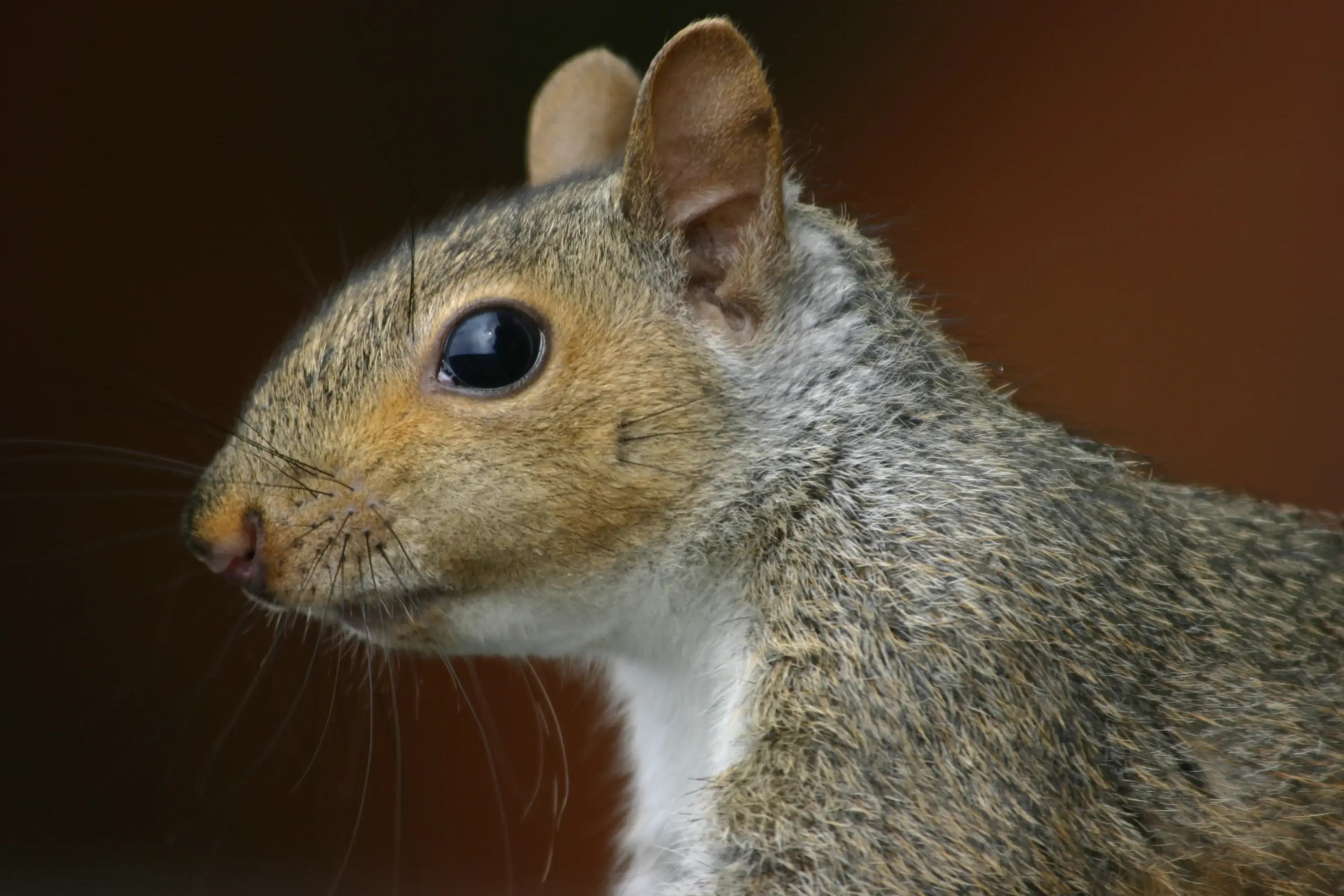
Also known as: Gray squirrel, Cat squirrel
The eastern gray squirrel (Sciurus carolinensis), spelled as grey squirrel outside of the United States, is a species of tree squirrel in the genus Sciurus. It is native to eastern North America, where it is the most prodigious and ecologically essential natural forest regenerator. Widely introduced to certain places around the world, the eastern gray squirrel in Europe, in particular, is regarded as an invasive species. In Europe, Sciurus carolinensis is included (since 2016) in the list of Invasive Alien Species of Union concern (the Union list). This implies that this species cannot be imported, bred, transported, commercialized, or intentionally released into the environment in the whole of the European Union.
Habitat & Range
In the wild, eastern gray squirrels can be found inhabiting large areas of mature, dense woodland ecosystems, generally covering 100 acres (40 hectares) of land. These forests usually contain large mast-producing trees such as oaks and hickories, providing ample food sources. Oak-hickory hardwood forests are generally preferred over coniferous forests due to the greater abundance of mast forage. This is why they are found only in parts of eastern Canada which do not contain boreal forest (i.e. they are found in some parts of New Brunswick, in southwestern Quebec, throughout southern Ontario and in southern Manitoba). Eastern gray squirrels generally prefer constructing their dens upon large tree branches and within the hollow trunks of trees. They also have been known to take shelter within abandoned bird nests. The dens are usually lined with moss plants, thistledown, dried grass, and feathers. These perhaps provide and assist in the insulation of the den, used to reduce heat loss. A cover to the den is usually built afterwards. Eastern gray squirrels also use dens for protection from predators and to help them look after their young. Young survive 40 percent less if they lived in a leaf nest compared to a den. Squirrels tend to claim 2-3 dens at the same time. Canopy and midstory trees are used by squirrels to hide from predators such as hawks and owls. The typical squirrel ranges over 1.5 to 8 acres (0.61 to 3.24 ha) and tends to be smaller where more of them are found. Close to human settlements, eastern gray squirrels are found in parks and back yards of houses within urban environments and in the farmlands of rural environments.
Life History
Eastern gray squirrels can breed twice a year, but younger and less experienced mothers normally have a single litter per year in the spring. Depending on forage availability, older and more experienced females may breed again in summer. In a year of abundant food, 36% of females bear two litters, but none will do so in a year of poor food. Their breeding seasons are December to February and May to June, though this is slightly delayed in more northern latitudes. The first litter is born in February or March, the second in June or July, though, again, bearing may be advanced or delayed by a few weeks depending on climate, temperature, and forage availability. In any given breeding season, an average of 61 – 66% of females bear young. If a female fails to conceive or loses her young to unusually cold weather or predation, she re-enters estrus and has a later litter. Five days before a female enters estrus, she may attract up to 34 males from up to 500 meters away. Eastern gray squirrels exhibit a form of polyandry, in which the competing males will form a hierarchy of dominance, and the female will mate with multiple males depending on the hierarchy established. Normally, one to four young are born in each litter, but the largest possible litter size is eight. The gestation period is about 44 days. The young are weaned around 10 weeks, though some may wean up to six weeks later in the wild. They begin to leave the nest after 12 weeks, with autumn born young often wintering with their mother. Only one in four squirrel kits survives to one year of age, with mortality around 55% for the following year. Mortality rates then decrease to around 30% for following years until they increase sharply at eight years of age. Rarely, eastern gray females can enter estrus as early as five and a half months old, but females are not normally fertile until at least one year of age. Their mean age of first estrus is 1.25 years. The presence of a fertile male will induce ovulation in a female going through estrus. Male eastern grays are sexually mature between one and two years of age. Reproductive longevity for females appears to be over 8 years, with 12.5 years documented in North Carolina. These squirrels can live to be 20 years old in captivity, but in the wild live much shorter lives due to predation and the challenges of their habitat. At birth, their life expectancy is 1–2 years; an adult typically can live to be six, with exceptional individuals making it to 12 years. Eastern gray squirrels eat a range of foods, such as many types of seeds and nuts, including acorns, walnuts, and hazelnuts, tree buds, flowers, berries, tree bark, and some types of forest fungi, including fly agaric mushrooms and truffles. They are also carnivorous, variously eating insects, small birds, eggs, frogs, lizards, and other small rodents, including other squirrels. Eastern tree squirrels can cause damage to trees by tearing the bark and eating the soft cambial tissue underneath.
Hunting Season
Sep 12 - Dec 24 and Dec 26 - Feb 28. Junior special season: Sep 12 - Sep 27.
License & Regulations
A valid Pennsylvania hunting license is required for all resident and non-resident hunters age 16 and older. Hunters under 16 may hunt while accompanied by a licensed adult or with a mentored youth permit. Licenses can be purchased online through the Pennsylvania Game Commission website (HuntFishPA) or at authorized issuing agents. Additional stamps may be required: furtaker license for trapping, federal Migratory Bird Hunting and Conservation Stamp (Duck Stamp) for waterfowl, HIP registration for migratory birds, and special permits for elk, bobcat, fisher, and river otter. All hunters born after June 1, 1965 must successfully complete a hunter-trapper education course before purchasing a license.
Frequently Asked Questions
Regulations for hunting Eastern Gray Squirrel in Pennsylvania
Eastern gray squirrel season spans from September through February with a break December 24-26. Daily bag limit is 6 squirrels with an 18-squirrel possession limit. Includes red, gray, black, and fox squirrel in the combined bag. A junior special season runs the first two weeks of September.
When is Eastern Gray Squirrel hunting season in Pennsylvania?
The Eastern Gray Squirrel hunting season in Pennsylvania: Sep 12 - Dec 24 and Dec 26 - Feb 28. Junior special season: Sep 12 - Sep 27.
What is the bag limit for Eastern Gray Squirrel in Pennsylvania?
The bag limit for Eastern Gray Squirrel in Pennsylvania is: 6 per day, 18 possession.
What's another name for Eastern Gray Squirrel?
Eastern Gray Squirrel is also known as Gray squirrel, Cat squirrel in Pennsylvania.
What is the best time of day to hunt squirrels in Pennsylvania?
Squirrels are most active during the early morning and late afternoon hours. Focus on oak-hickory forests with abundant mast production during these peak activity periods for the best hunting success.
How to identify Eastern Gray Squirrel?
The eastern gray squirrel (Sciurus carolinensis), spelled as grey squirrel outside of the United States, is a species of tree squirrel in the genus Sciurus. It is native to eastern North America, where it is the most prodigious and ecologically essential natural forest regenerator. Widely introduced to certain places around the world, the eastern gray squirrel in Europe, in particular, is regarded as an invasive species. In Europe, Sciurus carolinensis is included (since 2016) in the list of Inv...
References
| State | Category | Directory | Subcategory | Content | Source |
|---|---|---|---|---|---|
| Pennsylvania | Hunting | Regulations | Season Dates | Sep 12 - Dec 24 and Dec 26 - Feb 28. Junior special season: Sep 12 - Sep 27. | Link |
| Pennsylvania | Hunting | License | License & Fees | A valid Pennsylvania hunting license is required for all resident and non-resident hunters age 16 and older. Hunters und | Link |
| Pennsylvania | Hunting | Regulations | Regulations | Eastern gray squirrel season spans from September through February with a break December 24-26. Daily bag limit is 6 squ | Link |