Also known as: Wapiti
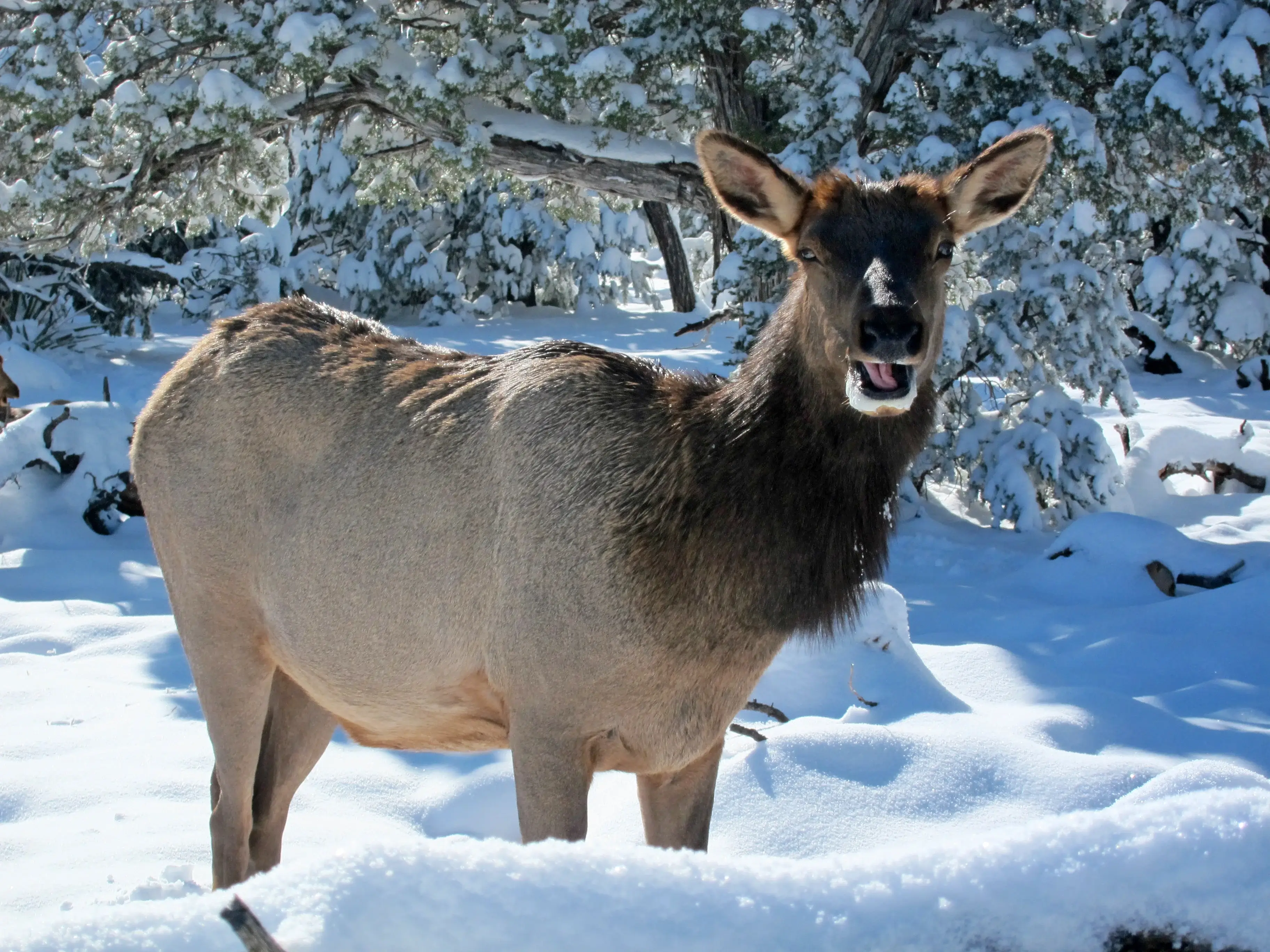
The elk (pl.: elk or elks; Cervus canadensis) or wapiti (pronounced ) is the second largest species within the deer family, Cervidae, and one of the largest terrestrial mammals in its native range of North America and Central and East Asia. The word "elk" originally referred to the European variety of the moose, Alces alces, but was transferred to Cervus canadensis by North American colonists. The name "wapiti" is derived from a Shawnee and Cree word meaning "white rump", after the distinctive light fur around the tail region which the animals may fluff-up or raise to signal their agitation or distress to one another, when fleeing perceived threats, or among males courting females and sparring for dominance. A similar trait is seen in other artiodactyl species, like the bighorn sheep, pronghorn and the white-tailed deer, to varying degrees. Elk dwell in open forest and forest-edge habitats, grazing on grasses and sedges and browsing higher-growing plants, leaves, twigs and bark. Male elk have large, blood- and nerve-filled antlers, which they routinely shed each year as the weather warms. Males also engage in ritualized mating behaviors during the mating season, including posturing to attract females, antler-wrestling (sparring), and bugling, a loud series of throaty whistles, bellows, screams, and other vocalizations that establish dominance over other males and aim to attract females. Elk were long believed to belong to a subspecies of the European red deer (Cervus elaphus), but evidence from many mitochondrial DNA genetic studies, beginning in 1998, shows that the two are distinct species. The elk's wider rump-patch and paler-hued antlers are key morphological differences that distinguish C. canadensis from C. elaphus. Although it is currently only native to North America, and Central, East and North Asia, elk once had a much wider distribution in the past; prehistoric populations were present across Eurasia and into Western Europe during the Late Pleistocene, su
Life History
Elk are ruminants and therefore have four-chambered stomachs. Unlike white-tailed deer and moose, which are chiefly browsers, elk are similar to cattle in that they are primarily grazers. But like other deer, they also browse. Elk have a tendency to do most of their feeding in the mornings and evenings, seeking sheltered areas in between feedings to digest. Their diets vary somewhat depending on the season, with native grasses being a year-round supplement, tree bark (e.g. cedar, wintergreen, eastern hemlock, sumac, jack pine, red maple, staghorn, and basswood) being consumed in winter, and sedges, forbs, and tree sprouts during the summer. Favorites of the elk include dandelions, aster, hawkweed, violets, clover, and the occasional mushroom. Elk consume an average of 9.1 kilograms (20 lb) of vegetation daily. Particularly fond of aspen sprouts which rise in the spring, elk have had some impact on aspen groves which have been declining in some regions where elk exist. Range and wildlife managers conduct surveys of elk pellet groups to monitor populations and resource use. Research in the Greater Yellowstone Ecosystem has found that supplemental feeding of concentrated alfalfa pellets leads to significant alterations in the elks' microbiome. The elk gut microbiome is typically characterized by a diverse community of bacteria specialized in breaking down complex plant fibers and cellulose, whereas the supplementally fed gut microbiome may have less fiber-digesting bacteria. Therefore, transitioning from natural foraging to concentrated alfalfa pellets can cause changes in the gut microbiome that might affect the elk's ability to efficiently digest their natural diet or could potentially lead to imbalances that affect overall health.
Hunting Season
Archery (antlered or antlerless): Sep 12 - Sep 27. Regular Firearms 1st: Oct 3 - Oct 11. Regular Firearms 2nd: Oct 31 - Nov 8. Regular Firearms 3rd: Jan 9 - Jan 17.
License & Regulations
A valid Pennsylvania hunting license is required for all resident and non-resident hunters age 16 and older. Hunters under 16 may hunt while accompanied by a licensed adult or with a mentored youth permit. Licenses can be purchased online through the Pennsylvania Game Commission website (HuntFishPA) or at authorized issuing agents. Additional stamps may be required: furtaker license for trapping, federal Migratory Bird Hunting and Conservation Stamp (Duck Stamp) for waterfowl, HIP registration for migratory birds, and special permits for elk, bobcat, fisher, and river otter. All hunters born after June 1, 1965 must successfully complete a hunter-trapper education course before purchasing a license.
Frequently Asked Questions
Regulations for hunting Elk in Pennsylvania
Pennsylvania's elk hunting is a limited-draw program managed through a competitive permit allocation. The state's elk herd, concentrated in north-central Pennsylvania, is one of the largest in the eastern United States. Elk permits are awarded through a random drawing, with preference points earned for unsuccessful applications. Successful applicants must complete an elk hunter orientation. All elk harvests must be reported within 24 hours.
When is Elk hunting season in Pennsylvania?
The Elk hunting season in Pennsylvania: Archery (antlered or antlerless): Sep 12 - Sep 27. Regular Firearms 1st: Oct 3 - Oct 11. Regular Firearms 2nd: Oct 31 - Nov 8. Regular Firearms 3rd: Jan 9 - Jan 17.
What is the bag limit for Elk in Pennsylvania?
The bag limit for Elk in Pennsylvania is: One elk per license year with valid elk permit.
What's another name for Elk?
Elk is also known as Wapiti in Pennsylvania.
How do I apply for an elk permit in Pennsylvania?
Elk permits in Pennsylvania are awarded through a competitive random drawing. Applicants can earn preference points for unsuccessful applications. Successful applicants must complete an elk hunter orientation before hunting. The elk herd is concentrated in north-central Pennsylvania.
What is the population of elk in Pennsylvania?
Pennsylvania's elk herd is one of the largest in the eastern United States, with over 1,300 animals. The herd is primarily located in Elk, Cameron, Clinton, and surrounding counties in north-central Pennsylvania.
How to identify Elk?
The elk (pl.: elk or elks; Cervus canadensis) or wapiti (pronounced ) is the second largest species within the deer family, Cervidae, and one of the largest terrestrial mammals in its native range of North America and Central and East Asia. The word "elk" originally referred to the European variety of the moose, Alces alces, but was transferred to Cervus canadensis by North American colonists. The name "wapiti" is derived from a Shawnee and Cree word meaning "white rump", after the distinctive l...
References
| State | Category | Directory | Subcategory | Content | Source |
|---|---|---|---|---|---|
| Pennsylvania | Hunting | Regulations | Season Dates | Archery (antlered or antlerless): Sep 12 - Sep 27. Regular Firearms 1st: Oct 3 - Oct 11. Regular Firearms 2nd: Oct 31 - | Link |
| Pennsylvania | Hunting | License | License & Fees | A valid Pennsylvania hunting license is required for all resident and non-resident hunters age 16 and older. Hunters und | Link |
| Pennsylvania | Hunting | Regulations | Regulations | Pennsylvania's elk hunting is a limited-draw program managed through a competitive permit allocation. The state's elk he | Link |