Also known as: Porcupine, Quill pig
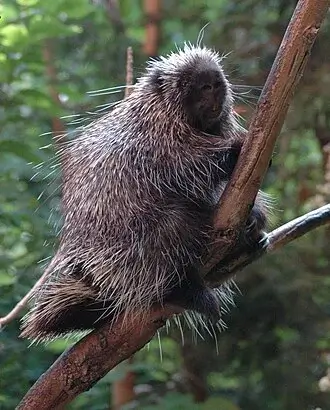
The North American porcupine (Erethizon dorsatum), also known as the Canadian porcupine, is a large quill-covered rodent in the New World porcupine family. It is the second largest rodent in North America after the North American beaver (Castor canadensis). The porcupine is a caviomorph rodent whose ancestors were believed to have crossed the Atlantic from Africa to Brazil 30 million years ago, and then migrated to North America during the Great American Interchange after the Isthmus of Panama rose 3 million years ago.
Habitat & Range
In eastern North America, porcupines range from Canada to the Appalachian Mountains in West Virginia and Maryland, though east of the Appalachians their range extends no farther south than northern New Jersey. In the west they range from Alaska to northern mountains in Mexico. They are commonly found in coniferous and mixed forested areas, but have adapted to harsh environments, such as shrublands and tundra. They make their dens in hollow trees or in rocky areas.
Life History
Porcupines are herbivores. During the summer, North American porcupines eat twigs, roots, stems, fruits, leaves, and other vegetation. In the winter, they eat mainly conifer needles and tree bark. Porcupines are selective in their consumption, but the degree of selectivity depends on the season. Porcupines are nearsighted and slow-moving. They are active mainly at night, as they are nocturnal. On summer days, they often rest in trees. They do not hibernate, but sleep in and stay close to their dens in winter. The strength of the porcupine's defense has given it the ability to live a solitary life, unlike many herbivores, which must move in flocks or herds. The porcupine has "an extraordinary ability to learn complex mazes and to remember them as much as a hundred days afterward". Female porcupines are solitary for most of the year except during the fall when breeding season begins. At this time, they secrete thick mucus that mixes with urine, producing an odor attracting nearby males. The male typically sits in a tree below the female. If another male approaches, they may fight for mating rights. Once a dominant male succeeds, he approaches and sprays urine on the female, causing her to enter estrus. They then mate on the ground, with both tightening their skin and holding quills flat to avoid injury. Mating may repeat until the female loses interest and climbs back into the tree. The North American porcupine has a long gestation period relative to other rodents, an average of 202 days. By contrast, the North American beaver, which is comparable in size, has a gestation period of 128 days. The eastern grey squirrel (Sciurus carolinensis) has a gestation period of just 44 days. North American porcupines give birth to a single young, referred to as a porcupette. At birth, they weigh about 450 g, which increases to nearly 1 kg after the first two weeks. They do not gain full adult weight until the end of the second summer about 4.5 kg. Their quills harden soon after birth. Female porcupines provide all parental care. For the first two weeks the young rely on their mother for sustenance. After this they learn to climb trees and start to forage. They continue to nurse for up to four months, which coincides with the fall mating season. Porcupettes typically separate from their mother in the fall.
Status, Trends & Threats
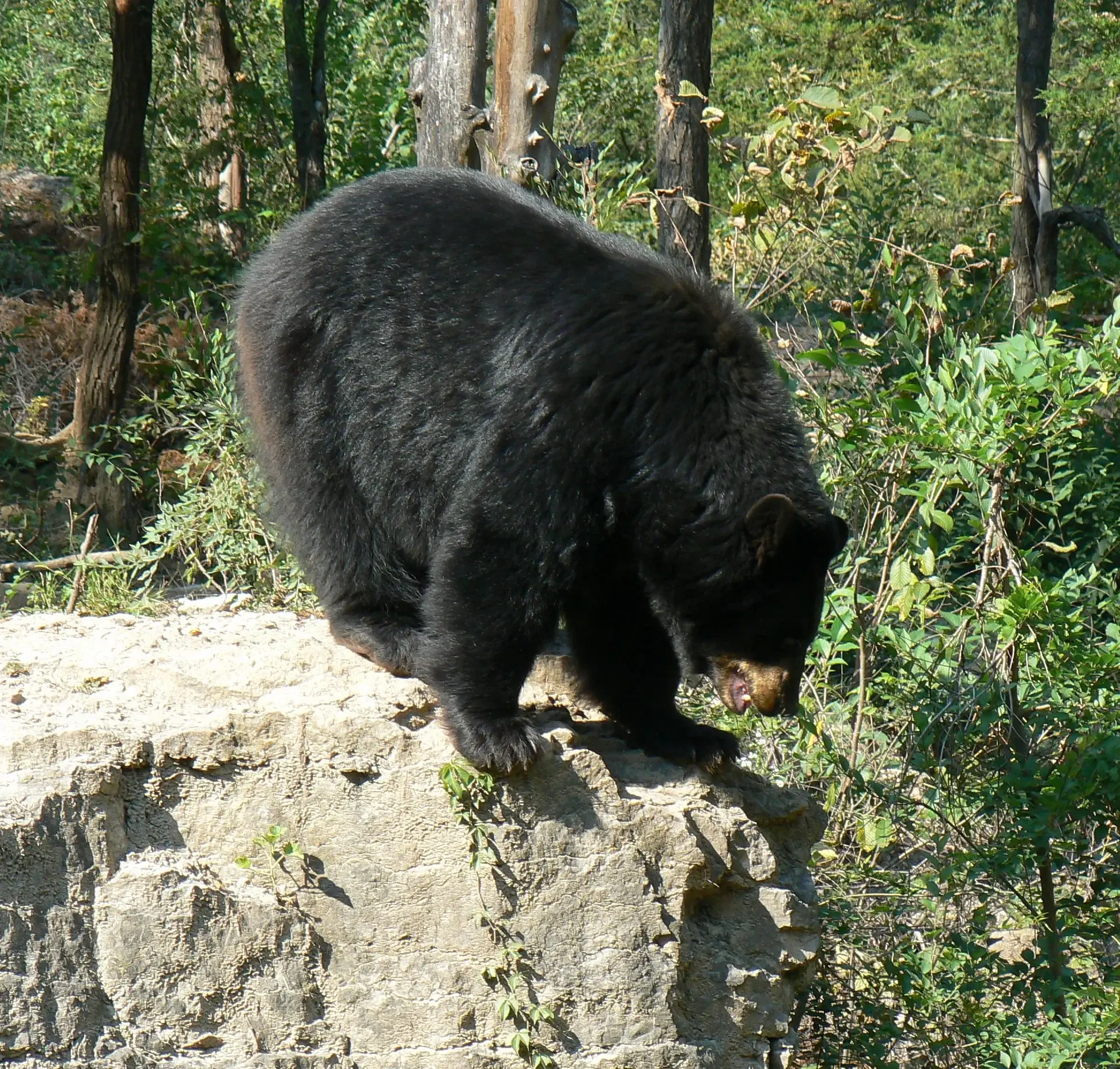
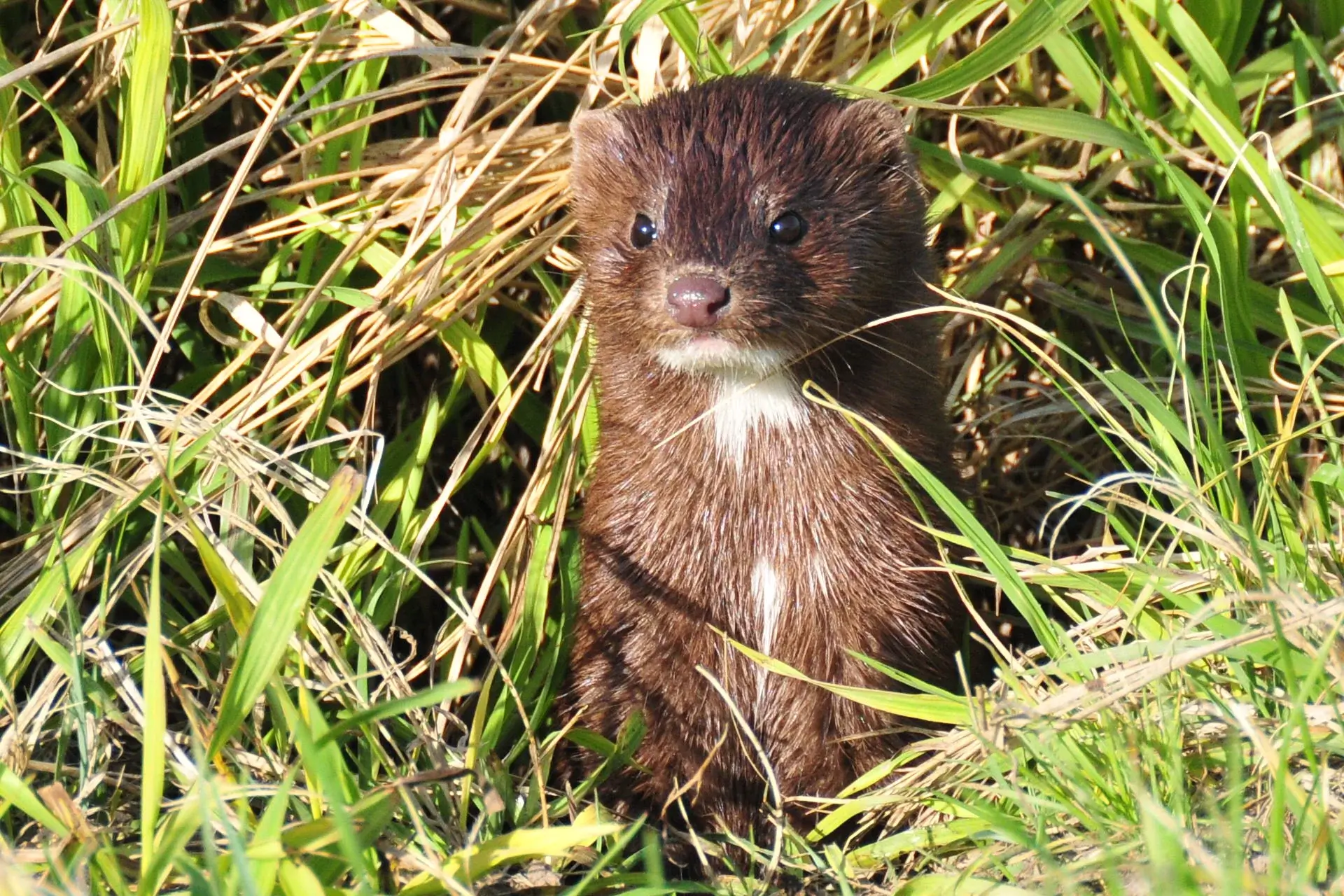
Natural predators of this species include fishers (a cat-sized mustelid), wolverines, coyotes, wolves, American black bears, and cougars, as well as humans. The only known avian predators of this species are golden eagles and great horned owls. In many cases, injury or even death may occur in the predator from embedded porcupine quills even if they are successful in dispatching the porcupine. The North American porcupine is most at risk from the fisher (Pekania pennanti), the male of which may sometimes exceed a mass of 5.5 kg (12 lb). Fishers are agile tree climbers, and may force a fleeing porcupine from a tree to the ground, where it is more vulnerable. There it will try to present its hindquarters and tail to the attacker, with the predator circling around and attempting to attack the prey. After repeated attacks, the porcupine eventually weakens, allowing the fisher to flip the porcupine over, rip open its underbelly, and consume its organs without exposing itself to the still dangerous quills. One study suggested that since male fishers are considerably larger than females (often weighing on average twice as much), only males are likely to hunt porcupines. Another predator of the porcupine is the cougar. When attacking, the cougar does not try to avoid the quills all together, but they avoid being impaled by too many of them. Some individuals have been found with dozens of quills embedded in their gums to no ill effect. It can climb trees, so its favorite method is to position itself below the porcupine and knock it to the ground. Other predators, such as canids (wolves and coyotes), may attack but do not pose much of a threat. In some parts of the Great Basin, cougars have greatly decreased numbers of porcupines in mountainous forests through predation. In some cases, porcupine quills have indeed killed cougars, although typically the porcupine has already been consumed.
Hunting Season
Oct 10 - Nov 27; Dec 14 - Dec 24; Dec 26 - Jan 31. May not be hunted at night.
License & Regulations
A valid Pennsylvania hunting license is required for all resident and non-resident hunters age 16 and older. Hunters under 16 may hunt while accompanied by a licensed adult or with a mentored youth permit. Licenses can be purchased online through the Pennsylvania Game Commission website (HuntFishPA) or at authorized issuing agents. Additional stamps may be required: furtaker license for trapping, federal Migratory Bird Hunting and Conservation Stamp (Duck Stamp) for waterfowl, HIP registration for migratory birds, and special permits for elk, bobcat, fisher, and river otter. All hunters born after June 1, 1965 must successfully complete a hunter-trapper education course before purchasing a license.
Frequently Asked Questions
Regulations for hunting North American Porcupine in Pennsylvania
Porcupine hunting season in Pennsylvania runs from October through January with specific open periods. Daily bag limit is 3 porcupines, with a 10-animal season limit. Night hunting is prohibited. Porcupines are found primarily in forested areas of northern and central Pennsylvania.
When is North American Porcupine hunting season in Pennsylvania?
The North American Porcupine hunting season in Pennsylvania: Oct 10 - Nov 27; Dec 14 - Dec 24; Dec 26 - Jan 31. May not be hunted at night.
What is the bag limit for North American Porcupine in Pennsylvania?
The bag limit for North American Porcupine in Pennsylvania is: 3 per day, 10 season limit.
What's another name for North American Porcupine?
North American Porcupine is also known as Porcupine, Quill pig in Pennsylvania.
How to identify North American Porcupine?
The North American porcupine (Erethizon dorsatum), also known as the Canadian porcupine, is a large quill-covered rodent in the New World porcupine family. It is the second largest rodent in North America after the North American beaver (Castor canadensis). The porcupine is a caviomorph rodent whose ancestors were believed to have crossed the Atlantic from Africa to Brazil 30 million years ago, and then migrated to North America during the Great American Interchange after the Isthmus of Panama r...
References
| State | Category | Directory | Subcategory | Content | Source |
|---|---|---|---|---|---|
| Pennsylvania | Hunting | Regulations | Season Dates | Oct 10 - Nov 27; Dec 14 - Dec 24; Dec 26 - Jan 31. May not be hunted at night. | Link |
| Pennsylvania | Hunting | License | License & Fees | A valid Pennsylvania hunting license is required for all resident and non-resident hunters age 16 and older. Hunters und | Link |
| Pennsylvania | Hunting | Regulations | Regulations | Porcupine hunting season in Pennsylvania runs from October through January with specific open periods. Daily bag limit i | Link |