Also known as: Coon, Northern raccoon
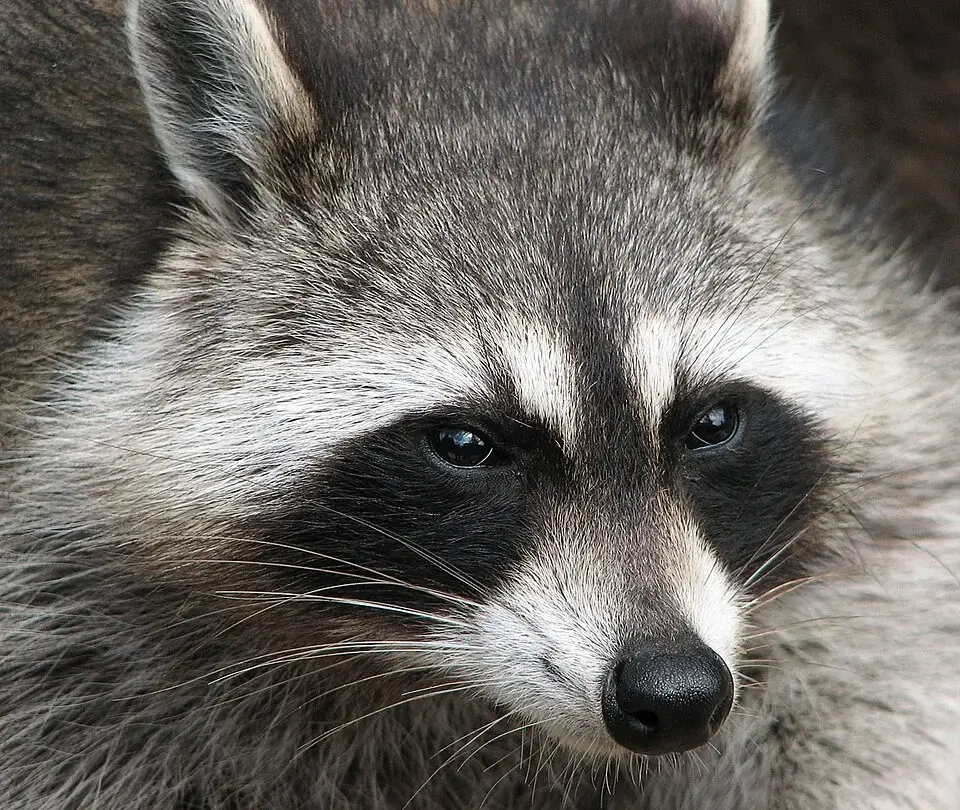
The raccoon ( or US: , Procyon lotor), sometimes called the North American, northern or common raccoon (also spelled racoon) to distinguish it from other species of raccoon, is a mammal native to North America. It is the largest of the procyonid family, having a body length of 40 to 70 cm (16 to 28 in), and a body weight of 5 to 26 kg (11 to 57 lb). Its grayish coat mostly consists of dense underfur, which insulates it against cold weather. The animal's most distinctive features include its extremely dexterous front paws, its facial mask, and its ringed tail, which are common themes in the mythologies of the Indigenous peoples of the Americas surrounding the species. The raccoon is noted for its intelligence, and studies show that it can remember the solution to tasks for at least three years. It is usually nocturnal and omnivorous, eating about 40% invertebrates, 33% plants, and 27% vertebrates. The original habitats of the raccoon are deciduous and mixed forests. Still, due to their adaptability, they have extended their range to mountainous areas, coastal marshes, and urban areas, where some homeowners consider them to be pests. As a result of escapes and deliberate introductions in the mid-20th century, raccoons are now also distributed across central Europe, the Caucasus, and Japan. In Europe, the raccoon has been included on the list of Invasive Alien Species of Union Concern since 2016. This implies that this species cannot be imported, bred, transported, commercialized, or intentionally released into the environment in the whole of the European Union. Though raccoons were previously thought to be generally solitary, there is now evidence that they engage in sex-specific social behavior. Related females often share a common area, while unrelated males live together in groups of up to four raccoons to maintain their positions against foreign males during the mating season and against other potential invaders. Home range sizes vary anywhere from 3 ha (7.4 acre
Habitat & Range
Although they have thrived in sparsely wooded areas in the last decades, raccoons depend on vertical structures to climb when they feel threatened. Therefore, they avoid open terrain and areas with high concentrations of beech trees, as beech bark is too smooth to climb. Tree hollows in old oaks or other trees and rock crevices are preferred by raccoons as sleeping, winter, and litter dens. If such dens are unavailable or accessing them is inconvenient, raccoons use burrows dug by other mammals, dense undergrowth, or tree crotches. In a study in the Solling range of hills in Germany, more than 60% of all sleeping places were used only once, but those used at least ten times accounted for about 70% of all uses. Since amphibians, crustaceans, and other animals around the shore of lakes and rivers are an important part of the raccoon's diet, lowland deciduous or mixed forests abundant with water and marshes sustain the highest population densities. While population densities range from 0.5 to 3.2 animals per square kilometer (1.3 to 8.3 animals per square mile) in prairies and do not usually exceed 6 animals per square kilometer (15.5 animals per square mile) in upland hardwood forests, more than 20 raccoons per square kilometer (51.8 animals per square mile) can live in lowland forests and marshes.
Life History
Though usually nocturnal, the raccoon is sometimes active in daylight to take advantage of available food sources. Its diet consists of about 40% invertebrates, 33% plant material and 27% vertebrates. Since its diet consists of such a variety of different foods, Zeveloff argues the raccoon "may well be one of the world's most omnivorous animals". While its diet in spring and early summer consists mostly of insects, worms, and other animals already available early in the year, it prefers fruits and nuts, such as acorns and walnuts, which emerge in late summer and autumn, and represent a rich calorie source for building up fat needed for winter. Contrary to popular belief, raccoons only occasionally eat active or large prey, such as birds and mammals. They prefer prey that is easier to catch, specifically crayfish, insects, fish, amphibians and bird eggs. Raccoons are avid predators of eggs and hatchlings in both birds and reptile nests, to such a degree that, for threatened prey species, raccoons may need to be removed from the area or nests may need to be relocated to mitigate the effect of their predation (i.e. in the case of some globally threatened turtles). When food is plentiful, raccoons can develop strong individual preferences for specific foods. In the northern parts of their range, raccoons go into a winter rest, reducing their activity drastically as long as a permanent snow cover makes searching for food difficult. Raccoons usually mate in a period triggered by increasing daylight between late January and mid-March. However, there are large regional differences which are not completely explicable by solar conditions. For example, while raccoons in southern states typically mate later than average, the mating season in Manitoba also peaks later than usual in March and extends until June. During the mating season, males restlessly roam their home ranges in search of females in an attempt to court them during the three- to four-day period when conception is possible. These encounters will often occur at central meeting places. Copulation, including foreplay, can last over an hour and is repeated over several nights. The weaker members of a male social group also are assumed to get the opportunity to mate, since the stronger ones cannot mate with all available females. In a study in southern Texas during the mating seasons from 1990 to 1992, about one-third of all females mated with more than one male. If a female does not become pregnant or if she loses her kits early, she will sometimes become fertile again 80 to 140 days later. After usually 63 to 65 days of gestation (although anywhere from 54 to 70 days is possible), a litter of typically two to five young is born. The average litter size varies widely with habitat, ranging from 2.5 in Alabama to 4.8 in North Dakota. Larger litters are more common in areas with a high mortality rate, due, for example, to hunting or severe winters. While male yearlings usually reach their sexual matu
Hunting Season
Oct 24 - Feb 21. Day/night hunting: Oct 24 - Nov 27 and Dec 14 - Feb 21. Restricted to night hours: Nov 28 - Dec 13.
License & Regulations
A valid Pennsylvania hunting license is required for all resident and non-resident hunters age 16 and older. Hunters under 16 may hunt while accompanied by a licensed adult or with a mentored youth permit. Licenses can be purchased online through the Pennsylvania Game Commission website (HuntFishPA) or at authorized issuing agents. Additional stamps may be required: furtaker license for trapping, federal Migratory Bird Hunting and Conservation Stamp (Duck Stamp) for waterfowl, HIP registration for migratory birds, and special permits for elk, bobcat, fisher, and river otter. All hunters born after June 1, 1965 must successfully complete a hunter-trapper education course before purchasing a license.
Frequently Asked Questions
Regulations for hunting Raccoon in Pennsylvania
Raccoon hunting season runs from late October through February. No bag limit. Day and night hunting are permitted except during the firearms deer season (Nov 28 - Dec 13) when only night hunting is allowed. Trapping season coincides. Raccoon hunting is a traditional night-hunting activity in Pennsylvania, often pursued with hounds.
When is Raccoon hunting season in Pennsylvania?
The Raccoon hunting season in Pennsylvania: Oct 24 - Feb 21. Day/night hunting: Oct 24 - Nov 27 and Dec 14 - Feb 21. Restricted to night hours: Nov 28 - Dec 13.
Is there a bag limit for Raccoon in Pennsylvania?
There is no bag limit for Raccoon in Pennsylvania.
What's another name for Raccoon?
Raccoon is also known as Coon, Northern raccoon in Pennsylvania.
How to identify Raccoon?
The raccoon ( or US: , Procyon lotor), sometimes called the North American, northern or common raccoon (also spelled racoon) to distinguish it from other species of raccoon, is a mammal native to North America. It is the largest of the procyonid family, having a body length of 40 to 70 cm (16 to 28 in), and a body weight of 5 to 26 kg (11 to 57 lb). Its grayish coat mostly consists of dense underfur, which insulates it against cold weather. The animal's most distinctive features include its ext...
References
| State | Category | Directory | Subcategory | Content | Source |
|---|---|---|---|---|---|
| Pennsylvania | Hunting | Regulations | Season Dates | Oct 24 - Feb 21. Day/night hunting: Oct 24 - Nov 27 and Dec 14 - Feb 21. Restricted to night hours: Nov 28 - Dec 13. | Link |
| Pennsylvania | Hunting | License | License & Fees | A valid Pennsylvania hunting license is required for all resident and non-resident hunters age 16 and older. Hunters und | Link |
| Pennsylvania | Hunting | Regulations | Regulations | Raccoon hunting season runs from late October through February. No bag limit. Day and night hunting are permitted except | Link |