Also known as: Wood duck, Carolina duck
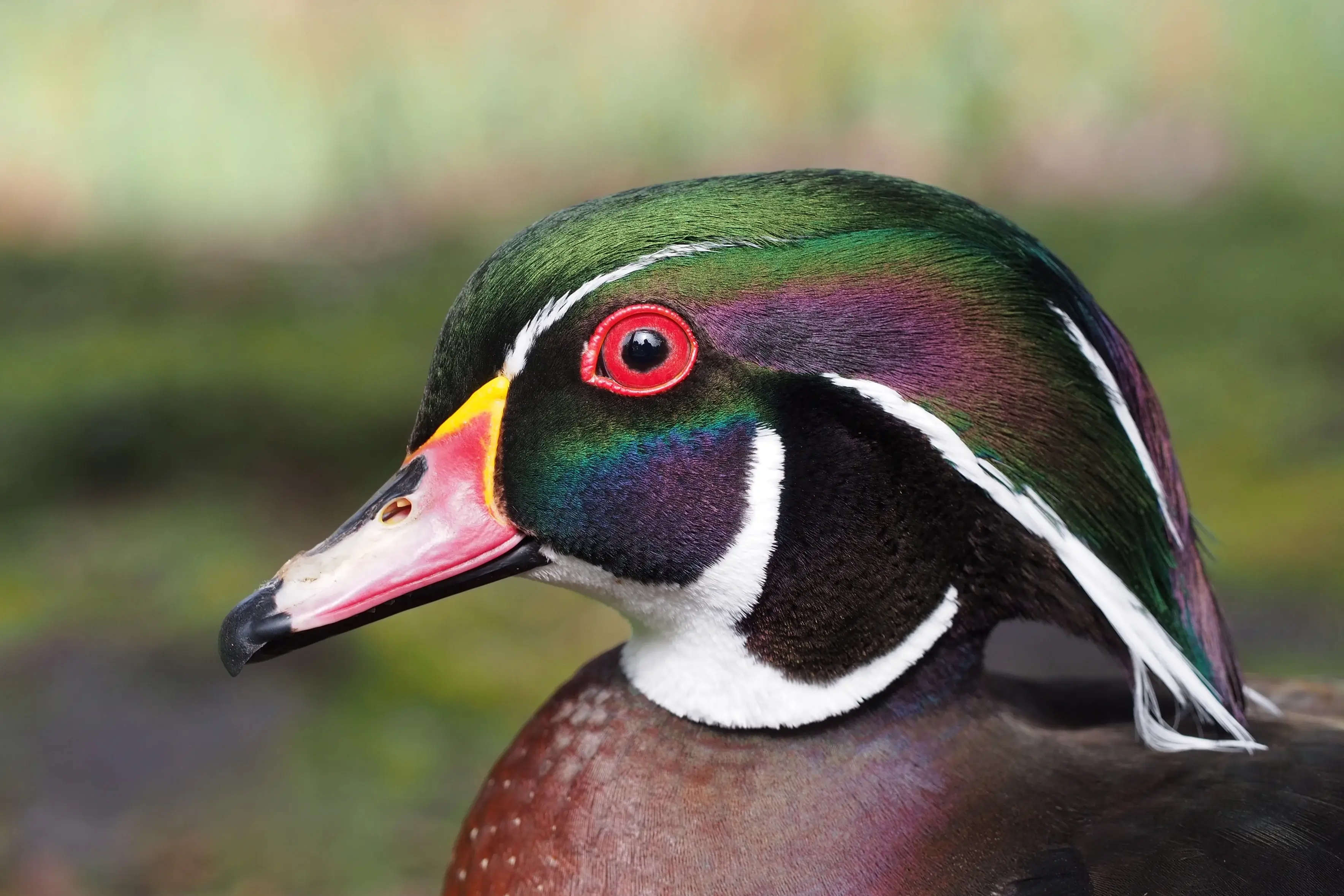
The wood duck or Carolina duck (Aix sponsa) is a partially migratory species of perching duck found in North America. The male is one of the most colorful North American waterfowls.
Life History
Their breeding habitat is wooded swamps, shallow lakes, marshes, ponds and creeks in the eastern United States, the west coast of the United States, some adjacent parts of southern Canada, and the west coast of Mexico. They get their name from being one of the only species of ducks who perch and nest in trees. In recent decades, the breeding range has expanded towards the Great Plains. Currently most breeding occurs in the Mississippi alluvial valley. They usually nest in cavities in trees close to water, although they will take advantage of nesting boxes in wetland locations. Other species may compete with them for nesting cavities, such as birds of prey, as well as mammals such as grey squirrels, and these animals may also occupy nest boxes meant for wood ducks. Wood ducks may end up nesting up to a mile away from their water source as a result. Females line their nests with feathers and other soft materials, and the elevation provides some protection from predators such as raccoons, owls, and hawks. Unlike most other ducks, the wood duck has sharp claws for perching in trees and can, in southern regions, produce two broods in a single season—the only North American duck that can do so. Wood ducks typically lay their first eggs from February to April. Females typically lay seven to fifteen eggs which are incubated for an average of thirty days. However, if nesting boxes are placed too close together, females may lay eggs in the nests of their neighbours, which may lead to nests with thirty eggs or more and unsuccessful incubation—a behaviour known as "nest dumping". The day after they hatch, the precocial ducklings climb to the opening of the nest cavity and jump down from the nest tree to the ground. The morning after hatching, the hen will leave the nest to feed and make sure it is safe for her chicks. When she decides it is safe, she uses a maternal call to call the chicks out. Chicks can jump from as high as 50 feet, surviving by landing either in water, or on top of soft material such as leaf litter. The mother calls them to her and guides them to water. The ducklings can swim and find their own food by this time. Wood ducks prefer nesting over water so the young have a soft landing.
Status, Trends & Threats
The population of the wood duck was in serious decline in the late 19th century as a result of severe habitat loss and market hunting for both meat and plumage for the ladies' hat market in Europe. By the beginning of the 20th century, wood ducks had become rare, almost disappearing in many areas. In response to the Migratory Bird Treaty, established in 1916, and enactment of the U.S. Migratory Bird Treaty Act of 1918, wood ducks finally began to repopulate. By enforcing existing hunting regulations and protecting woodland and marsh habitat, wood duck populations began to rebound starting in the 1920s. The erection of nesting boxes starting in the 1930s further assisted wood duck conservation. A synopsis of evidence from multiple studies performed by Williams et al. (2020) concluded that providing artificial nesting sites for wildfowl, including wood ducks, is beneficial. Wood duck boxes have been found to be less effective than natural, hollow, dead trees but remain overall beneficial for the population. Landowners as well as park and refuge managers can encourage wood ducks by building wood duck nest boxes near lakes, ponds, and streams. Fulda, Minnesota, has adopted the wood duck as an unofficial mascot, and a large number of nest boxes can be found in the area. Expanding North American beaver (Castor canadensis) populations throughout the wood duck's range have also helped the population rebound as beavers create an ideal forested wetland habitat for wood ducks. The population of the wood duck has increased a great deal in the last several years. The increase has been due to the work of many people constructing wood duck boxes and conserving vital habitat for the wood ducks to breed. During the open waterfowl season, U.S. hunters have been allowed to take only two wood ducks per day in the Atlantic and Mississippi Flyways. However, for the 2008–2009 season, the limit was raised to three. The wood duck limit remains at two in the Central Flyway and at seven in t
Hunting Season
Same as general duck seasons by zone. North Zone: Oct 10 - Oct 24 and Nov 17 - Jan 9. South Zone: Oct 10 - Oct 17 and Nov 18 - Jan 18. Northwest Zone: Oct 10 - Nov 27 and Dec 21 - Jan 9. Lake Erie Zone: Nov 2 - Jan 9.
License & Regulations
A valid Pennsylvania hunting license is required for all resident and non-resident hunters age 16 and older. Hunters under 16 may hunt while accompanied by a licensed adult or with a mentored youth permit. Licenses can be purchased online through the Pennsylvania Game Commission website (HuntFishPA) or at authorized issuing agents. Additional stamps may be required: furtaker license for trapping, federal Migratory Bird Hunting and Conservation Stamp (Duck Stamp) for waterfowl, HIP registration for migratory birds, and special permits for elk, bobcat, fisher, and river otter. All hunters born after June 1, 1965 must successfully complete a hunter-trapper education course before purchasing a license.
Frequently Asked Questions
Regulations for hunting Wood Duck in Pennsylvania
Wood duck hunting follows the same zone-based season framework as other duck species. HIP registration and federal Duck Stamp are required. The daily bag limit for wood ducks is 3 birds within the overall 6-duck daily limit. Wood ducks are one of Pennsylvania's most common breeding ducks.
When is Wood Duck hunting season in Pennsylvania?
The Wood Duck hunting season in Pennsylvania: Same as general duck seasons by zone. North Zone: Oct 10 - Oct 24 and Nov 17 - Jan 9. South Zone: Oct 10 - Oct 17 and Nov 18 - Jan 18. Northwest Zone: Oct 10 - Nov 27 and Dec 21 - Jan 9. Lake Erie Zone: Nov 2 - Jan 9.
What is the bag limit for Wood Duck in Pennsylvania?
The bag limit for Wood Duck in Pennsylvania is: 3 wood ducks per day (within the 6-duck daily limit).
What's another name for Wood Duck?
Wood Duck is also known as Wood duck, Carolina duck in Pennsylvania.
How to identify Wood Duck?
The wood duck or Carolina duck (Aix sponsa) is a partially migratory species of perching duck found in North America. The male is one of the most colorful North American waterfowls.
References
| State | Category | Directory | Subcategory | Content | Source |
|---|---|---|---|---|---|
| Pennsylvania | Hunting | Regulations | Season Dates | Same as general duck seasons by zone. North Zone: Oct 10 - Oct 24 and Nov 17 - Jan 9. South Zone: Oct 10 - Oct 17 and No | Link |
| Pennsylvania | Hunting | License | License & Fees | A valid Pennsylvania hunting license is required for all resident and non-resident hunters age 16 and older. Hunters und | Link |
| Pennsylvania | Hunting | Regulations | Regulations | Wood duck hunting follows the same zone-based season framework as other duck species. HIP registration and federal Duck | Link |