Also known as: Mink
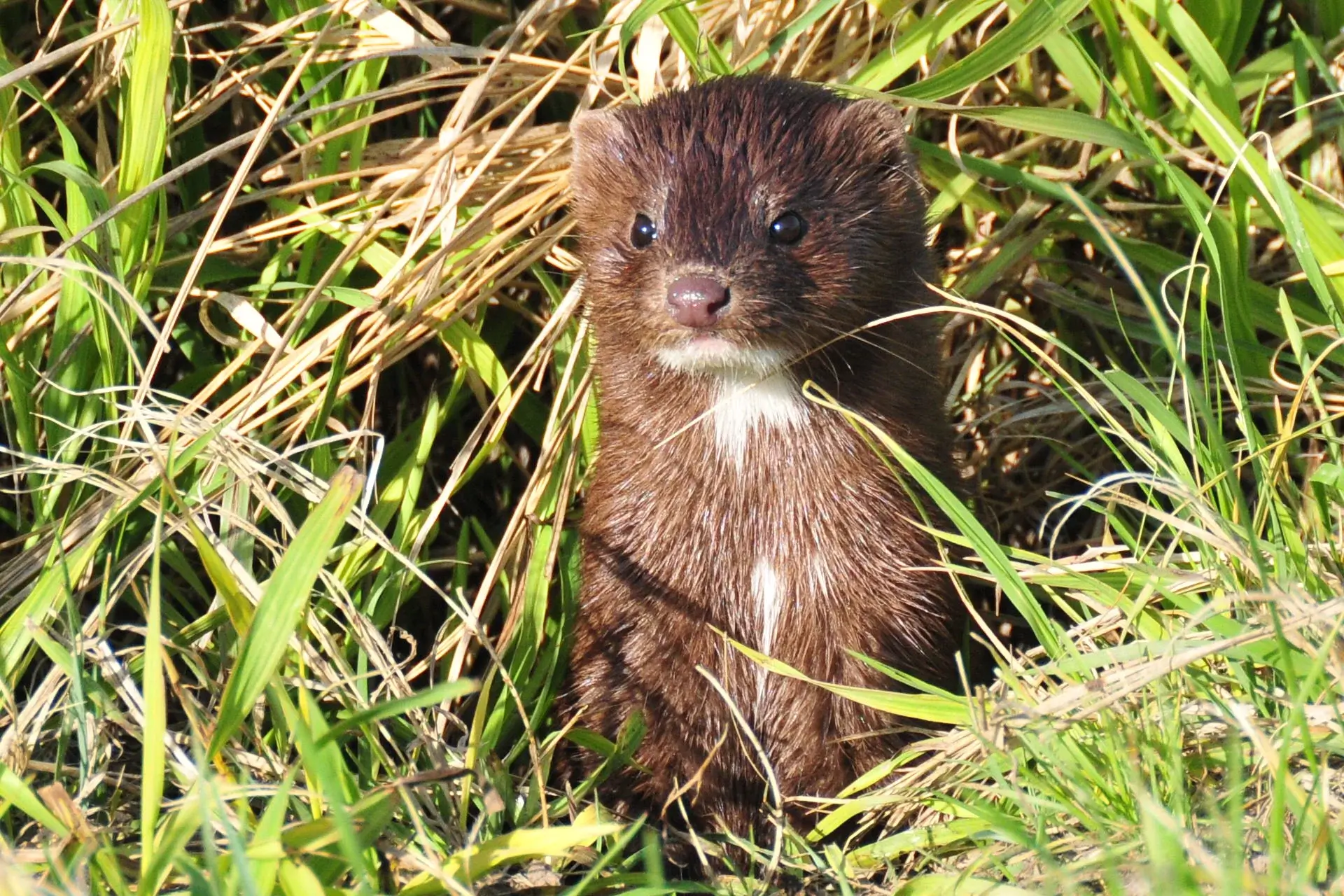
The American mink (Neogale vison) is a semiaquatic species of mustelid native to North America, though human introduction has expanded its range to many parts of Europe, Asia, and South America. Because of range expansion, the American mink is classed as a least-concern species by the IUCN. The American mink was formerly thought to be the only extant member of the genus Neovison following the extinction of the sea mink (N. macrodon), but recent studies, followed by taxonomic authorities, have reclassified it and the sea mink within the genus Neogale, which also contains a few New World weasel species. The American mink is a carnivore that feeds on rodents, fish, crustaceans, frogs, and birds. In its introduced range in Europe it has been classified as an invasive species linked to declines in European mink, Pyrenean desman, and water vole populations. It is the animal most frequently farmed for its fur, exceeding the silver fox, sable, marten, and skunk in economic importance.
Life History
The American mink is a carnivorous animal that feeds on rodents, fish, crustaceans, amphibians, and birds. It kills vertebrate prey by biting the back of the head or neck, leaving canine puncture marks 9–11 mm (0.35–0.43 in) apart. The American mink often kills birds, including larger species like seagulls and cormorants, by drowning. In its natural range, fish are its primary prey. Although inferior to the North American river otter in hunting fish, Audubon and Bachman once reported seeing a mink carrying a foot-long trout. Mink inhabiting the prairie sloughs primarily target frogs, tadpoles, and mice. It is a formidable predator of muskrats, which are chased underwater and killed in their own burrows. Among the rodents killed by the American mink in its native range are rats and mice of the genera Hesperomys, Microtus, Sigmodon, and Neotoma. Marsh rabbits are frequently taken in marshy or swampy tracts. In Tartaria, the American mink's most important food items are voles, fish, crustaceans, frogs, and aquatic insects. In winter, aquatic foods predominate, while land-based prey increases in importance during the spring. Within the Altai Mountains, the American mink feeds predominantly on mammals such as rodents, shrews, and moles, as well as birds, reptiles, amphibians, and fish. Among the 11 different bird species preyed upon by minks in Altai are dippers and pine grosbeaks. Among fish, small species predominate in the diet of minks in Altai, and include minnows, gudgeons, and wide-headed sculpins. In the Sverdlovsk and Irkutsk Oblasts, mouse-like rodents are their most important foods, followed by birds, fish and insects. In the Russian Far East, where crustaceans are scarce, the American mink feeds extensively on amphipods. In the British Isles, dietary composition varies seasonally and regionally. European rabbits are the most commonly taken prey in areas where they are common, especially in summer. A range of small rodents and insectivores are preyed upon, but to a lesser degree. European hares are occasionally attacked. Minks in Britain prey on several bird species, with ducks, moorhens, and coots being most frequently targeted on lakes and rivers, while gulls are taken in coastal habitats. Marine species preyed upon in Britain include European eels, rock-pool fish such as blenny, shore crabs and crayfish. American minks have been implicated in the decline of the water vole in the United Kingdom and linked to the decline of waterfowl across their range in Europe. They are now considered vermin in much of Europe and are hunted for the purpose of wildlife management. In South America's Cape Horn Biosphere Reserve, mammals, including both native and exotic rodents, are the American mink's main prey throughout the year, though birds are of equal importance during their summer nesting periods. The American mink may pose a threat to poultry. According to Clinton Hart Merriam and Ernest Thompson Seton, although the American mink is a potential p
Hunting Season
Private: Nov 27 - Mar 1. WMA: Nov 27 - Feb 28.
License & Regulations
A valid South Carolina hunting license is required for resident and non-resident hunters age 16 and older. Licenses can be purchased online through the Go Outdoors SC portal or at authorized license retailers. Additional permits may be required: Big Game Permit for deer, bear, and turkey; individual bear tags ($25 residents, $100 nonresidents); turkey tags ($25 residents, $125 nonresidents); antlerless deer tags; and the federal Migratory Bird Hunting and Conservation Stamp (Duck Stamp) for waterfowl. Hunters born on or after July 1, 1979 must successfully complete a hunter education course.
Frequently Asked Questions
Regulations for hunting American Mink in South Carolina
American mink hunting and trapping season runs from late November through the end of February or early March. No bag limit. Mink are semi-aquatic predators found along waterways throughout South Carolina.
When is American Mink hunting season in South Carolina?
The American Mink hunting season in South Carolina: Private: Nov 27 - Mar 1. WMA: Nov 27 - Feb 28.
What's another name for American Mink?
American Mink is also known as Mink in South Carolina.
How to identify American Mink?
The American mink (Neogale vison) is a semiaquatic species of mustelid native to North America, though human introduction has expanded its range to many parts of Europe, Asia, and South America. Because of range expansion, the American mink is classed as a least-concern species by the IUCN. The American mink was formerly thought to be the only extant member of the genus Neovison following the extinction of the sea mink (N. macrodon), but recent studies, followed by taxonomic authorities, have re...
References
| State | Category | Directory | Subcategory | Content | Source |
|---|---|---|---|---|---|
| South Carolina | Hunting | Regulations | Season Dates | Private: Nov 27 - Mar 1. WMA: Nov 27 - Feb 28. | Link |
| South Carolina | Hunting | License | License & Fees | A valid South Carolina hunting license is required for resident and non-resident hunters age 16 and older. Licenses can | Link |
| South Carolina | Hunting | Regulations | Regulations | American mink hunting and trapping season runs from late November through the end of February or early March. No bag lim | Link |