Also known as: Mourning dove, Turtle dove, Carolina dove
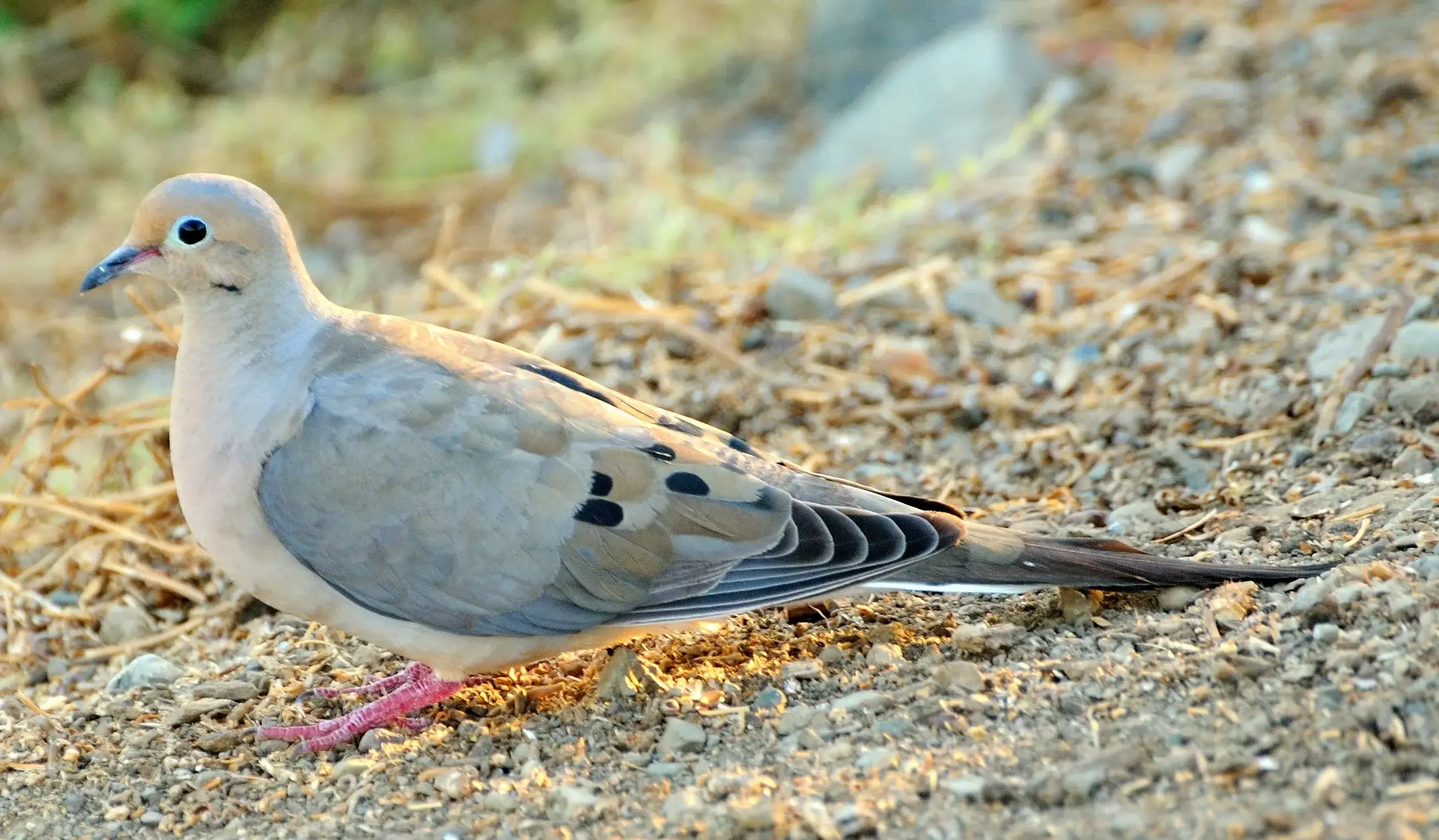
The mourning dove (Zenaida macroura) is a member of the dove family, Columbidae. The bird is also known as the American mourning dove, the rain dove, the chueybird, and colloquially as the turtle dove, and it was once known as the Carolina pigeon and Carolina turtledove. It is one of the most abundant and widespread North American birds and a popular gamebird, with more than 20 million birds (up to 70 million in some years) shot annually in the U.S., both for sport and meat. Its ability to sustain its population under such pressure is due to its prolific breeding; in warm areas, one pair may raise up to six broods of two young each in a single year. The wings make an unusual whistling sound upon take-off and landing, a form of sonation. The bird is a strong flier, capable of speeds up to 88 km/h (55 mph). Mourning doves are light gray and brown and generally muted in color. Males and females are similar in appearance. The species is generally monogamous, with two squabs (young) per brood. Both parents incubate and care for the young. Mourning doves eat almost exclusively seeds, but the young are fed crop milk by their parents.
Habitat & Range
The mourning dove has a large range of nearly 11,000,000 km2 (4,200,000 sq mi). The species is resident throughout the Greater Antilles, most of Mexico, the Continental United States, southern Canada, and the Atlantic archipelago of Bermuda. Much of the Canadian prairie sees these birds in summer only, and southern Central America sees them in winter only. The species is a vagrant in northern Canada, Alaska, and South America. It has been spotted as an accidental at least nine times in the Western Palearctic with records from the British Isles (5), Sweden (2), the Azores (1), and Iceland (1). In 1963, the mourning dove was introduced to Hawaii, and in 1998 there was a small population in North Kona. The mourning dove also appeared on Socorro Island, off the western coast of Mexico, in 1988, sixteen years after the Socorro dove was extirpated from that island. The mourning dove occupies a wide variety of open and semi-open habitats, such as urban areas, farms, prairie, grassland, and lightly wooded areas. It avoids swamps and thick forest.
Hunting Season
Split season: Sep 1 - Oct 4; Nov 15 - Nov 29; Dec 22 - Jan 31.
License & Regulations
A valid South Carolina hunting license is required for resident and non-resident hunters age 16 and older. Licenses can be purchased online through the Go Outdoors SC portal or at authorized license retailers. Additional permits may be required: Big Game Permit for deer, bear, and turkey; individual bear tags ($25 residents, $100 nonresidents); turkey tags ($25 residents, $125 nonresidents); antlerless deer tags; and the federal Migratory Bird Hunting and Conservation Stamp (Duck Stamp) for waterfowl. Hunters born on or after July 1, 1979 must successfully complete a hunter education course.
Frequently Asked Questions
Regulations for hunting Mourning Dove in South Carolina
Mourning dove hunting in South Carolina follows a three-segment split season from September through January. Daily bag limit is 15 birds. HIP registration is required. Shooting hours are from 30 minutes before sunrise until sunset. Dove hunting is one of the most popular hunting activities in South Carolina, often pursued over agricultural fields.
When is Mourning Dove hunting season in South Carolina?
The Mourning Dove hunting season in South Carolina: Split season: Sep 1 - Oct 4; Nov 15 - Nov 29; Dec 22 - Jan 31.
What is the bag limit for Mourning Dove in South Carolina?
The bag limit for Mourning Dove in South Carolina is: 15 per day.
What's another name for Mourning Dove?
Mourning Dove is also known as Mourning dove, Turtle dove, Carolina dove in South Carolina.
What is the best way to hunt doves in South Carolina?
Dove hunting in South Carolina is typically done over prepared agricultural fields such as sunflowers, wheat, millet, or corn. Hunters set up around the field edges and shoot passing birds. Doves are fast fliers requiring good shooting skills. Hunting over baited fields is illegal. Many fields are managed specifically for dove hunting with special dove field permits on WMAs.
How to identify Mourning Dove?
The mourning dove (Zenaida macroura) is a member of the dove family, Columbidae. The bird is also known as the American mourning dove, the rain dove, the chueybird, and colloquially as the turtle dove, and it was once known as the Carolina pigeon and Carolina turtledove. It is one of the most abundant and widespread North American birds and a popular gamebird, with more than 20 million birds (up to 70 million in some years) shot annually in the U.S., both for sport and meat. Its ability to susta...
References
| State | Category | Directory | Subcategory | Content | Source |
|---|---|---|---|---|---|
| South Carolina | Hunting | Regulations | Season Dates | Split season: Sep 1 - Oct 4; Nov 15 - Nov 29; Dec 22 - Jan 31. | Link |
| South Carolina | Hunting | License | License & Fees | A valid South Carolina hunting license is required for resident and non-resident hunters age 16 and older. Licenses can | Link |
| South Carolina | Hunting | Regulations | Regulations | Mourning dove hunting in South Carolina follows a three-segment split season from September through January. Daily bag l | Link |