Also known as: Snow goose, Blue goose
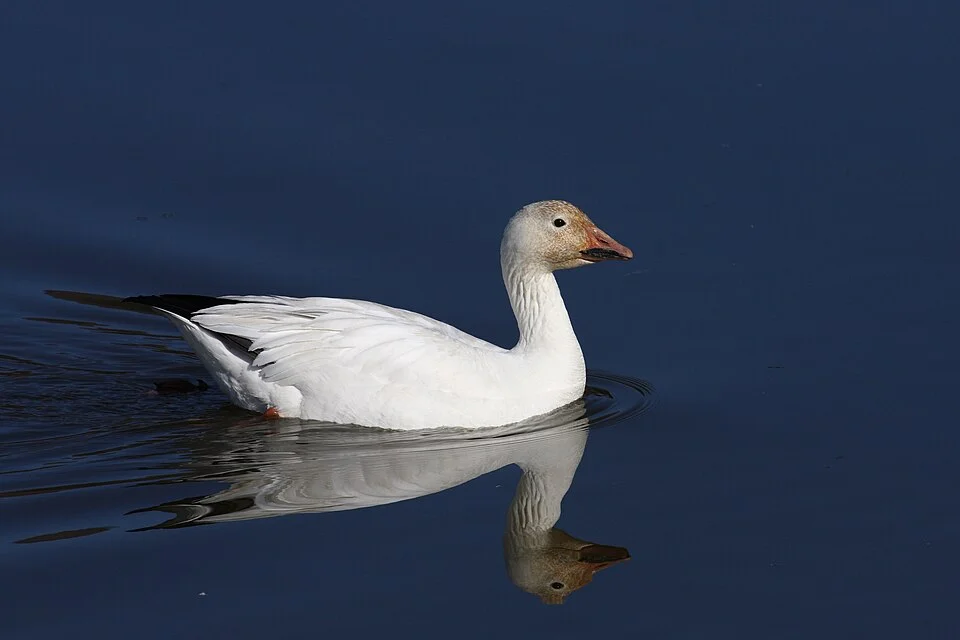
The snow goose (Anser caerulescens) is a species of goose native to North America. Both white and dark morphs exist, the latter often known as blue goose. Its name derives from the typically white plumage. The species was previously placed in the genus Chen, but is now typically included in the "gray goose" genus Anser. Snow geese breed north of the timberline in Greenland, Canada, Alaska, and the northeastern tip of Siberia, and spend winters in warm parts of North America from southwestern British Columbia through parts of the United States to Mexico.
Life History
Outside of the nesting season, they usually feed in flocks. In winter, snow geese feed on left-over grain in fields. They migrate in large flocks, often visiting traditional stopover habitats in spectacular numbers. Snow geese frequently travel and feed alongside greater white-fronted geese; in contrast, the two tend to avoid travelling and feeding alongside Canada geese, which are often heavier birds. The population of greater snow geese was in decline at the beginning of the 20th century, but has now recovered to sustainable levels. Snow geese in North America have increased to the point where the tundra breeding areas in the Arctic and the saltmarsh wintering grounds are both becoming severely degraded, and this affects other species using the same habitat. Major nest predators include Arctic foxes and skuas. The biggest threat occurs during the first few weeks after the eggs are laid and then after hatching. The eggs and young chicks are vulnerable to these predators, but adults are generally safe. They have been seen nesting near snowy owl nests, which is likely a solution to predation. Their nesting success was much lower when snowy owls were absent, leading scientists to believe that the owls, since they are predatory, were capable of keeping competing predators away from the nests. A similar association as with the owls has been noted between geese and rough-legged hawks. Additional predators at the nest have reportedly included wolves, coyotes, and all three North American bear species. Few predators regularly prey on snow geese outside of the nesting season, but bald eagles (as well as possibly golden eagles) readily attack wintering geese.
Hunting Season
Nov 22-29; Dec 12 - Jan 31; Feb 15 - Mar 1.
License & Regulations
A valid South Carolina hunting license is required for resident and non-resident hunters age 16 and older. Licenses can be purchased online through the Go Outdoors SC portal or at authorized license retailers. Additional permits may be required: Big Game Permit for deer, bear, and turkey; individual bear tags ($25 residents, $100 nonresidents); turkey tags ($25 residents, $125 nonresidents); antlerless deer tags; and the federal Migratory Bird Hunting and Conservation Stamp (Duck Stamp) for waterfowl. Hunters born on or after July 1, 1979 must successfully complete a hunter education course.
Frequently Asked Questions
Regulations for hunting Snow Goose in South Carolina
Snow goose hunting follows the regular goose season framework in South Carolina with a high daily bag limit of 25 birds and no possession limit. HIP registration and federal Duck Stamp are required. The high limit is part of conservation efforts to control the overabundant mid-continent snow goose population.
When is Snow Goose hunting season in South Carolina?
The Snow Goose hunting season in South Carolina: Nov 22-29; Dec 12 - Jan 31; Feb 15 - Mar 1.
What is the bag limit for Snow Goose in South Carolina?
The bag limit for Snow Goose in South Carolina is: 25 per day, no possession limit.
What's another name for Snow Goose?
Snow Goose is also known as Snow goose, Blue goose in South Carolina.
How to identify Snow Goose?
The snow goose (Anser caerulescens) is a species of goose native to North America. Both white and dark morphs exist, the latter often known as blue goose. Its name derives from the typically white plumage. The species was previously placed in the genus Chen, but is now typically included in the "gray goose" genus Anser. Snow geese breed north of the timberline in Greenland, Canada, Alaska, and the northeastern tip of Siberia, and spend winters in warm parts of North America from southwestern Bri...
References
| State | Category | Directory | Subcategory | Content | Source |
|---|---|---|---|---|---|
| South Carolina | Hunting | Regulations | Season Dates | Nov 22-29; Dec 12 - Jan 31; Feb 15 - Mar 1. | Link |
| South Carolina | Hunting | License | License & Fees | A valid South Carolina hunting license is required for resident and non-resident hunters age 16 and older. Licenses can | Link |
| South Carolina | Hunting | Regulations | Regulations | Snow goose hunting follows the regular goose season framework in South Carolina with a high daily bag limit of 25 birds | Link |