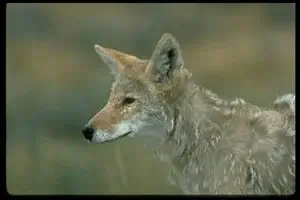
The coyote is very similar in size to a small German Shepherd and weighs an average of 25 to 40 pounds. It features long, slender legs, a bushy tail with a black tip, and large ears that are held erect, with unmistakable yellow eyes and black, round pupils. It is a strong swimmer and characteristically runs with its tail down, distinguishing it from foxes and wolves.
Habitat & Range
Coyotes are most typically associated with open plains in the West and brushy areas in the East. Their highly adaptable and opportunistic nature has allowed them to thrive in rapidly changing environments across Texas, where they range throughout the entire state.
Life History
An extremely intelligent animal with keen senses, the coyote is primarily nocturnal and very opportunistic, feeding mainly on rabbits, rodents, insects, carrion, lizards, snakes, fruit, and even fish. Coyotes are monogamous, with pairs remaining together for several years; breeding occurs from mid-January to early March, with litters of five to seven pups born after a 63–65 day gestation, and lifespan is normally 10 to 12 years.
Status, Trends & Threats
Coyotes range extensively across Texas and the United States, having slowly filled the void left by the declining population of wolves. No specific conservation threats are noted; the species is considered stable, adaptable, and widespread.
Frequently Asked Questions
Can coyotes be hunted year-round in Texas?
Yes, coyotes are classified as nongame animals in Texas and can be hunted year-round with a valid hunting license. There is no closed season or bag limit for coyotes on most private lands, though local regulations and municipal ordinances may apply.
Do I need a special permit to hunt coyotes in Texas?
No special permit is required beyond a valid Texas hunting license to take coyotes. However, if hunting on public lands, additional restrictions may apply and hunters should check with the specific wildlife management area or public hunting property.
What is the best time of day to hunt coyotes in Texas?
Coyotes are primarily nocturnal but are also active during dawn and dusk. Early morning and late evening hours typically offer the best opportunity, especially during the breeding season from mid-January to early March when they are more active.