Also known as: Audubon's cottontail
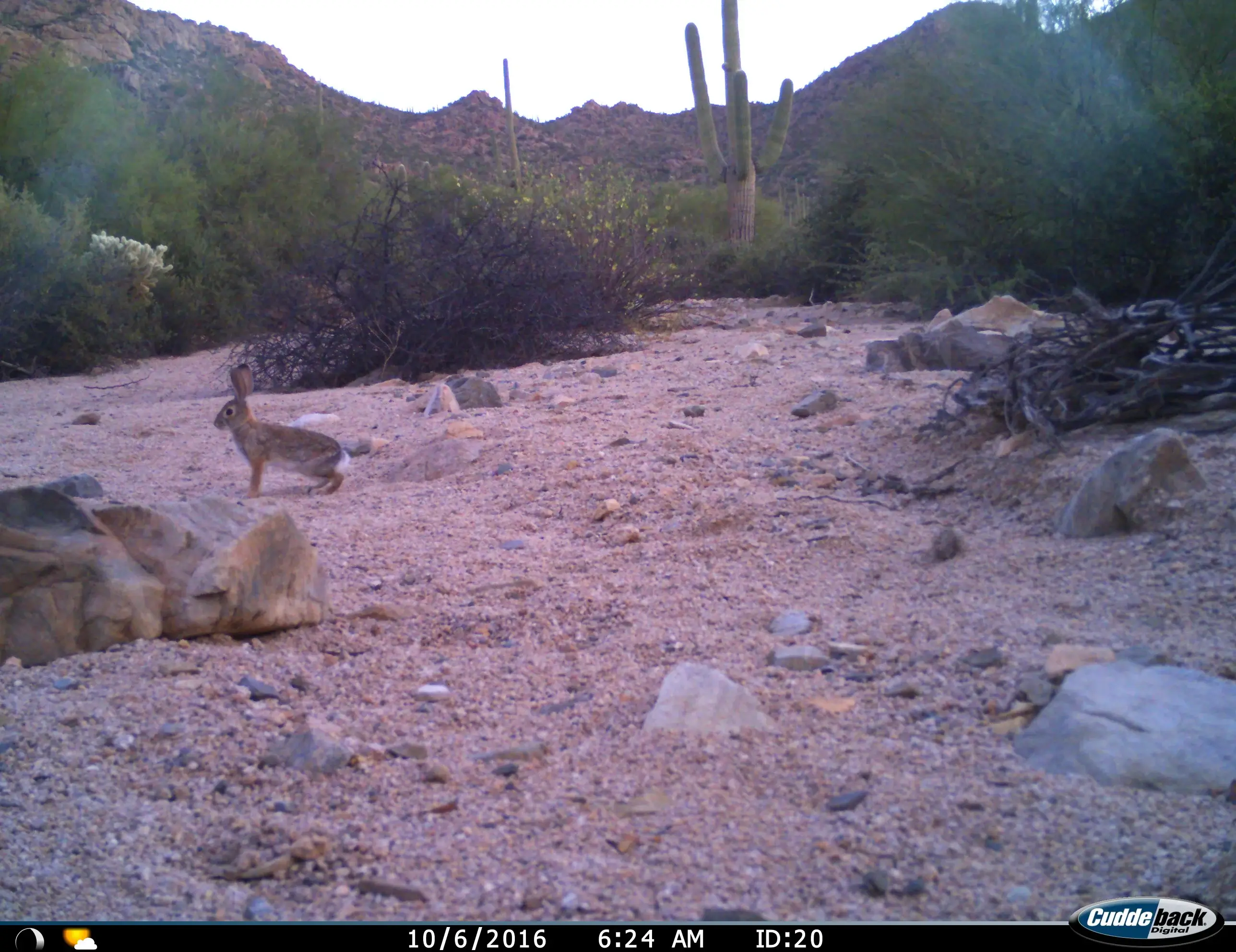
The desert cottontail is a medium-sized cottontail rabbit with a buff-brown color lined with black above and white below, and relatively long ears. It is quick on its feet and well-adapted to arid environments across the western United States. It is frequently associated with prairie dog towns and can produce multiple litters per year.
Habitat & Range
Adapted to varied habitats from grasslands to cactus deserts, favoring brushy areas with pre-established burrowing systems. Found from California across the western half of Texas, north to eastern Montana and southwestern North Dakota.
Life History
Desert cottontails take shelter in other animals' burrows or their own scratched-out depressions lined with dried grasses and rabbit fur. Their diet shifts seasonally — grasses and green plants in spring and summer, bark and twigs in fall and winter. They practice caprophagy (reingesting soft pellets) to extract full nutrition. They may produce two or more litters a year with one to six young per litter, and have a lifespan of up to two years in the wild. They are preyed upon by hawks, foxes, owls, and snakes.
Status, Trends & Threats
No explicit conservation concerns noted. The species is widely distributed across the western half of Texas and natural predation by hawks, foxes, owls, and snakes is the primary threat.
Frequently Asked Questions
Is there a hunting season for desert cottontail in Texas?
Yes, cottontail rabbits have a year-round open season in Texas with no bag limit on private property. On public lands, check specific regulations. No special hunting license is required beyond a valid Texas hunting license.
Where is the best place to hunt desert cottontail in Texas?
Desert cottontails are most abundant in the western half of Texas, particularly in brushy grasslands, cactus deserts, and areas with prairie dog towns. Look for them in open country with available burrows for shelter, especially in the Edwards Plateau, South Texas Plains, and Trans-Pecos regions.
What is the difference between a desert cottontail and an eastern cottontail in Texas?
The desert cottontail (Sylvilagus audubonii) occupies the western half of Texas and has longer ears, while the eastern cottontail (Sylvilagus floridanus) is found in the eastern half. Desert cottontails are slightly smaller and paler in color, adapted to more arid environments.