Also known as: Fox squirrel
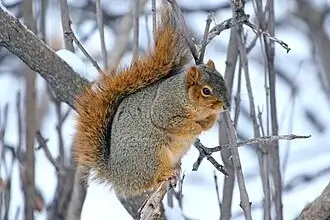
The eastern fox squirrel is a large tree squirrel, about 21 inches long and 1.5 to 2 pounds, with gray and black fur on the back and orange-colored belly fur. Its tail is cinnamon mixed with black, and the name comes from its gray and red fur coat that resembles that of a gray fox. It is the most common squirrel in Texas due to its adaptability.
Habitat & Range
Prefers upland hardwood forests containing nut-producing trees, found in forests and along rivers and streams in the eastern two-thirds of Texas and the eastern half of the United States.
Life History
Fox squirrels are usually active early in the morning and late in the afternoon, nesting in tree holes or leaf-and-twig nests. They eat acorns, nuts, buds, fruit, fungi, insects, amphibians, and inner bark of trees. They bury thousands of nuts for winter food, relocating them by smell, and are important for planting nut trees. They typically have two breeding seasons per year with litters of 3-4 young, and can live up to 15 years.
Status, Trends & Threats
The fox squirrel is Texas' most common squirrel and an important game animal. No immediate conservation concerns, though proper forest management — leaving older nut-producing trees and maintaining forest corridors — benefits populations.
Frequently Asked Questions
What is the hunting season for fox squirrels in Texas?
Fox squirrel hunting season in Texas typically runs from October through February, with a bag limit of 25 squirrels per day in most counties. Seasons and limits may vary by county, so hunters should check TPWD regulations for their specific location.
What is the best habitat to find fox squirrels in Texas?
Fox squirrels prefer open upland hardwood forests with a mixture of oak and nut trees, particularly in the eastern two-thirds of Texas. Look for areas with mature pecan, oak, and hickory trees near rivers and streams.
Are fox squirrels considered pests in Texas?
Yes, fox squirrels are sometimes considered pests by farmers due to their attraction to corn and pecans. However, they are also valued as an important game animal in Texas and benefit from proper forest management practices.