Also known as: Wapiti
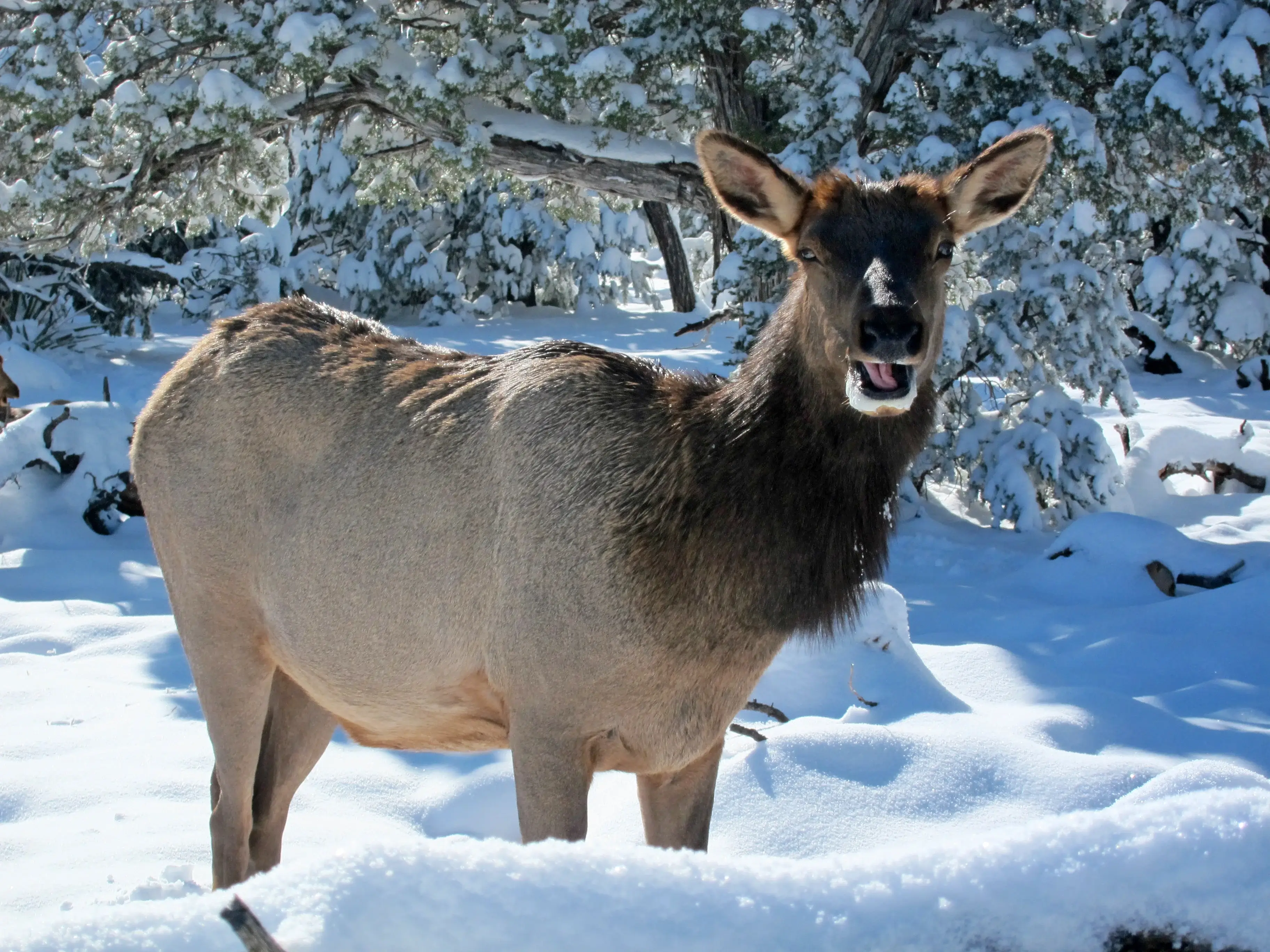
Elk are large herbivores resembling deer. Males possess antlers that are usually six-pointed and shed annually. They have long, shaggy neck hair. Their fur is light brown overall, with darker coloration on the head, neck, legs, and belly, plus a prominent white rump patch. Elk are social, with herds typically led by a cow that guides them to water and feeding areas. Cows also serve as sentinels, standing guard at night, during rest periods, and while feeding. They rely heavily on smell for detecting threats, though sight and hearing are also keen. Three distinct calls: a loud bark used as an alarm to warn the herd of danger; bugling by bulls during the breeding season; and bleating by young calves and yearlings.
Habitat & Range
Historically, elk wintered on western plains and summered in open, forested mountain areas. Due to human land-use changes, they now occupy mountain habitats year-round. In Texas, free-ranging elk exist across much of West Texas, and high-fence ranch populations occur statewide.
Life History
Breeding season (the rut) begins in late summer and runs through November, signaled by bulls bugling. Bulls enter the season very fat but become emaciated by its end. Calves are born in May and June, typically one per female. Newborns are reddish-brown and spotted with white. They remain hidden at first but can follow their mothers at about two weeks old. By two to three months, calves can survive solely on plants. Antlers are usually shed in late winter through spring. New growth begins once the pedicle scars heal. Some antlers can weigh over 30-40 pounds. Diet includes both grazing and browsing. In western ranges, summer diet includes shrubs, trees, and grasses. In Texas, they consume desert plants like agaves along with various grasses.
Status, Trends & Threats
Historical evidence suggests elk once ranged across much of Texas. By the late 1800s, they were confined to the Guadalupe Mountains in far West Texas. Today, free-ranging elk exist across much of West Texas, and high-fence ranch populations occur statewide.
Frequently Asked Questions
What do elk look like?
Elk are large herbivores with light brown fur, darker head and legs, and a prominent white rump patch. Males have six-pointed antlers that are shed annually.
Where can elk be found in Texas?
Free-ranging elk exist across much of West Texas, primarily in the Guadalupe Mountains. High-fence ranch populations occur statewide.
When is elk breeding season?
The rut begins in late summer and runs through November, with bulls bugling to attract females. Calves are born in May and June.