Also known as: Desert mule deer (O. h. crooki), Rocky Mountain mule deer (O. h. hemionus)
Mule deer are a different species from white-tailed deer. Their ears are noticeably larger, which is where they get their name. Their body weights are generally larger than white-tailed deer. They have a black-tipped cream tail and bifurcated (forked) antlers. In Texas, desert mule deer (Odocoileus hemionus crooki) is the primary subspecies, with Rocky Mountain mule deer (O. h. hemionus) found in the northern Panhandle.
Habitat & Range
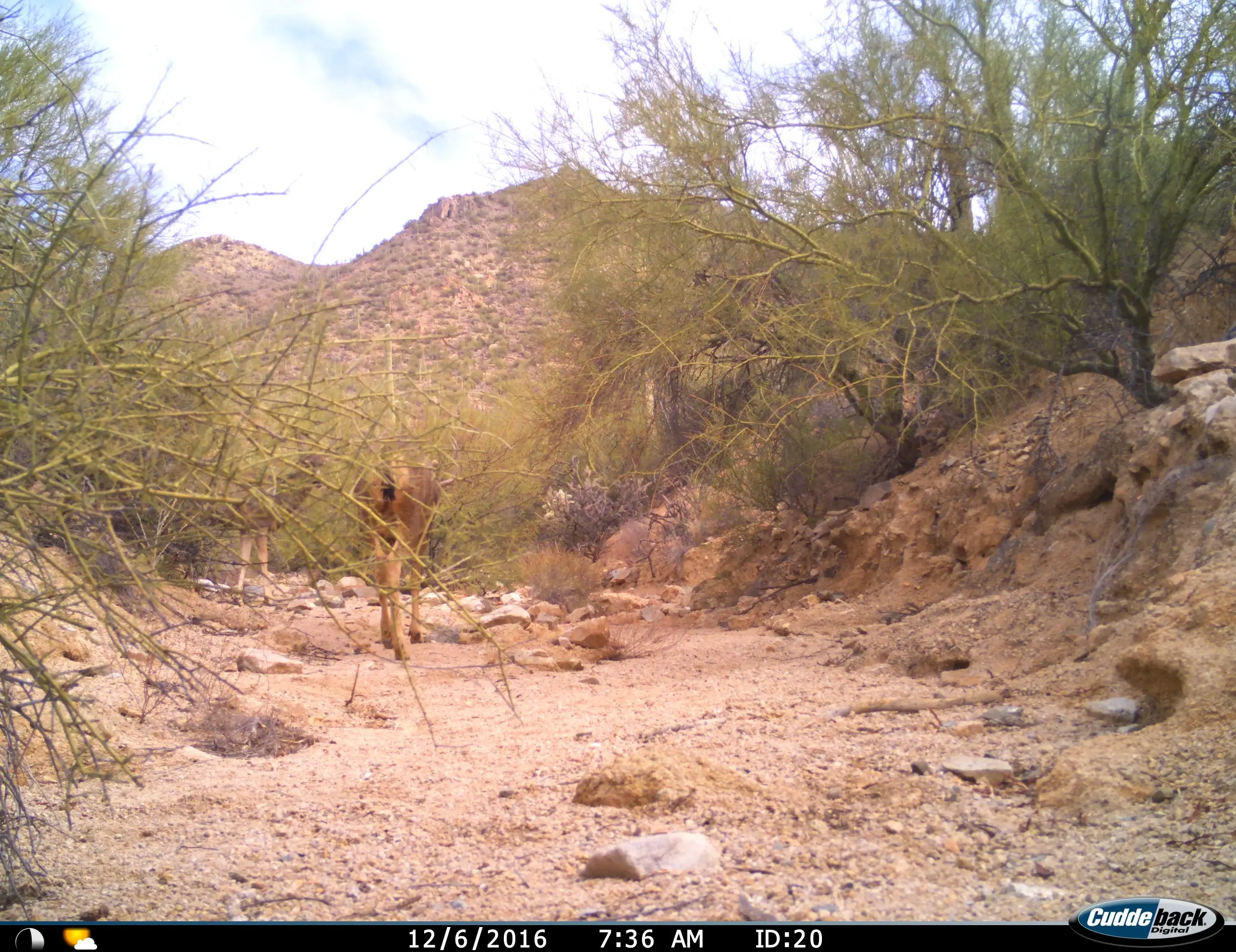
Mule deer prefer more open rangeland compared to white-tailed deer. They are found primarily west of the Pecos River and in parts of the High Plains of the Texas Panhandle. Brush encroachment makes them more vulnerable to predators since they rely on eyesight and quick escape. The most critical factor for maintaining populations is proper habitat management.
Life History
Mule deer are members of the deer family (Cervidae) and grow antlers — solid bone structures shed each year after breeding season. While growing, antlers are covered with a soft skin called velvet containing tiny blood vessels that supply nutrients. The growth period lasts about three months; by September antlers have hardened as bucks prepare for breeding season. Their diet consists primarily of browse (lechuguilla, sotol, mesquite, juniper), forbs, and some green grass. Breeding season (rut) runs from mid-November to mid-February, peaking in late December. Gestation is approximately 210 days (7 months), with fawning in June through August. Population estimates range from 150,000 to 250,000 statewide, with approximately 80 to 90 percent in the Trans-Pecos region. The species has experienced significant population fluctuations. Despite increased numbers and range expansion over the last 60 years, substantial declines have occurred recently throughout west Texas. In the Trans-Pecos, numbers reached a low of 95,000 animals in 1999. Key factors affecting populations include drought, habitat degradation, reproduction, water distribution, and predator density.
Status, Trends & Threats
Chronic Wasting Disease (CWD) was first detected in Texas in mule deer in July 2012, with two cases from the Hueco Mountains of northern El Paso and Hudspeth counties near the New Mexico border. CWD is a progressive, fatal disease affecting the brain. Wildlife experts attribute population declines to extended drought, lack of available quality forage, and loss of cover.
Hunting Season
Mule deer season dates are different from the white-tailed deer season and harvest limits vary by county. Hunters should check the Outdoor Annual for county-specific regulations.
Frequently Asked Questions
How can I tell the difference between a mule deer and a white-tailed deer?
Mule deer have noticeably larger ears (giving them their name), a black-tipped cream tail, and bifurcated (forked) antlers. They are generally larger-bodied than white-tailed deer.
Where do mule deer live in Texas?
Mule deer occur primarily west of the Pecos River and in parts of the High Plains of the Texas Panhandle. About 80 to 90 percent of the statewide population is found in the Trans-Pecos region.
What is the breeding season for mule deer in Texas?
The breeding season (rut) runs from mid-November to mid-February, peaking in late December. Fawns are born in June through August after a gestation of approximately 210 days.
References
| State | Category | Directory | Subcategory | Content | Source |
|---|---|---|---|---|---|
| Texas | Hunting | Regulations | Season Dates | Mule deer season dates are different from the white-tailed deer season and harvest limits vary by county. Hunters should | Link |
| Texas | Hunting | Regulations | Regulations | Mule deer hunting season dates and bag limits vary by county in Texas. Consult the TPWD Outdoor Annual for current regul | Link |