Also known as: Pronghorn antelope, American antelope
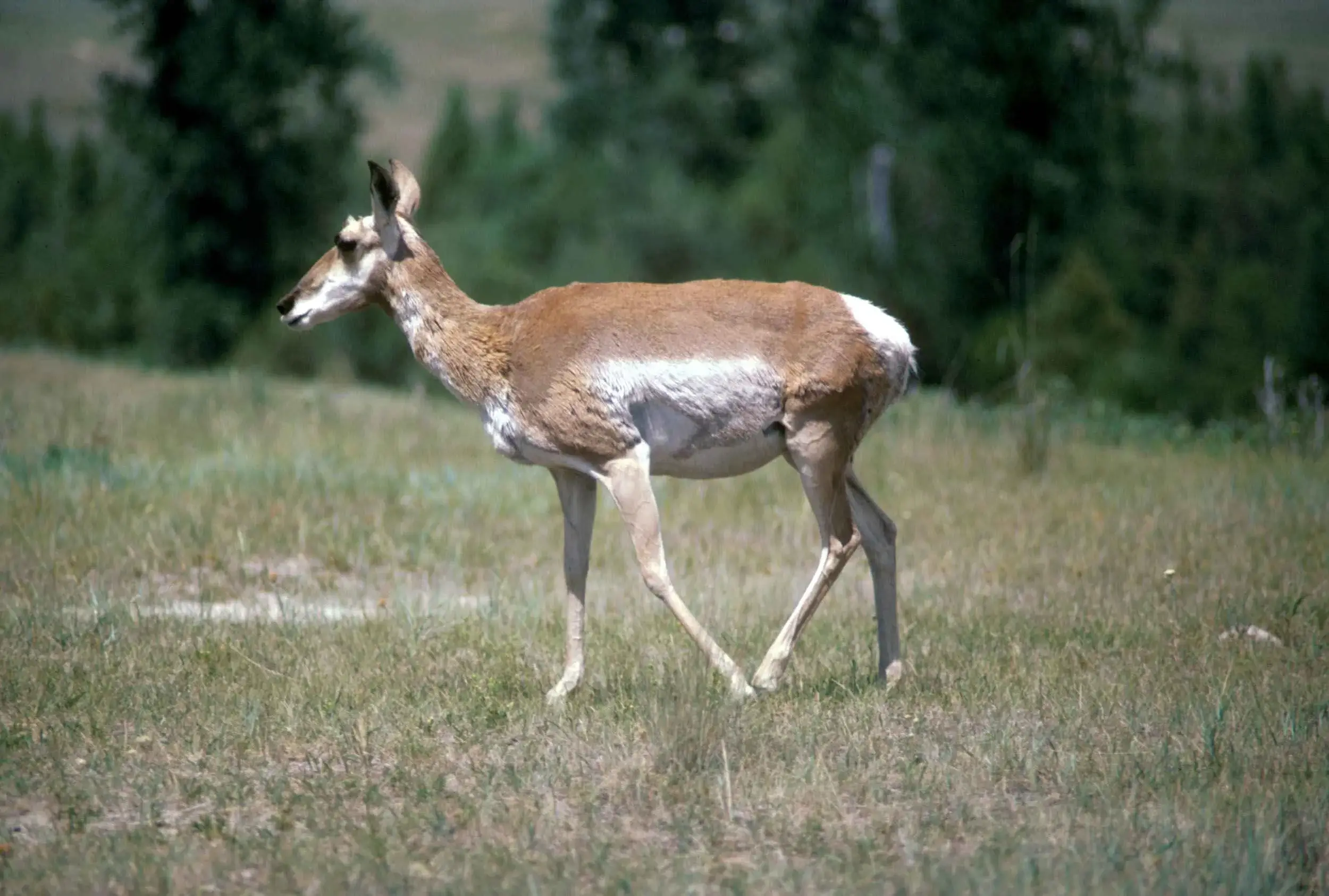
The pronghorn is a small, deerlike mammal with black, pronged horns on both males and females. They possess only two toes per foot. A distinctive black stripe runs along the nose, and they have a white patch on the cheek. Males additionally show a black patch on their jaw. Females tend to be smaller than males.
Habitat & Range
Pronghorns are animals of the plains, built for speed and long-distance vision. They inhabit areas where sightlines and running are not blocked by wooded vegetation. Nearby water is not essential since they are physiologically adapted to go extended periods without drinking, being able to conserve body water and to produce metabolic water. In Texas, they are restricted to limited areas from the Panhandle to the Trans-Pecos.
Life History
Among North American mammals, pronghorns are the fastest runners, though top speed likely does not exceed 70 km per hour. They exhibit a strong sense of curiosity, insisting on closely inspecting unrecognized moving objects. Historically, hunters exploited this trait by waving a handkerchief from behind cover to lure them into range. Pronghorns show a disinclination to jump over fences or other objects. A low brush fence just over a meter high can typically turn them. They generally crawl under or between the wires of barbed-wire fences. Their diet consists only of vegetation, mainly shrubs and grasses. They are especially partial to wildflowers and fruits. Pronghorns can eat certain plants, like paper flower and woolly senecio, that are toxic to other animals. Breeding season in Trans-Pecos Texas runs from late summer into early fall. Dominant bucks gather harems of 2 to 14 does. Young are born in spring and early summer. The female hides her fawns and returns to nurse them three or more times a day. By about one week old, they can walk and run. At one month, they graze easily on vegetation. In the wild, pronghorns can reach 12 to 14 years, though typical lifespan is probably considerably less.
Status, Trends & Threats
No explicit conservation status is provided by TPWD. Historically pronghorn ranged across the western two-thirds of Texas, reaching as far east as Robertson County and south to Kenedy County. Currently they are restricted to limited areas from the Panhandle to the Trans-Pecos.
Frequently Asked Questions
What does a pronghorn look like?
Pronghorns are small, deerlike mammals with black, pronged horns on both males and females. They have a distinctive black stripe along the nose, a white patch on the cheek, and only two toes per foot.
How fast can a pronghorn run?
Pronghorns are the fastest runners among North American mammals, though top speed likely does not exceed 70 km per hour (about 43 mph).
Where do pronghorns live in Texas?
Pronghorns are currently restricted to limited areas from the Texas Panhandle to the Trans-Pecos region. They inhabit open plains where sightlines and running are not blocked by wooded vegetation.