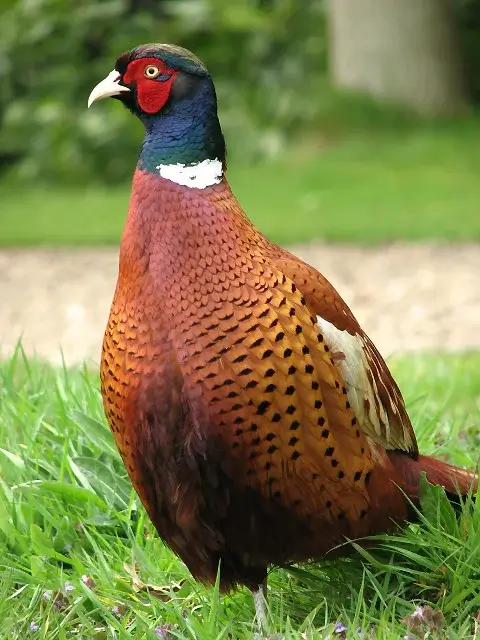
The Ring-necked Pheasant is a non-native game bird introduced to the U.S. from Asia. They love to run, but they can fly fast too — flight speeds can reach nearly 40 mph, and while flights are typically under 200 yards, one bird was recorded flying nearly 4 miles over water with a strong tailwind. Only males (cocks) are legal to harvest.
Habitat & Range
The species occupies the High Plains Ecoregion of the Texas Panhandle and South Plains. Key habitat needs include Conservation Reserve Program (CRP) fields alongside healthy playas for cover and nesting. Unlike most native upland game birds, pheasants are dependent on landscapes dominated by cultivation. Key elements include large areas of grain farming, interspersed pastures, hay fields, and riparian corridors along tributaries and rivers. Coastal habitats proved incompatible with the birds. The primary range is 37 Texas counties, with 36 in the Panhandle and South Plains plus Wilbarger County along the Red River.
Life History
Pheasants are fast runners and strong fliers. The species naturally expanded its range into Texas from Oklahoma and Kansas through immigration. Their diet relies heavily on grain crops, seeds, and insects. Nesting habitat quality depends on CRP fields and playas. TPWD monitors populations annually via 44 roadside survey routes covering roughly 900 miles.
Status, Trends & Threats
TPWD has monitored populations annually since 1976. Numbers peaked in the early 1980s with greater than 140 birds per route, then steadily declined. The 2025-2026 survey averaged 1.64 birds per route, slightly up from 1.60 in 2024 but below the 15-year average of 2.18. Threats include: clean farming technology and increased harvest efficiency (mid-1990s), changes in partner cost-share program structures, variable weather conditions, the historic drought from 2009 to 2013, emergency grazing and haying authorized during drought reducing habitat quality, agricultural commodity prices affecting land use, CRP acreage reductions, and producer planting and harvest practices. Total hunters peaked at nearly 45,000 in 1986–87. Since 2010, harvest has exceeded 20,000 twice (2017, 2021).
Frequently Asked Questions
How fast can a Ring-necked Pheasant fly?
Ring-necked Pheasants can fly at speeds up to nearly 40 mph. While typical flights are under 200 yards, one bird was recorded flying nearly 4 miles over water with a strong tailwind.
Where in Texas can Ring-necked Pheasants be found?
They are found primarily in the High Plains Ecoregion of the Texas Panhandle and South Plains, occupying about 37 counties. They are dependent on landscapes dominated by cultivation, including grain farming areas, CRP fields, and playas.
Are Ring-necked Pheasants native to Texas?
No, they are not native to the U.S. They were introduced from Asia and first arrived in Texas by immigrating from western Oklahoma in 1939–1940. Private releases in the 1930s–1940s helped establish populations.