Also known as: Ringtail Cat
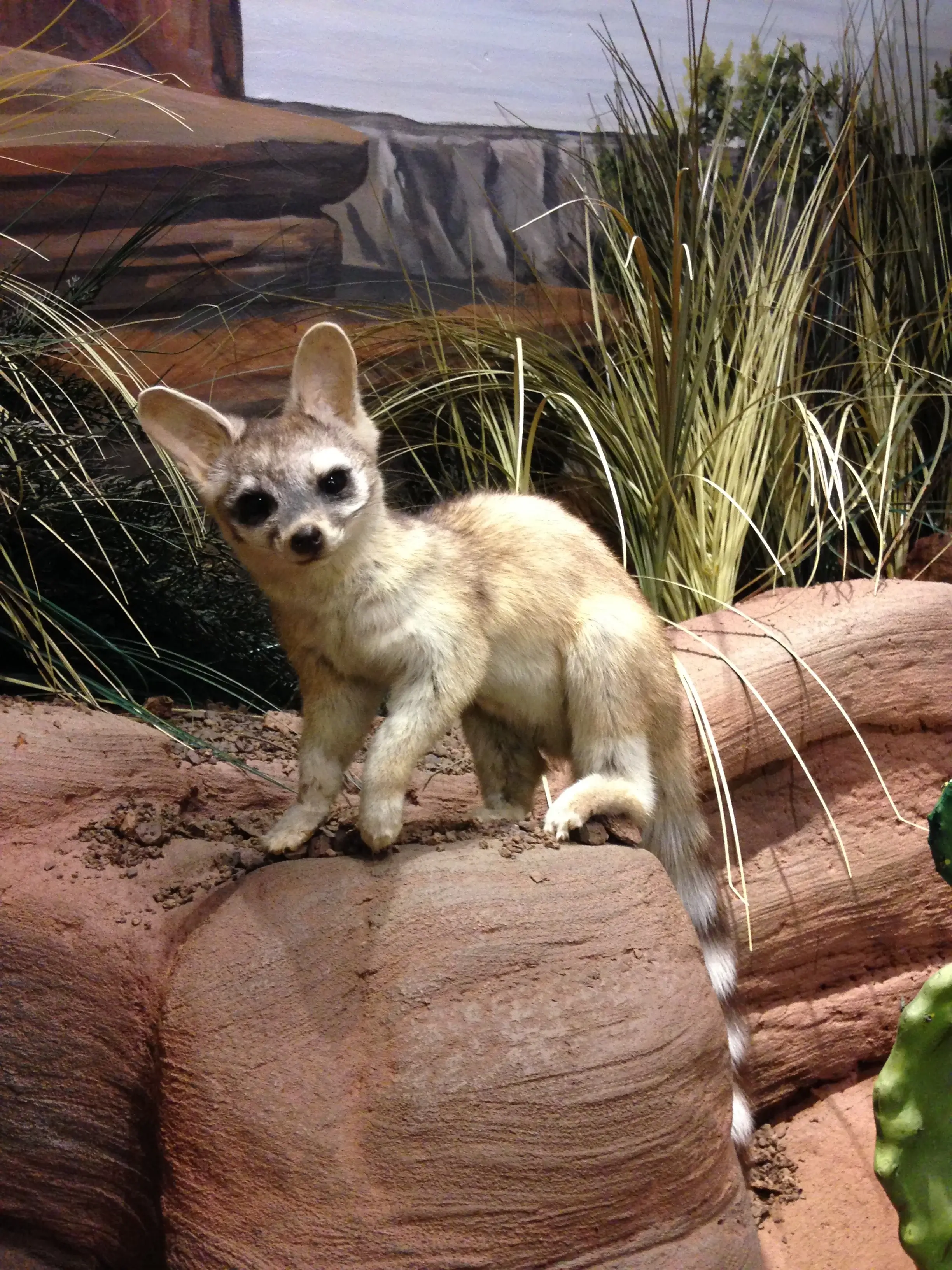
A cat-sized carnivore resembling a small fox with a long raccoonlike tail. Its tail is bushy, flattened and nearly as long as the head and body, with alternating black and white rings.
Habitat & Range
Ringtails occupy diverse habitats but prefer rocky areas such as rock piles, stone fences, canyon walls, and talus slopes. In less common woodland settings, they den in hollow trees and logs. They are distributed statewide but uncommon in lower Rio Grande and Coastal Plains of southern Texas.
Life History
Ringtails are almost wholly nocturnal and spend the majority of the day sleeping in their dens. They emerge at night to forage. They are expert climbers, capable of climbing vertical walls to find the most protected crevices, crannies, and hollows for den sites. They have also been observed living in buildings. Birds, rodents, carrion, reptiles and amphibians, and insects such as grasshoppers and crickets form the bulk of their diet, along with native fruits and berries. Breeding occurs in mid-spring. Litters typically consist of two to four babies, which are born covered with short, pale hair, unable to see and hear. By about four months of age, young Ringtails develop their adult coloration.
Status, Trends & Threats
No conservation concerns noted. Ringtails are distributed statewide in Texas, though uncommon in lower Rio Grande and Coastal Plains of southern Texas.
Frequently Asked Questions
What does a ringtail look like?
The ringtail is a cat-sized carnivore resembling a small fox with a long raccoonlike tail. Its tail is bushy, flattened and nearly as long as the head and body, with alternating black and white rings.
What do ringtails eat?
Ringtails have a varied diet. Birds, rodents, carrion, reptiles and amphibians, and insects such as grasshoppers and crickets form the bulk of their diet, along with native fruits and berries.
Are ringtails good climbers?
Yes, ringtails are expert climbers capable of climbing vertical walls to find the most protected crevices, crannies, and hollows for den sites.