Also known as: Rio Grande Wild Turkey
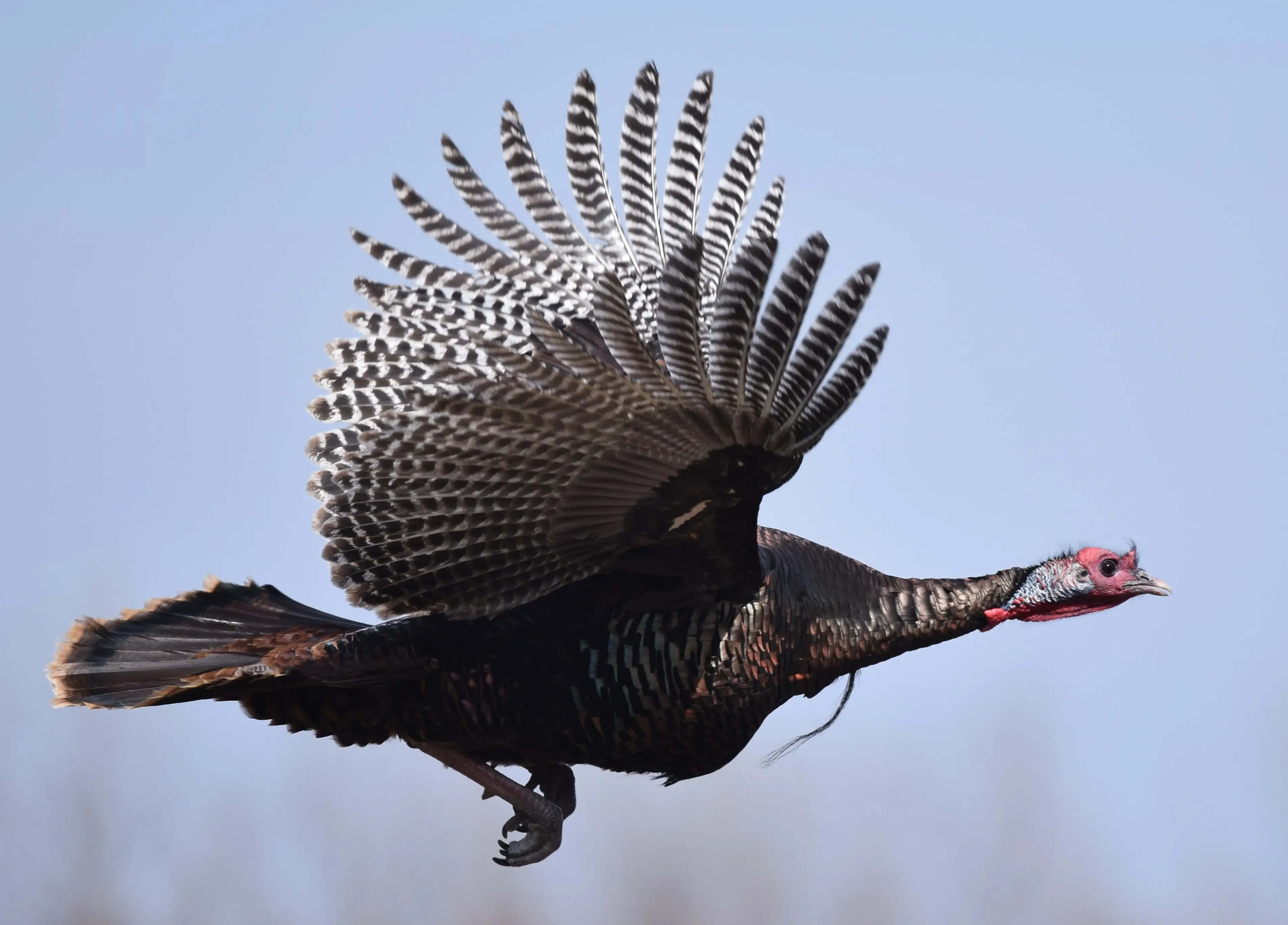
The Rio Grande Turkey is a very large, small-headed, round-winged, long-tailed, ground-dwelling bird. They have an unfeathered bluish head and reddish throat, with a dark breast and belly. The upper back shows iridescent bronze coloring, green wings, barred primaries, and a dark fan-shaped tail tipped with a brown or buff band. Adult males have a larger head with a throat wattle, caruncled forehead, a projection behind the bill, and more iridescent plumage overall. Mature gobblers average 16–18 pounds. The Rio Grande is one of three wild turkey subspecies found in Texas, along with the Eastern turkey (M. g. silvestris) and Merriam's turkey (M. g. merriami). It is sometimes called the "King of Texas" by TPWD biologists, with an estimated 500,000–600,000 birds statewide.
Habitat & Range
Rio Grande turkeys require tall trees for roosting plus good ground vegetation, brush, and grasses for nesting and poult survival. Key habitat components include riparian zones along streams and rivers which are critical for roosting, nesting, water, food, and cover. In the Texas Panhandle, they prefer open, mature native wood and brush lands and healthy riparian corridors. Winter roosts are found along drainages or on hillsides with tall oak trees. An understory that is not too dense or lush is preferred. Eastern red cedar invasion can reduce carrying capacity by as much as 50%. Turkeys are usually absent from areas lacking water. Their range covers Central Texas from the Panhandle south to the Rio Grande Valley, including the South Texas Plains along major river courses.
Life History
Turkeys forage mostly on the ground with a highly varied diet. General diet categories include mast (oaks, acorns), fruits (grape, persimmon, juniper), seeds (native grasses, corn, oats, weeds), and greens (grasses, forbs). Spring/summer diet consists primarily of grass leaves, crabgrass seeds, greenleaf material, berries, grasshoppers and beetles, acorns, and panic grass seeds. Fall/winter diet includes winter wheat, crabgrass seeds, acorns, corn residue, wild grape, and grasshoppers. They also eat insects, invertebrates, worms, snails, spiders, and arthropods. Nests are a shallow depression on the ground lined with leaves and grasses, well concealed in thick shrubs or woodlands within roughly 1/4 mile of water. Clutch size is 8–15 eggs with an incubation period of about 27–28 days. Typically one brood per year unless the nest is destroyed. Turkeys spend about six months (October–March) in winter habitat. At night they roost in large trees, especially cottonwood.
Status, Trends & Threats
By 1920, only approximately 100,000 Rio Grande turkeys remained in Texas due to unregulated hunting and habitat loss. TPWD has successfully trapped and relocated tens of thousands of birds, restoring the species to its historic range. Current statewide estimate is 500,000–600,000 birds. Populations vary considerably and fluctuate annually depending on rainfall during nesting and overall habitat conditions. During prolonged drought, numbers decline and then rebound during favorable years. Deterioration of habitat has resulted from changed land uses, exclusion of fire, and encroachment of exotic species. Weather, especially drought, is the main limiting factor — droughts can cause up to 50% reductions in flocks. Average lifespan is 2–3 years; some live up to 10 years. A recent banding study found annual harvest rates around 3%.
Frequently Asked Questions
Where in Texas can Rio Grande Turkeys be found?
They are found across Central Texas from the Panhandle south to the Rio Grande Valley, including the South Texas Plains along major river courses. They inhabit 223 of Texas' 254 counties and are absent only from deep East Texas and far West Texas.
What do Rio Grande Turkeys eat?
They have a highly varied diet that includes acorns and other mast, fruits (grape, persimmon, juniper), seeds (native grasses, corn, oats, weeds), greens, insects, grasshoppers, beetles, worms, snails, and spiders. Their diet shifts seasonally based on availability.
How many eggs do Rio Grande Turkeys lay?
A typical clutch contains 8–15 eggs, with an incubation period of about 27–28 days. Chicks fledge within 6–10 days. Hens typically raise one brood per year unless the nest is destroyed.